
Plant Quarantine
| Field of Study | Н Agriculture, Forestry, Fisheries and Veterinary Medicine |
| Specialty | H1 Agronomy |
| Education Level | Magister |
| Form | Full-time (day) |
| Scope | 90 ECTS credits |
| Duration | 1 year 4 months |
| Institute/Faculty |
Faculty of Plant Protection, Biotechnology and Ecology
|
| Department |
Entomology, Integrated Plant Protection, and Plant Quarantine
|
About the Program
The “Plant Quarantine” educational and professional program at the second (master’s) level is designed to train experts capable of ensuring the country’s phytosanitary security and supporting international trade in plant products. The program’s subject area covers the study of the biology and ecology of quarantine and regulated harmful organisms (insects, mites, nematodes, pathogens, and weeds), as well as the mastery of methods for their monitoring, laboratory diagnosis, and conducting a phytosanitary risk analysis. The practical component of the program focuses on customs clearance regulations, the implementation of government oversight, product certification in accordance with international standards (IFRS), and the application of modern technologies for the decontamination of regulated facilities. Graduates acquire the professional competencies needed to work within the State Service of Ukraine for Food Safety and Consumer Protection, quarantine laboratories, and leading agricultural holdings.
Purpose of the Educational Program
The goal of the educational and professional program is to develop in future specialists the ability to dynamically combine knowledge, skills, communication skills, and competencies with independent work and responsibility when solving tasks and addressing issues in the field of quarantine and plant protection, training specialists in domestic and European phytosanitary legislation; skills in conducting phytosanitary inspections of objects subject to domestic and international plant quarantine; thorough phytosanitary assessment; analysis of the phytosanitary risk posed by harmful organisms regarding their potential to become established within Ukraine; potential environmental and economic consequences; and measures for their containment and eradication.
Subject Area of the Educational Program
Protection of plants from introduced harmful organisms, taking into account the phytosanitary status, environmental conditions, and economic feasibility in agrocenoses, urban landscapes, and non-agricultural lands.
Features of the Educational Program
Ensuring global food security, promoting safe trade and environmental protection, and developing skills in conducting phytosanitary inspections of regulated items subject to domestic and international plant quarantine; thorough phytosanitary assessment; analysis of the phytosanitary risk posed by harmful organisms regarding their potential to become established within Ukraine; potential environmental and economic consequences; and measures for their containment and eradication.
Employment
Employment: According to the current version of the National Classifier of Ukraine: Classification of Occupations (DK 003:2010) and the International Standard Classification of Occupations 2008 (ISCO-08), a graduate with professional qualification 2213.2 “Plant Quarantine Inspector” may be employed in positions with the following job titles: (2211.2) Entomologist, (2211.2) Entophytopathologist, (2211.2), Mycologist, (2211.2) Microbiologist, (2213.1) Plant protection researcher, (2213.2) Plant protection agronomist, (2213.2) Plant quarantine inspector.
Further Study
A master's degree holder in the “Plant Quarantine” program is eligible to continue their studies in a doctoral program.
Additional Information
Student-centered learning, problem-based and differentiated learning approaches, methods for intensifying and individualizing learning, programmed learning, information technology, developmental learning approaches, the credit transfer system for organizing learning, e-learning using the Moodle platform, self-directed learning, and inquiry-based learning.
Instruction takes the following forms: lectures, multimedia lectures, interactive lectures, seminars, practical exercises, laboratory work, independent study using textbooks and lecture notes, consultations with instructors, and preparation of a master’s thesis (project).
Stakeholder Feedback
-
Контактний телефон: (044) 527-82-12
-
Е-mail: [email protected]
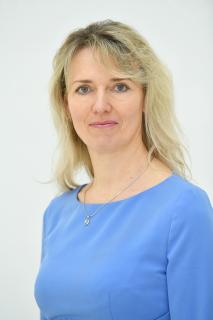
Program Guarantor:
Today, prospective students are choosing not just a degree, but real tools for earning a living and achieving self-fulfillment. After completing our master’s program, graduates will become a vital professional link in the chain of Ukrainian exports to global markets!