
Agrochemical services in precision farming
| Field of Study | Н Agriculture, Forestry, Fisheries and Veterinary Medicine |
| Specialty | H1 Agronomy |
| Education Level | Magister |
| Form | Full-time (day) |
| Scope | 90 ECTS credits |
| Duration | 1 year and 4 months |
| Institute/Faculty |
Faculty of Agrobiology
|
| Department |
O.I. Dushechkin Department of Agrochemistry and Crop Product Quality
|
About the Program

Modern agronomy increasingly demands objectivity, manageability and ease of analysis. As part of their bachelor’s degree in agronomy, students acquire purely technical knowledge on the cultivation of agricultural crops. However, agricultural production is, first and foremost, agribusiness, which implies a set of management decisions aimed at ultimately generating profit. Effective management of agricultural resources is the foundation of this process. To achieve this goal, specialists must possess knowledge and skills in the technologies and tools of comprehensive agrochemical monitoring, including the assessment of soil quality and the potential of plant communities, as well as an understanding of the causes and consequences of spatial heterogeneity in soil cover within a field or farm. They must be proficient in GIS technologies and possess theoretical knowledge of analysing various data layers related to site conditions and crop cultivation technologies. The creation of task maps and their technical implementation for the differentiated application of fertilisers and other resources, as well as proficiency in various mobile applications for making effective management decisions, form the culmination of the training for Master’s students on the aforementioned programme.
Purpose of the Educational Program
The aim of the vocational training programme is to train highly qualified specialists in the field of agronomy and to equip them with specific skills in precision farming, as well as the ability to tackle organisational, operational and scientific challenges relating to agrochemical services, monitoring, geo-integrated technologies, the differentiated use of agricultural resources, and fertigation for the effective management of agribusiness.
Subject Area of the Educational Program
Field of study H: Agriculture, Forestry, Fisheries and Veterinary Medicine Specialisation H1: Agronomy Subject of study and professional activity: technological processes involved in the cultivation of agricultural crops. Learning objectives: to develop in students the ability to solve complex tasks and problems in the field of agronomy. Theoretical content of the subject area: crop production and management of soils, plant varieties and the conservation of biological diversity. The objects of professional activity for Master’s students are agricultural crops and their varieties (hybrids), the breeding process, agricultural landscapes, natural forage lands, soil and the preservation and enhancement of its fertility, optimisation of plant nutrition, harmful organisms and means of protection against them, technologies for the production, storage and primary processing of crop products. Methods, methodologies and technologies: general scientific (hypothesis, experiment, analysis, induction, deduction, modelling, generalisation) and specialised (laboratory, vegetative, lysimeter, vegetative-field, field) research methods in agronomy, statistical methods of data analysis, agronomic measures, general crop cultivation technologies. Tools and equipment: equipment, apparatus, tools and software required for laboratory, laboratory-field and field research in agronomy
Features of the Educational Program
This educational and professional programme focuses on mastering modern approaches to aerial and ground-based monitoring of soils and the potential of agro-phytocenoses, analysing various data layers relating to local conditions and crop cultivation technologies, implementing differentiated fertiliser application, water use, including fertigation, and other agricultural resources, with the aim of making effective decisions for the efficient management of agricultural resources in precision farming, taking into account weather and climate changes. The programme provides for problem-based lectures, laboratory and practical sessions, and practical training in real-world production settings.
Employment
According to the current version of the National Classifier of Ukraine: Classification of Occupations (DK 003:2010), a graduate holding a Master’s degree in Agronomy may be employed in the following roles: agronomist (2213.2); agrochemist (2213.2); agricultural research scientist (2213.1), researcher in agrochemistry and soil science (2213.1); specialist in agrochemistry and soil science (2213.2). Graduates may find employment in commercial organisations providing agrochemical services to agricultural enterprises, conducting comprehensive agrochemical diagnostics and plant nutrition diagnostics, in roles such as managers (specialists, experts) – agrochemists, agrochemical analysts, plant nutrition consultants, lead agronomists in precision farming, research agronomists, specialists supporting the agronomic solutions department, precision farming technologists, research agronomists in innovative technologies, agri-scouts, operations monitoring specialist, head of the agro-apps management department, digital agronomy business development expert, etc.
Further Study
A Master’s degree holder is entitled to continue their studies to obtain a third (academic) level. Acquisition of additional qualifications within the adult education system.
Photos
Videos
Stakeholder Feedback
Yaroslav BOYKO, CEO of Agrilab
Today, the agricultural sector is the flagship of the Ukrainian economy, the main source of foreign exchange earnings and the second-largest employer. A key prerequisite for strengthening the domestic agricultural sector’s position in the international market is the introduction of innovations, in particular precision farming technologies. And the issue of staffing plays a key role in this. In this context, the agricultural business community has high hopes for the master’s programme ‘Agrochemical Services in Precision Agriculture’, established at the National University of Life and Environmental Sciences of Ukraine (NULES). After all, whereas previously it was only possible to obtain a relevant education in precision farming abroad, it is now possible to acquire all the necessary knowledge and skills related to Global Positioning System (GPS) technologies, Geographic Information Systems (GIS), yield monitoring technologies (Yield Monitor Technologies), variable rate technology and remote sensing technology (D33) — is possible right here in Ukraine.
The curriculum for the professional training programme ‘Agrochemical Services in Precision Agriculture’ covers all key aspects of modern agricultural production and includes subjects necessary for developing the skills and competencies required to prepare tasks and collect soil samples, processing the results of agrochemical surveys to create maps, preparing recommendations for crop fertilisation systems, formulating tasks for differentiated application of resources, analysing remote monitoring data and plant nutrition diagnostics, and data collection and analysis. A key advantage of this programme is the balanced combination of theoretical and practical sessions using modern technologies. As a result, graduates are able to independently assess the causes of spatial heterogeneity in soil fertility; are capable of managing the process of implementing precision farming technologies whilst adhering to a logical sequence of all stages; and are able to apply complex geoinformation models in the production process and determine the feasibility and effectiveness of various technologies. I am convinced that the ‘Agrochemical Services in Precision Agriculture’ study programme at the second level of higher education for the training of Master’s degree holders in the speciality H1 Agronomy is an extremely important step for the development of modern agricultural production in Ukraine. The programme fully meets current requirements and is recommended for implementation in the curriculum of the Faculty of Agrobiology at the National University of Life and Environmental Sciences of Ukraine.
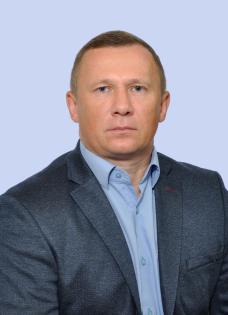
Program Guarantor:
Сучасна агрономія все більше вимагає об’єктивності, керованості та зручності для аналізу. В межах підготовки бакалаврів з агрономії студенти здобувають суто технологічні знання по вирощуванню сільськогосподарських культур. Проте, агровиробництво є, перш за все, агробізнесом, що означає наявність комплексу управлінських рішень для отримання в підсумку, прибутку. Ефективний менеджмент агроресурсів є основою цього процесу. Для досягнення цієї мети фахівці мають володіти знаннями та навиками по технологіях та інструментарію комплексного агрохімічного моніторингу із оцінкою якості грунтів та потенціалу фітоценозів, і розумінням причини і наслідків просторової неоднорідності грунтового покриву в межах поля чи господарства. Вони повинні володіти ГІС-технологіями та теоретичними знаннями аналізу різноманітних шарів даних, пов’язаних із умовами території та технологіями вирощування сільськогосподарських культур. Створення карт-завдань та їх технічна реалізація за диференційованого внесення добрив та інших ресурсів, володіння різноманітними мобільними додатками для прийняття дієвих управлінських рішень є підсумовуючою основою підготовки магістрів вищезазначеної програми.