
VET4GSEB project has been included in the list of the best Erasmus+ initiatives supporting the recovery of Ukraine
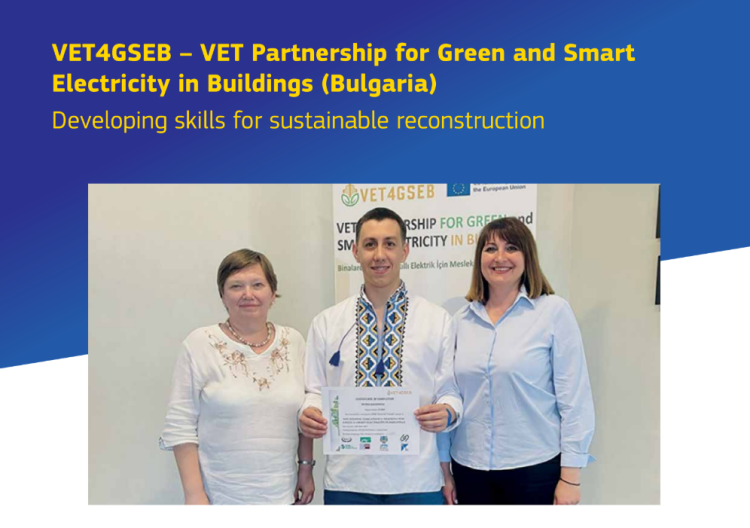
The international project VET4GSEB (Vocational Education and Training for Green and Smart Energy in Buildings), in the implementation of which the scientific and pedagogical staff of the National University of Life and Environmental Sciences of Ukraine actively participated, received high international recognition.
Information about the project is included in the official publication of the European Commission «Building Resilience and Human Capital for Ukraine's European Future», prepared by the Directorate-General for Education, Youth, Athletics and Culture (DG EAC) with the support of the Education and Culture Executive Agency (EACEA). The publication presents the most successful Erasmus+ projects that contribute to the preservation and development of Ukraine's human potential, strengthening international partnerships and supporting the post-war recovery of the state.
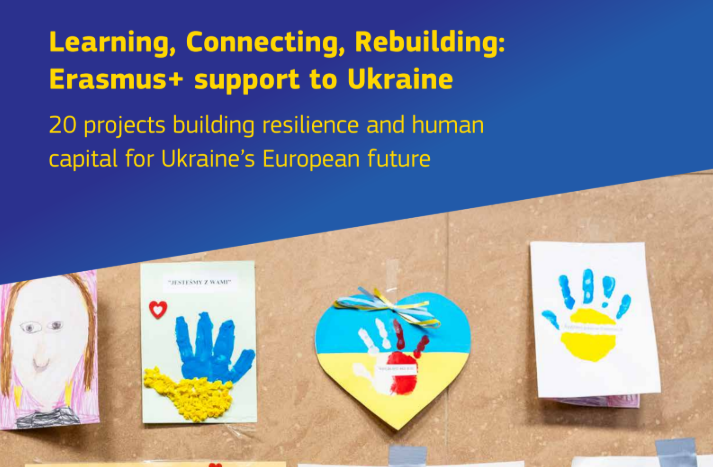
The publication included only 20 Erasmus+ projects, selected as the best examples of support for Ukraine. It is especially significant that only two of them were implemented within the framework of the Capacity Building in Vocational Education and Training (CB VET) area and were presented in the thematic section «Developing Skills for Recovery and Reconstruction». One of these projects was ERASMUS-EDU-2022-CB-VET VET4GSEB.
The VET4GSEB project is aimed at modernizing vocational education and training specialists to implement innovative solutions in the field of photovoltaic technologies, “smart” electrical systems, energy efficiency and renewable energy. Its relevance has significantly increased in the context of large-scale destruction of Ukraine’s energy and civil infrastructure, when training qualified personnel for the reconstruction of the country in accordance with the principles of sustainable development and the European Green Deal became especially important.
During the project implementation, an international consortium of partners from Bulgaria, Ukraine, Georgia, Armenia, Turkey and Albania were working together to develop professional education in the field of sustainable energy. Among the key results of the project are the creation of modern educational materials in several languages, the development of a digital educational platform, the implementation of a system of certification of teachers and trainers, as well as the formation of new professional competencies necessary for the green transformation of the construction and energy sectors.
NUBiP of Ukraine participated in the project by the team of the Educational and Scientific Institute of energy, automation and energy saving, headed by the director of the institute, Professor Viktor KAPLUN. A significant contribution to the implementation of the project was made by associate professors of the department of energy systems engineering Olena SHELIMANOVA and Svitlana MAKAREVYCH, as well as other representatives of the university team. Thanks to their work, the project results were integrated into the educational process and became accessible to education seekers and industry professionals.
The inclusion of VET4GSEB in the European Commission publication is evidence of the high quality of the work of the international consortium and the significant contribution of its partners to the development of modern vocational education. For NUBiP of Ukraine, this is also confirmation of the ability to successfully implement large-scale international initiatives that contribute to the European integration of Ukraine, the development of human capital and the training of specialists for green and energy-efficient reconstruction of the state.
We sincerely congratulate the project team on this significant achievement and thank all partners, experts, teachers, education seekers and representatives of the professional community who participated in its implementation. This recognition is the result of joint work and confirms the importance of international cooperation for the sustainable development of Ukraine.
The article is available at the link .