
International series of research workshops brings together researchers from NUBiP of Ukraine and the University at Buffalo
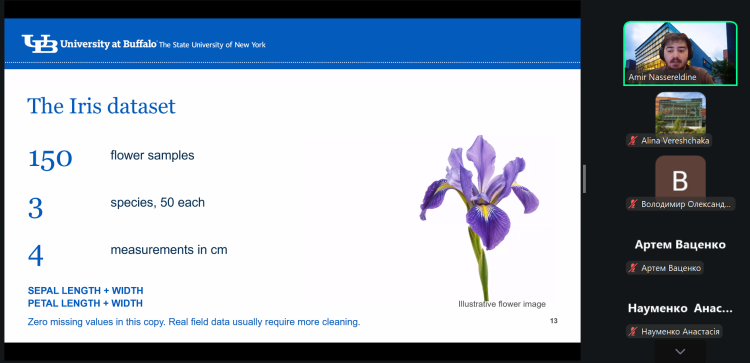
Throughout of beginning of educational year, a series of four international research workshops, supported by American Councils Ukraine, brought together scientists, PhD students, master's students, and early-career researchers from the National University of Life and Environmental Sciences of Ukraine (NUBiP of Ukraine) and the University at Buffalo (USA).
The story of this project began in October 2025, when Olha KRAVCHENKO, Associate Professor at NUBiP of Ukraine, participated in an academic fellowship at the University at Buffalo as a finalist of the BridgeUSA Ukrainian Academic Fellows Program. During her stay, she became familiar with the American university's PhD training system, the high level of its doctoral students' research skills, and their active involvement in academic life. This experience inspired her to develop the idea for the PhD2PhD project.
The concept was to encourage PhD students from the University at Buffalo to share their knowledge, practical skills, and experience with their Ukrainian colleagues. At the same time, the project aimed not only to strengthen the research competencies of NUBiP PhD students but also to create opportunities for direct communication, professional networking, and future scientific collaboration between early-career researchers from both universities. The initiative successfully received grant funding, making it possible to organize the planned series of workshops.
Across the four sessions, invited speakers and panelists shared practical knowledge and experience in academic publishing, artificial intelligence, scientific communication, and PhD education.
The workshops attracted considerable interest and received positive feedback from participants. Unfortunately, due to the security situation in Ukraine, all meetings had to be held entirely online. Nevertheless, this did not prevent active participation: each session attracted at least 55 participants. Every meeting included discussions and Q&A sessions, allowing participants to interact directly with invited speakers and exchange ideas with colleagues from both universities.
The series also welcomed university leaders and representatives of international organizations, who delivered opening and welcoming remarks. Among them were Oleksandr LABENKO, Vice-Rector for Scientific and Pedagogical Work and International Affairs at NUBiP of Ukraine; Oksana TONKHA, Vice-Rector for Research and Innovation at NUBiP of Ukraine; and Diana SHALASHNA, representative of American Councils Ukraine. The sessions were moderated by Alina VERESHCHAKA from the University at Buffalo.
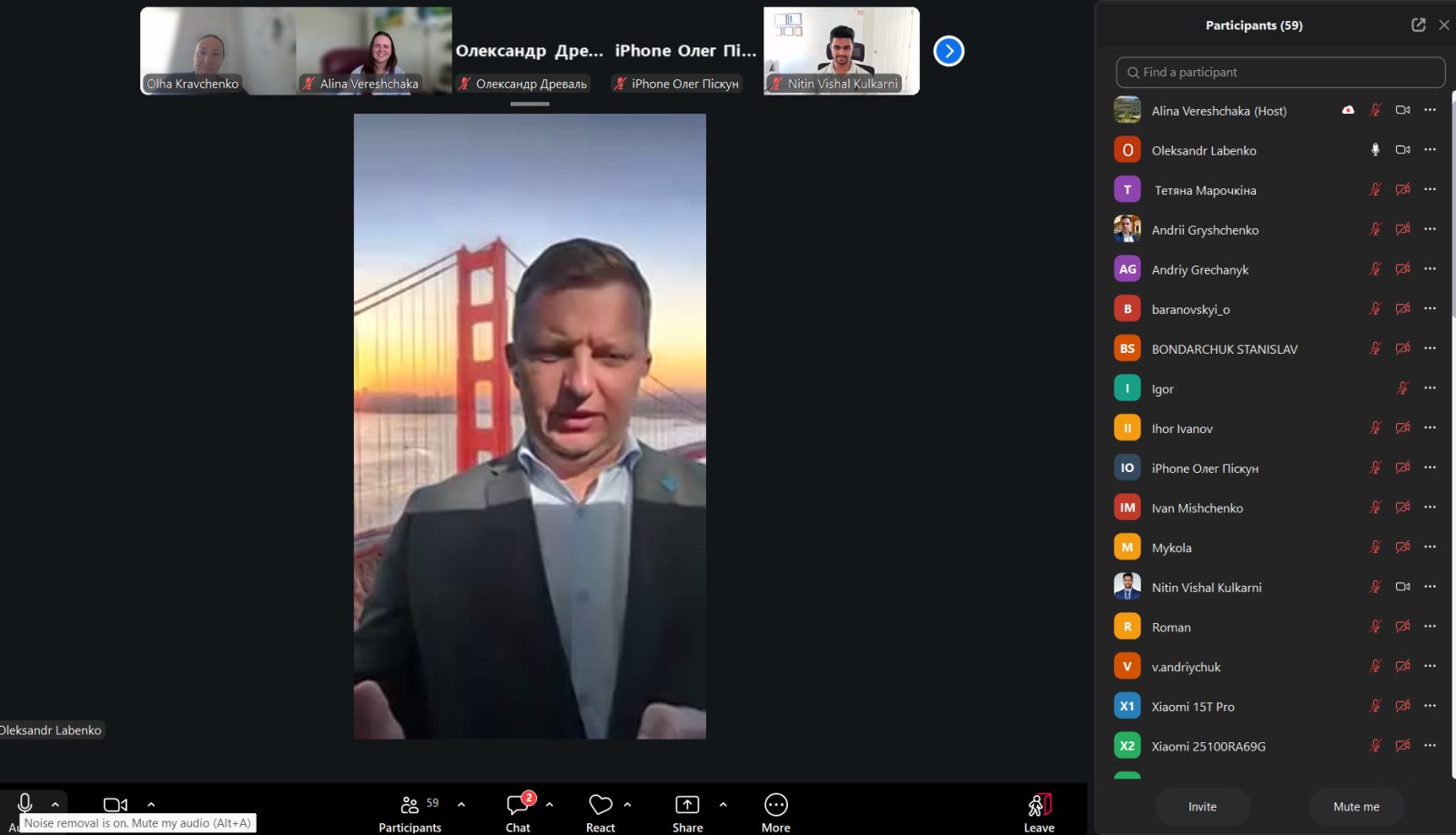
Academic Writing and Working with Overleaf
The series opened on September 7, 2026, with a workshop entitled «How to Write Research Papers in Overleaf», delivered by Nitin KULKARNI, a PhD student at the University at Buffalo.
The practical workshop combined recommendations for effective academic writing with hands-on experience using Overleaf, an online collaborative LaTeX platform widely used for preparing scientific manuscripts.
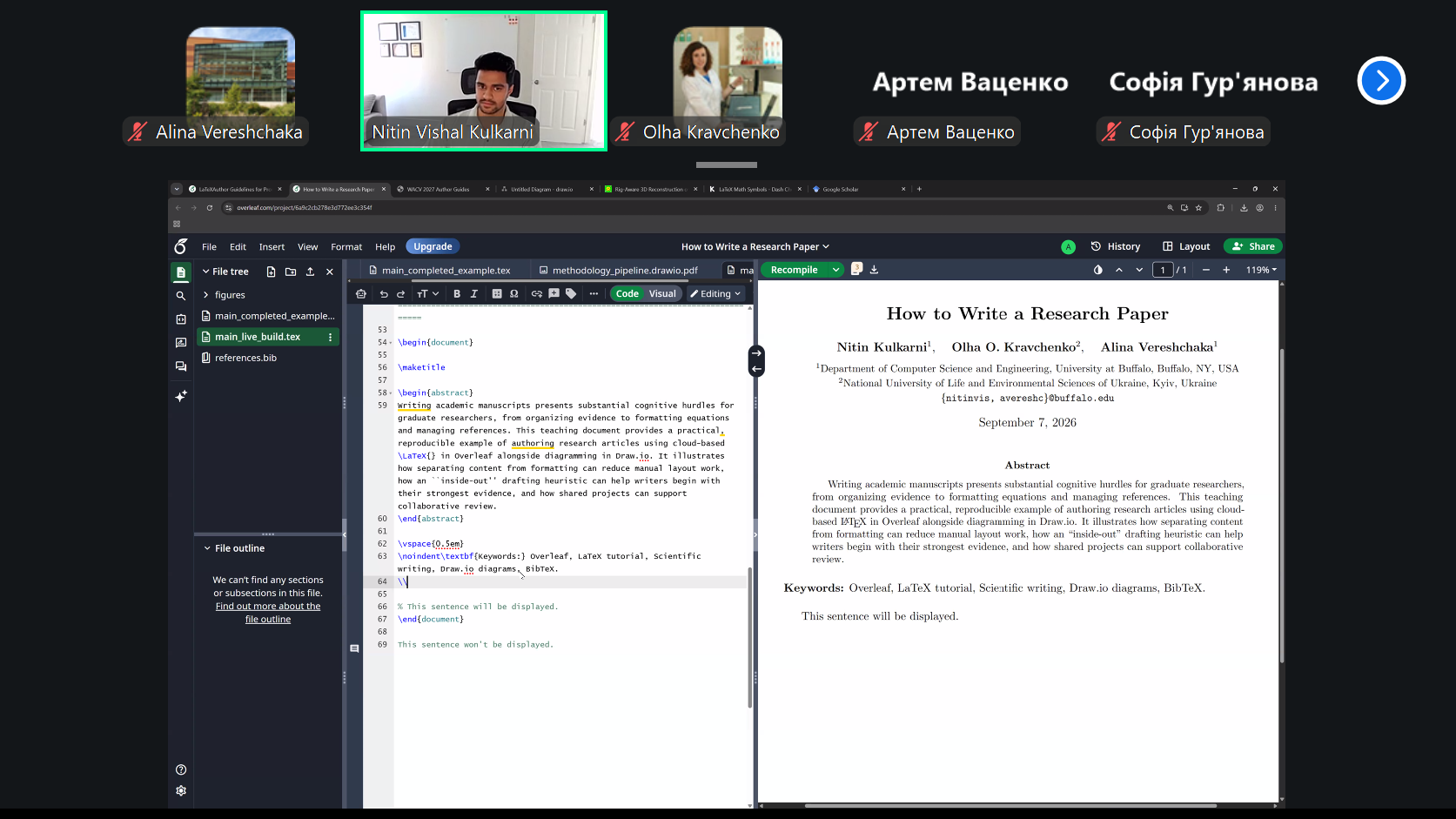
Participants explored how to structure and organize research papers, work with mathematical equations, figures, tables, references, and citations, and collaborate effectively with co-authors. Particular attention was paid to the advantages of Overleaf for preparing complex academic documents and the common challenges researchers face during manuscript preparation.
Using Artificial Intelligence in Scientific Research
The second workshop took place on September 14, 2026, and was led by Amir NASSEREDDIN, a PhD student at the University at Buffalo, who presented the topic «How to Use AI Tools in Scientific Research: From Ideas to Code and Data Analysis».
During the practical session, the speaker demonstrated how modern artificial intelligence tools can support different stages of the research process while remaining accessible even to participants without extensive backgrounds in computer science or programming.
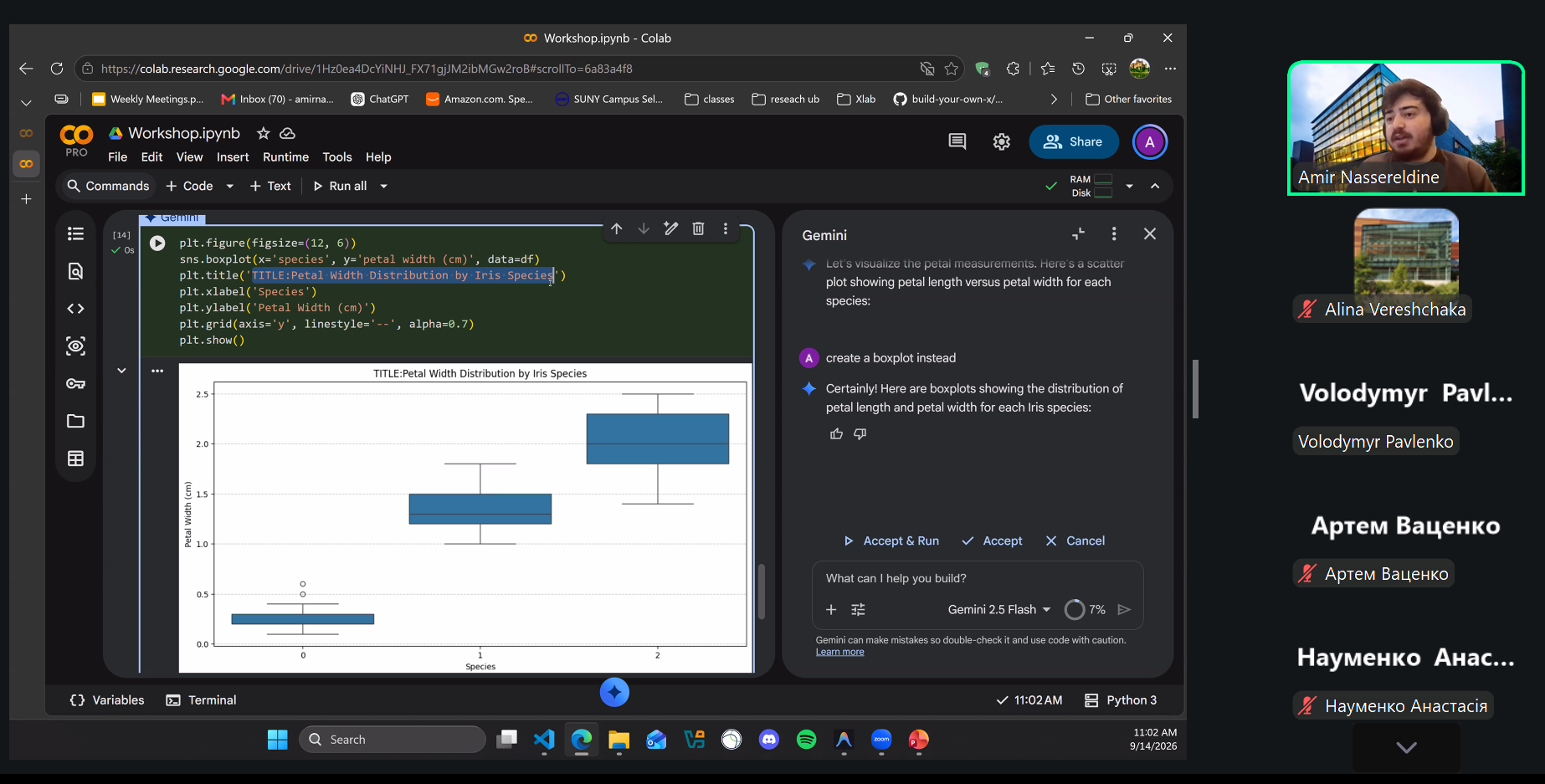
Participants explored the use of AI for generating and refining research ideas, writing and debugging Python code, cleaning and analyzing data, and preparing graphs, summaries, and other research materials. Special attention was given to the responsible use of AI, particularly the limitations of AI-generated results and the importance of independently verifying them.
The practical demonstrations sparked active discussions about the opportunities and limitations of AI in scientific research, as well as the changes these technologies are bringing to academic work.
Designing Effective Scientific Posters and Flowcharts
The third workshop, «How to Create Effective Scientific Posters and Flowcharts», was delivered by Nitin KULKARNI, a PhD student at the University at Buffalo. This session focused on scientific communication and the visualization of research results.
It was particularly encouraging that the session was opened by Vice-Rector Oksana TONKHA, who shared valuable advice and recommendations with early-career researchers.
The speaker then presented practical approaches to transforming complex research ideas into clear visual formats. The workshop covered the structure and key elements of an effective scientific poster, ways to present a research project or paper as a conference poster, and approaches to combining text, figures, graphs, and visual design.
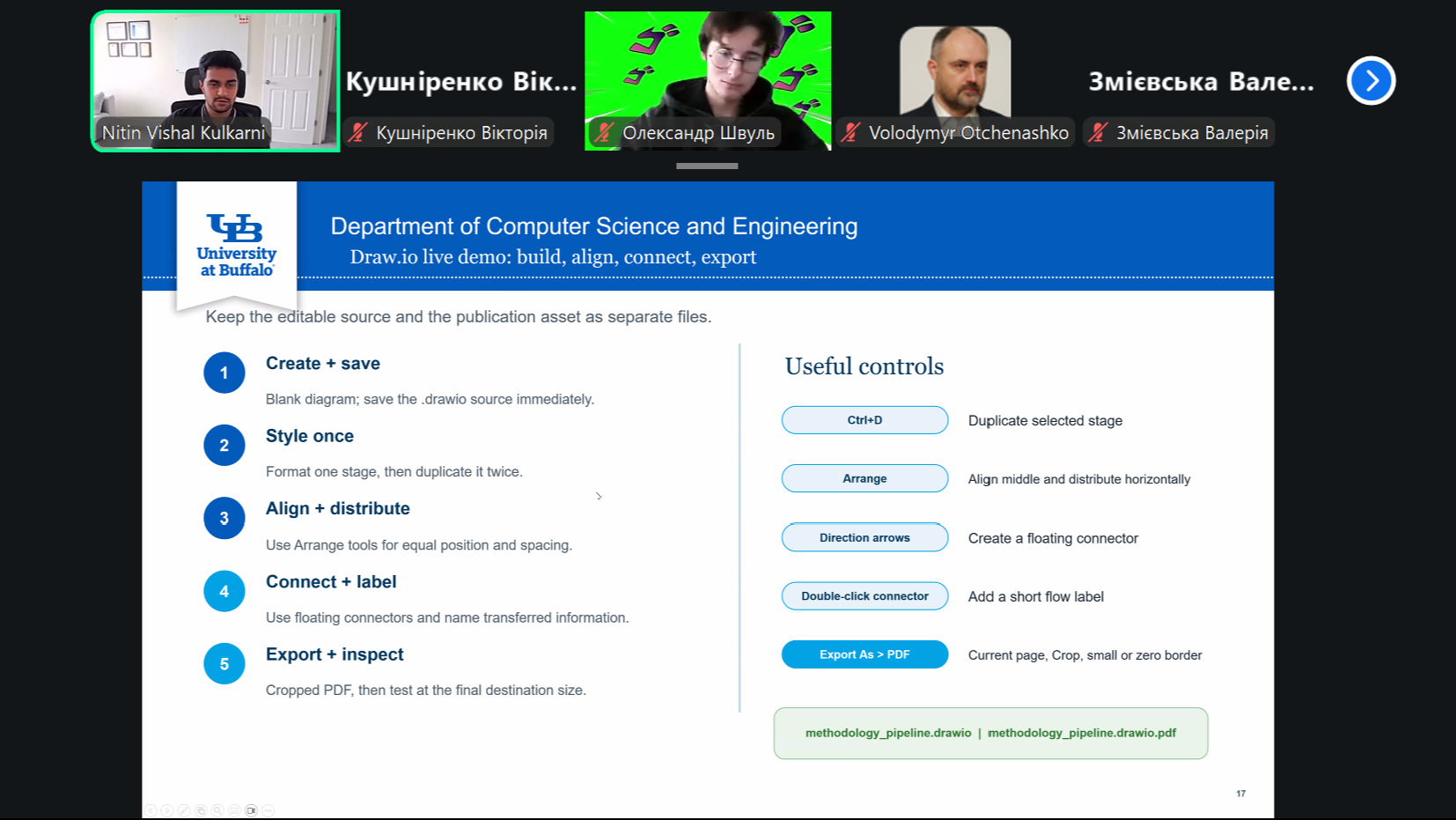
Participants also learned how to create flowcharts to illustrate research methodologies, algorithms, processes, and workflows. Particular attention was paid to common design mistakes and practical techniques for creating clear, professional, and accessible scientific visualizations.
The workshop concluded with an open discussion and Q&A session, during which participants had the opportunity to discuss their questions related to research presentation and visualization directly with the speaker.
Inside the PhD: Experiences of Doctoral Students from Ukraine and the USA
The series concluded on September 28, 2026, with a 90-minute international panel discussion entitled «Inside the PhD: Student Experiences from UB and NUBiP».
This meeting was particularly interesting because it offered an opportunity to explore doctoral education from the perspective of PhD students themselves, compare experiences at the two universities, and openly discuss common challenges. Diana SHALASHNA, BridgeUSA Program Coordinator, also delivered opening remarks.
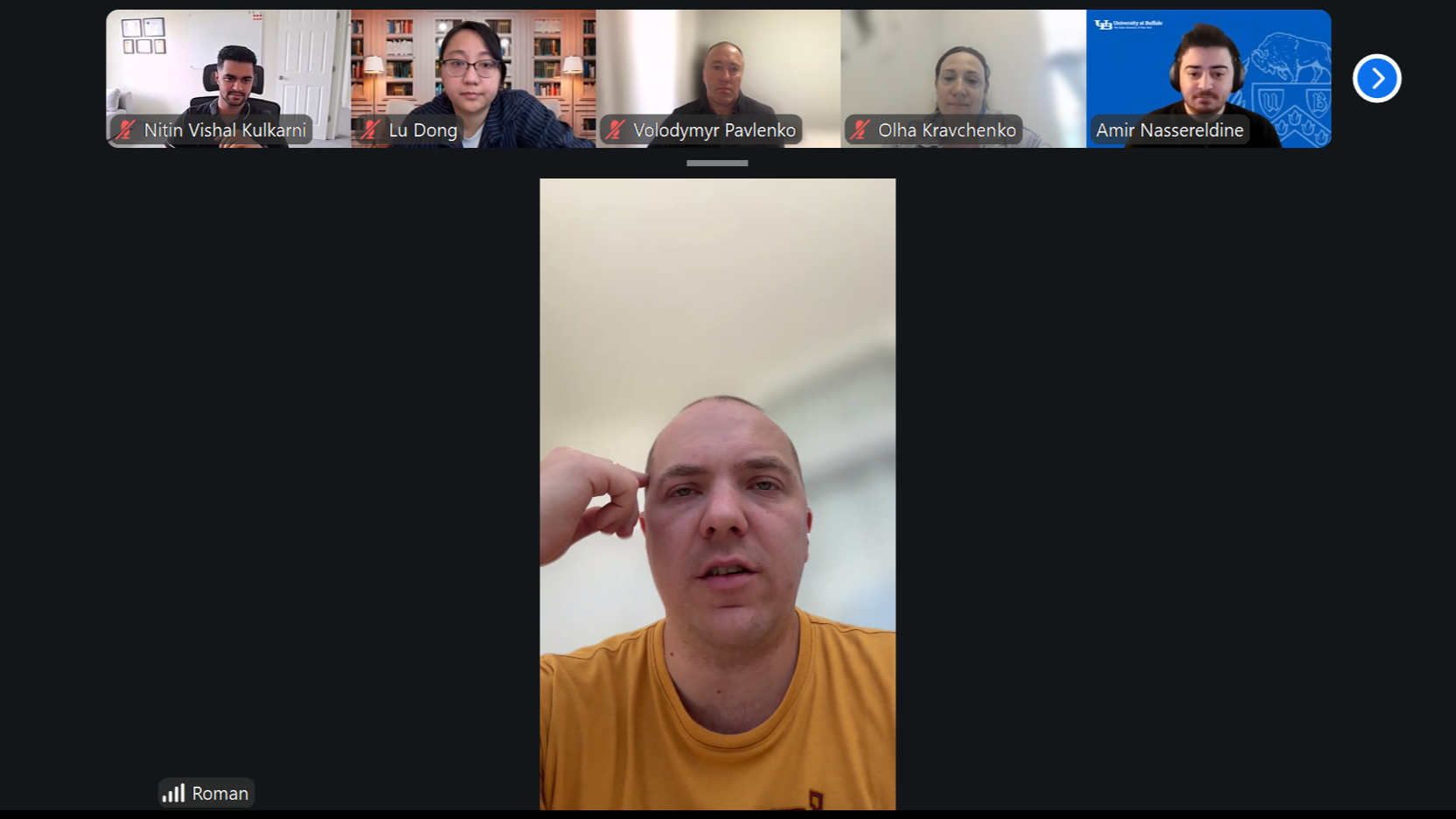
The panel brought together Roman TOMASHEVSKYI and Volodymyr PAVLENKO from NUBiP of Ukraine, along with Nitin KULKARNI, Amir NASSEREDDIN, and Lu DONG from the University at Buffalo.
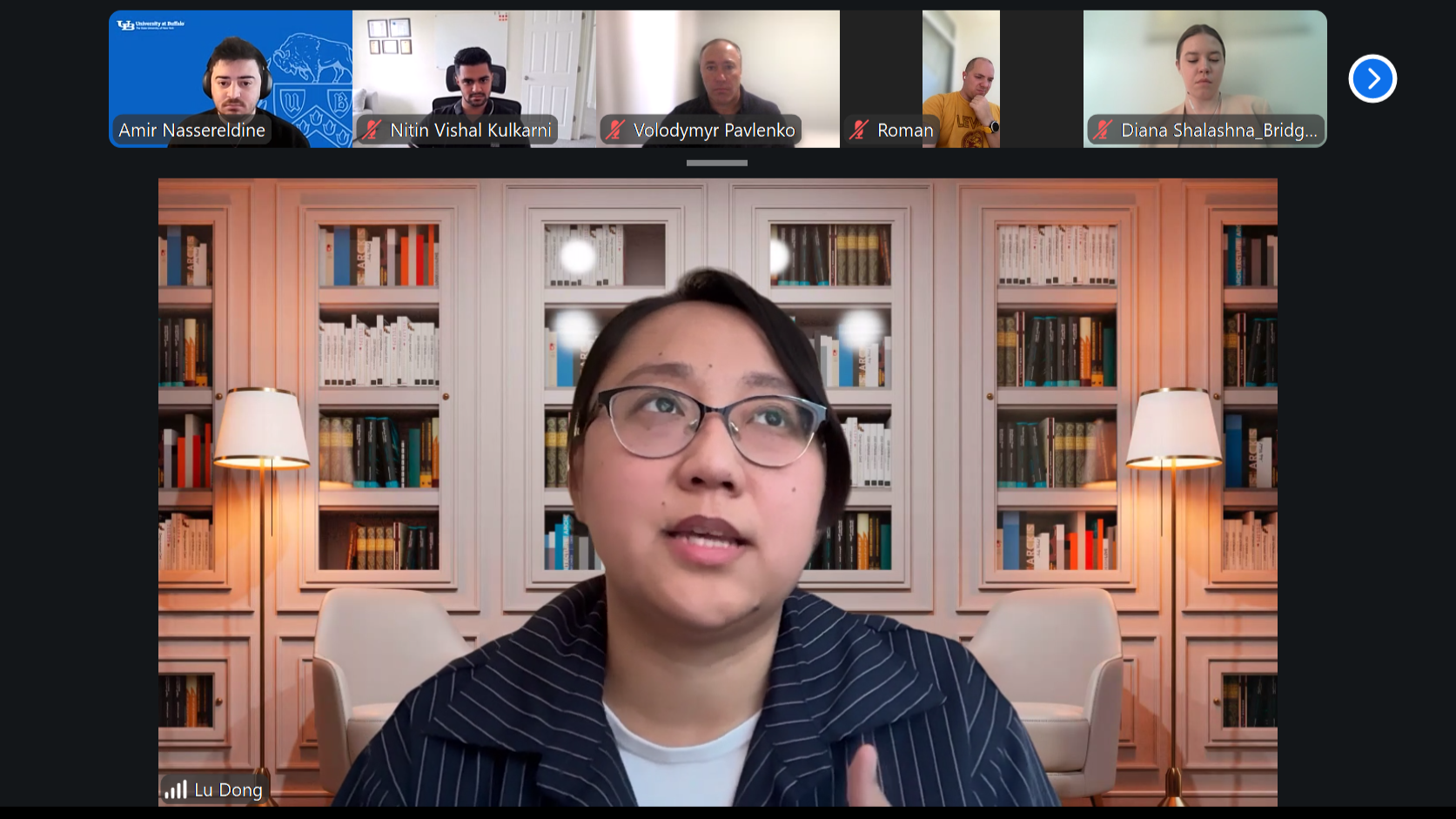
Drawing on their own experiences as PhD students, the panelists shared their perspectives on research development, academic challenges, professional networking, conference participation, time management, and career planning.
The discussion covered choosing a research direction, navigating the first years of doctoral studies, developing scientific collaborations, participating effectively in conferences and academic events, and balancing research with coursework and teaching responsibilities. The panelists also addressed the less pleasant but inevitable aspects of academic life, including unsuccessful experiments, rejected manuscripts, and the difficulties faced by early-career researchers. Career preparation after completing a PhD was another important topic.
The panel concluded with an extended Q&A session, giving participants the opportunity to interact directly with the panelists and hear perspectives from doctoral students studying and working in different academic environments.
From an International Fellowship to New Opportunities for Collaboration
Overall, the four-workshop series combined practical training, international academic exchange, and direct interaction between early-career researchers from NUBiP of Ukraine and the University at Buffalo.
The program covered key stages of the research journey, from academic writing and the use of artificial intelligence to scientific visualization and professional development. Equally important was the opportunity for young researchers from both universities to get to know one another, exchange experiences, discuss shared research interests, and lay the foundation for future collaboration.
Thus, an idea that emerged during an academic fellowship at the University at Buffalo developed into a successfully implemented international educational and research project. With the support of American Councils Ukraine and through the organizational efforts of Olha KRAVCHENKO and Alina VERESHCHAKA, the PhD2PhD series became not only an opportunity to gain new practical knowledge but also an important step toward strengthening international academic dialogue, building a network of early-career researchers, and initiating future joint educational and scientific activities.