
From scientific initiatives to strategic partnership: NUBiP of Ukraine and Estonian University of Natural Sciences expand horizons of cooperation
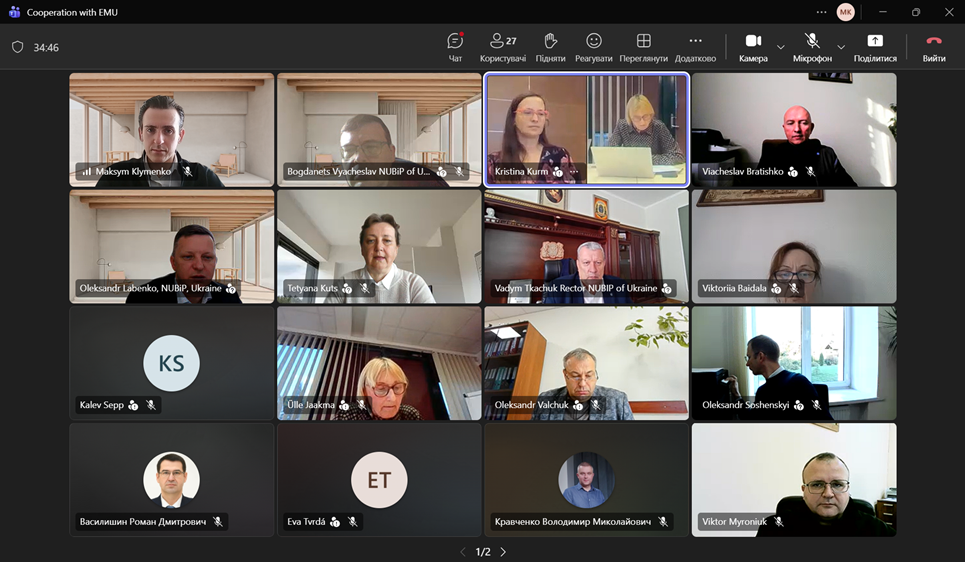
On October 20, 2026, the National University of Life and Environmental Sciences of Ukraine and the Estonian University of Life Sciences (EMU) held a large-scale bilateral working meeting dedicated to deepening academic partnership, developing joint scientific research, and implementing international educational and grant initiatives.
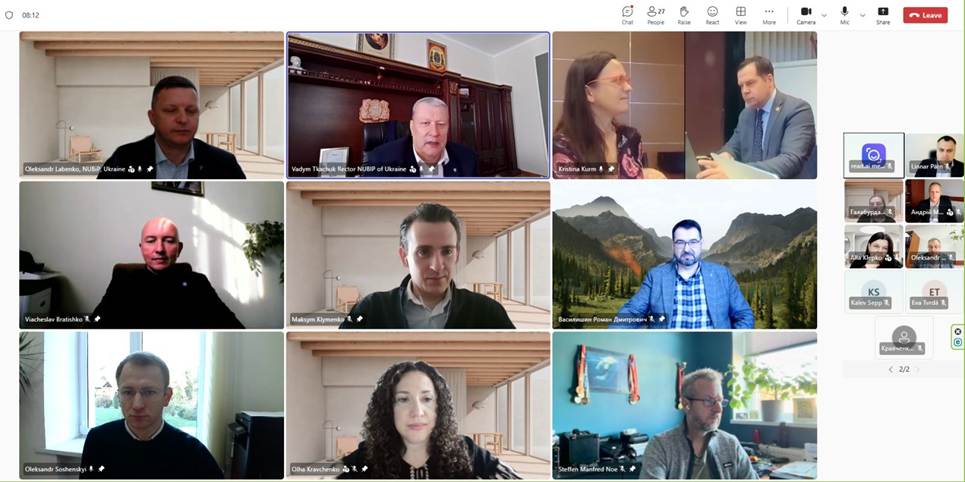
The meeting brought together the leadership of two universities, leading scientists, representatives of faculties, educational and scientific institutes, and international departments around a common goal — transforming promising scientific ideas into long-term European-level projects.
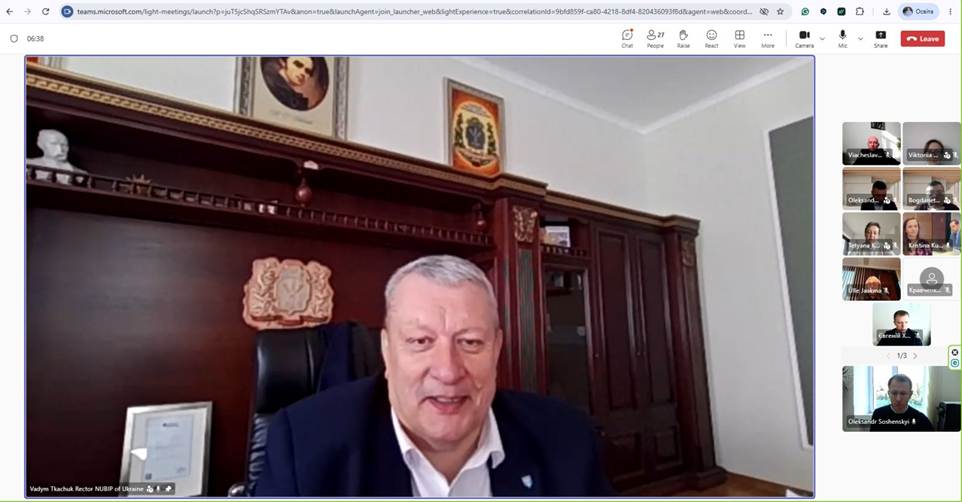
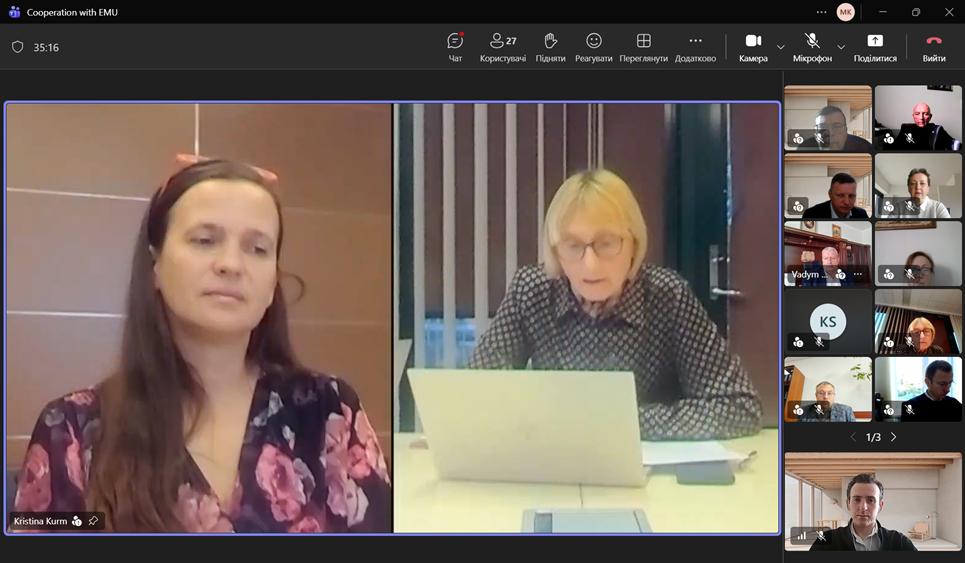
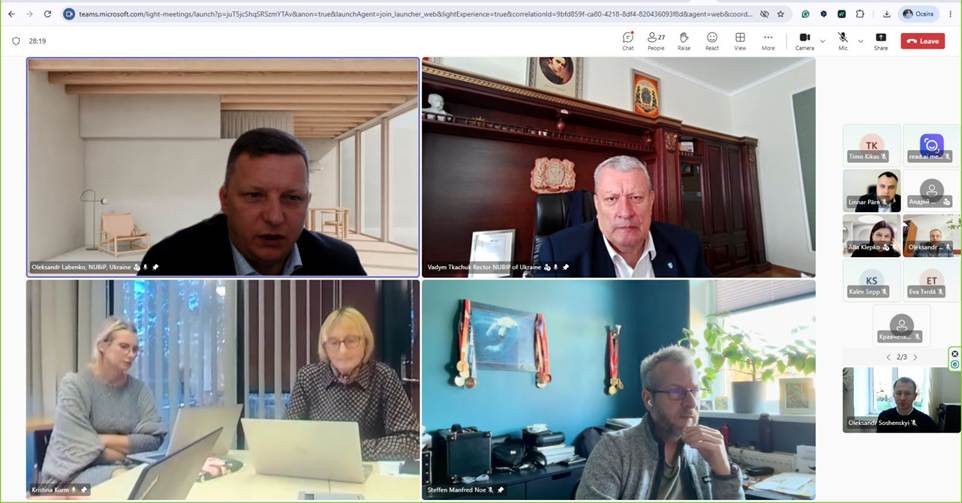
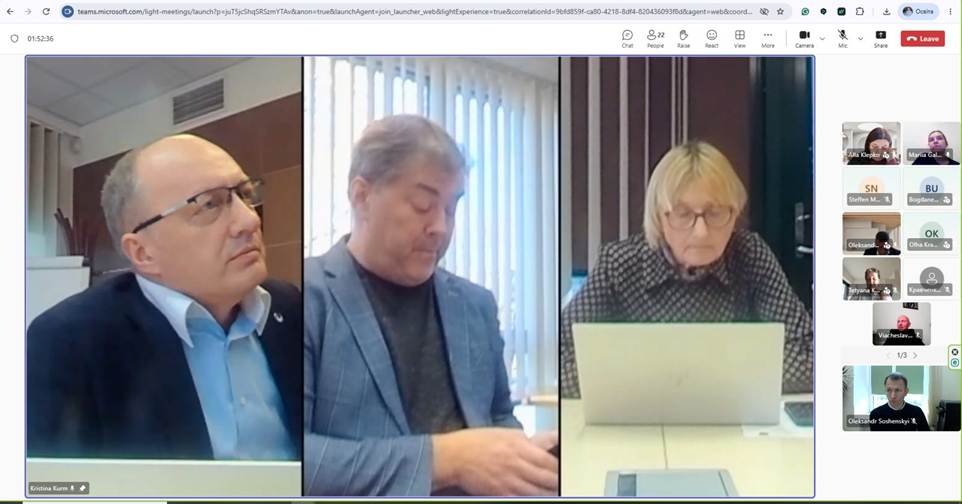
The meeting was opened by the rector of NUBiP of Ukraine, doctor of economic sciences, Professor Vadym TKACHUK, and the rector of the Estonian University of Life Sciences, Professor Ülle JAAKMA. In their appeals, the heads of higher education institutions emphasized the importance of developing international scientific cooperation, pooling research potential, and strengthening the role of universities in overcoming current environmental, climate, and food challenges.
The partnership is of particular importance in the context of Ukraine's European integration and its future post-war recovery. Estonia's experience in natural sciences, sustainable resource management, and innovation, combined with the scientific potential of NUBiP of Ukraine, opens up opportunities for developing practical solutions in the fields of agricultural production, environmental protection, bioeconomy, and food security.
The meeting was moderated by Oleksandr LABENKO, doctor of economic sciences, Vice-rector for educational and scientific work and international activities of NUBiP of Ukraine. He emphasized the need to transition from individual scientific contacts to systematic institutional cooperation, which involves joint research teams, preparation of international grant applications, academic mobility, and the involvement of young scientists.
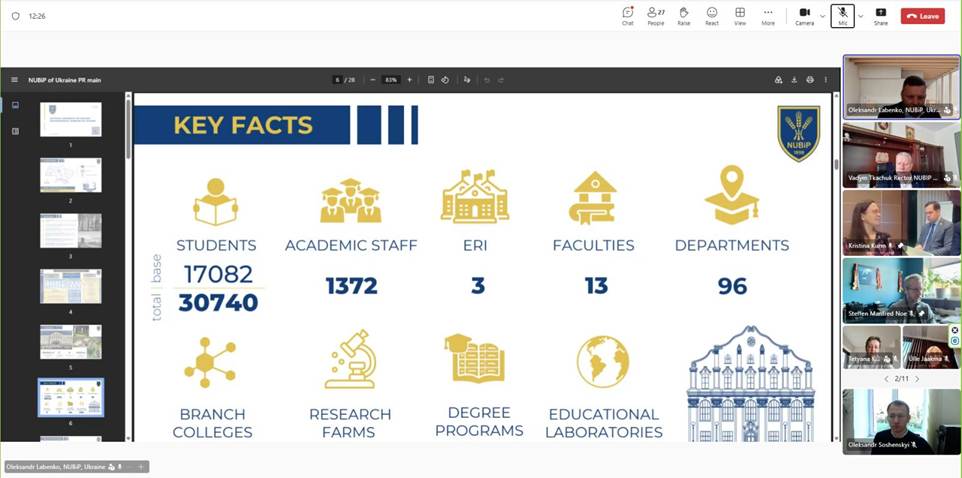
The central part of the meeting was a series of thematic discussions, during which representatives of both universities presented their research findings, identified common research interests, and discussed opportunities for forming joint international teams.
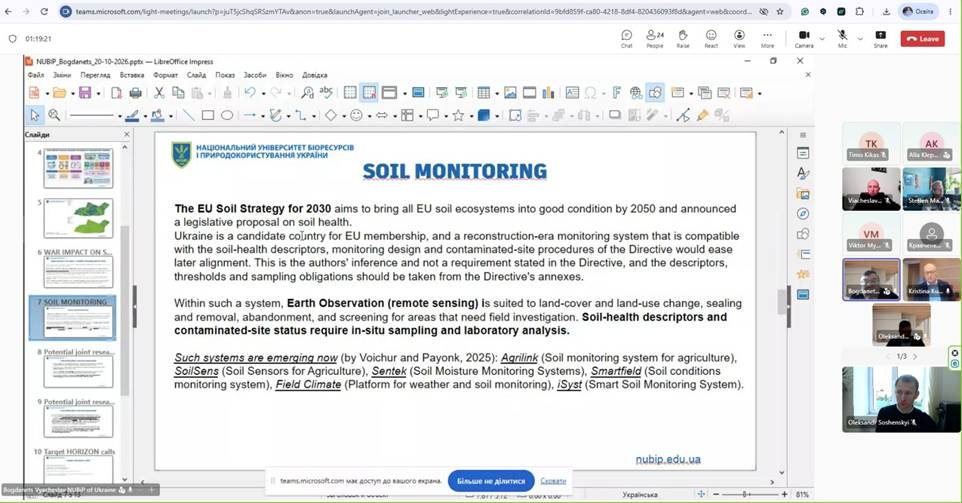
Soil health, climate resilience, and satellite monitoring. Aret VOOREMÄE, Director of the EMU Institute of Agricultural and Environmental Sciences, Endla REINTAM, vice-rector for academic affairs, and Vyacheslav BOHDANETS, associate professor of the department of geodesy and cartography at the faculty of land management of NUBiP of Ukraine, candidate of agricultural sciences, discussed modern methods of soil condition assessment, organic carbon accumulation, adaptation of agricultural landscapes to climate change, and the use of Earth remote sensing technologies. A significant practical outcome of the previous interaction was a jointly prepared and submitted project application under the COST Actions program, aimed at building an international research network.
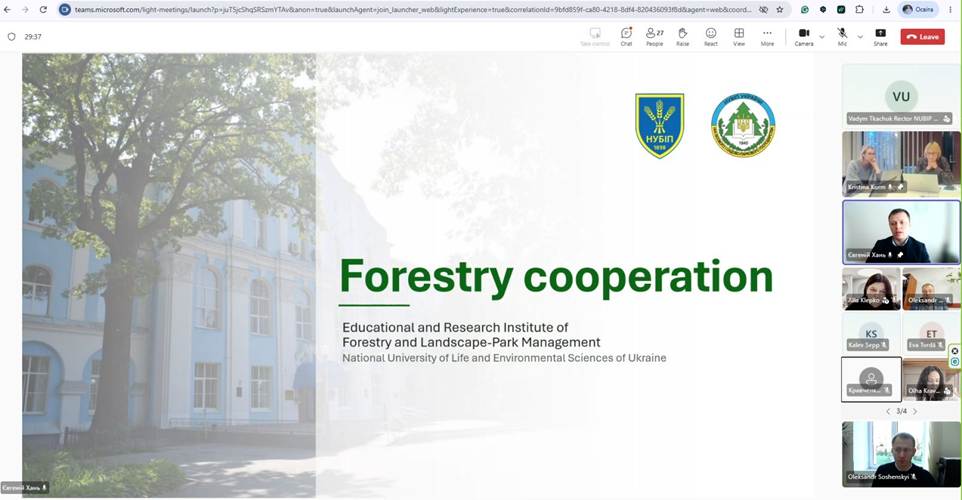
Monitoring, conservation, and restoration of forest ecosystems. Marek METSLAID, Director of the Institute of Forest and Wood Sciences at Estonian University of Life Sciences (EMU), and Rein DRENKHAN, Professor of forest pathology, along with Roman VASYLYSHYN, doctor of agricultural sciences, Professor, and director of the Educational and Scientific Institute of Forestry and Landscape Architecture at the National University of Life and Environmental Sciences of Ukraine (NUBiP of Ukraine), and Yevhen KHAN, deputy director of the Institute for International Activities, discussed issues of forest stand resistance to climate change, pathogen spread, forest condition monitoring, and restoration of damaged ecosystems. A special emphasis was placed on Ukraine's needs in developing science-based approaches to the post-war restoration of forest resources.
The concept of «One Health», veterinary medicine, and food safety. Director of the Institute of Veterinary Medicine and Animal Science at EMU, Professor Toomas TIIRATS, and associate professor of the Professor A.K. Skorokhodko department of animal hygiene and food products, a student at the faculty of veterinary medicine of NUBiP of Ukraine, Maria HALABURDA, focused on issues of epizootic safety, veterinary toxicology, food product quality control, and the interrelationship between human and animal health and the state of the environment. The discussion confirmed the promising nature of interdisciplinary research, the results of which could be used to improve biosecurity systems and develop sustainable food systems.
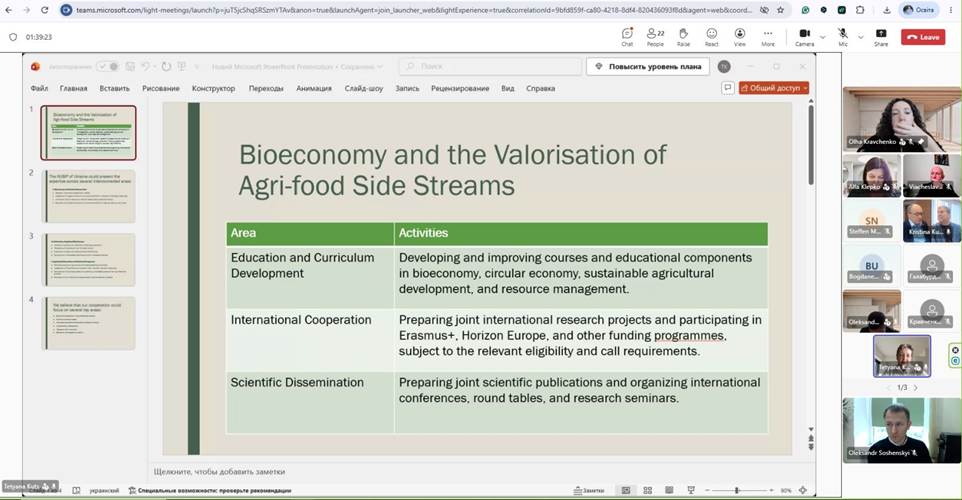
Bioeconomy, circular production models, and efficient use of bioresources. Head of the department of rural economics at EMU, Professor Rando VÄRNIK, and associate professor of statistics and economic analysis at the faculty of economics of NUBiP of Ukraine, candidate of economic sciences Tetiana KUTS, discussed opportunities for increasing the efficiency of agricultural biomass utilization, processing of agricultural production by-products, and creating new value chains. The discussion was joined by the dean of the faculty of economics, candidate of economic sciences, associate professor Andriy MUZYCHENKO, and the head of the department of economics, doctor of economic sciences, Professor Viktoria BAIDALA. Representatives of the faculty of economics outlined the prospects for joint economic modeling, evaluation of the effectiveness of bioeconomic solutions, and the implementation of circular economy principles.
Water resources, hydroecology, and climate policy. EMU vice-rector for research, Professor Kalle OLLI, and representatives from NUBiP of Ukraine — associate professor of the department of agrosphere ecology and environmental control, candidate of pedagogical sciences Vita STROKAL, and deputy dean of the agrobiological faculty for international activities, candidate of biological sciences, associate professor of the department of analytical and bioinorganic chemistry and water quality Olha KRAVCHENKO — discussed the prospects of international research in the field of water resource management, hydroecological monitoring, and adaptation of aquatic ecosystems to climate change.
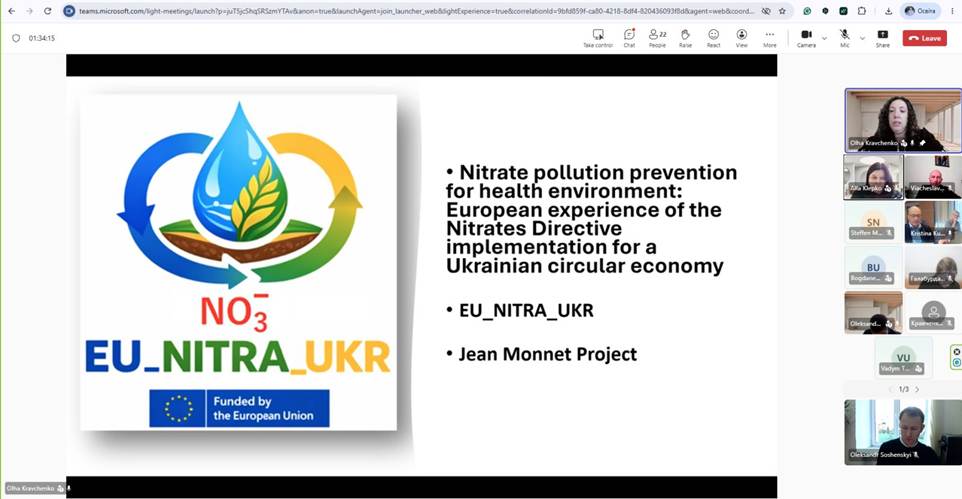
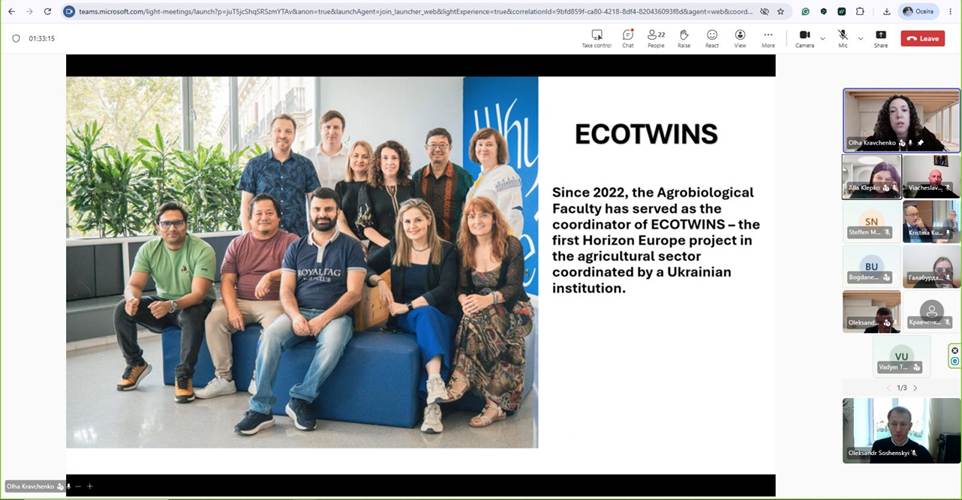
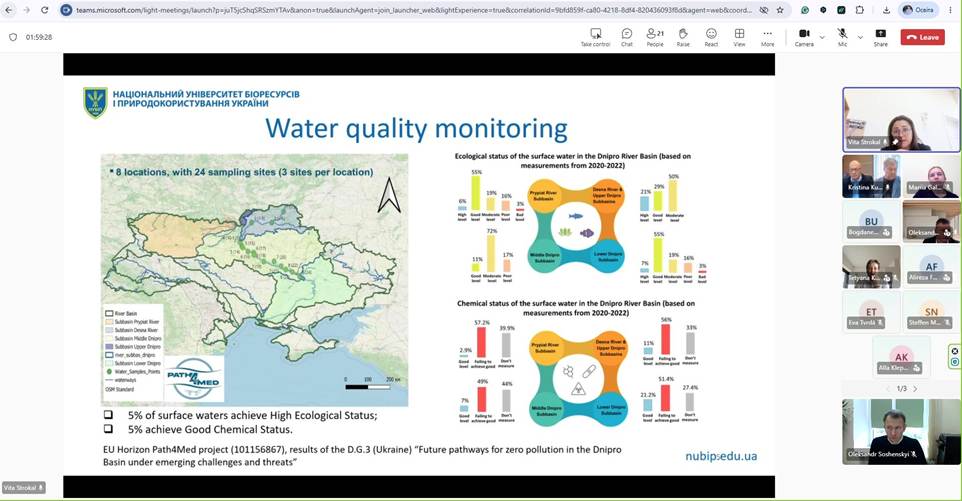
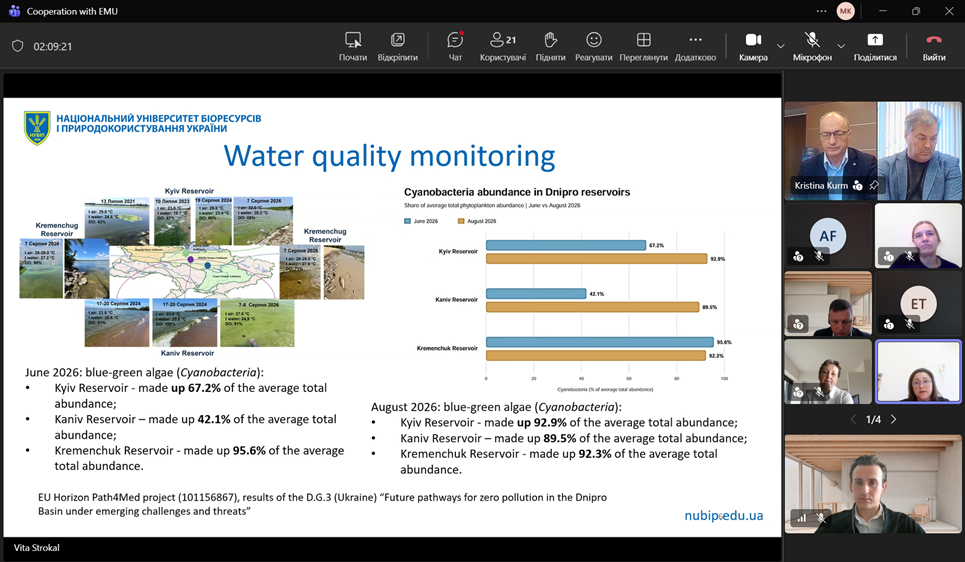
Special attention was paid to the ecological quality of water, assessment of anthropogenic impact on water bodies, issues of ecotoxicological safety, and the implementation of modern methods for water resource analysis. The participants of the section discussed the possibilities of forming interdisciplinary research teams, combining ecological, chemical, and analytical approaches, as well as preparing joint international projects to enhance the resilience of aquatic systems.
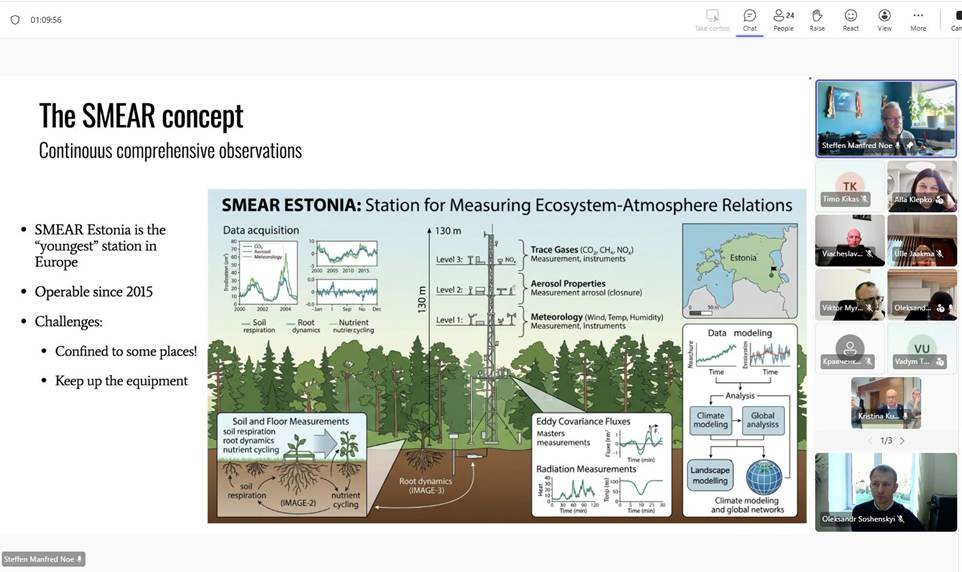
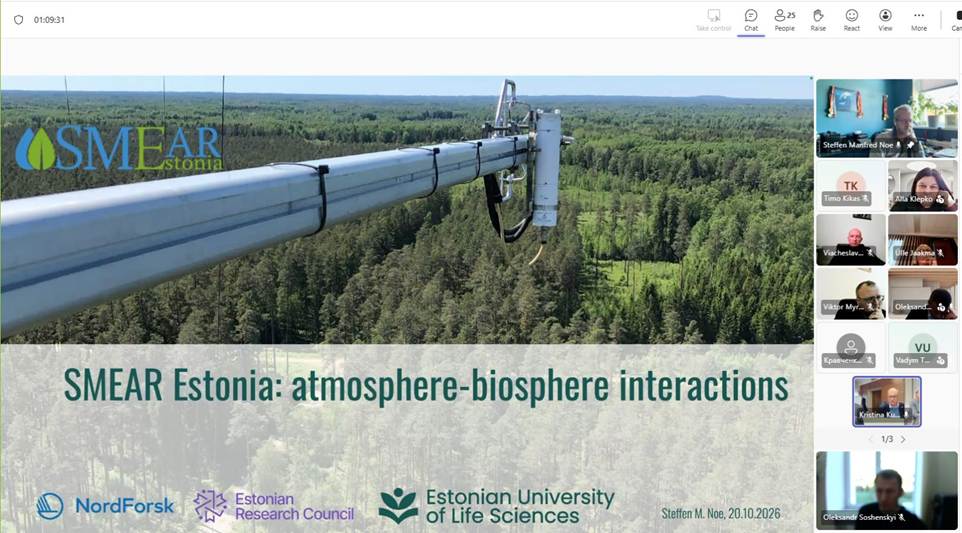
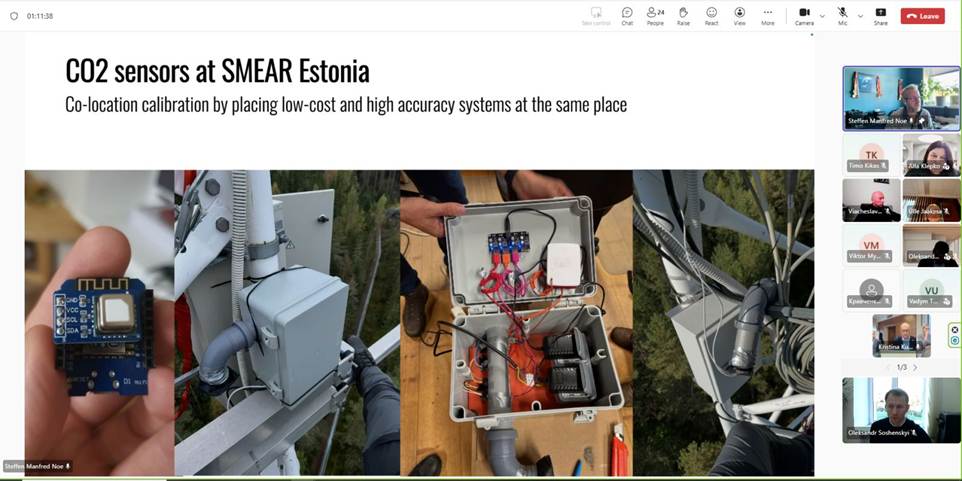
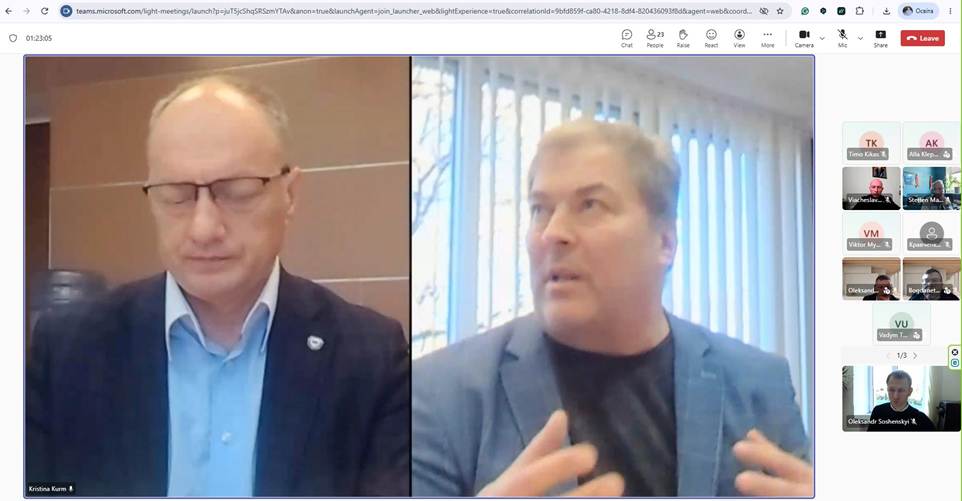
Radioecological monitoring and environmental safety. Professor of forest data science and modeling at EMU, Steffen NOE, and head of the department of general ecology, radiobiology, and life safety at NUBiP of Ukraine, doctor of biological sciences, Professor Alla KLEPKO, discussed the prospects of using modern methods for monitoring the state of natural ecosystems, spatial data analysis, and mathematical modeling of ecological processes. An important component of the discussion was the possibility of combining ecosystem modeling tools with methods of radioecological monitoring, radionuclide migration assessment, and ecological risk analysis. For Ukraine, such research is of particular relevance in the context of assessing the consequences of wartime pollution of territories and restoring safe environmental use.
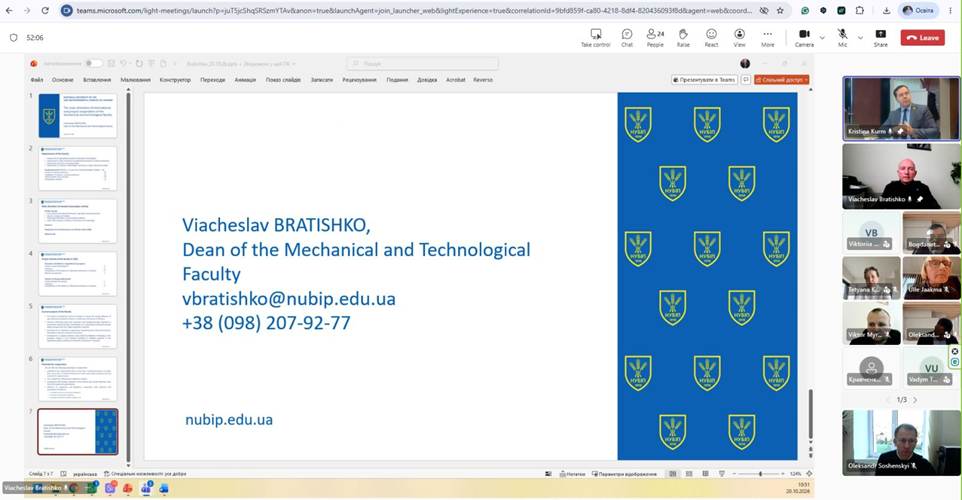
Agricultural engineering, mechatronics, and automation technologies. EMU representatives — director of academic affairs of the Institute of Forestry and Engineering, senior lecturer Margus ARAK and assistant professor of production engineering Marten MADISSOO — together with the dean of the mechanical and technological faculty of NUBiP of Ukraine, doctor of technical sciences, professor Vyacheslav BRATISHKO and associate professor of the M.P. Momotenko department of technical service and engineering management, discussed innovative solutions for modern agricultural production with Nataliia TSYVENKOVA. Among the priorities are the development of mechatronic systems, increasing the energy efficiency of agricultural machinery, automation of technological processes, and the implementation of intelligent engineering solutions.
Thus, the thematic discussions covered a wide range of interconnected fields, from soil science and ecology to digital technologies and economics. This interdisciplinary approach allows not only to expand bilateral scientific contacts but also to form competitive international consortia for participation in European research programs.
A special place in the meeting agenda was occupied by the discussion of the implementation of the international project BIOEASTWIDE (Strengthening of the BIOEAST bioeconomy R&I ecosystem through WIDEning activities and building a partnership for bioeconomy), funded by the European Union within the Horizon Europe program, which officially launched on October 1, 2026.
The National University of Life and Environmental Sciences of Ukraine and the Estonian University of Natural Sciences are partners in an international consortium whose activities are aimed at strengthening the research and innovation ecosystem of the bioeconomy in Central and Eastern European countries, deepening intergovernmental cooperation, and expanding the participation of scientific institutions in the European research area.
The digital and analytical component of the cooperation was presented by Volodymyr KRAVCHENKO, deputy dean of the faculty of information technologies of NUBiP of Ukraine for scientific and innovation activities, doctor of economic sciences. The focus was on the possibilities of using artificial intelligence, computer vision, big data analytics, and modern information systems for natural resource exploration, environmental process modeling, and management decision support.
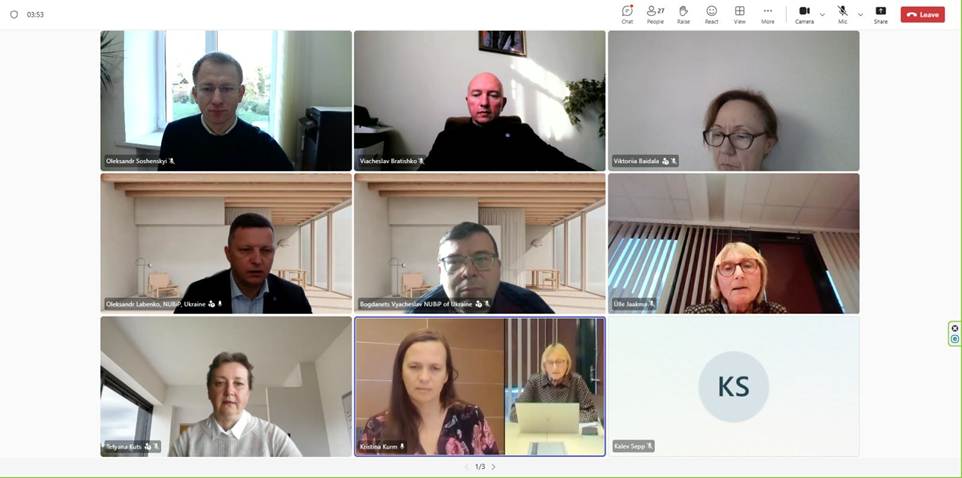
Equally important was the discussion of institutional cooperation mechanisms. The relevant block included EMU vice-rector for academic affairs, professor Endla REINTAM, EMU chief specialist for international relations Karoli KÕIV, head of the international projects department of NUBiP of Ukraine, associate professor of forestry Oleksandr SOSHENSKYI, and head of the international relations department Maksym KLYMENKO.
The parties discussed the further development of academic mobility for students and academic staff under the Erasmus+ KA171 program, prospects for participation in subsequent grant cycles, as well as opportunities to involve a wider range of faculties and educational-scientific institutes in international educational initiatives.
The development of interaction with Euroleague for Life Sciences (ELLS), a European alliance of natural science universities that unites higher education institutions around common educational, research, and innovation initiatives, was also an important topic of dialogue. NUBiP of Ukraine is interested in deepening cooperation with the alliance universities and counts on the support of Estonian colleagues in developing relevant institutional contacts.
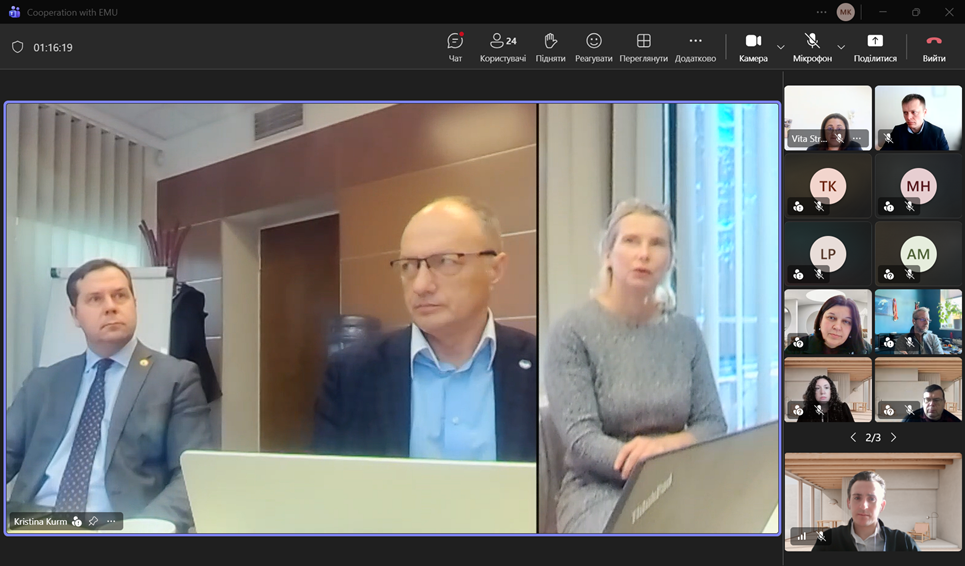
The results of the working meeting were summarized by the head of the international relations department of NUBiP of Ukraine, Maksym KLYMENKO, who noted the high level of interest and substantive interaction between the scientific teams of both universities.
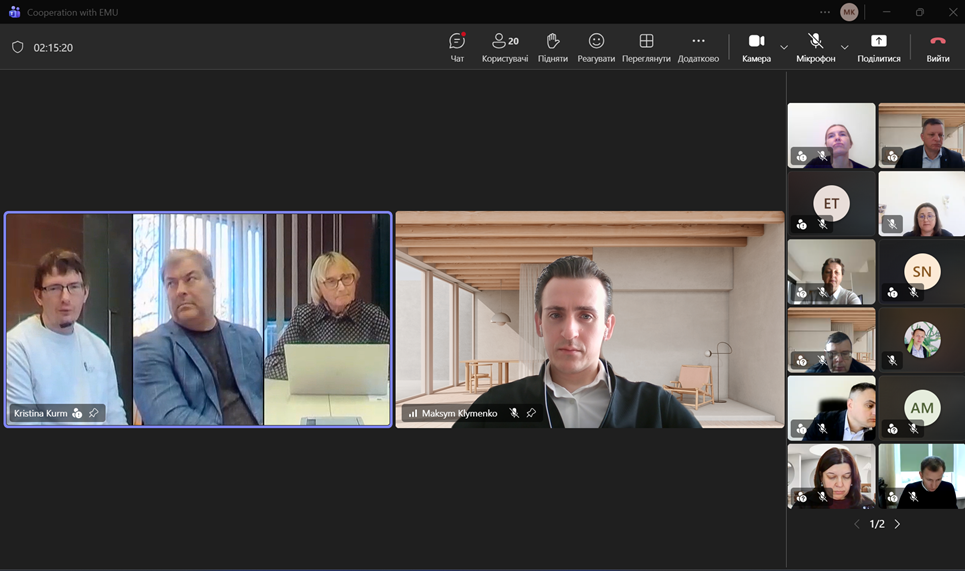
He emphasized that cooperation with the Estonian University of Natural Sciences already has concrete practical content: a joint project application under the COST Actions program, partnership in the BIOEASTWIDE consortium, prospects for expanding academic mobility within Erasmus+ KA171, and new opportunities for establishing connections with European university networks.
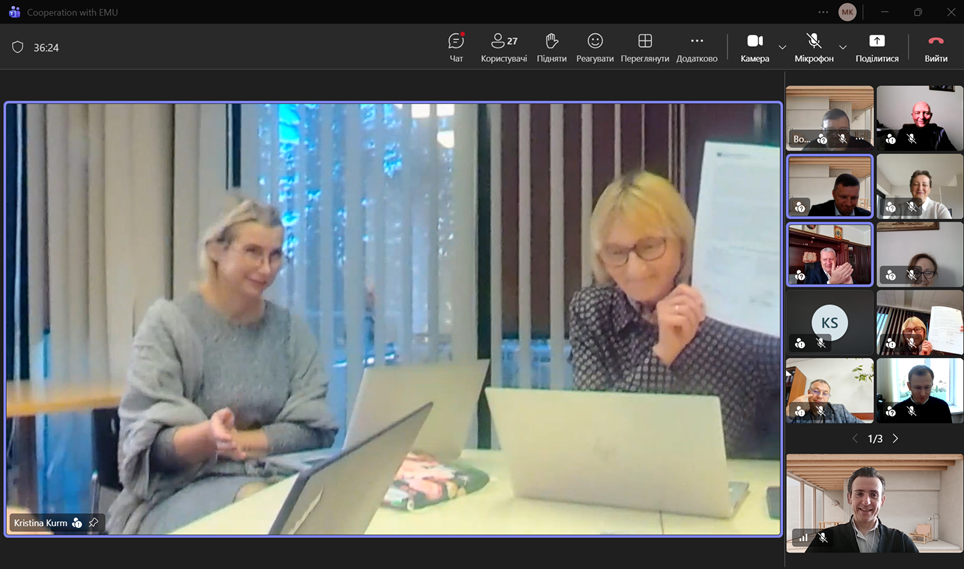
The signing of the Memorandum of Understanding (MoU) at the beginning of the meeting marked an important stage in the institutionalization of these efforts, and the direct involvement of relevant faculties, educational and scientific institutes, and research units is a guarantee of filling the partnership with real scientific and educational outcomes.
The meeting confirmed that the cooperation between NUBiP of Ukraine and the Estonian University of Life Sciences is reaching a qualitatively new level — from the exchange of scientific ideas to the formation of joint research teams, the implementation of international projects, and the development of a long-term strategic partnership.
For NUBiP of Ukraine, this is another important step towards deepening integration into the European research area, strengthening the university's international presence, and attracting European experience and resources for Ukraine's sustainable development.