Scientists of NUBiP of Ukraine at LandNET 2026 on the sustainability of land administration and artificial intelligence
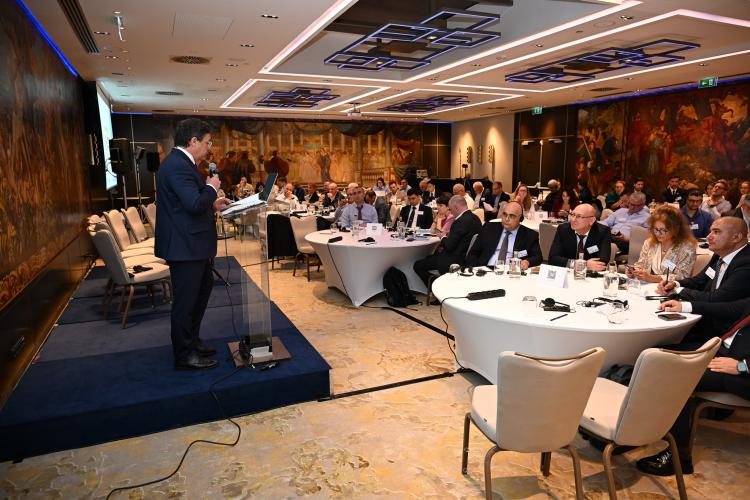
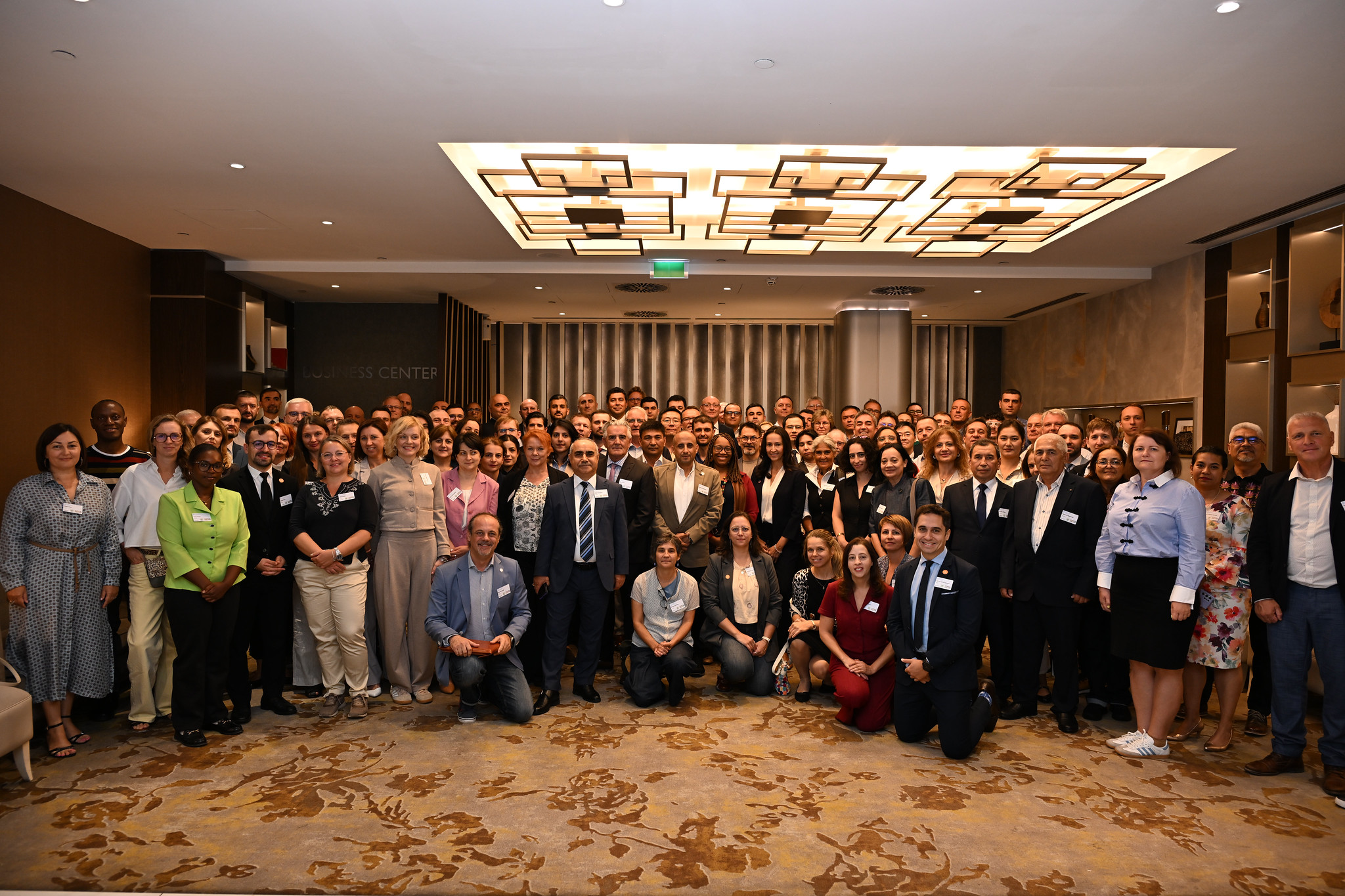
On September 08-10, 2026, the 17th LandNET International workshop was held in Budapest together with the second interregional dialogue on family farming. The National University of Life and Environmental Sciences of Ukraine was represented by professors Taras YEVSYUKOV, head of the department of geodesy and cartography, and Andriy MARTYN, head of the department of land management design. Their speeches focused on issues that increasingly affect the future of rural areas: how to maintain the effectiveness of land institutions during the crisis and how to use new technologies to improve land management.
LandNET — an international professional community and a network for the exchange of practical experience in the field of land relations, which is supported by Regional Office of the Food and Agriculture Organization of the United Nations (FAO) for Europe and Central Asia. It brings together more than 300 specialists from more than 40 countries: scientists, government officials, civil society and the private sector. Since 2002, within the framework of this cooperation, regional meetings have been held on land consolidation, land banking, public land management, land market development and overcoming agricultural land neglect.
The importance of LandNET lies in the ability to professionally compare solutions that have already been tested in different countries. The legislative model requires a clear procedure, high-quality data, and the trust of land owners. Communicating researchers with those who apply these procedures on a daily basis helps identify their weaknesses and identify the conditions under which someone else's experience can be useful. For family farms, this has a very specific meaning: access to land, secure use of it and the ability to plan work for years to come.
This year, LandNet's combination with interregional dialogue has expanded the exchange between Europe and Central Asia and Latin America and the Caribbean. Participants discussed access of young people and rural women to land, generational continuity in family farming, land reforms and multifunctional land consolidation. Special attention was paid to its use for water management, nature restoration and infrastructure development.
Scientists of NUBiP of Ukraine consistently participate in this work, presenting research results, land reform experience, and approaches to training land managers. In 2025 Taras YEVSYUKOV was unanimously elected a member of the LandNet management board for a three-year term. This showed the trust of the professional community in the Ukrainian scientist and expanded the University's ability to participate in determining the directions of the network's activities.
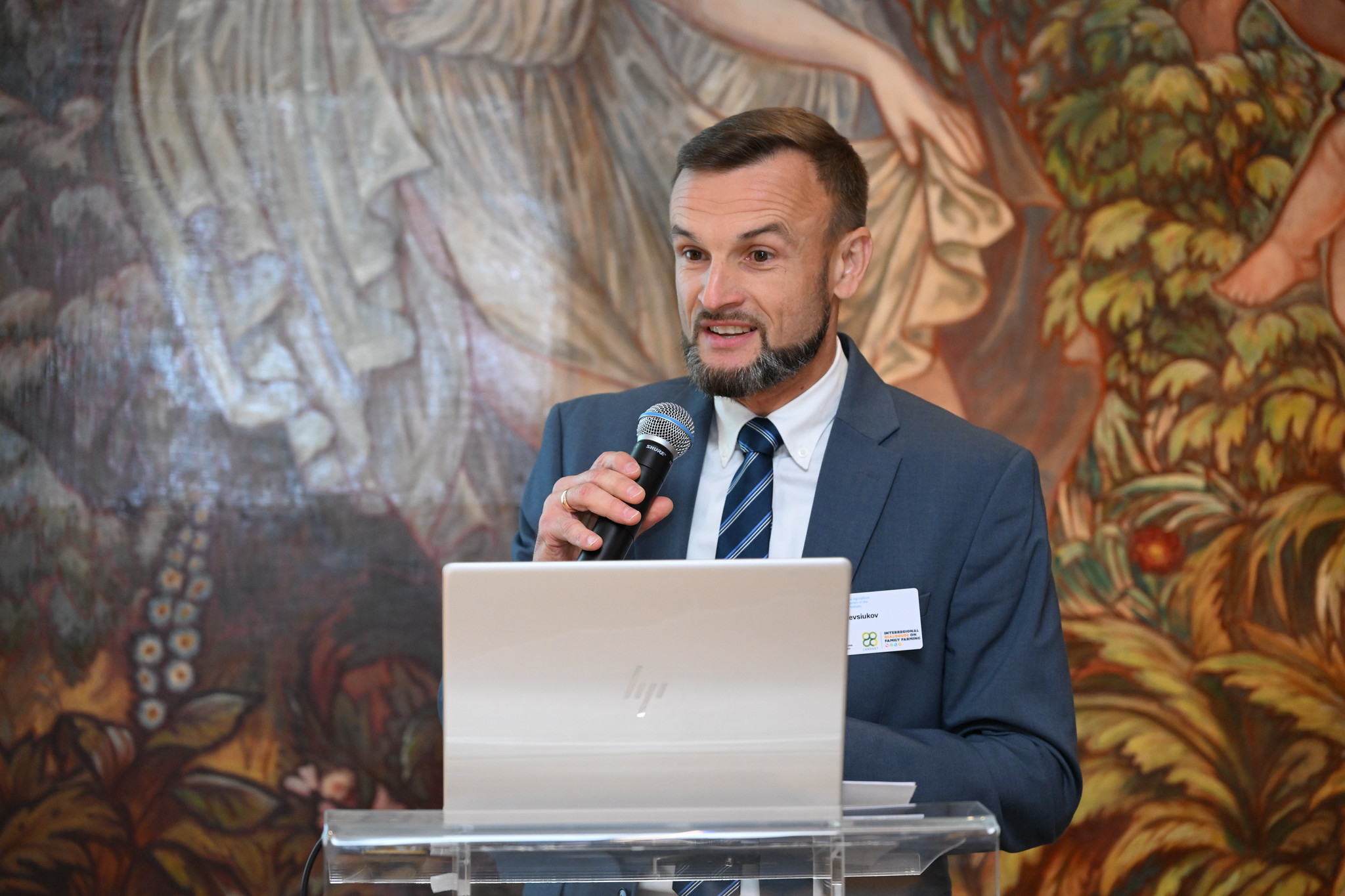
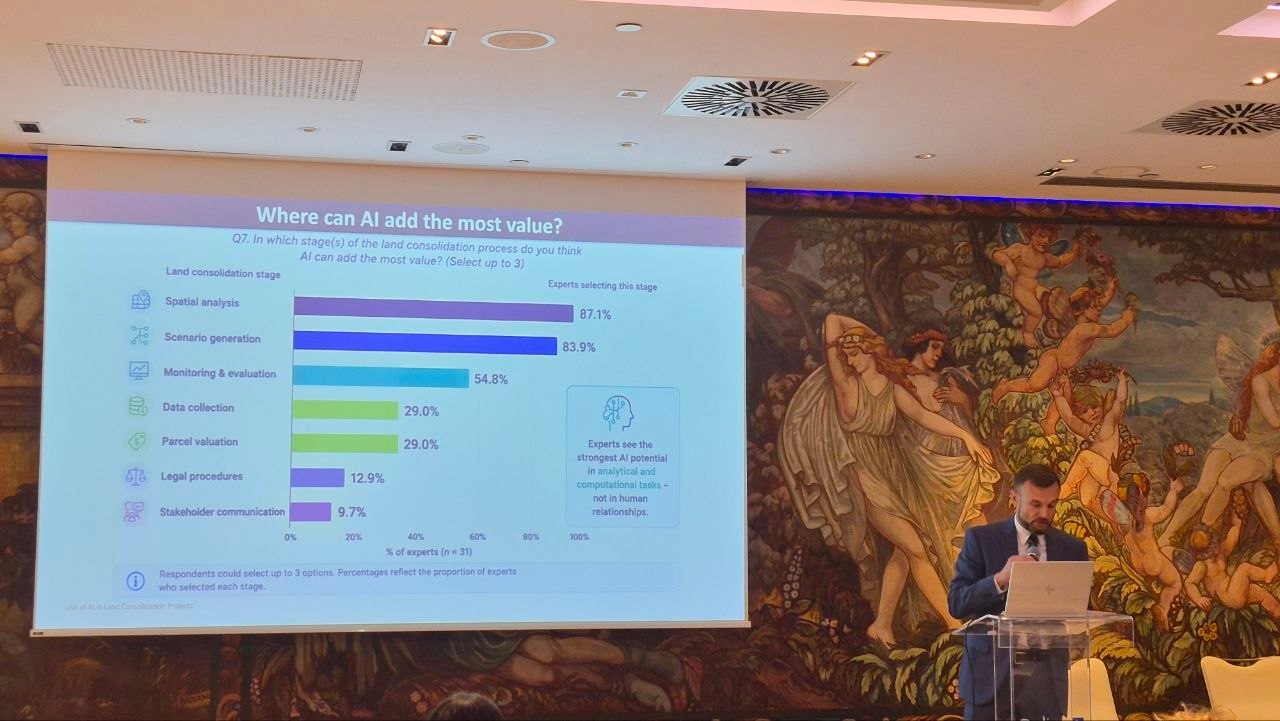
On September 10, during a session on new approaches to land consolidation and land banking, professor Taras YEVSYUKOV together with Ela Ertunç, associate professor of Konya Technical University, Turkey, submitted a report «The use of artificial intelligence in land consolidation projects». The authors started a joint study of this area and identified the most promising areas of AI application in the process of preparing and implementing such projects.
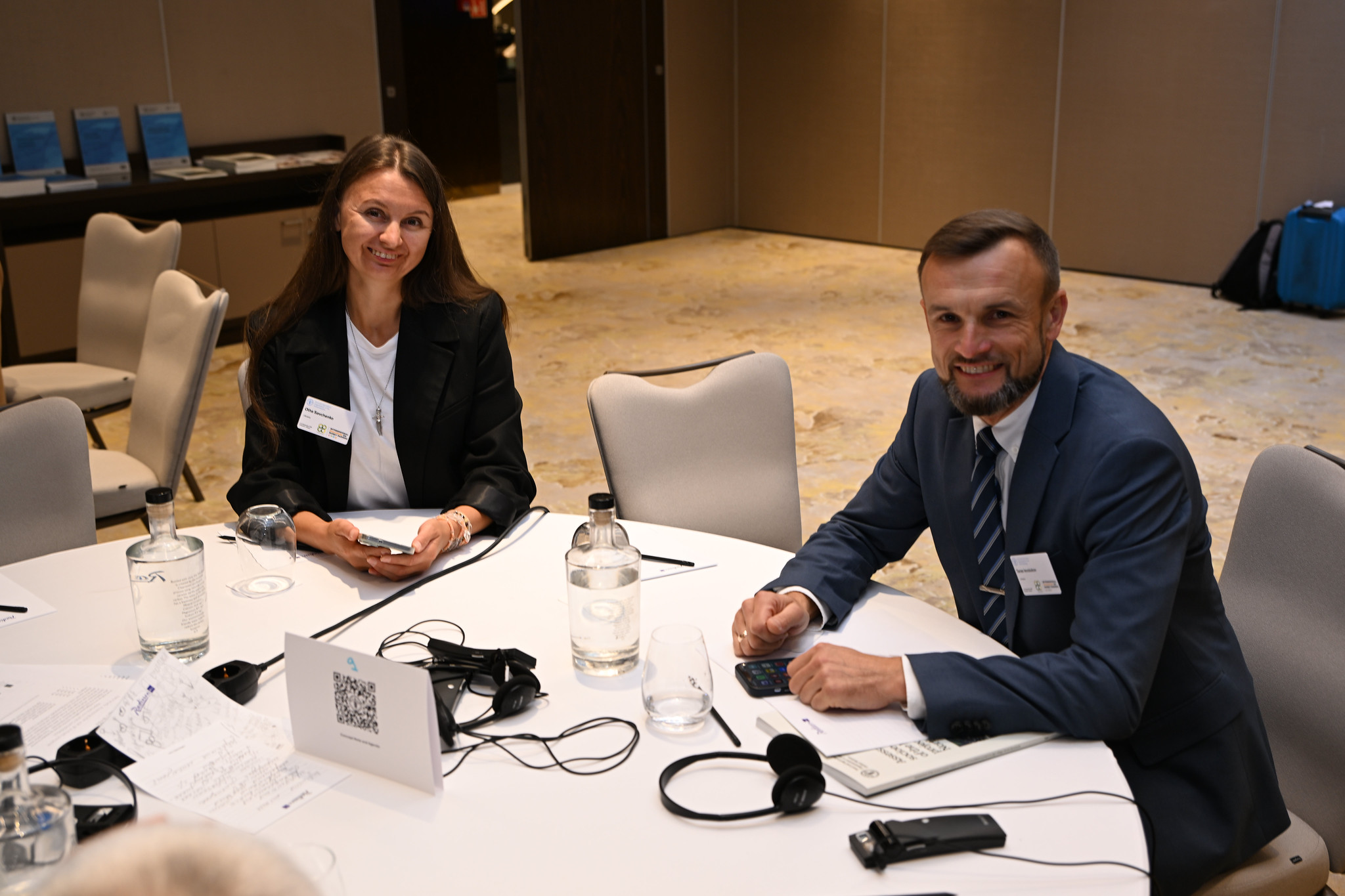
For land management, this topic is particularly difficult. Consolidation involves a coordinated redistribution of land plots to overcome their fragmentation and improve business conditions. When designing, you need to take into account the characteristics of land, access to roads and water, the cost of land plots and the interests of many owners. It is the abundance of interrelated conditions that makes this area important for studying the capabilities of artificial intelligence.
Joint Ukrainian-Turkish work paves the way for a substantive test of where intellectual methods can facilitate the work of a land surveyor. For further research, it is important to evaluate their benefits in processing initial data, comparing reallocation options, and analyzing the consequences of design decisions. The quality criterion for such an application should be the validity and clarity of the results for the specialist and landowner. Decisions that affect property rights require professional verification and a transparent approval procedure.
This topic was discussed alongside the socio-economic results of consolidation in North Macedonia, lessons from pilot projects, and land fragmentation issues in Mexico. This context set an important benchmark for technological research: their value will be determined by how much they will help solve real land use problems.
The participants were particularly interested in the professor's report made by Andriy MARTYN «Strengthening the sustainability of land management and land administration systems for agriculture in Ukraine in crisis conditions». It opened the thematic session, which also presented Colombia's experience in land management in armed conflict and current challenges to land administration in Brazil.
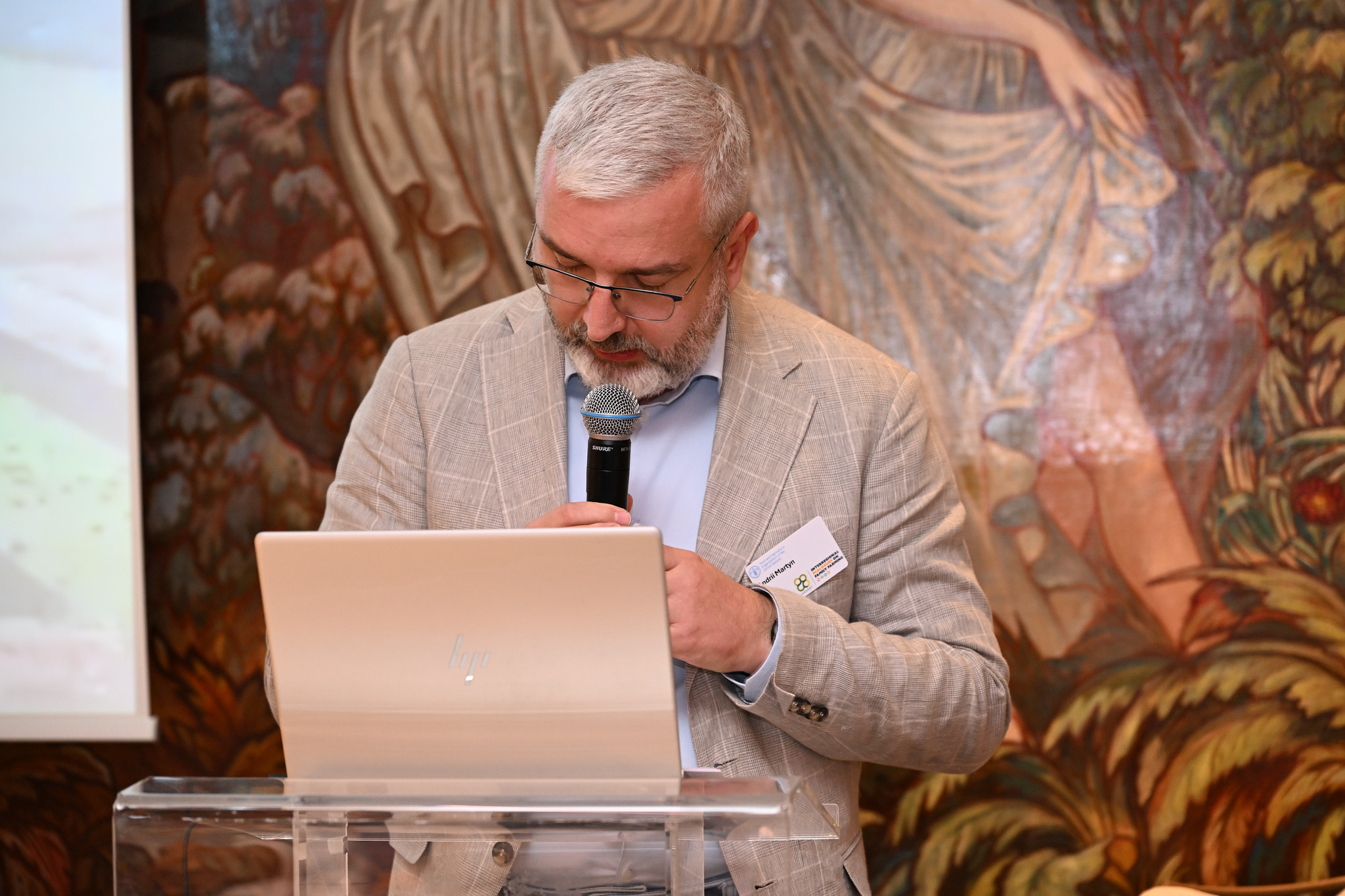
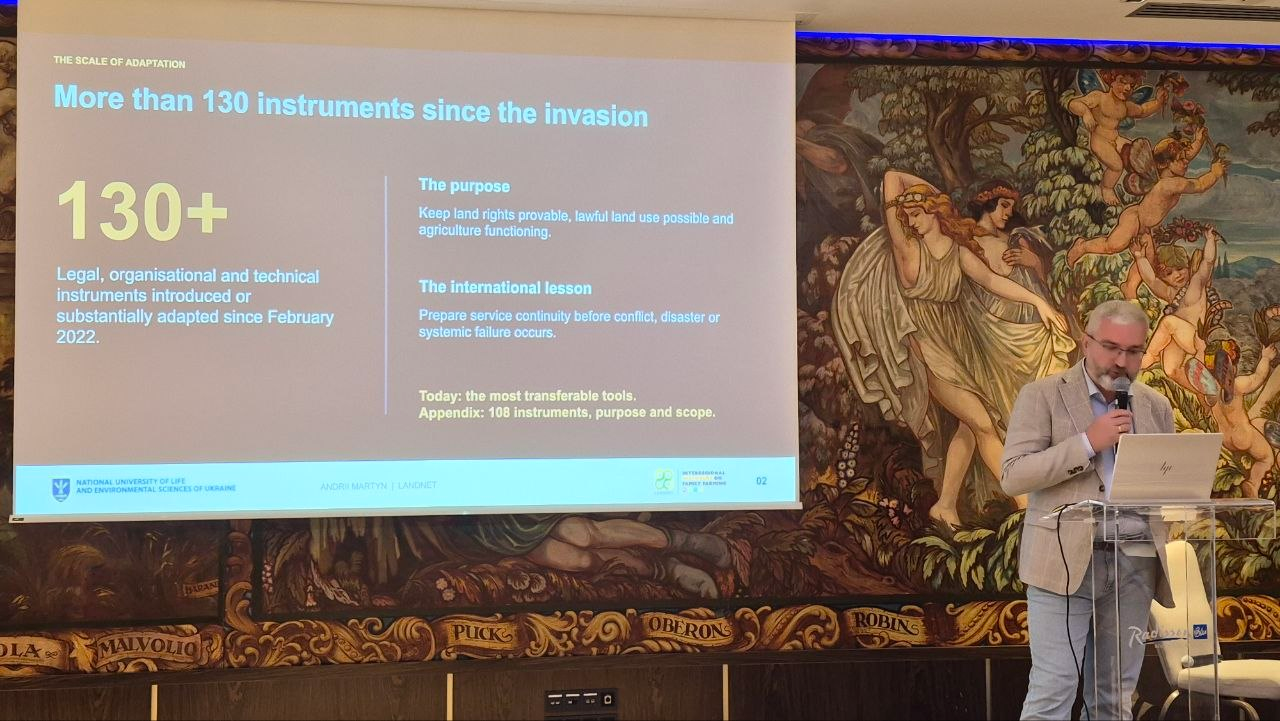
Andriy MARTYN presented the results of systematization of more than 130 legal, organizational and technical tools introduced or significantly adapted in Ukraine since the beginning of the full-scale russian invasion. They cover the preservation of register information, maintenance of land services, protection of the rights of displaced persons, ensuring agricultural production and preparing for the restoration of territories. The report focused on solutions that other countries can take into account in advance in their own crisis preparedness plans.
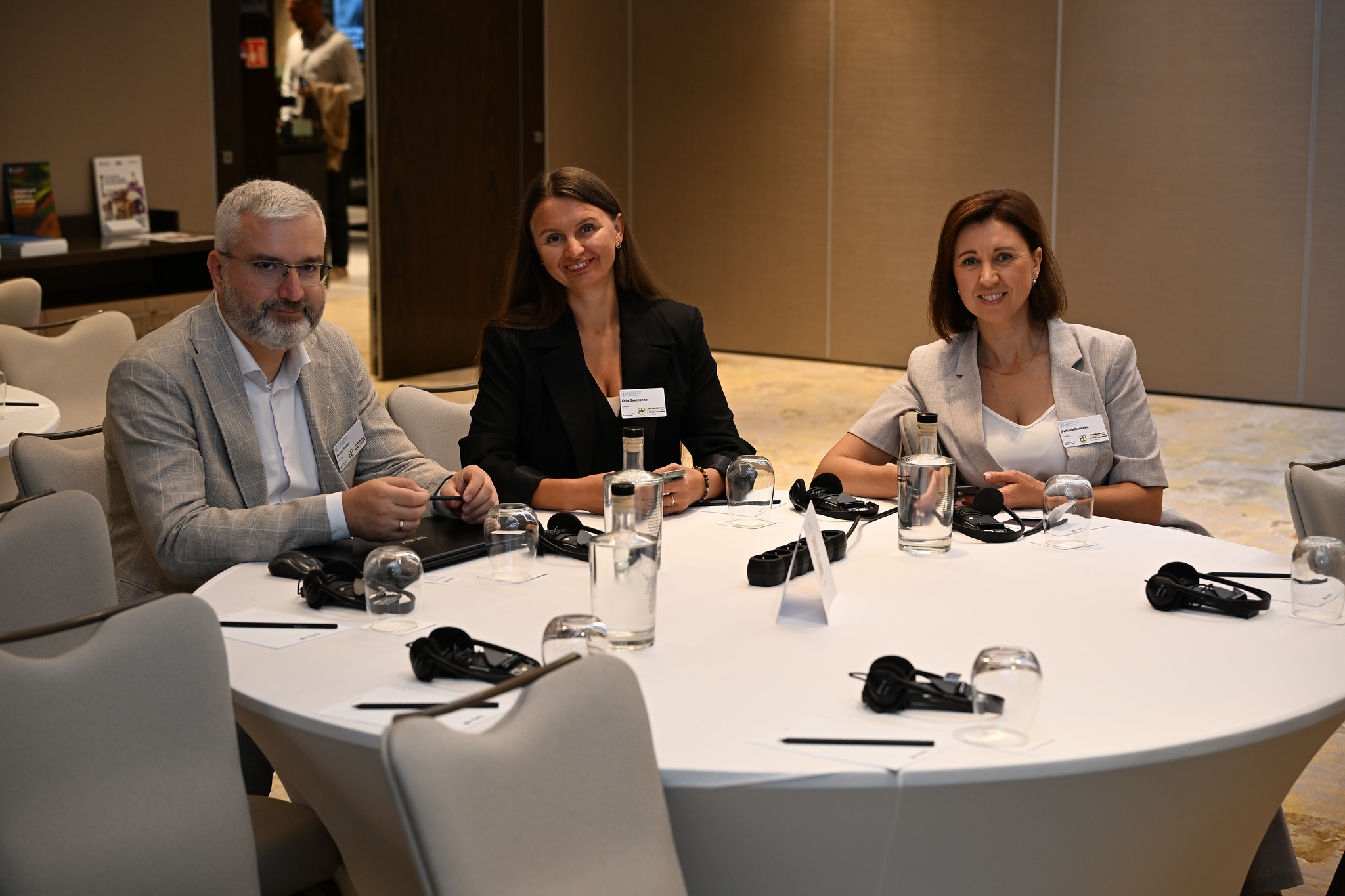
One of the main conclusions of the Ukrainian experience is that during the crisis, the importance of land administration increases. Stopping registries may be an initial measure of protection against cyber- attacks, but long-term suspension of services creates new risks for the economy and citizens. Agricultural production depends on seasonal deadlines: a delay in the registration of land rights may mean the loss of the opportunity to sow it. Therefore, the state should determine in advance the list of services that should remain available even in the most difficult circumstances.
Practical recommendations related to storing secure copies of data in physically isolated locations, digitizing title documents in advance, and checking the ability to restore information systems. Equally important are the legally valid backup procedures for the period of unavailability of central registers and the procedure for further making temporary entries in them. A stored database becomes fully valuable when a person can again get a legitimate and affordable service based on it.
The international interest in this presentation is explained by the universality of the issues raised. Ukraine has gained its experience during the war, but the register may also become unavailable due to flooding, an earthquake, a man-made accident or a cyberattack. For various reasons of disruption of the work of institutions, related questions arise: how to preserve evidence of rights, who will continue to provide services, what procedures will have legal force, and how to return to full-fledged work. For many countries, Ukrainian developments are material for preparation, which can still be carried out before the onset of an emergency.
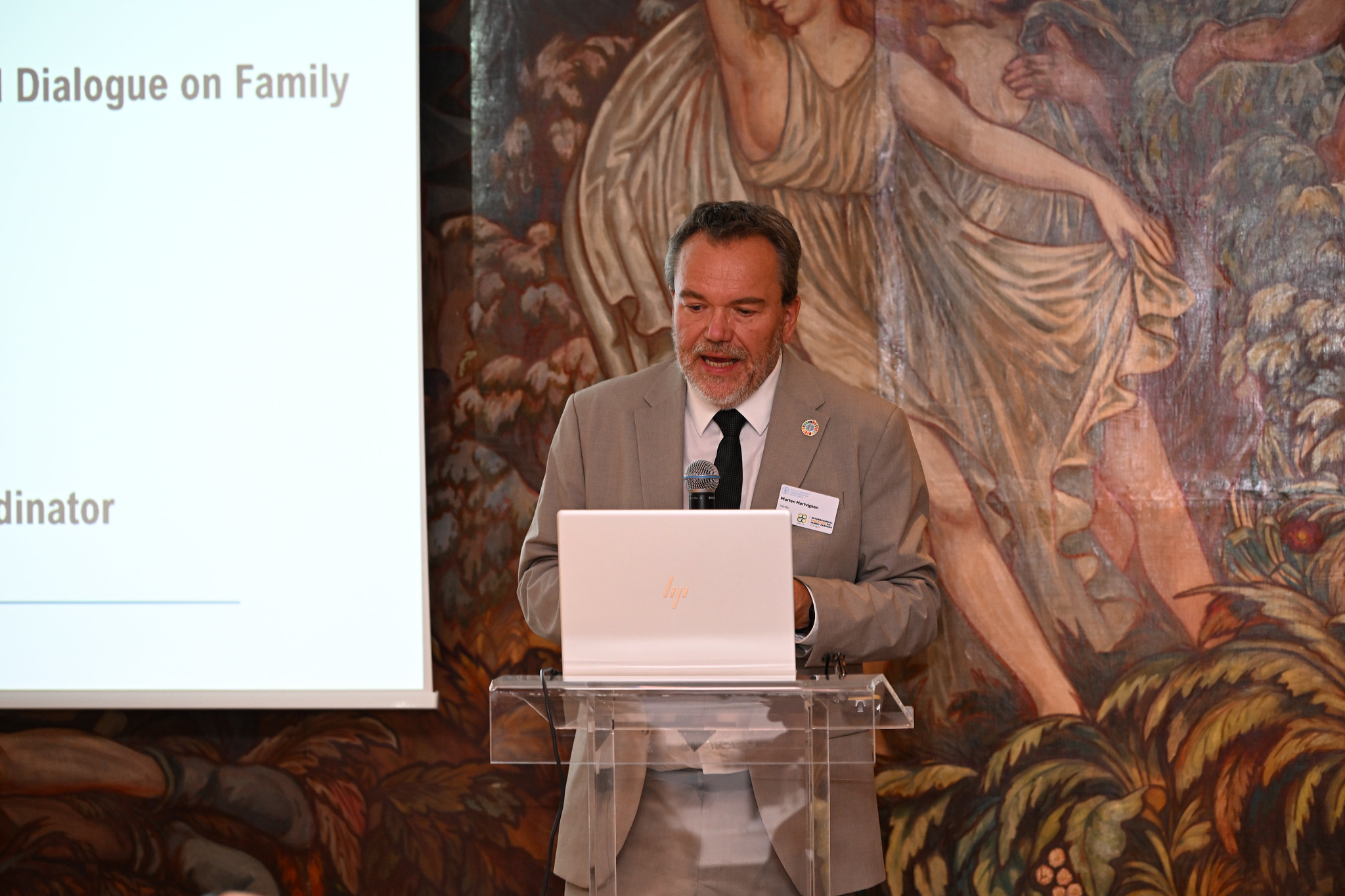
In discussions with NUBiP scientists, these issues were addressed in connection with the broader objectives of land policy — access to land, trust in institutions and the viability of family farming. The Ukrainian experience gives grounds to assess the stability of the system by its ability to provide a specific action: confirm the right, register the use of the site, preserve evidence of damage, or make a decision necessary to resume production.
Participation in LandNET 2026 continued the work of NUBiP of Ukraine in the international community of land relations specialists. Joint research with a Turkish colleague, discussion of the experience of different countries and presentation of Ukrainian crisis response mechanisms create the basis for the following scientific and educational tasks of the University. Of particular importance is the ability to transform the experience gained by Ukraine in extremely difficult circumstances into knowledge that will help other societies better protect land rights and preserve working conditions on the land.