

Practical Training on Close-to-Nature Forest Management for Students and Forestry Professionals
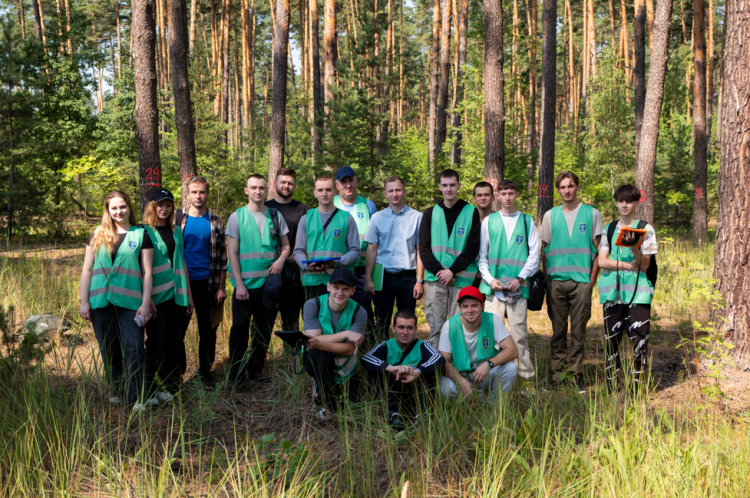
On 13 July 2026, a practical training session for students and forestry professionals was held at the Boyarka Forest Research Station of the National University of Life and Environmental Sciences of Ukraine (NUBiP of Ukraine). The training focused on planning silvicultural interventions based on the principles of close-to-nature forest management. Participants learned how to make informed decisions on selecting trees to retain for future growth and those to be removed, taking into account various forest management objectives, including biodiversity conservation, increasing timber value, maintaining the recreational functions of forests, and enhancing forest resilience.
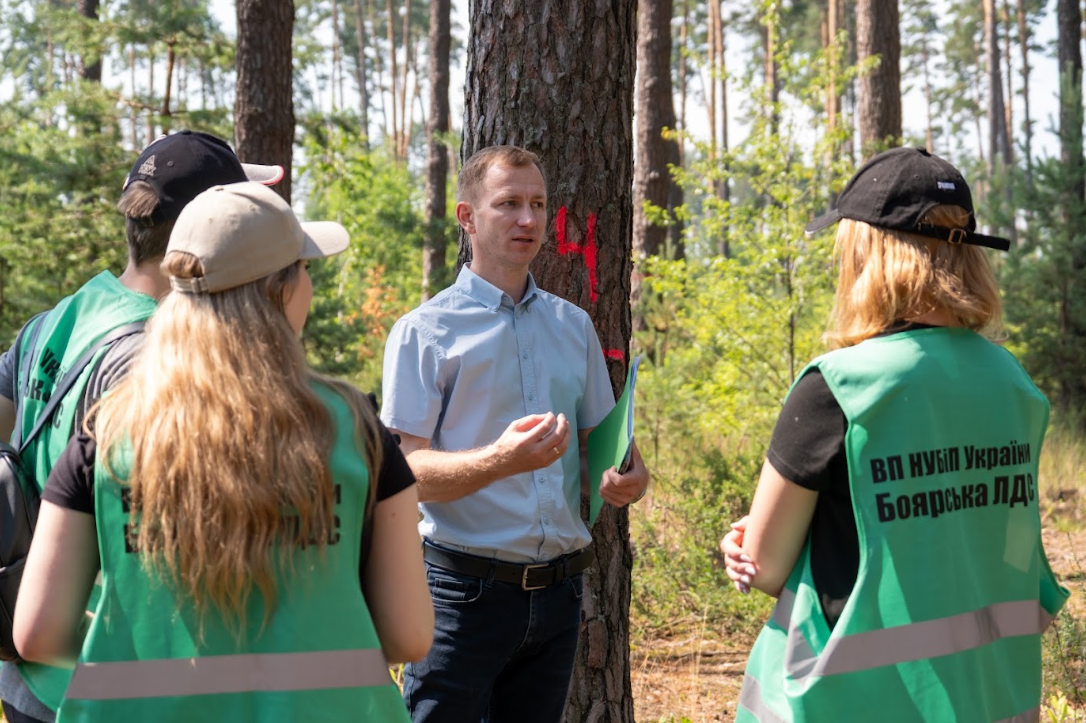
The training was organized within the framework of the international project From Crisis to Resilience with Close-to-Nature Forest Management in Ukraine, funded by the Swiss foundation VELUX STIFTUNG. The project was launched in September 2025 and will run until August 2029. It is coordinated by the Bern University of Applied Sciences (BFH-HAFL, Switzerland). The Ukrainian project partners include WWF-Ukraine, the National University of Life and Environmental Sciences of Ukraine, the FORZA Agency for Sustainable Development of the Carpathian Region, the Ukrainian National Forestry University, and Polissia National University. The project aims to promote close-to-nature forest management practices, establish a network of marteloscopes and demonstration plots, strengthen professional capacity, and facilitate knowledge exchange between Ukraine and Switzerland.
The practical exercises were conducted on educational marteloscope plots established in the forests of the Boyarka Forest Research Station. A marteloscope is a specially prepared forest plot where every tree has been mapped and measured, enabling participants to practice tree selection while immediately assessing the consequences of their management decisions. The training was carried out in two different forest stand types.
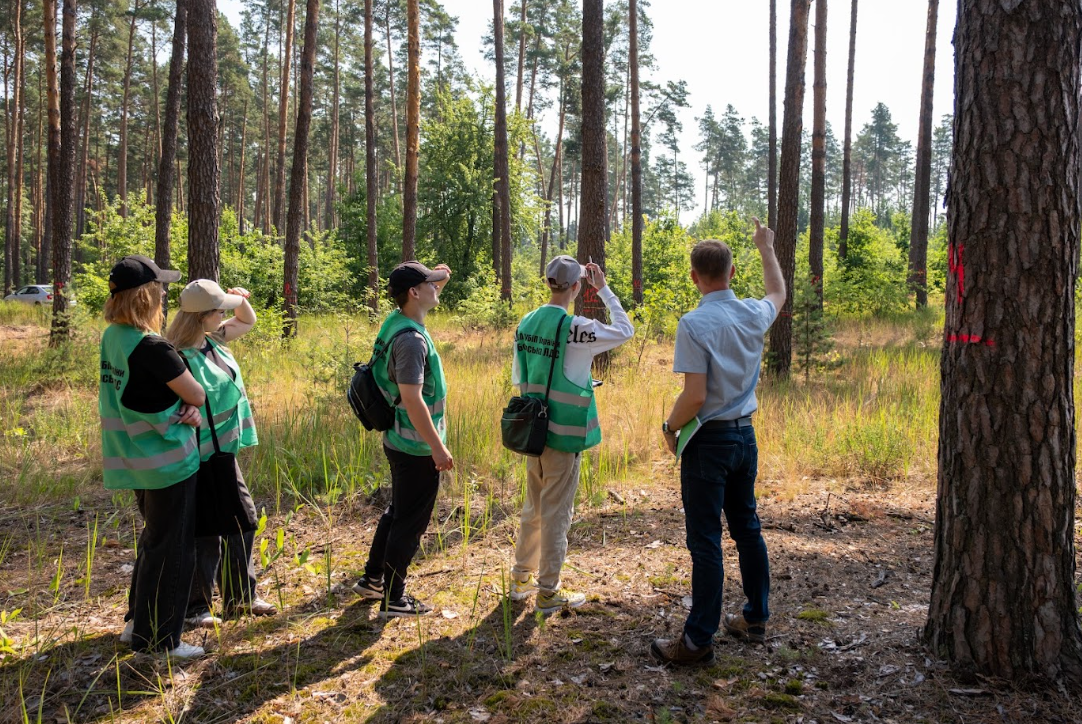
The first training plot was a 92-year-old pure Scots pine stand undergoing transformation cutting. The main objective was to assess the existing natural regeneration and identify the silvicultural measures required to establish the next forest generation while maintaining continuous forest cover in accordance with the principles of close-to-nature forest management.
The second plot was a mature 123-year-old mixed Scots pine–oak stand. Here, participants analysed the stand structure, assessed individual trees, and selected the most appropriate silvicultural interventions while balancing economic objectives with ecological considerations.
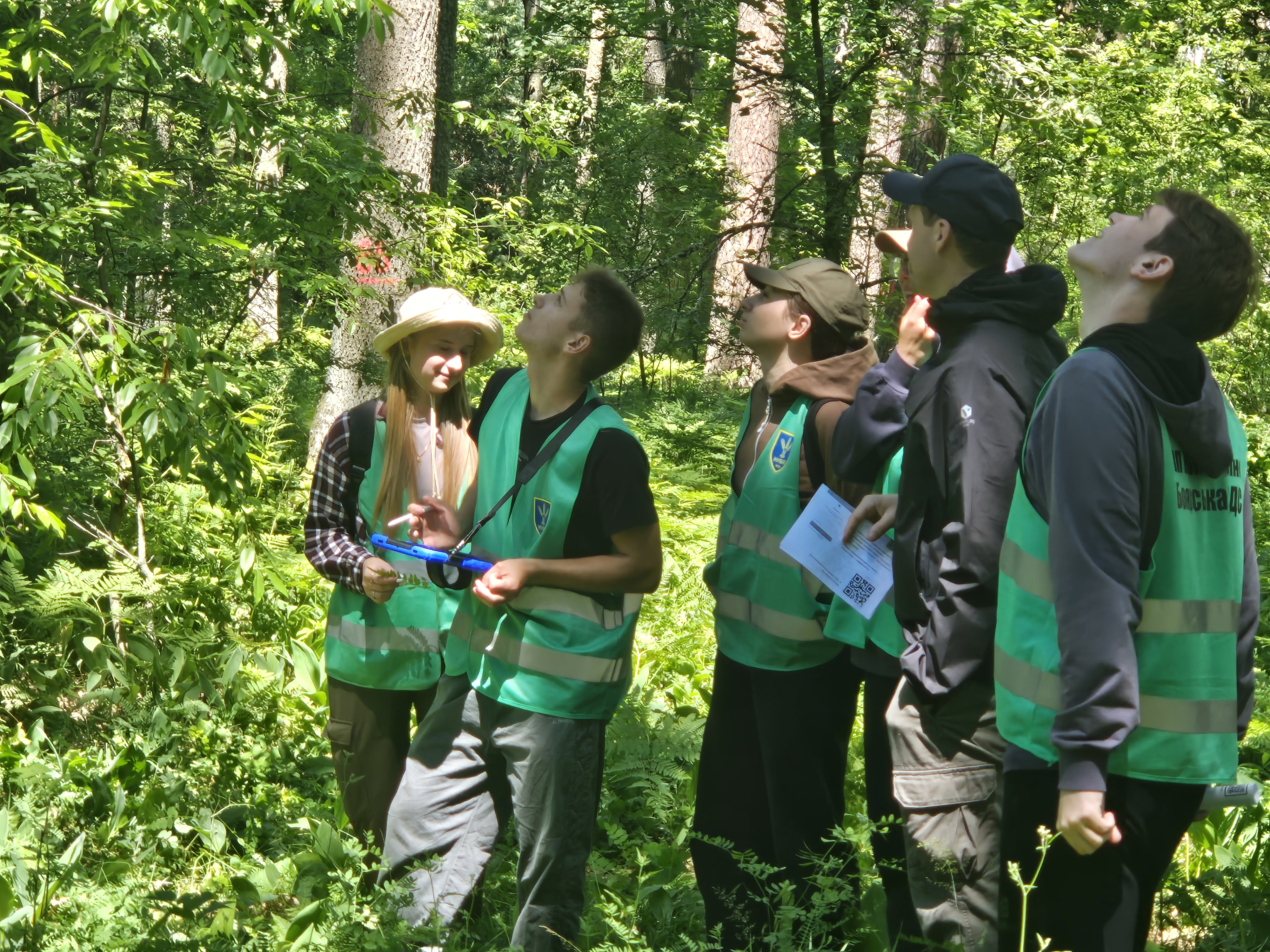
The training pursued two main objectives: promoting modern close-to-nature forest management practices and developing practical skills in planning silvicultural interventions that ensure a balanced provision of the economic, ecological, and social functions of forests
A distinctive feature of the training was the use of the digital platform martelage.sylvotheque.ch (MSC), developed by the Bern University of Applied Sciences, the coordinating partner of the project. The platform combines tree-selection exercises in marteloscopes with 360-degree panoramic images (photospheres), allowing users to compare forest stands before and after interventions and evaluate the impact and effectiveness of silvicultural decisions. Using the MSC Mobile application, participants marked selected trees directly in the field, identifying which trees should be retained for future growth and which should be harvested. The application instantly generated tables and graphs, enabling participants to analyse how their decisions would affect the future stand structure, timber volume, and key ecological indicators.
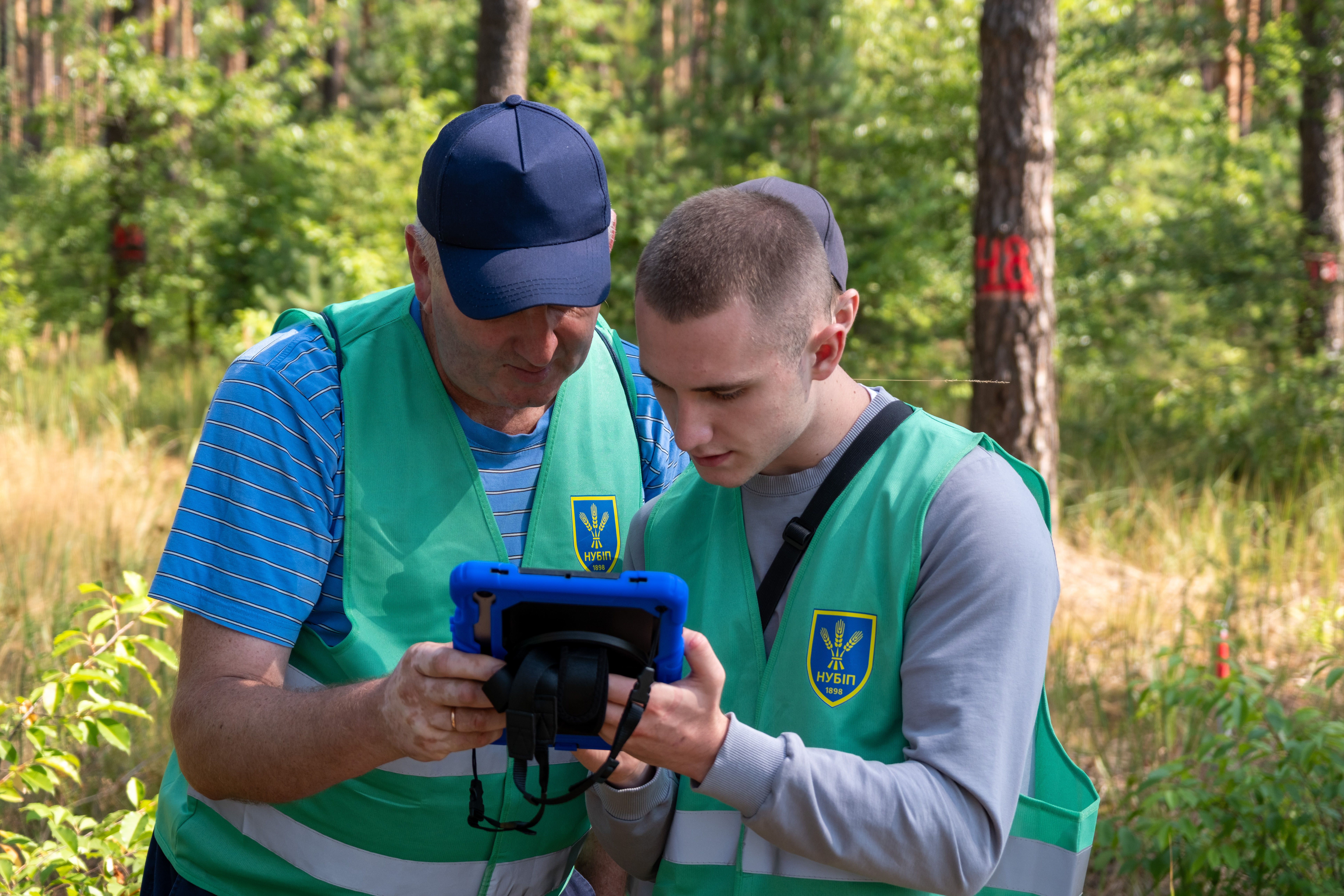
The training was conducted in the form of lively discussions and hands-on field exercises. Students and forestry professionals actively exchanged views on alternative management scenarios, compared their decisions, and gained practical experience in applying modern digital decision-support tools for sustainable forest management.