

Energy Independence and New Professional Competencies in Focus at the Consortium Meeting within the International LIFE Project «New Skills for Nearly Zero Energy Buildings»
To achieve the objectives of the Paris Climate Agreement and implement the European Green Deal, the European Union (EU) has committed to significantly reducing greenhouse gas emissions, particularly in the energy sector. Climate change is accelerating, while the energy sector remains the largest source of emissions. Without a large-scale transition to clean energy, achieving climate targets will be impossible. Growing dependence on imported energy resources has highlighted the need to develop local, resilient energy sources and to improve energy efficiency in energy consumption.
The energy crisis caused by geopolitical disruptions, in particular Russia’s aggression against Ukraine, has underscored the EU’s urgent need for energy independence. The REPowerEU Plan explicitly emphasizes the large-scale deployment of renewable energy and increased energy efficiency, while the Energy Performance of Buildings Directive (EPBD) is designed to reduce energy consumption in the building sector, decrease greenhouse gas emissions, and support the transition toward climate neutrality.
The transition to clean energy opens significant opportunities for job creation, innovation, and improvements in citizens’ quality of life. Ensuring access to affordable and sustainable energy, as well as protecting vulnerable social groups, has become a key priority of modern social policy. At the same time, the successful implementation of relevant regulatory frameworks and initiatives largely depends on human capital. Achieving the goals set out in EU energy strategies and national programmes of Member States has led to substantial changes in the labour market—particularly in the field of renewable energy systems in buildings. One of the major challenges currently facing the European renewable energy sector is the shortage of both qualified professionals and the appropriate skills required to work with advanced technologies.
Addressing this challenge requires the implementation of comprehensive educational programmes and upskilling initiatives. The development of professional competencies will become a crucial factor in accelerating the transition to renewable energy sources and improving energy efficiency in the building sector.
In accordance with the Consortium Agreement, a scheduled working meeting of the project partners was held in Barcelona (Spain) within the framework of the project “New Skills for Nearly Zero Energy Buildings” (NS4nZEBs). The main objective of the NS4nZEBs project is to increase the number of specialists in the fields of photovoltaic systems, smart grids, heat pump deployment, energy storage systems, and local hydrogen solutions at all stages of design, operation, maintenance, and cost assessment. The acquisition of new professional skills will foster wider implementation and scaling-up of energy-efficient renewable technologies, stimulate investment, and support policies aimed at energy independence and the use of local renewable energy sources in buildings.
The event was organized by Aniol Esquerra, the leader of Work Package 4 and President of Ecoserveis (energy innovation consulting company). Participants included Paul De Schepper, Project Coordinator, The Knowledge Centre for Energy-related Research, Thomas More University (TMU), Belgium; Nina Nikolova, Sdruzhenie Kamara Na Instalatorite V Bulgariya (Association of Installers in Bulgaria), Bulgaria; Andrea Galeota, Padova Chamber of Commerce (CCIAA PD), Italy; Evelina Stoykova, Sofia Energy Centre (SEC), Bulgaria; Darko Kramer, Elisenda Clèries, and Joan Estalella, Ecoserveis, Spain; Georgia Veziryianni, Centre for Renewable Energy Sources and Saving (CRES), Greece; and Svitlana Makarevych and Olena Shelimanova, Educational and Scientific Institute of Energy, Automation and Energy Saving, National University of Life and Environmental Sciences of Ukraine.
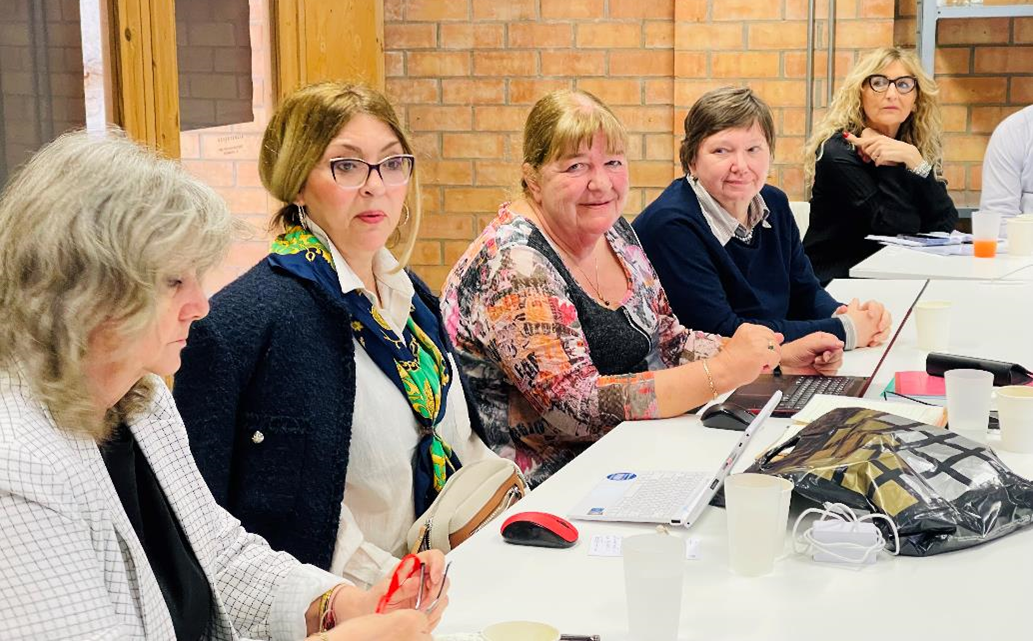
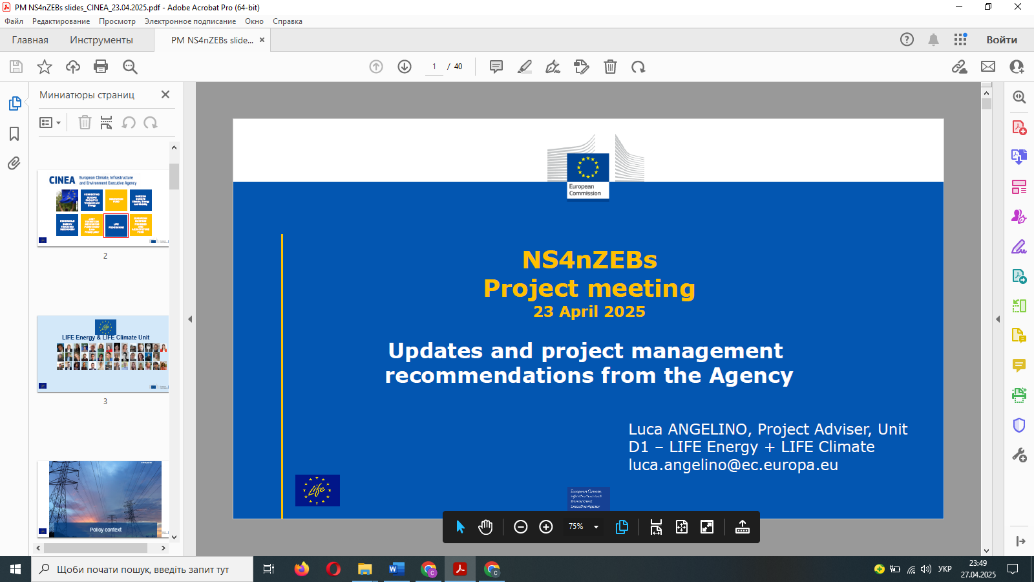
The meeting agenda included the presentation and approval of the interim report with the participation of Luca Angelino, Project Adviser at the European Climate, Infrastructure and Environment Executive Agency (CINEA). Accompanied by presentation materials, the speaker delivered the session “Updates and Project Management Recommendations from the Agency, 2025” and approved the interim results achieved by the Consortium within the framework of the project.
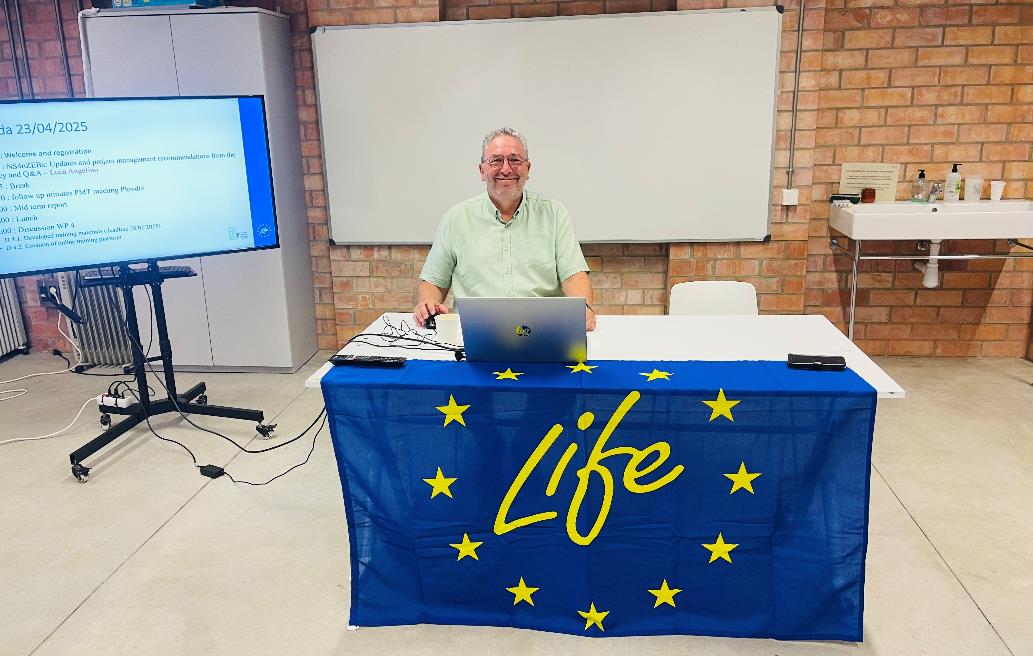
Each partner team presented the outcomes of their activities within the respective work packages and agreed on proposals for the further implementation of the project. The project coordinators highlighted the high quality and timely completion of all activities carried out by the partners from the National University of Life and Environmental Sciences of Ukraine (NUBiP of Ukraine).
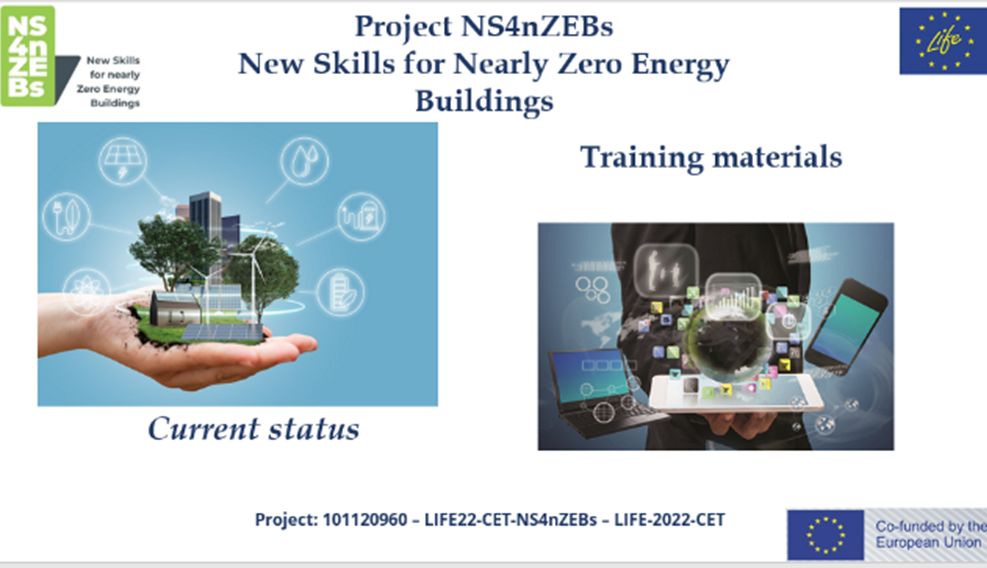
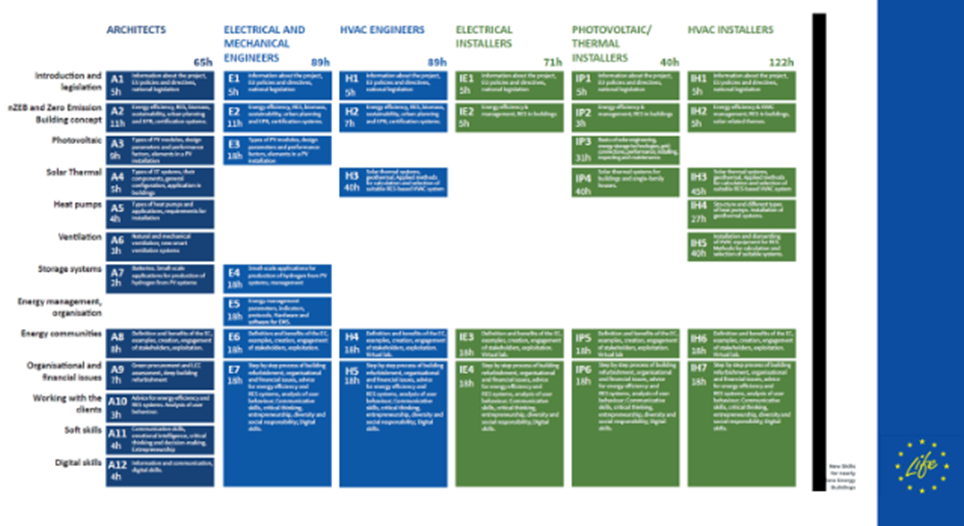
During the meeting, the following were approved: the developed digital learning materials, as well as a configured and structured course with virtual laboratories within the Learning Management System (LMS), which is fully ready for use. The final deadline for translating the materials into national languages for the Massive Open Online Courses (MOOCs) was also agreed upon, ensuring broad accessibility to new professional skills for future participants.
In addition, the partners discussed and defined the criteria for the selection of trainers for the training courses. In accordance with the Grant Agreement, all announced activities under Work Package 6 (WP6) “Sustainability, Replication and Exploitation of Project Results” were successfully completed by the Consortium members, and further timelines for the implementation of the planned actions were discussed.
We sincerely thank the organizers Aniol Esquerra and Elisenda Clèries for the meeting and their warm hospitality.