

Scientific and Practical Round Table «Building Renovation in One-Stop-Shops: Innovative Education and the Labour Market»

The National University of Life and Environmental Sciences of Ukraine (NUBiP of Ukraine) hosted the scientific and practical round table “Building Renovation in One-Stop-Shops: Innovative Education and the Labour Market” within the framework of the BUSHROSSs project (Building Up Skills for Home Renovation One-Stop-Shops).
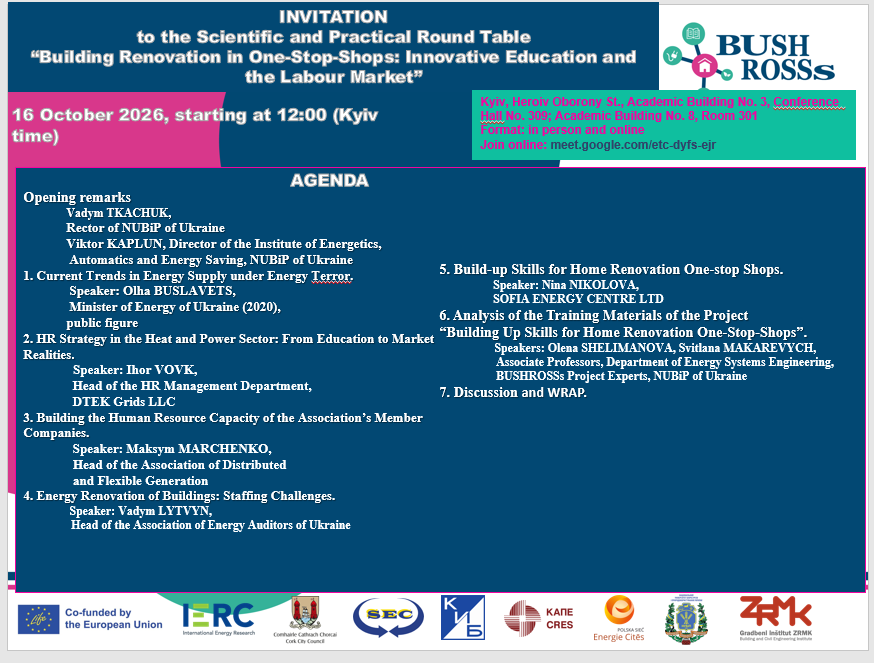
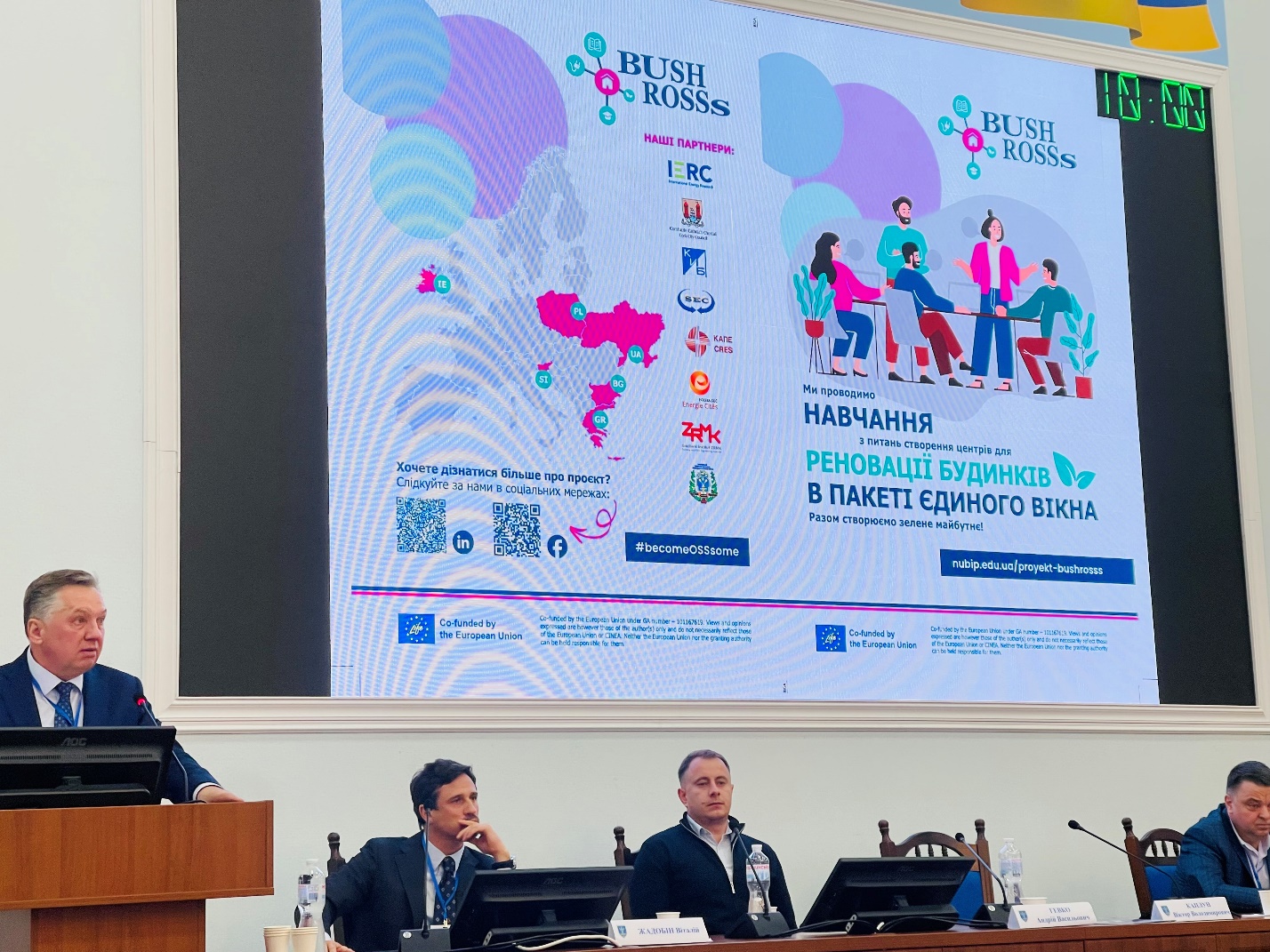
The round table brought together representatives of higher education institutions, energy companies, industry associations and international project partners. Participants discussed how the education system can respond to the staffing needs of the energy sector and the building energy renovation market. The event was moderated by Viktor Kaplun, Director of the Education and Research Institute of Energetics, Automatics and Energy Saving.
The successful implementation of the European Renovation Wave initiative requires coordinated efforts by stakeholders at all levels of governance. Only in this way can the necessary pace of energy modernisation of residential buildings be achieved. One of the key tools for accelerating this process is one-stop-shops (OSS), which bring together advisory, technical and financial services for homeowners in a single place.
At the same time, practical experience shows that organisations responsible for setting up and running such services need specialised knowledge, skills and resources. This challenge is particularly important for Ukraine. Restoring the damaged housing stock and improving the energy resilience of buildings require a large number of qualified specialists: engineers, energy auditors, economists, lawyers and social workers.
The BUSHROSSs project aims to develop the skills of professionals who establish and work in one-stop-shops for home renovation.
The participants were welcomed by Vadym Tkachuk, Rector of NUBiP of Ukraine, and Viktor Kaplun, Director of the Education and Research Institute of Energetics, Automatics and Energy Saving. They opened the discussion on cooperation between universities, businesses and industry associations in training specialists for the energy sector and building renovation.
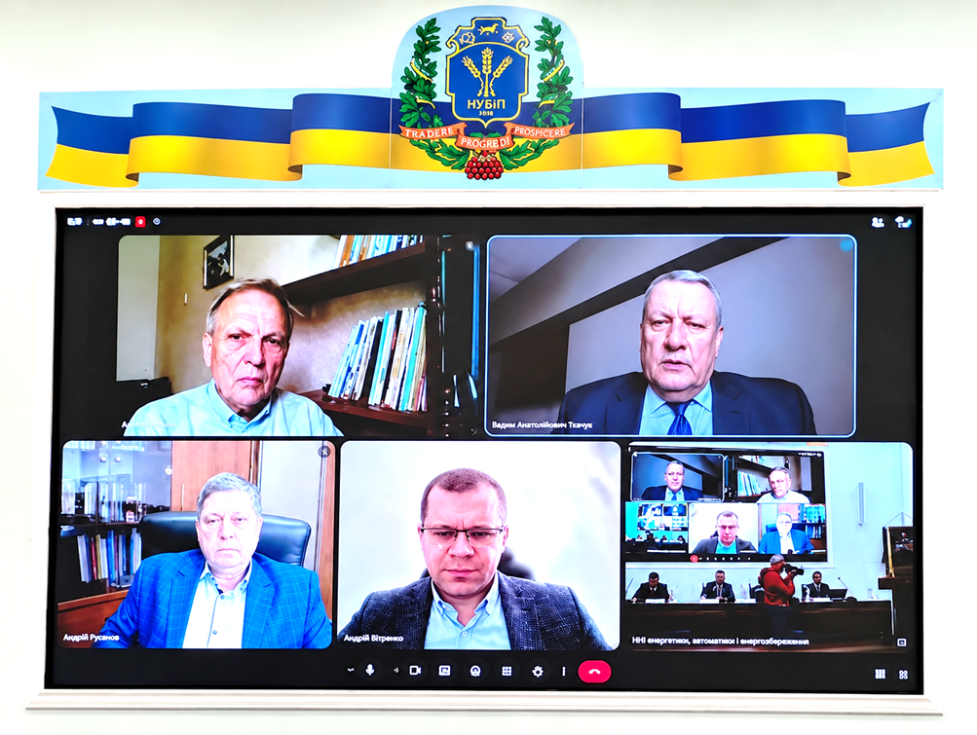
The first part of the event focused on the challenges facing the energy sector and how they affect the requirements for professional training.
Ihor Vovk, Head of the HR Management Department at DTEK Grids LLC, delivered the presentation “HR Strategy in the Heat and Power Sector: From Education to Market Realities”. It addressed the development of the industry’s talent pool and a specialist’s path from university studies to work in a company.
Oleksandr Aziukovskyi, Rector of Dnipro University of Technology, devoted his presentation “Shaping Trends in Knowledge-Intensive Professions on the Labour Market” to how demand for knowledge-intensive professions is changing and how higher education institutions can respond to these changes.
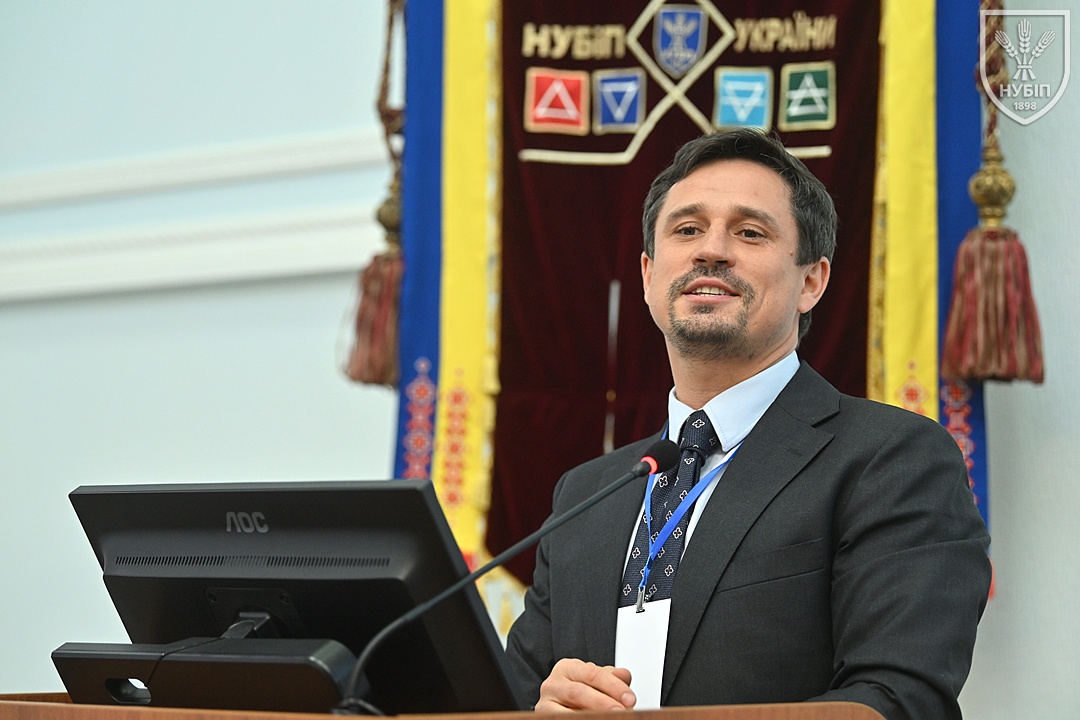
Maksym Marchenko, Head of the Association of Distributed and Flexible Generation, gave the presentation “Building the Human Resource Capacity of Distributed and Small-Scale Flexible Generation Operators”. The development of distributed generation is one of the ways to strengthen the resilience of the power system, so the need for qualified personnel in this segment is growing.
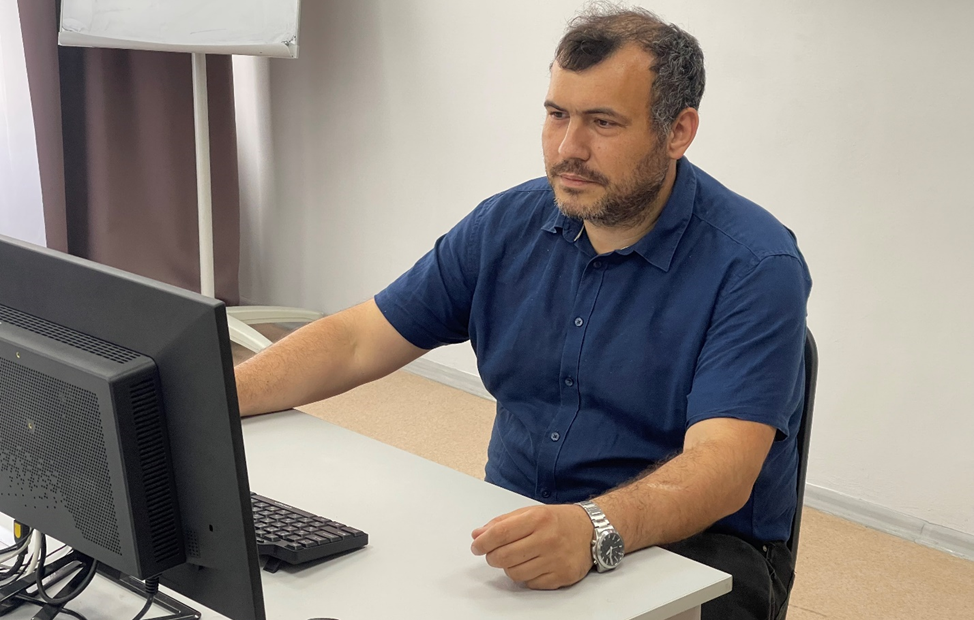
Vadym Lytvyn, Chairman of the Board of the Association of Energy Auditors of Ukraine, in his presentation “Energy Renovation of Buildings: Staffing Challenges” drew attention to workforce issues in a field directly related to the BUSHROSSs project.
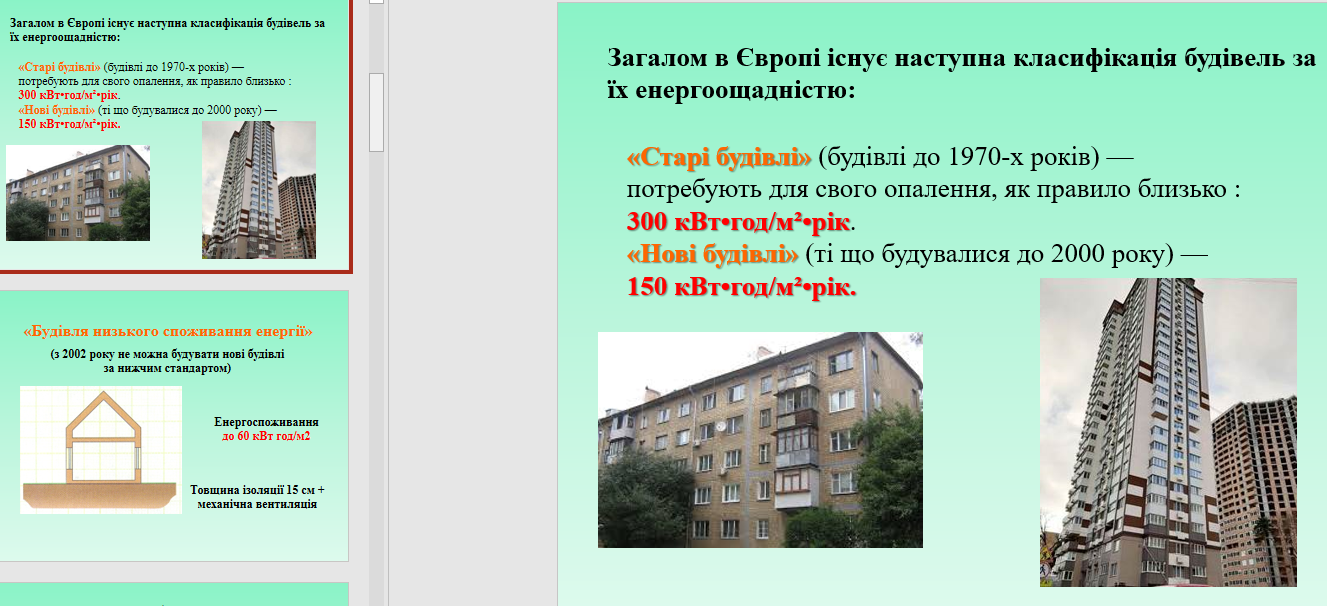
The second part of the round table focused directly on the BUSHROSSs project. Nina Nikolova (Sofia Energy Centre, Bulgaria) presented the training programmes for building renovation specialists in the one-stop-shop format.

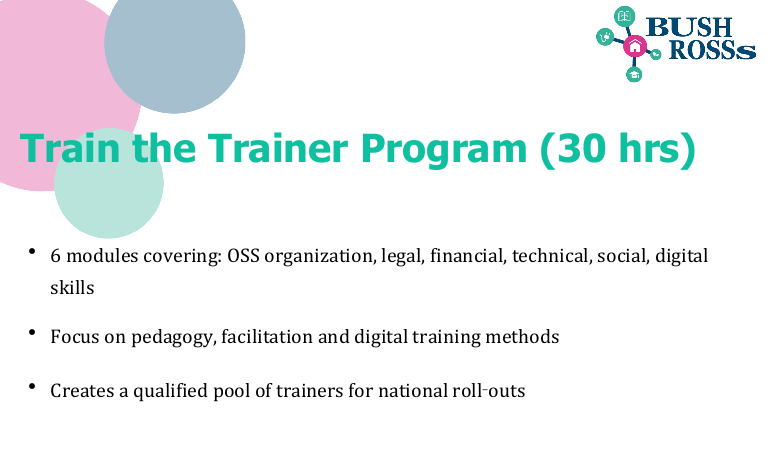
The programmes have a modular structure and are tailored to four categories of experts: economists, technical experts, legal advisers and social workers. The training covers six modules:
-
organisational aspects and financing of one-stop-shops;
-
legal aspects in line with EU legislation, to be adapted by the partners to national conditions;
-
economic and financial aspects;
-
technical aspects;
-
social aspects: inclusiveness and energy poverty;
-
soft and digital skills.
Associate Professors of the Department of Energy Systems Engineering at NUBiP of Ukraine and experts of the BUSHROSSs project working group Svitlana Makarevych and Olena Shelimanova analysed the training materials developed within the project. NUBiP of Ukraine specialists are involved in the preparation and piloting of the training modules, in particular the “Technical Aspects” module.
The presentations were followed by a general discussion, after which the moderator summarised the results of the round table. The event served as a platform for dialogue between educational institutions, energy companies and industry associations on training specialists for Building Energy Renovation.
The next stage of the project will be the pilot “Train the Trainers” session, to be held on 21–22 October 2026 in Athens (Greece). There, the partners will pilot the training programme for all four categories of experts.
Subsequently, national training courses will take place in Bulgaria, Greece, Ireland, Poland, Slovenia and Ukraine. At least 60 specialists will be trained in each of the six countries, so the project will reach no fewer than 360 professionals in total. Scaling up the training model is expected to strengthen the capacity of institutions, energy agencies and other organisations involved in the energy renovation of housing.
Svitlana Makarevych and Olena Shelimanova,
Associate Professors, Department of Power Systems Engineering,
experts of the BUSHROSSs project