

Fourth Coordination Meeting of the BUSHROSSs Project within the European Green Deal Renovation Wave Initiative
The large-scale deployment of an energy renovation wave across Europe requires coordinated efforts of stakeholders at all levels of governance to achieve the necessary rate of residential building renovation. An important role in this process is played by the establishment of One-Stop-Shop (OSS) platforms for building renovation and modernization, which can significantly accelerate the implementation of energy renovation measures.
Practical experience shows that stakeholders responsible for the operation of OSS structures in the residential renovation sector require specialized knowledge and resources to effectively establish and manage such platforms. In response to this need, the project «Building Up Skills for Home Renovation One-Stop-Shops» (LIFE BUSHROSSs) aims to develop the competencies of key institutions — national, regional and local authorities, municipalities, energy agencies and other stakeholders. This will contribute to the effective functioning of OSS platforms and provide homeowners with comprehensive support at all stages of energy renovation. This will contribute to the effective functioning of OSS platforms and provide homeowners with comprehensive support at all stages of energy renovation.
The implementation of the initiative will contribute to accelerating the pace of residential building renovation, helping to achieve the objectives of the European Green Deal, improve the level of comfort, health, and well-being of citizens, and have a positive impact on future generations.
Achieving this goal involves the development of training and capacity-building programmes, which will be piloted in the form of training courses for key stakeholders involved in the establishment and operation of OSS. Special attention will be given to the “train-the-trainers” approach, and the training will be based on a modular structure, ensuring flexibility and the ability to adapt to the specific features of energy renovation across different European countries.
According to the Grant Agreement, the fourth in-person working meeting of the project participants was held, attended by the project coordinator Padraig Lyons and Ruchi Agrawal (National University of Ireland, Cork, Ireland), as well as representatives of the partner organizations: Brian Cassidy and Michael Canny (Cork City Council, CCC, Ireland); Sdruzhenie Kamara Na Instalatorite V Bulgariya (Association of Installers in Bulgaria), represented by Ivanka Pandelieva-Dimova and Evelina Stoykova (Bulgaria); Nina Nikolova (Sofia Energy Centre, SEC, Bulgaria); Georgia Veziryianni and Eftychia Mavrou (Centre for Renewable Energy Sources and Savings, CRES, Greece); Anna Jaskuła and Izabela Kuśnierz (Stowarzyszenie Gmin Polska Sieć Energie Cités, PNEC, Poland); Marjana Šijanec Zavrl (Building and Civil Engineering Institute, ZRMK, Slovenia); as well as Svitlana Makarevych and Olena Shelimanova from the Educational and Reseasrch Institute of Energy, Automation and Energy Saving, National University of Life and Environmental Sciences of Ukraine.
The meeting began with a welcoming address by Anna Jaskuła, Executive Director of the Association of Municipalities of the Polish Network “Energie Cités.” In her speech, she welcomed the participants and emphasized the importance of implementing the project, which is aimed at upskilling and reskilling stakeholders in the field of sustainable energy development, energy efficiency, and the implementation of climate initiatives, particularly within the framework of the One-Stop Shop (OSS) service package. She highlighted that the development of professional competencies, the exchange of experience, and the implementation of effective support mechanisms will contribute to a more active deployment of modern energy solutions at the local level.
According to the pre-agreed meeting agenda, the BUSHROSSs project partners discussed the progress of the main work packages (WPs) and coordinated further tasks for the next six months.
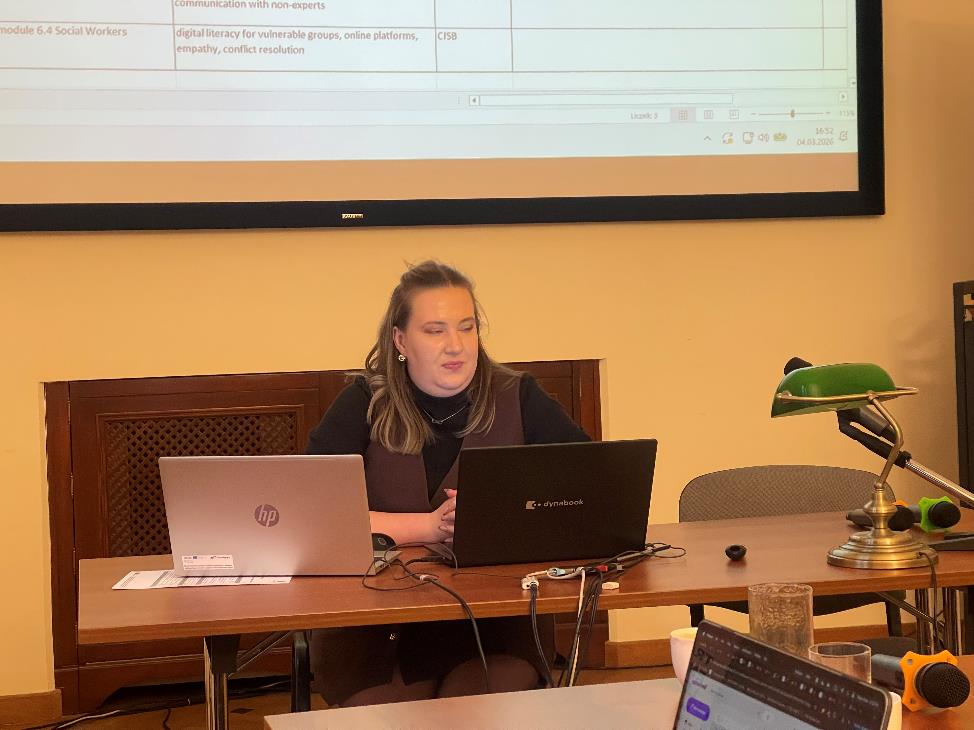
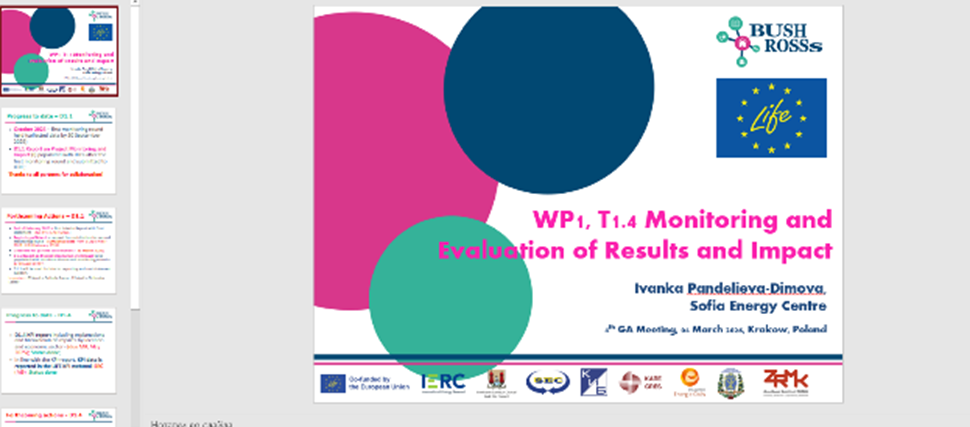
In particular, within WP1: Management, coordination, quality control, monitoring, and impact assessment, the activities of the Impact Assessment Team (IAT) and the Quality Assurance and Risk Management Team (QARMT) were reviewed, along with approaches to monitoring project outcomes and evaluating its effectiveness.
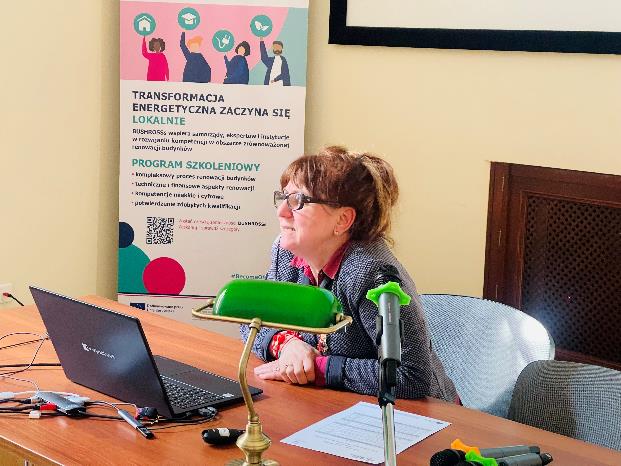
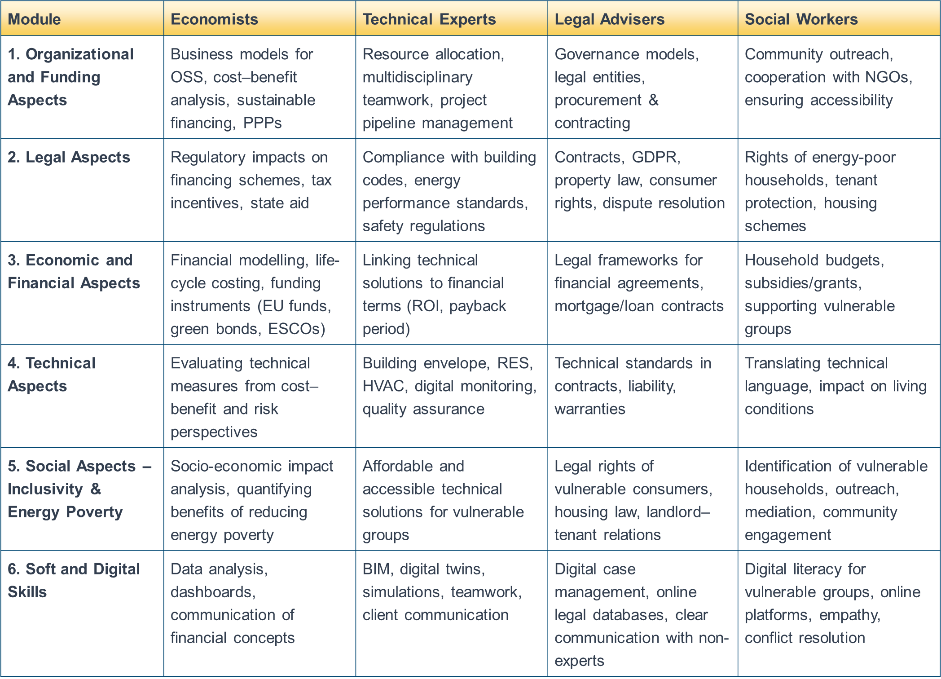
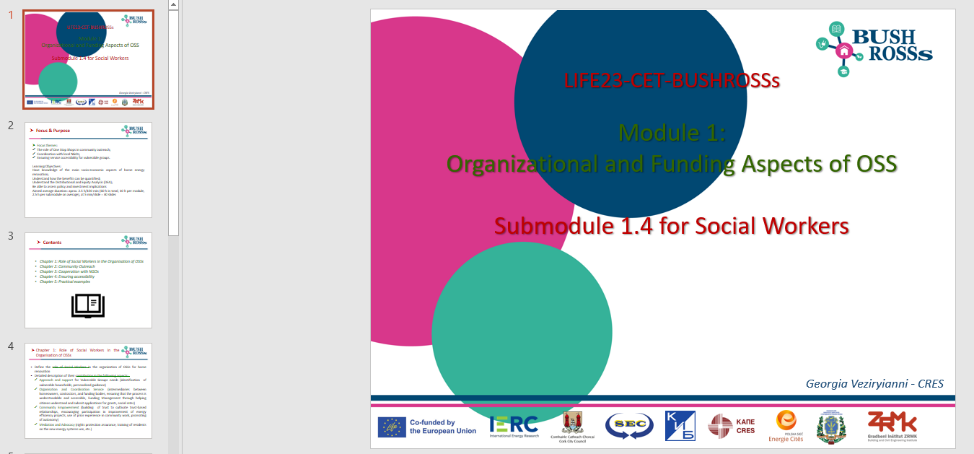
Work Packages WP3,WP4 cover the development of a joint six-module structure of tailored training programmes for economists, technical experts, legal advisors, and social workers, aligned with the European Qualifications Framework (EQF) and the micro-credentials system, as well as innovative teaching methodologies.
|
Method |
Description |
Application in BUSHROSSs |
Example Tools |
|
Video Microlearning |
5–10-minute focused videos on specific skills |
Short clips explaining “How to read an Energy Performance Certificate” |
Moodle, YouTube |
|
Interactive Modules |
SCORM or gamified learning with embedded quizzes |
Module on “Financial Instruments for Home Renovation” |
Articulate 360, LearnDash |
|
Digital Case Studies |
Real or simulated OSS cases with reflection questions |
“How a Bulgarian municipality implemented a citizen renovation hub” |
Moodle, PDF/HTML formats |
|
Discussion Forums |
Peer exchange and problem-solving |
Legal experts debate how to simplify permitting for renovations |
Moodle forums, Discourse |
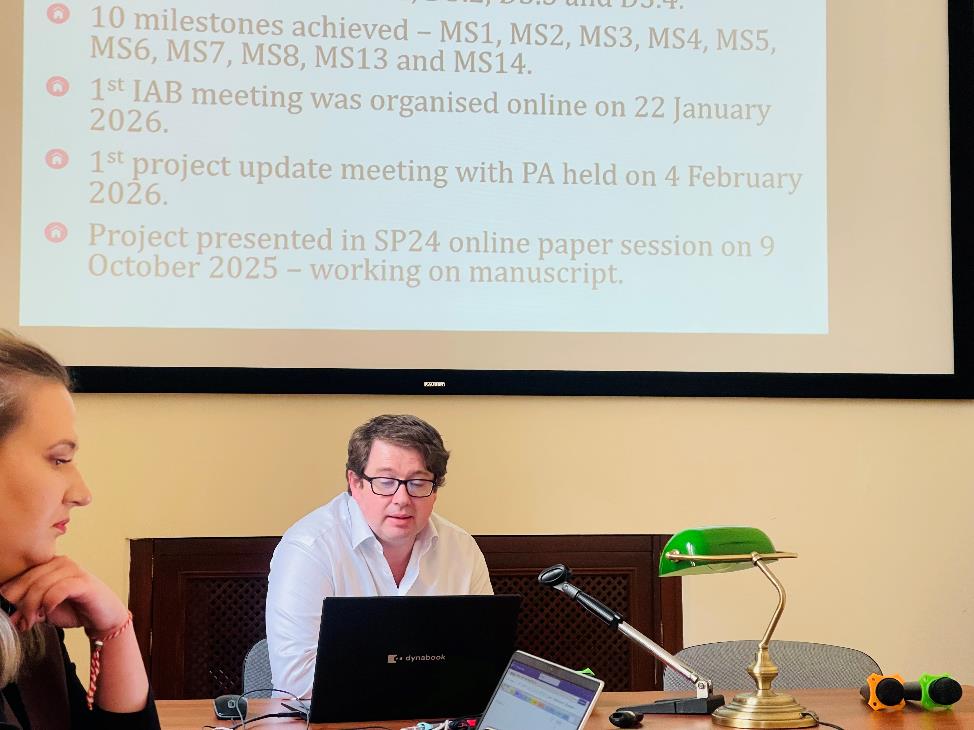
During the meeting, a discussion was held on the development of the modules and submodules of the training programme. The project partners presented the materials prepared in advance for the learning platform, agreed on their structure, as well as the scope and content of the training components.
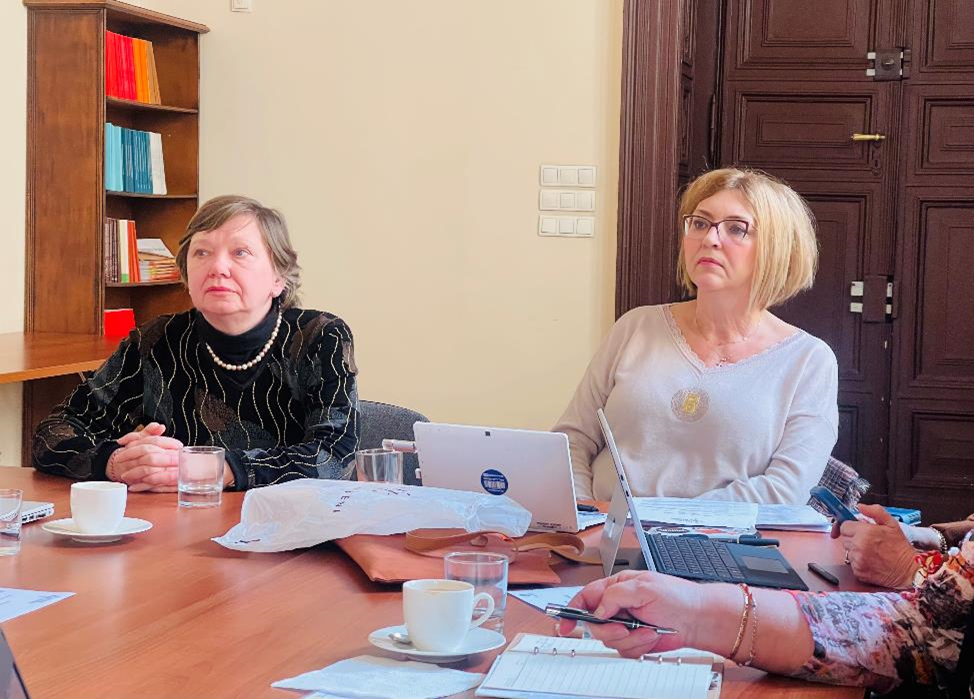
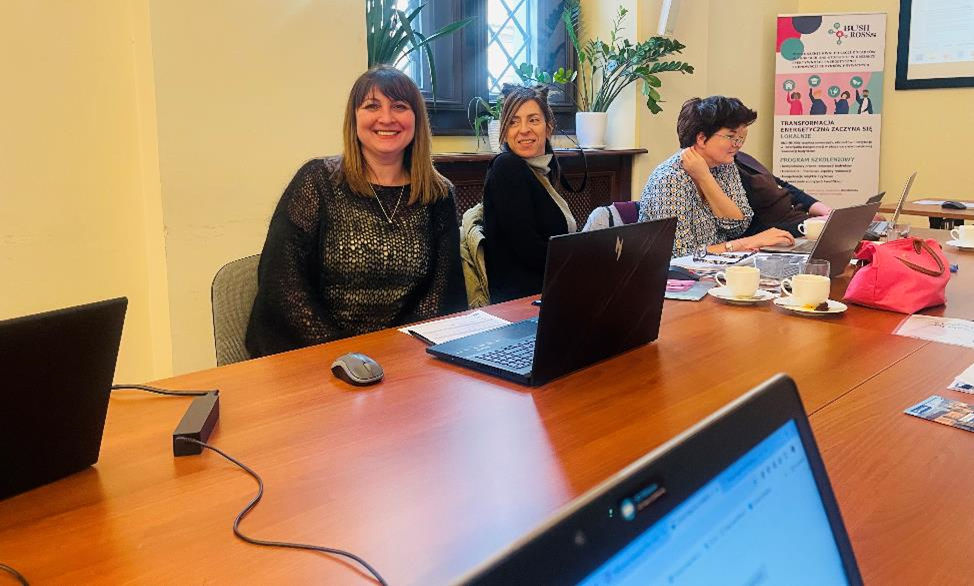
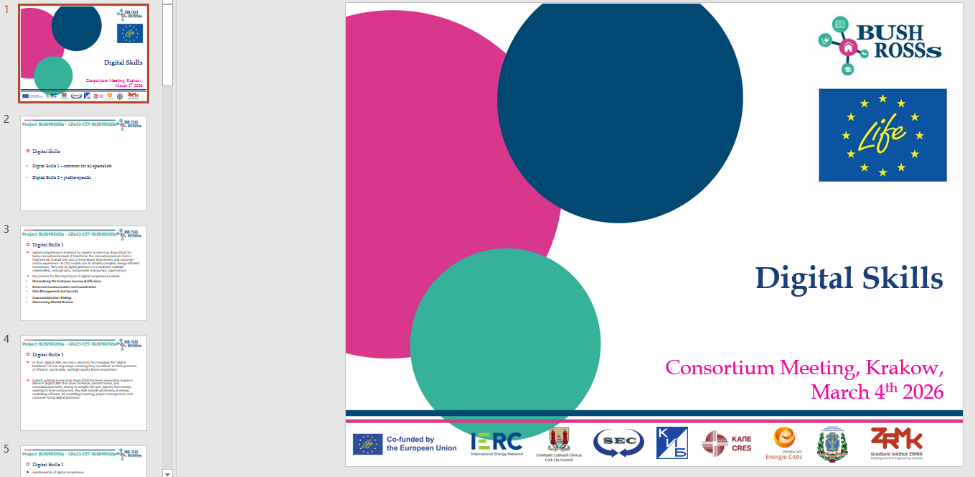
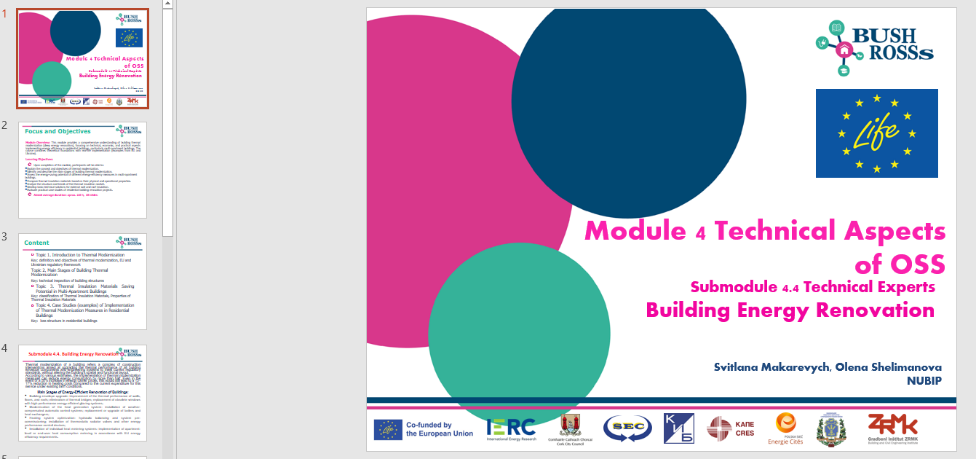
Within WP5, discussions focused on the preparation of pilot testing of the training modules and the organisation of training sessions, enabling the effectiveness of the developed approaches to be assessed prior to their large-scale implementation.
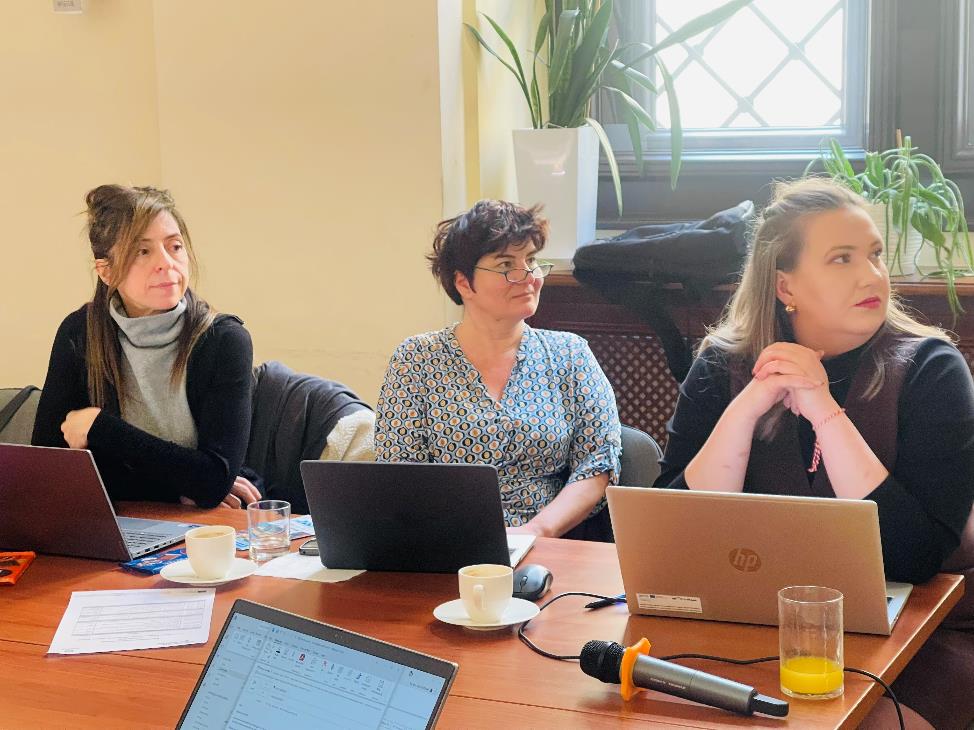
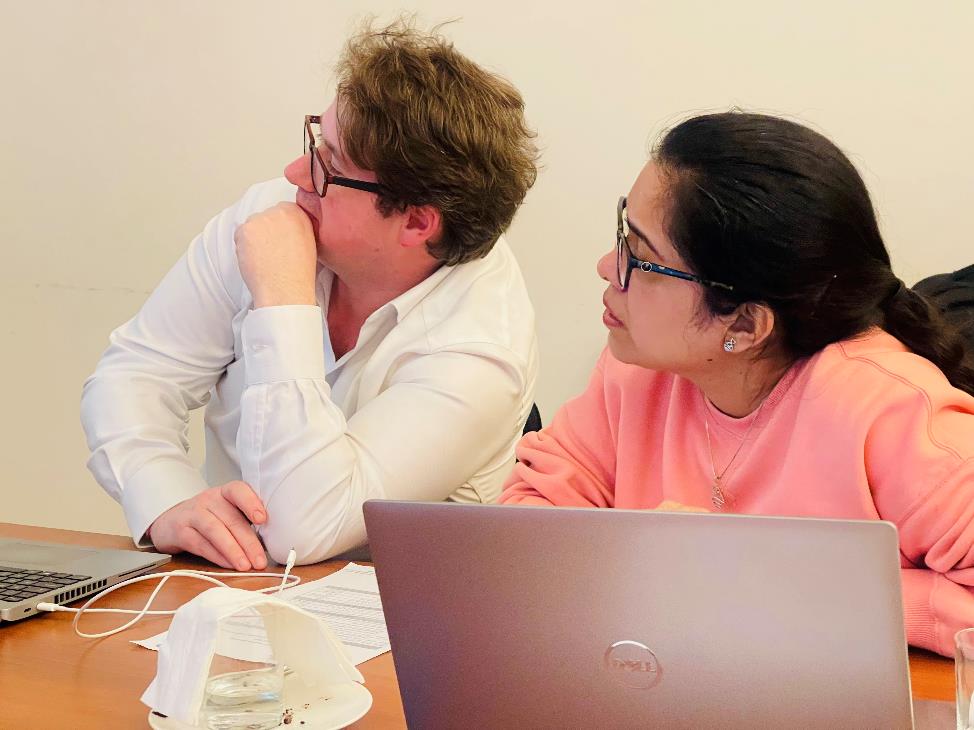
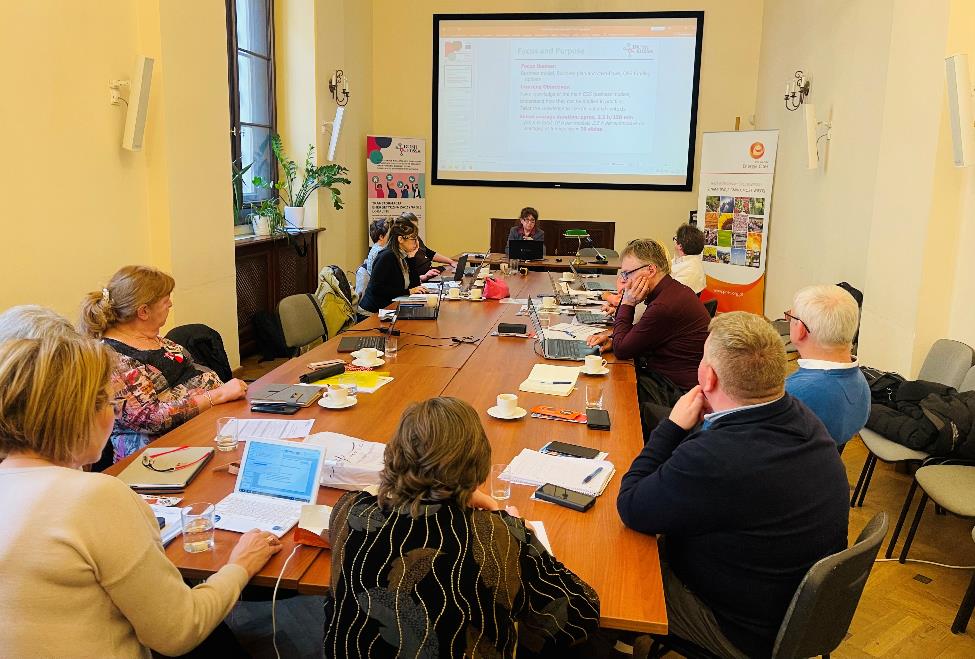
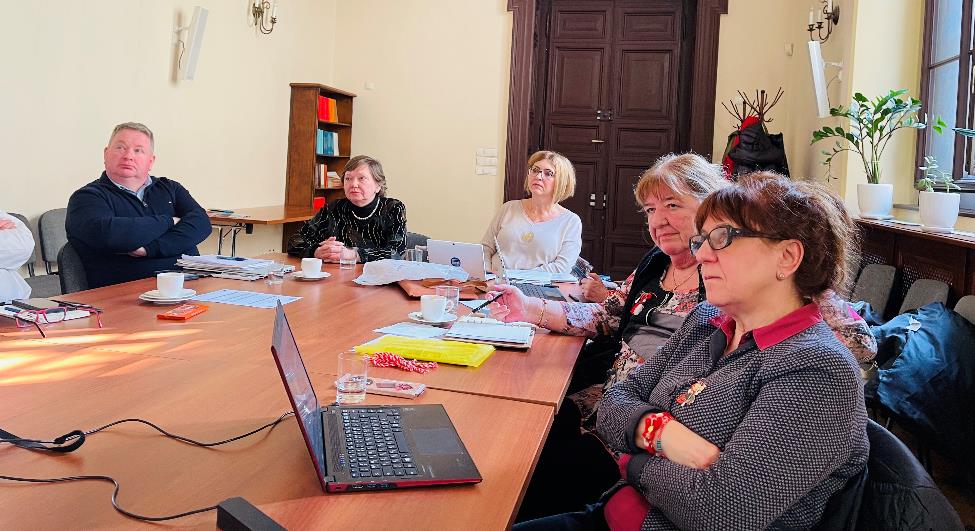
The final stage of the meeting focused on discussing the upcoming tasks for the next six months. The project partners outlined the key directions for further work, including the preparation and refinement of the training modules, the development of the learning platform with relevant materials, as well as the organisation of further stages of testing and implementation of the developed training components. The participants also designated responsible partners for specific areas of activity and agreed on the indicative timelines for completing the planned tasks. This approach enabled alignment on the next steps in the project implementation and ensured effective coordination of joint work among the partners.
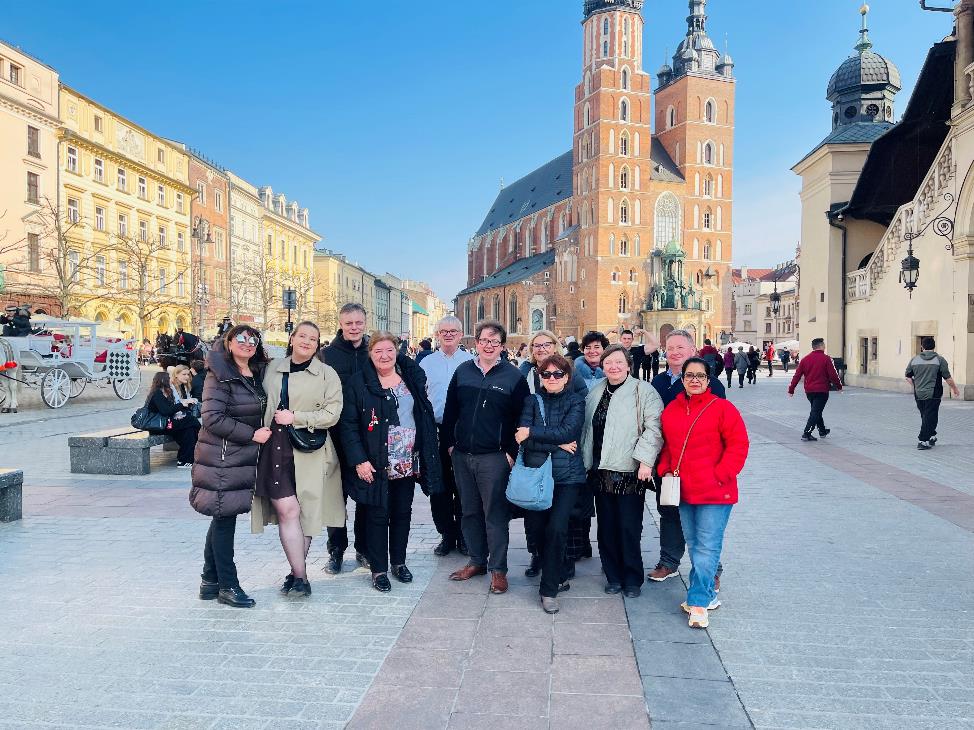
We sincerely thank the organizers — Anna Jaskuła and Izabela Kuśnierz — for the excellent meeting organization, hospitality, and the warm welcome in Poland.
Project Experts
Svitlana Makarevych,
Olena Shelimanova