

From research initiatives to strategic partnerships: the National University of Life and Environmental Sciences of Ukraine and the Estonian University of Life Sciences are broadening the scope of their cooperation
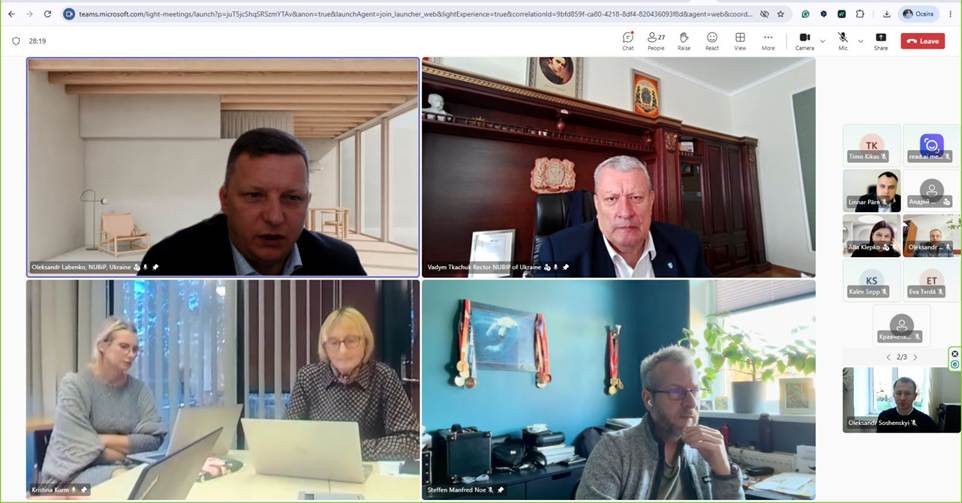
On 20 October 2026, the National University of Life and Environmental Sciences of Ukraine and the Estonian University of Life Sciences (EMU) held a large-scale bilateral working meeting dedicated to strengthening their academic partnership, developing joint research and implementing international educational and grant initiatives.
The meeting brought together the leadership of the two universities, leading academics, and representatives of faculties, academic and research institutes, and international departments, all united by a common goal — to transform promising research ideas into long-term projects of European calibre.
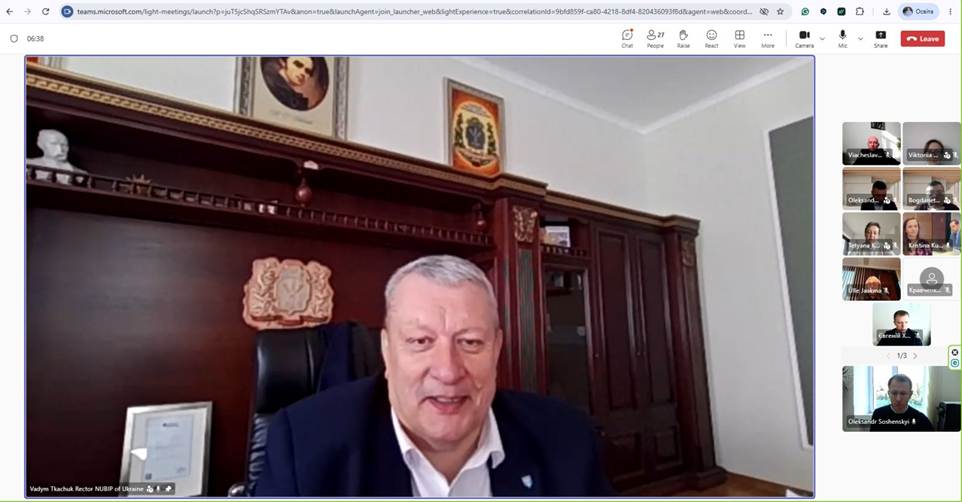
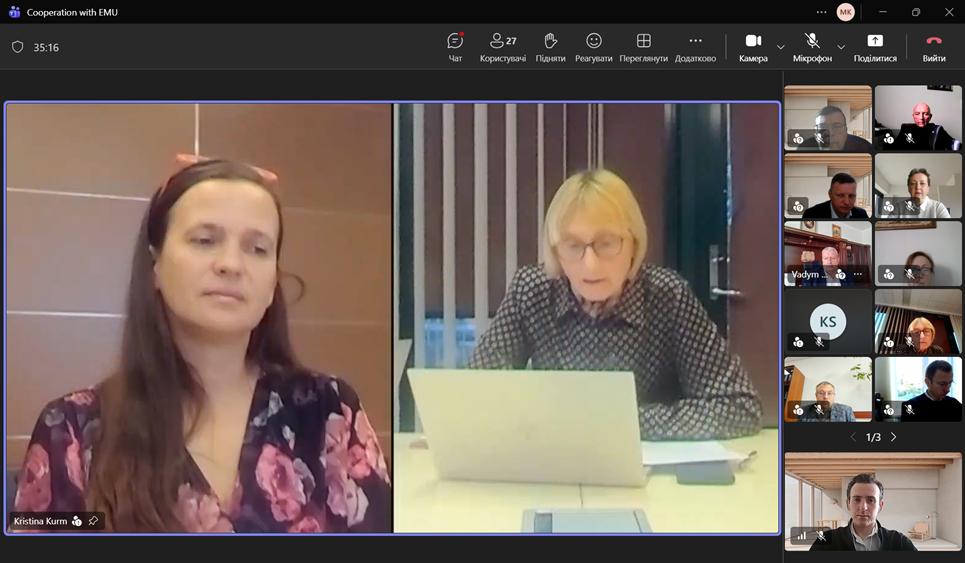
The event was opened by the Rector of the National University of Life and Environmental Sciences of Ukraine, Dr Vadym TKACHUK, Doctor of Economics and Professor, and the Rector of the Estonian University of Life Sciences, Professor Ülle JAAKMA (Ülle JAAKMA) . In their addresses, the heads of the higher education institutions emphasised the importance of developing international scientific cooperation, pooling research potential and strengthening the role of universities in tackling contemporary environmental, climate and food challenges.
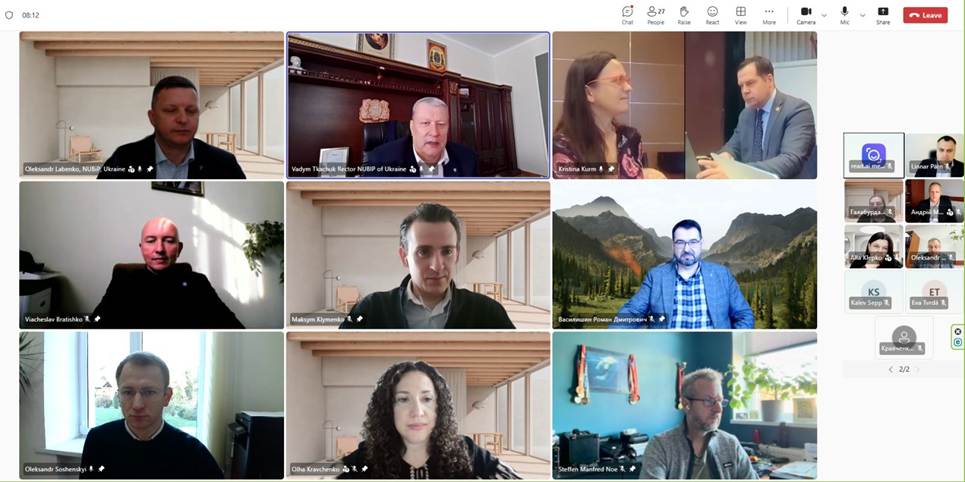
This partnership takes on particular significance in the context of Ukraine’s European integration and its future post-war recovery. Estonia’s experience in the natural sciences, sustainable resource management and the implementation of innovations, combined with the scientific potential of the National University of Life and Environmental Sciences of Ukraine, opens up opportunities for the development of practical solutions in the fields of agricultural production, environmental conservation, the bioeconomy and food security.
The meeting was moderated by Oleksandr LABENKO, Doctor of Economics and Vice-Rector for Scientific and Pedagogical Work and International Activities at the National University of Life and Environmental Sciences of Ukraine. He emphasised the need to move from isolated academic contacts to systematic institutional cooperation, which would involve joint research teams, the preparation of international grant applications, academic mobility and the involvement of young researchers.
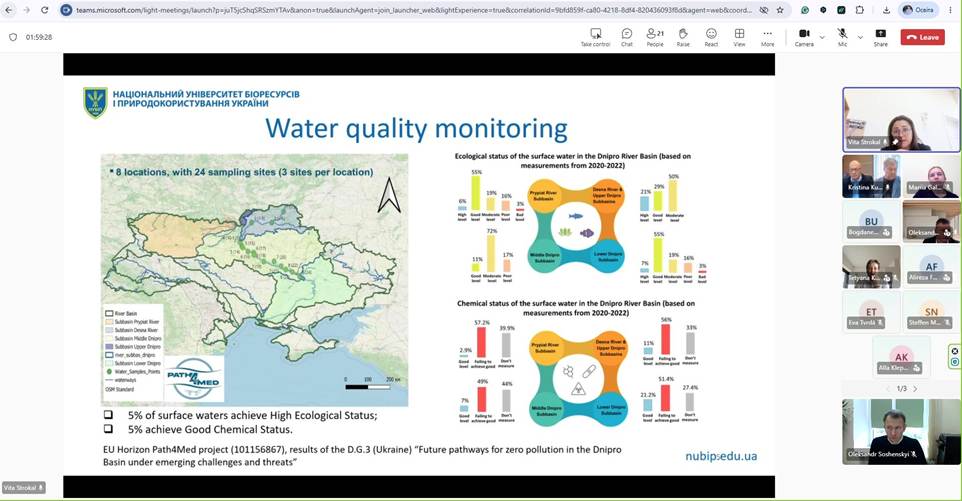
The central part of the meeting consisted of a series of thematic discussions, during which representatives from both universities presented their research findings, identified areas of common interest and discussed opportunities for forming joint international teams. Representatives from the Faculty of Agrobiology also took an active part in the discussions, joining the session on ‘Water Resources, Hydroecology and Climate Policy’.
EMU’s Vice-Rector for Research, Professor Kalle OLLI, and representatives from the National University of Life and Environmental Sciences of Ukraine (NULES) — Vita STROKAL, Associate Professor at the Department of Agrosphere Ecology and Environmental Monitoring and Candidate of Pedagogical Sciences, and Olga KRAVCHENKO, Deputy Dean of the Faculty of Agrobiology for International Affairs and Olga KRAVCHENKO, PhD in Biological Sciences and Associate Professor at the Department of Analytical and Bioinorganic Chemistry and Water Quality — discussed the prospects for international research in the fields of water resources management, hydroecological monitoring and the adaptation of aquatic ecosystems to climate change.
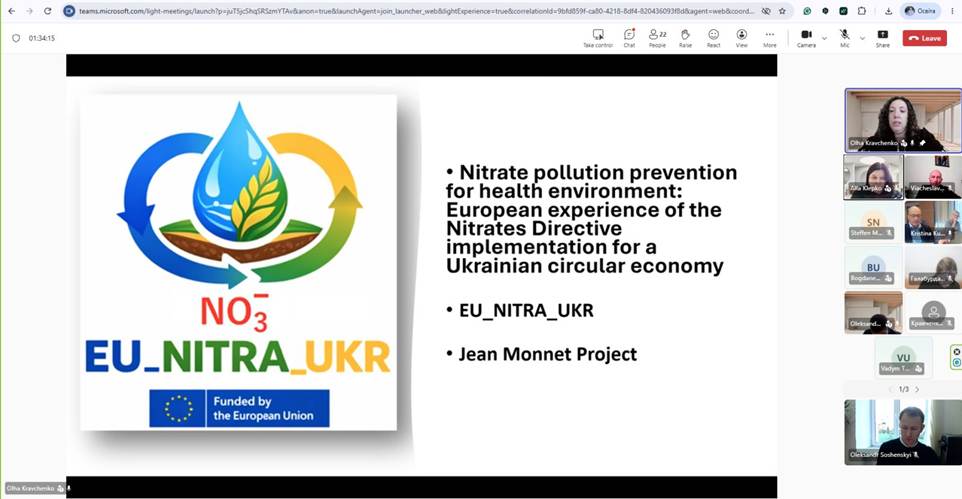
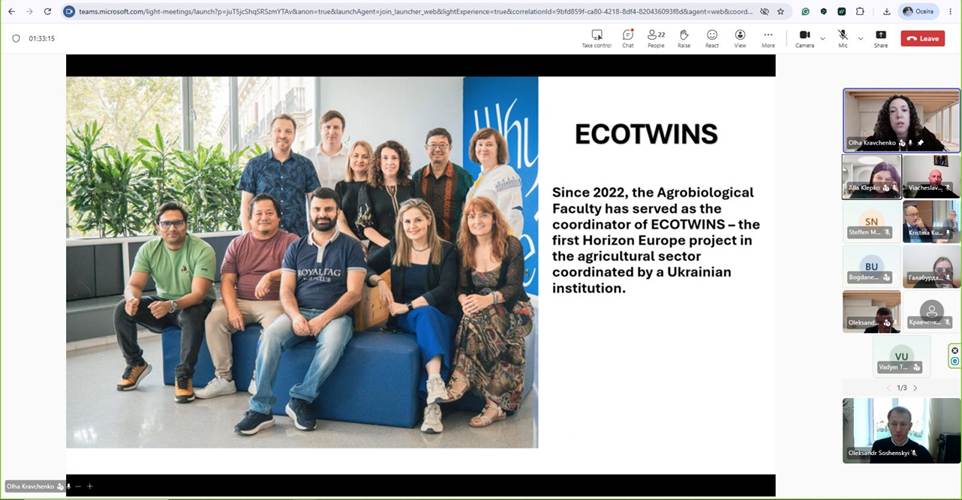
Particular attention was paid to the ecological quality of water, the assessment of anthropogenic pressure on water bodies, issues of ecotoxicological safety, and the implementation of modern methods for analysing water resources. Participants in the session explored opportunities for forming interdisciplinary research teams, combining environmental, chemical and analytical approaches, and developing joint international projects to enhance the resilience of water systems.
The National University of Life and Environmental Sciences of Ukraine and the Estonian University of Life Sciences are partners in an international consortium whose activities are aimed at strengthening the research and innovation ecosystem of the bioeconomy in Central and Eastern European countries, deepening intergovernmental cooperation and expanding the participation of research institutions in the European Research Area.
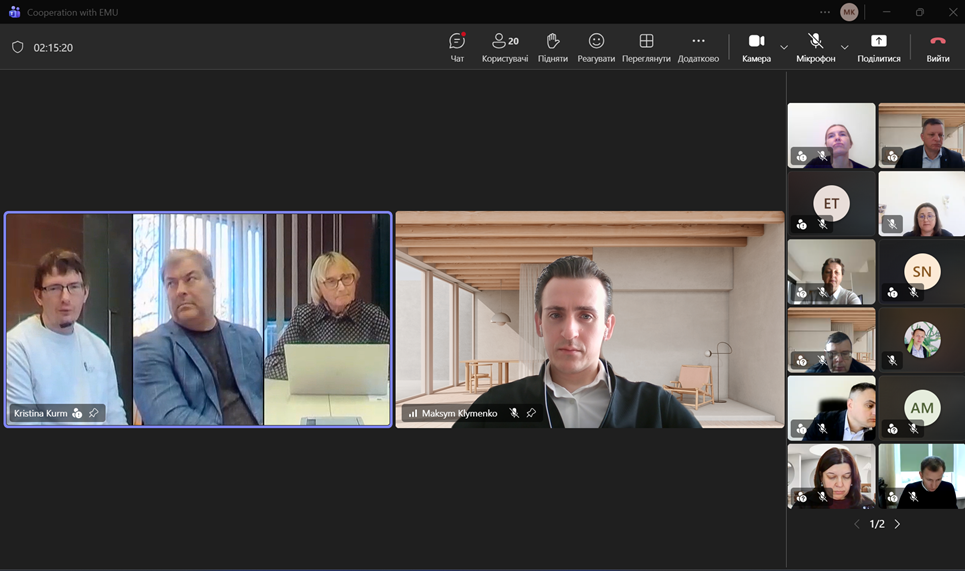
Maksym KLYMENKO, Head of the International Relations Department at the National University of Life and Environmental Sciences of Ukraine, summarised the working meeting, noting the high level of interest and substantive collaboration between the research teams at both universities.
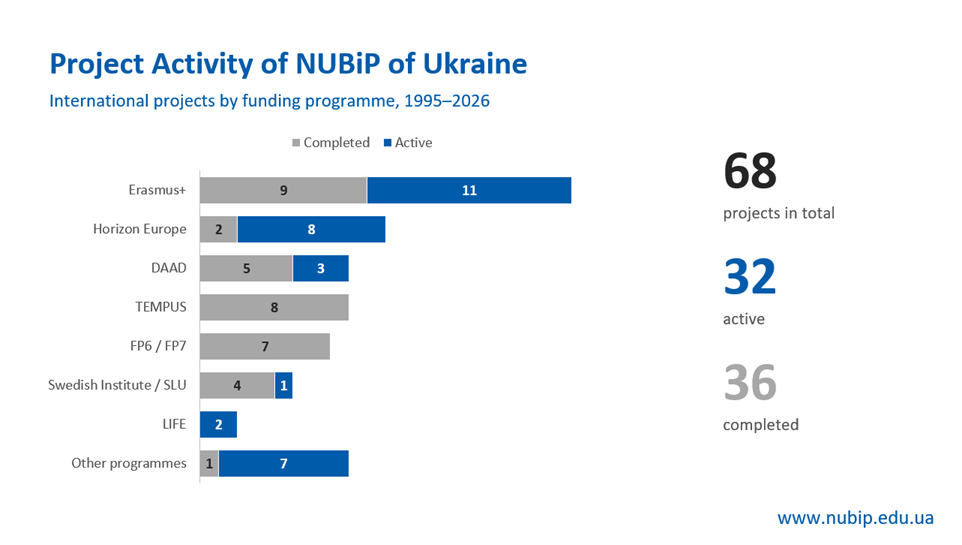
He emphasised that cooperation with the Estonian University of Life Sciences has already taken on concrete practical form: a joint project proposal under the COST Actions programme, partnership in the BIOEASTWIDE consortium, prospects for expanding academic mobility under Erasmus+ KA171, and new opportunities to establish links with European university networks.
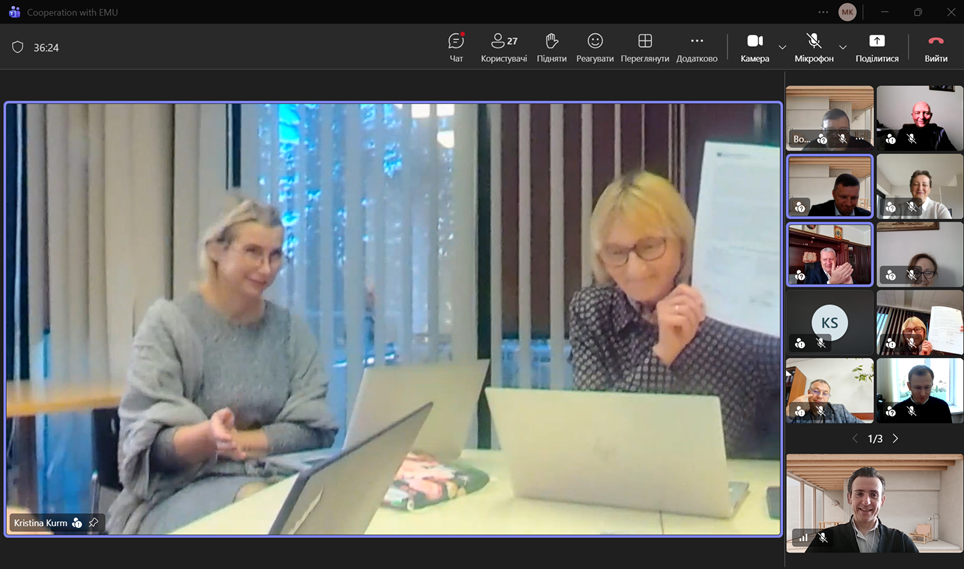
The signing of the Memorandum of Understanding (MoU) at the start of the meeting marked an important step towards institutionalising these efforts, whilst the direct involvement of relevant faculties, educational and scientific institutes, and research units is key to ensuring that the partnership yields tangible scientific and educational outcomes.
The meeting demonstrated that cooperation between the National University of Life and Environmental Sciences of Ukraine and the Estonian University of Life Sciences is moving to a whole new level — from the exchange of scientific ideas to the formation of joint research teams, the implementation of international projects and the development of a long-term strategic partnership.
For the National University of Life and Environmental Sciences of Ukraine, this is another important step towards deeper integration into the European Research Area, strengthening the university’s international presence and drawing on European expertise and resources for Ukraine’s sustainable development.