

Antimicrobial Resistance at the Forefront of Scientific Discourse
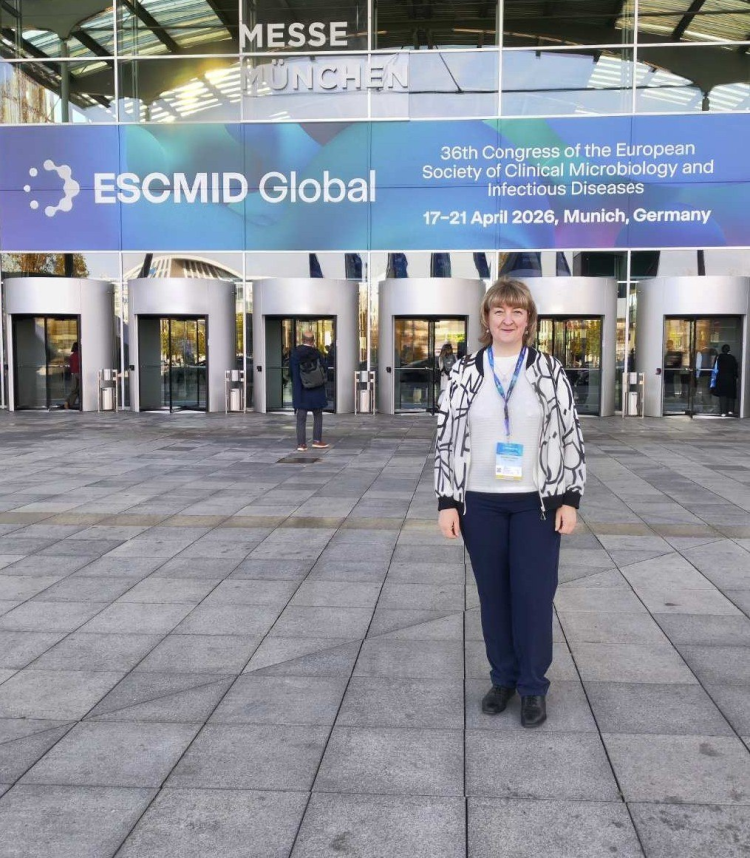
Associate Professor of the Department of Vertebrate Physiology and Pharmacology Liudmyla Ishchenko presented the results of a joint Ukrainian-American study at the ESCMID Global 2026 World Congress.
From April 17 to 21, 2026, Liudmyla Ishchenko, Associate Professor of the Department of Vertebrate Physiology and Pharmacology and Head of the Molecular Diagnostics Department at the Ukrainian Laboratory of Quality and Safety of Agricultural Products, participated in the international congress ESCMID Global 2026. This annual event, organized by the European Society of Clinical Microbiology and Infectious Diseases, took place in Munich, Germany.
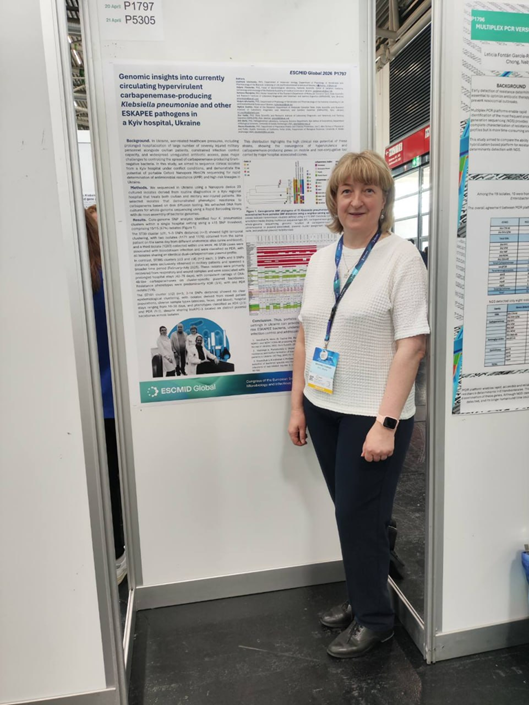
The ESCMID Congress is one of the premier international platforms in the field of clinical microbiology and infectious diseases, focusing on modern approaches to diagnosis, treatment, and epidemiological surveillance. Special emphasis is placed on antimicrobial resistance (AMR), which currently represents one of the leading global threats to public health and demands consolidated, cross-sectoral solutions.
During the congress, Liudmyla Ishchenko presented the findings of a joint study conducted with Ukrainian and American colleagues. The research focuses on the genomic epidemiology of multidrug-resistant Gram-negative pathogens isolated from clinical samples in a Kyiv hospital. Utilizing cutting-edge Oxford Nanopore Technologies DNA sequencing, the study demonstrates the feasibility of conducting genomic surveillance even under resource-limited conditions during wartime. This approach enables a detailed investigation of bacterial genetic profiles and tracks their dissemination.
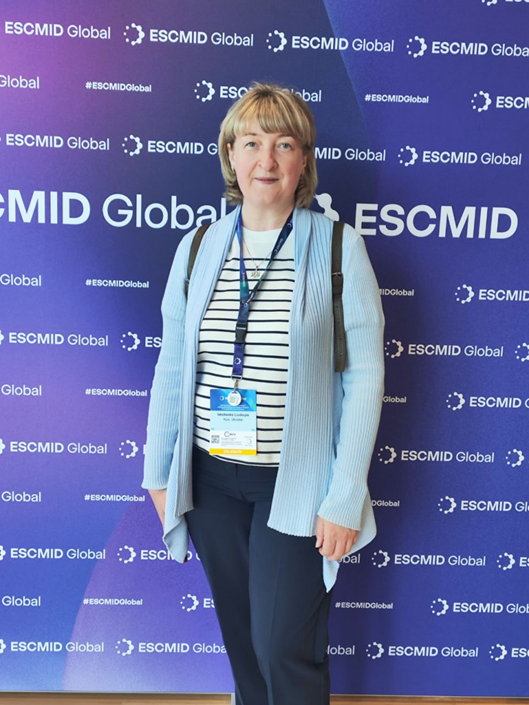
The study analyzed the prevalence of high-risk clones—bacterial strains most frequently responsible for difficult-to-treat infections—and identified combinations of various antibiotic resistance mechanisms. Particular attention was given to the analysis of plasmids, which are easily transferred between bacteria and spread antimicrobial resistance genes. The results highlight the critical importance of implementing genomic technologies to monitor healthcare-associated infections (HAIs). They demonstrate that modern sequencing methods not only detect resistant bacteria but also elucidate the mechanisms behind their transmission.
It is encouraging to note that the number of participants from Ukraine increases every year, reflecting the active integration of Ukrainian specialists into the international scientific community. This year, given the urgency of the AMR issue in Ukraine, a dedicated session titled "Developing Cooperation with Ukraine in the Field of Countering Antimicrobial Resistance" was organized. Held as a workshop, the session brought together representatives from the World Health Organization (WHO), the Robert Koch Institute, Charité University Hospital, the Public Health Center of the Ministry of Health of Ukraine, and other stakeholders involved in AMR mitigation in Ukraine.
The session addressed current AMR challenges in Ukraine, priorities for advancing laboratory diagnostics and epidemiological surveillance, and pathways for further coordination among international and national partners—specifically in diagnostics, surveillance, infection control, and access to treatment.
Participation in ESCMID Global 2026 facilitated valuable knowledge exchange, fostered new professional networks, and showcased Ukrainian scientific achievements on the global stage.