


Scientific work
The scientific topics of the department are devoted to solving topical theoretical and applied problems of soil science, biogeochemistry, cartography and soil protection.
The main directions of research work:
1. Reproduction of soil fertility:
· research of organic matter of the soil and its reproduction in agro-landscapes;
· research and assessment of virgin soils;
· assessment of agrophysical and water-physical properties of soils;
· study of the physicochemical state of soils;
· development of mathematical models of soil fertility;
· study and development of measures to reproduce soil fertility in fruit and berry plantations;
· development and substantiation of measures to preserve and restore soil fertility.
2. Research of the intensity of erosion processes and the development of anti-erosion measures:
assessment of the degree of lubrication and deflation of soils using GIS systems;
assessment of the anti-erosion resistance of chernozem soils by the method of sprinkling under various soil cultivation and fertilization systems;
· study of the properties of washed and deflated soils;
· development and evaluation of the effectiveness of anti-erosion measures.
3. Study of ecological and reclamation state of organogenic hydromorphic soils:
conducting a morphological and genetic analysis of drained peat soils and establishing their change in different uses;
· study of water-physical and physico-chemical parameters of ameliorated soils and their agro-ecological assessment;
establishing the impact of drainage and agricultural use on the operation of organic matter of peat soils;
development of measures for the rational use of drained peat soils with the preservation of their organic matter and productivity.
4. Reclamation of disturbed lands:
· substantiation of models of artificial soil profiles for reclamation of disturbed lands of various intended use: universal, increased fertility, hydroaccumulative, geomelioration, special (use of potential-fertile overburden rocks without coating them with a layer of soil mass);
monitoring the fertility of reclaimed soils in the process of their economic use, optimization of limiting factors that limit the growth, development and production process of crops on different models of reclaimed soils;
· establishment of an assortment of agricultural plants that successfully grow on overburden rocks without coating with a fertile layer of soil mass;
· development of fertilizer application systems (mineral, organic, bacterial and microfertilizers) on reclaimed lands: types, methods, terms, norms, doses.
5. Stoneing of soils using remote sensing of the earth
and modern geoinformation technologies:
· preparation of soil maps of the studied territories;
· preparation of cartograms of the content of humus, nutrients, acidity and other soil fertility indicators.
The department is engaged in the training of graduate students and doctoral students in the scientific specialty 06.01.03 "Agro-soil science and agrophysics"
REPORT ON THE RESEARCH WORK OF THE RESEARCH INSTITUTE OF CROPENRY AND SOIL SCIENCE
SE NUBiP of Ukraine "Velikosnityn educational and research farm them. O.V. Music"
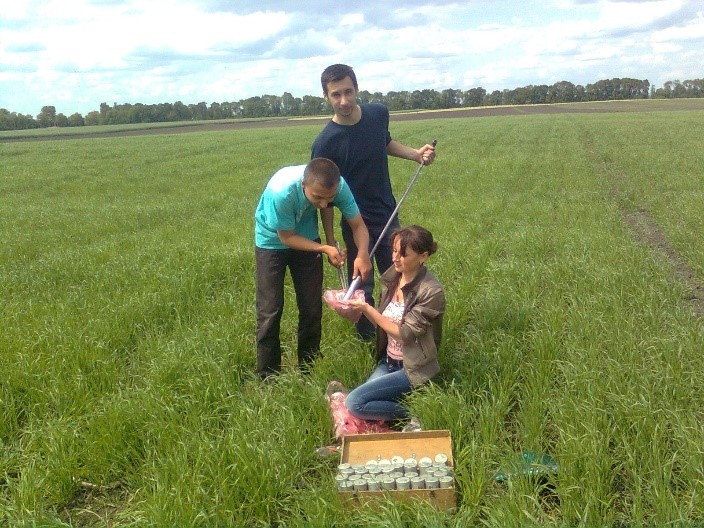
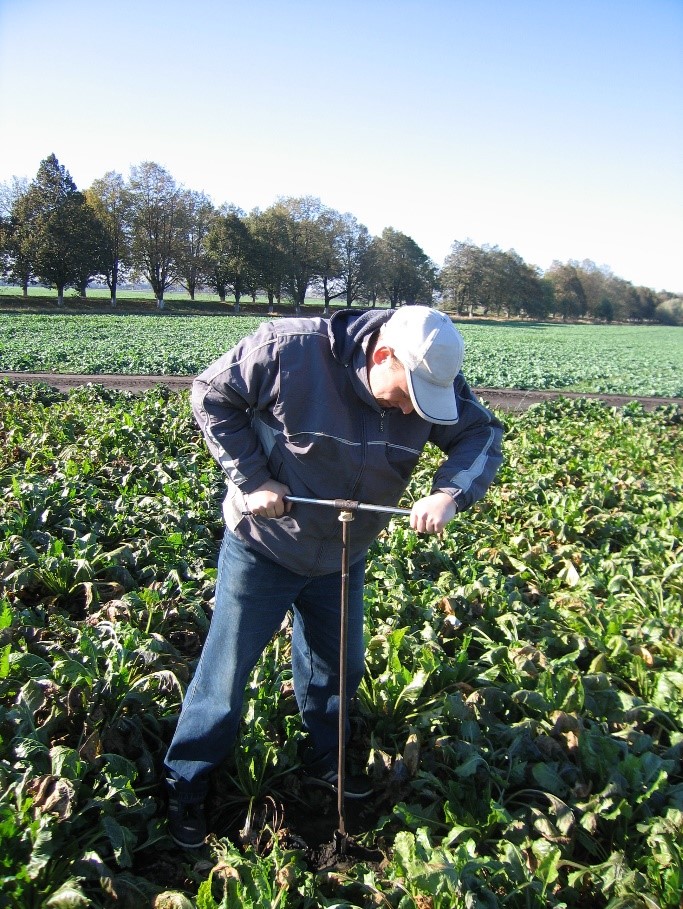
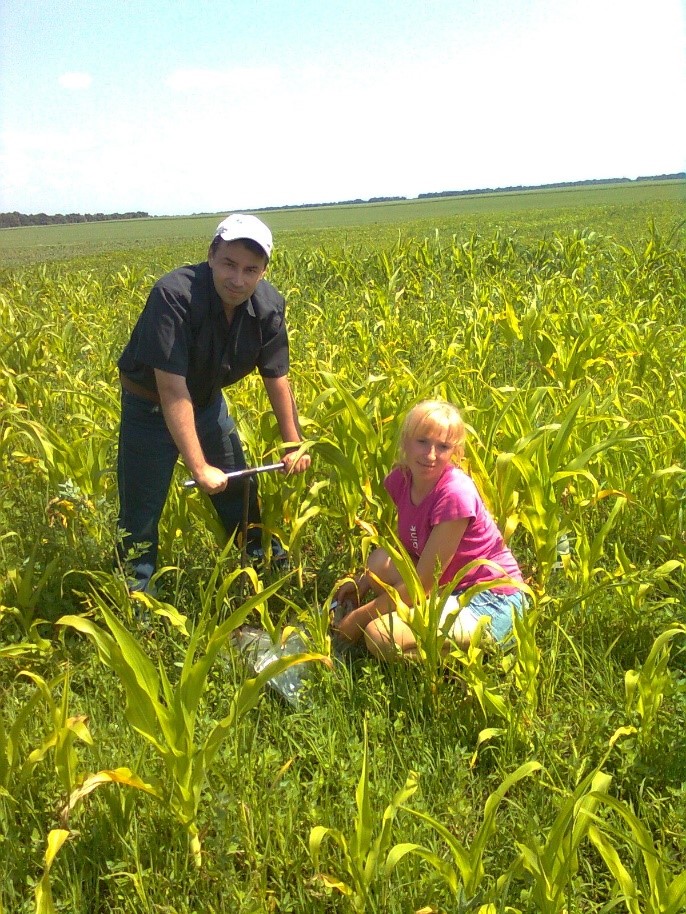
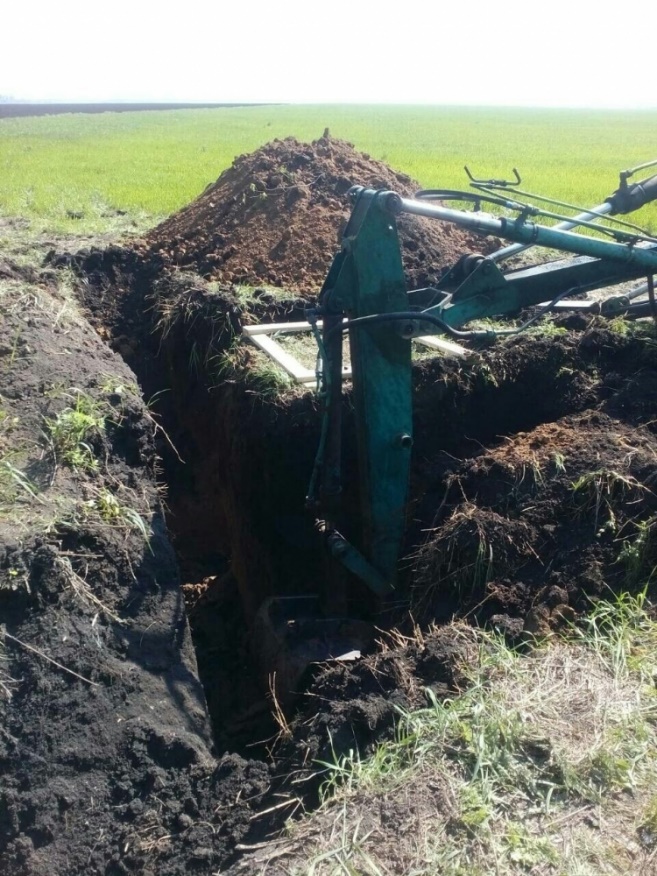
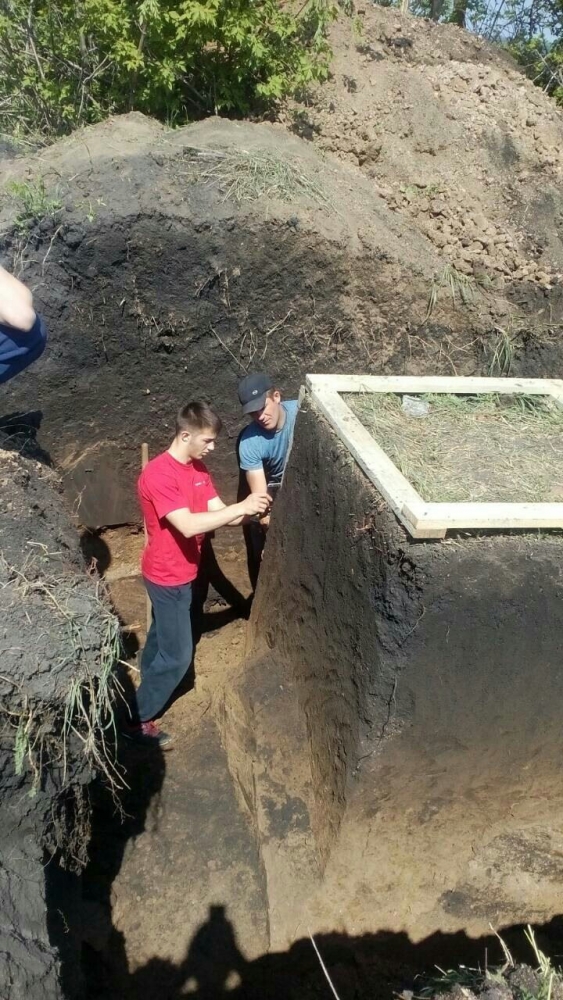
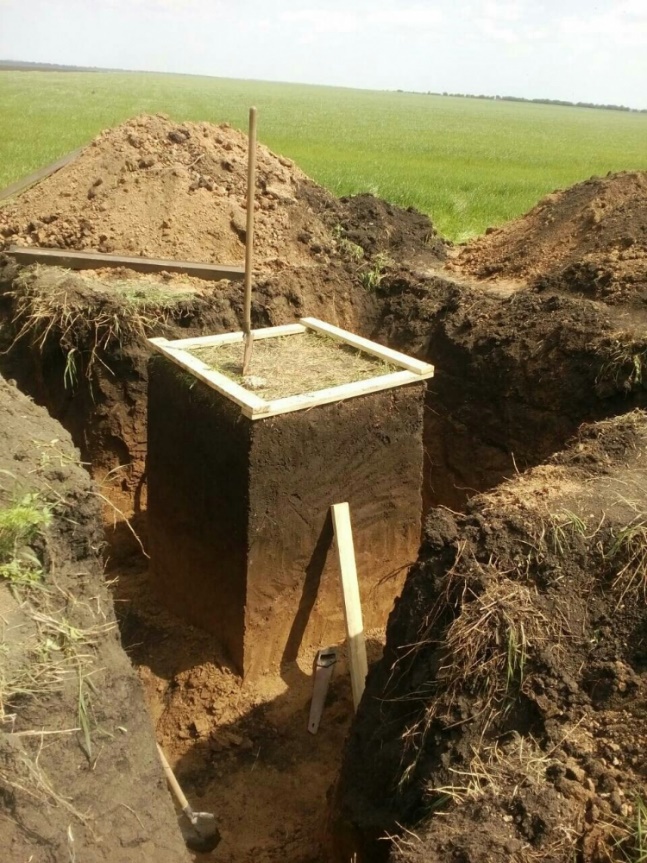
Under the guidance of Professor Zabaluev Viktor Oleksievich in the virgin landfill was received soil monolith, which will be presented in the Museum of soils at. 53 h.2
.