


Historical sketch
The formation of soil science at the NUBiP of Ukraine has its own logical sequence and history, which, on the one hand, was determined by the resolutions of decision-making bodies and the administrative work of the administration and, on the other, by the dedicated work of teachers, researchers and technical staff of the university departments.
Already in 1894, in the second decade after V.V. Dokuchaev established soil science as a science, the “Special Bureau for the Coordination of Scientific Work on Agriculture and Soil Science” was created. The next significant step for the expansion of soil research was the new regulation on the Agricultural Scientific Committee, adopted in 1911, which provided for broad coordination of scientific research, primarily within the framework of the activities of the relevant departments of universities and institutes.
The logical continuation of these important decisions for agricultural science and education was the establishment in 1898 of the agricultural department of the Kyiv Polytechnic Institute, where soil science was taught in the course of general agriculture as one of the sections of this discipline.
In the second decade of the 20th century. the question of separating soil science into a separate independent discipline was raised. This item was included in the project of reorganization of education at the agricultural department of KPI and sent to Petrograd for approval. However, the project wandered around ministerial offices for a long time and only in 1917 this issue was resolved positively, and the reading of the course was assigned to Prof. F. I. Levchenko. In 1920, M. M. Godlin was involved in teaching soil science.
In 1922, the Department of Soil Science was organized, and F. I. Levchenko was appointed its head. The staff of the department at that time consisted of 3 employees, the head of the department - professor, lecturer of the department M. M. Godlin and a laboratory assistant.
The discipline "Geology with Mineralogy" was taught by the outstanding geologist Prof. O. V. Nechaev, then Prof. V. M. Chervinsky and Prof. K. I. Timofeev. They collected rich mineralogical material and organized a geological and mineralogical museum. The fact that geology with mineralogy was always taught at a high level is evidenced by the memoirs of G. F. Kozyrska, who studied in the pre-war years at the Faculty of Agronomy: "... at the Department of Soil Science, students really liked the teacher of geology and crystallography Prof. K. I. Timofeev, who read the course in an accessible manner with rich illustrations."
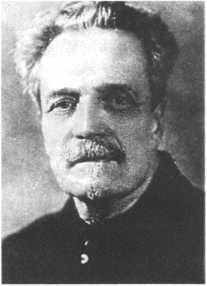
Professor Levchenko Fedor Ivanovich, the first head of the Department of Soil Science in 1922-1930.
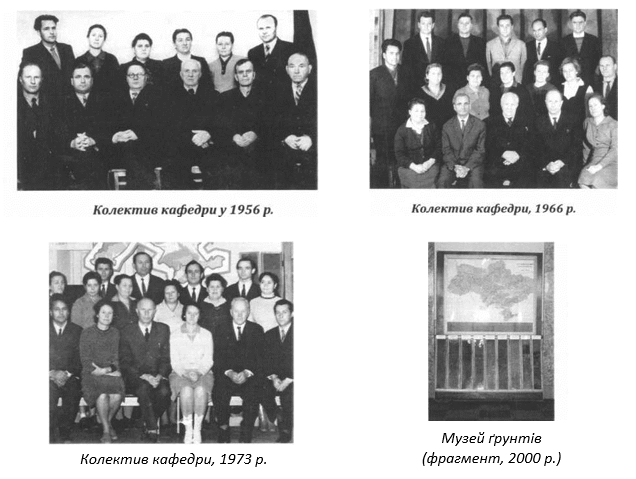
Simultaneously with the organization of the Department, a Museum of Soil Science was organized in which monoliths of soils of Ukraine, Central Asia, Western Siberia, Altai and other areas of the USSR were collected.
In the period 1906-1923, the staff of the Department carried out extensive work on the survey of soils of Central Asia, Volyn, agricultural research stations of Ukraine. Since 1923, the staff of the Department worked on the study of soils of beet-growing areas, soil cover of agricultural research stations of Polissya and Forest-Steppe, river valleys of the Left Bank of Ukraine. As a result of this work, maps of soils of beet-growing areas, Volyn, Shepetiv and Zhytomyr districts were compiled. Materials of soil surveys were transferred to the project organizations for carrying out land reclamation works on draining the river valleys of the Supoi, Trubizha, Perevod and others. Materials of soil surveys conducted by the department were included in the original of the first soil map of Ukraine on a scale of 1:1000000, which was published in 1928.
In 1929, the department was located in the newly built first building (now the fourth) of the Kyiv Agricultural Institute. In 1930, in connection with the disbandment of the Agricultural Institute into a number of separate institutes, the Department of Soil Science was transferred to the Institute of Agrochemistry and Soil Science. Prof. M. M. Godlin was appointed head of the department. Such administrative subordination was maintained until 1935, when the Kyiv Agricultural Institute was restored again.
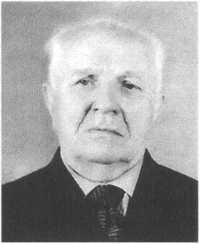
Professor Godlin Mikhail Mikhailovich, head of the department in 1930-1966.
In the pre-war years, the Department of Soil Science conducted teaching work at all faculties of the institute, including agrochemistry and soil science, agronomy and fruit and vegetable, at the faculties of mechanization and electrification of agriculture.
The research work of the department in the pre-war years was aimed at developing methods for mechanical and aggregate-disperse analysis of soils, as well as the classification of soils by mechanical and aggregate composition (M. M. Godlin), work began on the development of new methods for chemical analysis of soils (P. V. Zakharchuk).
In 1941, the employees of the department were evacuated with part of their property to the city of Alma-Ata, where they worked on the basis of the Kazakh Agricultural Institute until the spring of 1944. The department staff, having returned from Alma-Ata, set about restoring the department, its mineralogical and soil museums. By the 50th anniversary of the Agricultural Institute in 1948, the department had fully restored its functions.
The beginning of the 50s is characterized by the publication of the major monograph "Soils of the Ukrainian SSR" (1951) edited by Professor M. M. Godlin. A significant part of the materials included in the publication were the work of the department staff and the result of their work over the past 30 years.
At this time, the department was replenished with both experienced researchers and teachers (Prof. S. O. Zolotarev), and young graduates of the Faculty of Agrochemistry and Soil Science (B. T. Kabachenko, N. Ya. Dubrovina, M. I. Gorkun, N. P. Kotyuzhinskaya), the Faculty of Agronomy (V. A. Lapanova). When the Ukrainian Agricultural Academy was established in 1954, the department was joined by teachers from the Department of Soil Science of the Forestry Institute, Associate Professor Podshivalov S. Ya. and Assistant Professor Polyvyany P. M.
The geology course in the post-war years until the early 1970s was taught by Professor Bilenko D. K., a doctor of geological and mineralogical sciences respected by his colleagues and students. From the late 1960s, his pupil, a graduate of the Faculty of Agrochemistry and Soil Science, Szeged M. M., began to actively help Doros Kononovich.
The 1950s in the history of the department can be described as a "golden age" for the development of soil science. This was primarily due to the gigantic in scale idea of developing virgin lands in the southern part of Western Siberia, northern Kazakhstan and the Altai Territory, which began in 1954.
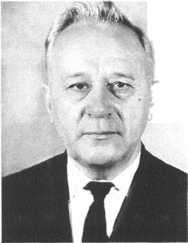
Professor Zrazhevsky Andriy Ilarionovich, head of the department in 1962-1972
In the second half of the 1950s, a campaign of continuous large-scale soil surveys of collective farms and state farms was carried out in Ukraine. The employees of the Department of Soil Science took an active part in this important nationwide campaign. In 1956, a soil party was created at the department, headed by the Candidate of Agricultural Sciences, Associate Professor V. Yu. Kalyuzhny, which existed until 1964. During this time, 540 soil maps of collective farms and state farms of Polissya, Forest-Steppe and Steppe of Ukraine were compiled at scales of 1:10,000 and 1:25,000, and about 1,500 cartograms of individual soil properties were transferred to the farms.
One of the consequences of conducting a large-scale soil survey was the expansion of the Soil Museum. Today the museum has about 200 exhibits.
In the fifties and sixties, the department conducted intensive research on the genesis of soils of the plains and mountains of Ukraine (Carpathians), studied soil erosion in the middle Dnieper region, investigated the conditions of occurrence of peat soils and the quality of their organic matter. With the arrival in 1962 of the new head of the department, Doctor of Biological Sciences, Professor Andriy Ilarionovich Zrazhevsky, research on soil biology was especially developed.
The following data testify to the fruitful work of the department in those years in training scientific personnel: if by 1948 14 people had completed postgraduate studies at the department and only 6 of them had defended their dissertations for the degree of Candidate of Agricultural Sciences, then in the next two decades until 1970 more than 20 students of the department received the degree of Candidate of Agricultural Sciences. Under the leadership of Prof. Godlin M. M., Prof. Zrazhevsky A. I., Prof. Zolotarev S. O., Assoc. Prof. Zakharchuk P. V. defended their candidate theses: Kupriyanchuk M., Matkarimov M., Bystry V. O., Lapanova V. A., Olinevych V. A., Kofman I. Ya., Polyviany P. M., Logvynenko I. I., Siry A. I., Kabachenko B. T., Dubrovina N. Ya., Gorkun M. I., Gordiyenko O. Y., Slobodyanyk G. F., Nazarenko G. V. and others. At this time, postgraduate students from China, Egypt, Syria, Ivory Coast and others also successfully worked at the department and defended their theses.
At the turn of the 60s and 70s, the teaching staff of the department included: Prof. Zrazhevsky A. I., Prof. Bilenko D. K., Prof. Zolotaryov S. O., Prof. Godlin M. M., Associate Professors: Zakharchuk P. V., Kalyuzhny V. Yu., Lapanova V. A., Dubrovina N. Ya., Kabachenko B. T., Siry A. I., Slobodyanyk G. F., Assistants: Nazarenko G. V., Gordiyenko O. Y., Gorkun M. I., Katyuzhynska N. P., Segeda M. M., Andriyenko V. O.
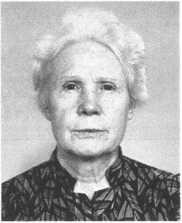
Associate Professor Lapanova Viktoriia Opanasivna, Head of the Department in 1972-1974
In 1972, Prof. Zrazhevsky A. I. left the position of Head of the Department due to illness. The duties of the Head of the Department were entrusted to the candidate of agricultural sciences Sciences, Associate Professor Lapanova V. A. At the end of 1974, Doctor of Agricultural Sciences, Professor Shykula M.K. was elected as the head of the Department of Soil Science and Geology.
With the arrival of the bright representative of agronomic soil science, Professor Shykula Mykola Kindratovich, as the head of the Department, research began aimed at developing methods and technologies for protecting soils from erosion, and later on, at substantiating and implementing soil protection technologies for growing crops. In 1974, a state-budget research laboratory for anti-erosion measures was organized at the Department. It was during this period that the Presidium of the Southern Branch of the VASGNIL approved a scientific and technical program for soil protection farming, according to which Professor M. K. Shykula was appointed coordinator of the republican program. Thus, in 1974, a republican experiment was launched to convert significant areas of agricultural land to soil conservation farming.
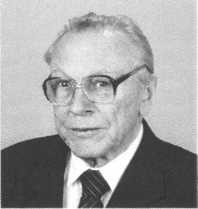
Professor Mykola Kindratovich Shykula, head of the department in 1974-1999
During 1974-1978, in stationary experiments, scientific data were obtained on the significant advantages of soil protection technologies over traditional plowing. On their basis, the first recommendations for the implementation of these technologies in Ukraine were developed, and by the beginning of the 80s they were undergoing production testing in all districts of the Poltava region. During the Poltava experiment, stationary research was organized in the Myrhorod, Lubensky, Karlovsky, Lokhvytsky and Shyshatsky districts and soil and agrochemical laboratories were created, on the basis of which candidate and doctoral dissertations were prepared.
In the 80s, a group of young scientists defended their candidate dissertations at the department and moved to teaching: L. R. Petrenko, O. F. Hnatenko, O. B. Yovsa, G. I. Nesterov, A. D. Balaev, M. V. Kapshtyk, M. F. Berezhnyak.
By this time, the Poltava experiment had spread to the entire territory of Ukraine and research into the effectiveness of soil protection technologies covered most of the Forest-Steppe and Steppe regions, where technologies were adapted to local soil and climatic conditions. In the late 80s, the Department of Soil Science and Soil Protection conducted research on 27 stationary experiments, lasting from 5 to 15 years; where more than 100 service personnel worked, local researchers and specialists gained experience, contributing to the development of zonal systems of soil protection farming.
In the 1990s, a new qualitative upsurge in the development of scientific research took place. A. I. Siry, O. F. Gnatenko, A. D. Balayev defended their doctoral dissertations at the department, and young scientists A. M. Shekhovtsov, S. V. Vitvitsky, V. S. Fantukh, M. P. Yukhymenko, A. O. Svishchuk, Yu. S. Kravchenko, N. M. Ridey, I. I. Vorobey, O. L. Makarchuk and others became candidates of science. A significant part of them became teachers and researchers at the university, and some of them successfully work in business. This period also saw the release of the collective monographs "Restoration of soil fertility in soil conservation agriculture" and "Soil conservation biological system of agriculture in Ukraine", which summarized the results of 25 years of research on revealing the mechanisms of soil fertility restoration and substantiation of technologies with minimal tillage and biologization of agriculture.
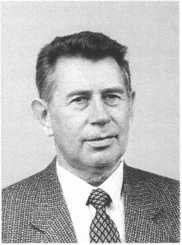
Professor Tararik Oleksandr Grigorovich, head of the department in 1999-2001
The department teaches scientific disciplines in the following areas: geology, geomorphology, general soil science, soil geography, soil cartography, soil assessment, soil monitoring and land management, soil protection, soil fertility restoration, restoration of technogenically disturbed lands, reclamation agriculture, soil conservation biological agriculture, fundamentals of scientific research, methods of research into soil cover degradation, ecological problems of soil cover.
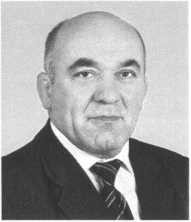
Professor Balayev Anatoliy Dzhalilovich, head of the department in 2001 - 2021
The topics of scientific research conducted in the following areas have expanded and been updated: soil fertility protection and restoration; soil protection, reclamation and biological agriculture; reclamation of technogenically disturbed lands, genesis and evolution of hydromorphic soils, reclamation soil science, application of GIS systems in soil science. The department cooperates with advanced farms of Kyiv, Chernihiv, Poltava and Dnipropetrovsk regions, where long-term multifactorial experiments are conducted and students complete bachelor's theses, master's, candidate's and doctoral dissertations.
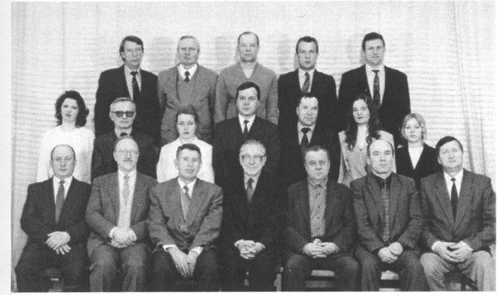
The department staff, 1998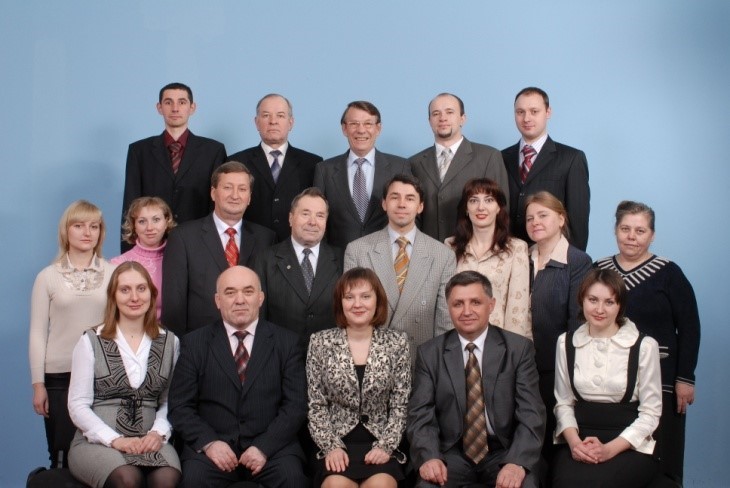
The department staff, 2008
Sitting: Bykova O. E., Balayev A. D., Tonkha O. L., Zabaluyev V. O., Pikovskaya O. V.; standing: Melnyk T. M., Kudlay M., Berezhnyak M. F., Papka M. K., Kravchenko Yu. S., Karabach K. S., Voloshina N. V., Kovaleva R. N., Bogdanovich R. P., Plyakha M. G., Nesterov G. I., Achasov A. B., Kozak V. M.