International Internship on Cyberbiosecurity for Faculty Members of the Faculty of Veterinary Medicine
Health Security Partners (HSP) is an international non-profit development organization dedicated to building local capacity to improve health security worldwide. The organization develops and implements programs in resource-limited regions aimed at advancing the careers of professionals, institutional capacity, and community resilience to prevent, detect, and respond to infectious diseases and zoonoses. Sponsored by government and non-profit organizations, as well as philanthropic foundations, HSP partners include the U.S. Department of State, the Centers for Disease Control and Prevention (CDC), and leading universities in the U.S. and Australia.
Back in early 2014, the organization announced a call for research grant applications under the HSP-CTR Virtual Scientist Engagement Fellowship Program for Ukrainian Life Scientists. Scientists from the National University of Life and Environmental Sciences of Ukraine (NULES) also participated in the competition. Although program funding was subsequently suspended for a number of reasons, project authors were invited to participate in a training workshop organized by the company for Ukrainian life scientists.
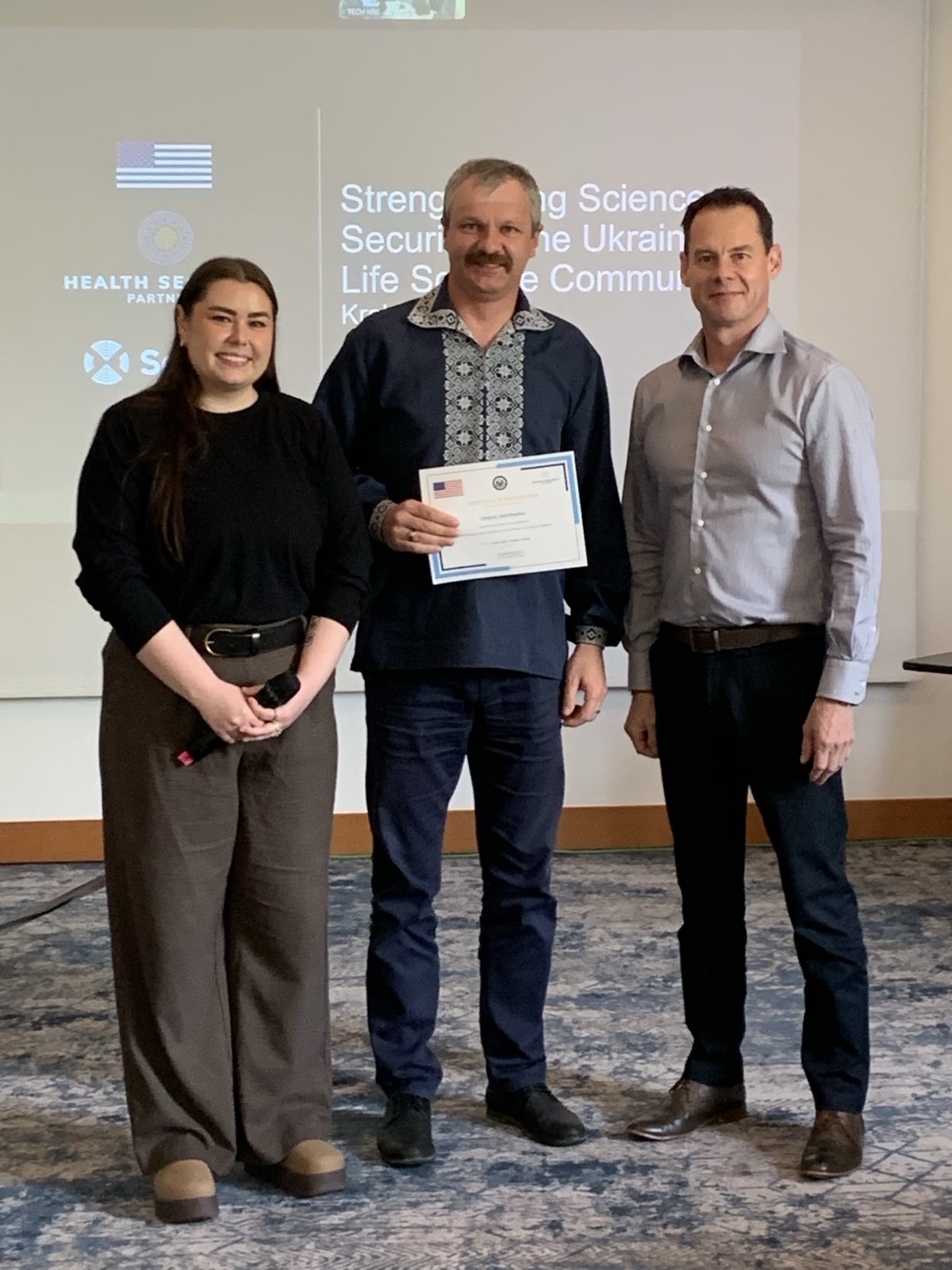
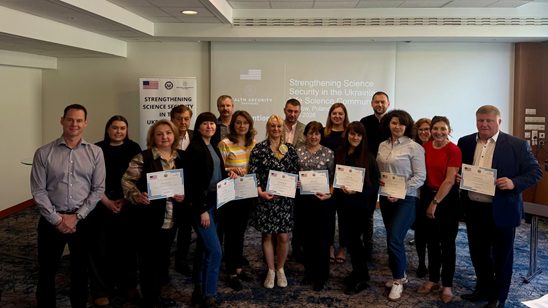
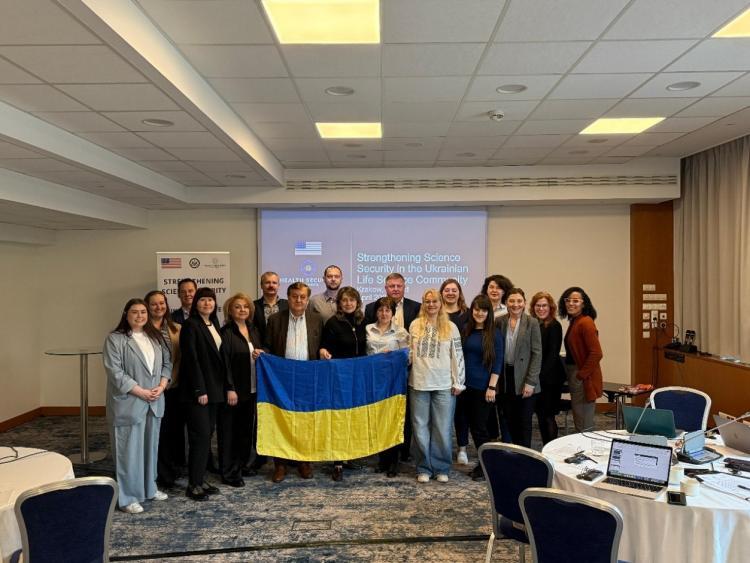
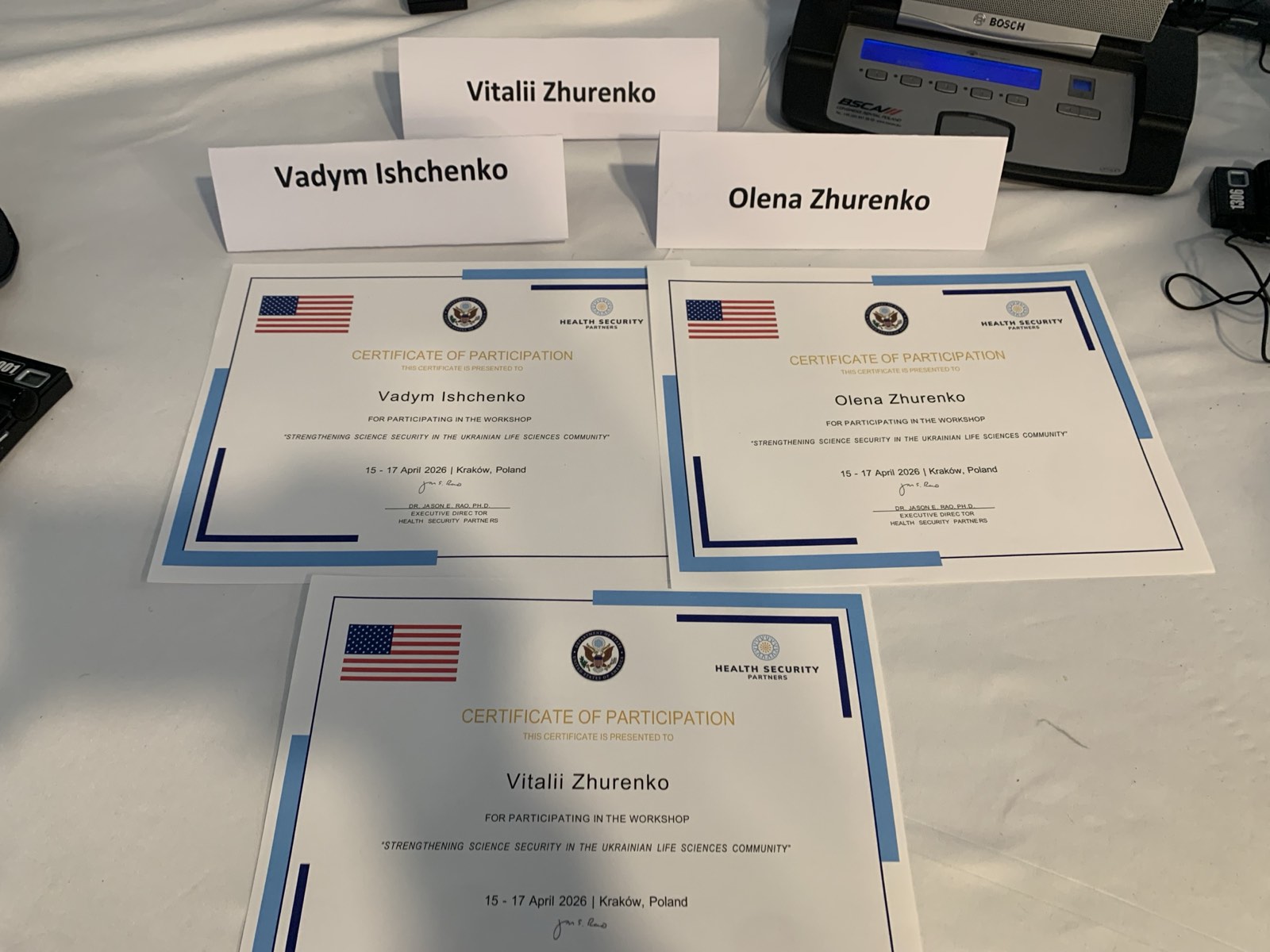
Consequently, from April 15 to April 17, 2026, faculty members from the Department of Vertebrate Physiology and Pharmacology, Olena ZHURENKO and Vadym ISHCHENKO, along with Vitaliy ZHURENKO from the Acad. V.G. Kasyanenko Department of Vertebrate Biomorphology, participated in an internship titled "Strengthening Science Security in the Ukrainian Life Sciences Community." The event was organized by Health Security Partners in Krakow, Republic of Poland.
The main focus of the workshop was cybersecurity in biological laboratories and cyberbiosecurity issues. The event also brought together researchers from other institutions, including the Institute of Food Biotechnology and Genomics of the National Academy of Sciences of Ukraine, Taras Shevchenko National University of Kyiv, Bogomolets National Medical University, V.N. Karazin Kharkiv National University, and Vasyl Stefanyk Precarpathian National University.
Participation in this internship is highly significant for the Faculty of Veterinary Medicine at NULES of Ukraine, especially as the faculty prepares for international accreditation, where compliance with biosafety and biosecurity requirements plays a crucial role. In today's environment, cybersecurity for biological laboratories is no longer just about data protection; it is about actively reducing the risk of biological incidents. This is particularly critical when working with zoonoses, where the compromise or improper operation of digital systems can lead to physical consequences. In the context of handling high-consequence zoonotic pathogens, cybersecurity becomes an essential element of biosecurity.
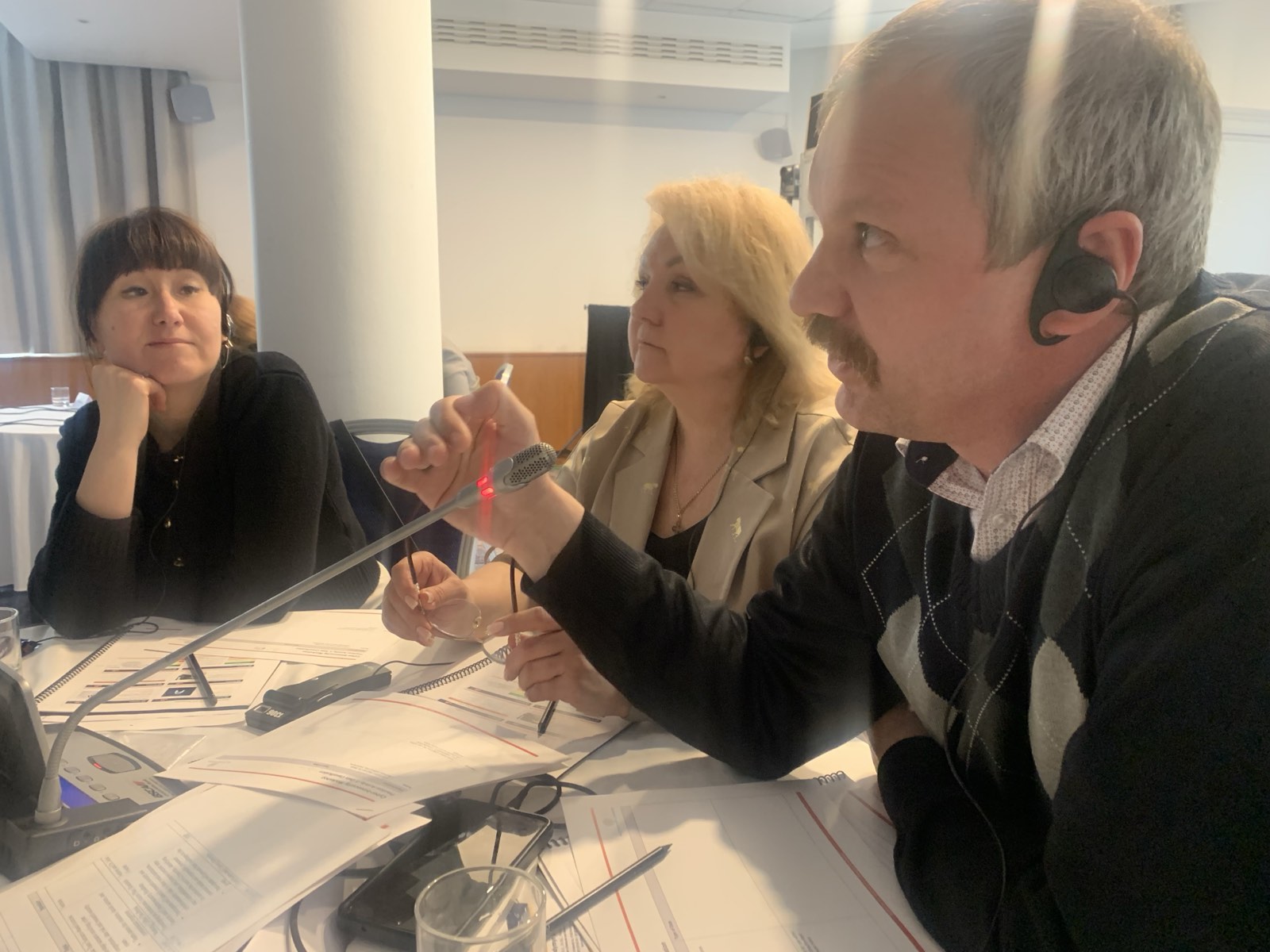
Presentations by domestic experts from the Ukrainian National Office for Intellectual Property and Innovations (UkrNOIVI / IP Office)—namely, Yuliana ZUKH-KIPRIIANOVA, Leading Intellectual Property Professional, and Professor Oksana KASHYNTSEVA, Head of the Intellectual Property Law Development Center—addressed the legal regulation of artificial intelligence use and the legal protection of intellectual property in science.
The participants expressed their gratitude to the event organizers: Emily Hufnagel, Program Coordinator at Health Security Partners, and Erin Fink and Samantha Santos DaSilva, HSP Program Managers, for organizing the training. They also thanked the outstanding lecturers: Dr. Dan Shields from the University of Canberra, Dr. Rebecca Hoile from the University of Sydney, and Dr. Julie Fischer from Georgetown University for delivering engaging and informative sessions. All participants gained valuable new knowledge and had the opportunity to network for future collaborations.