Academic Integrity at the National University of Life and Environmental Sciences of Ukraine
What Is Academic Integrity?
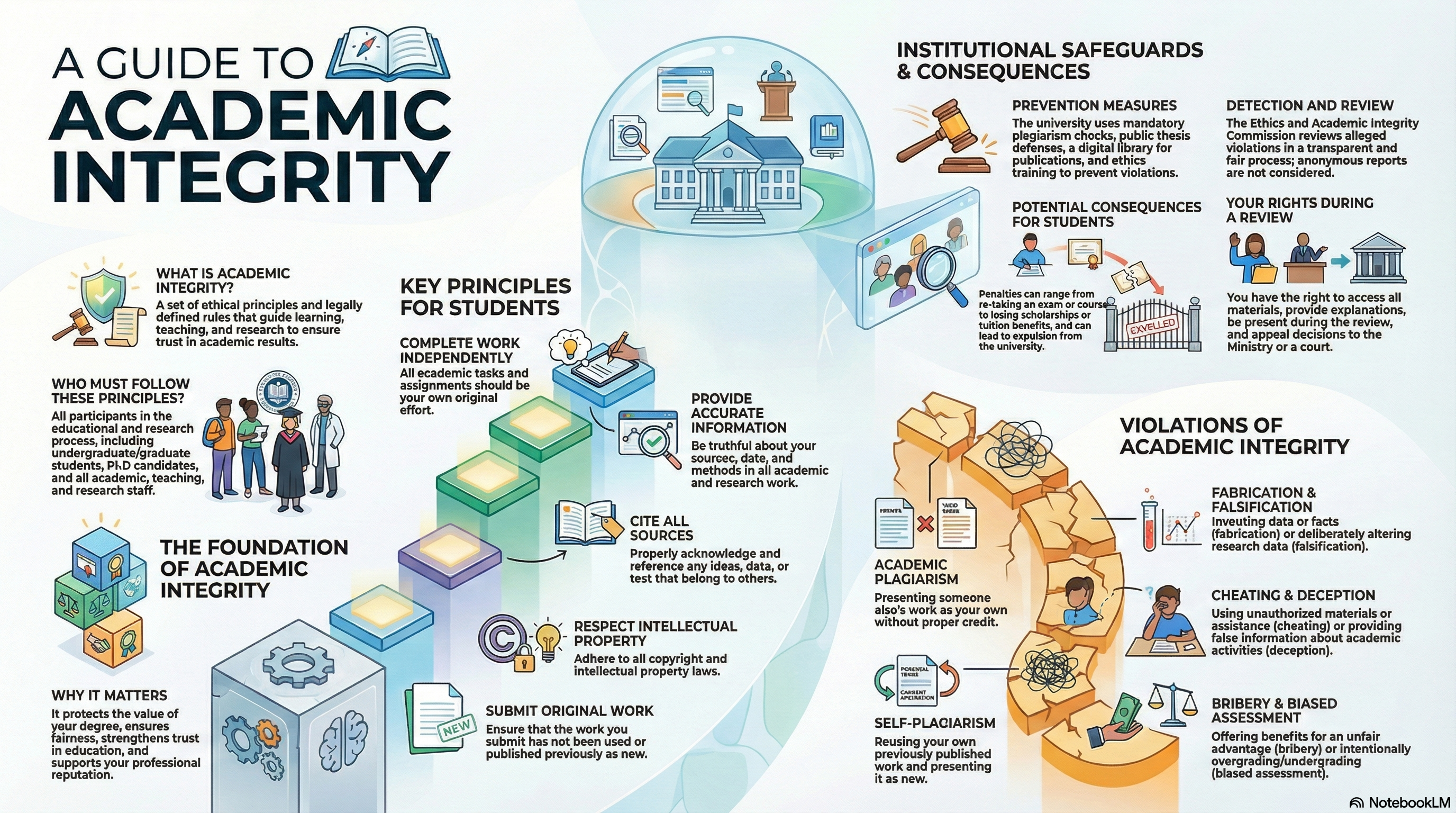
Academic integrity is a set of ethical principles and legally defined rules that guide all participants in the educational process during learning, teaching, and research activities. Its purpose is to ensure trust in academic results and research achievements.
Who Must Follow Academic Integrity?
Undergraduate and graduate students
PhD students and doctoral candidates
Academic, teaching, and research staff
All participants in the educational and research process
Key Principles for Students
Complete all academic tasks independently
Provide accurate information about your academic and research work
Properly cite all sources when using ideas, data, or text of others
Respect copyright and intellectual property laws
Submit only original academic work
Violations of Academic Integrity
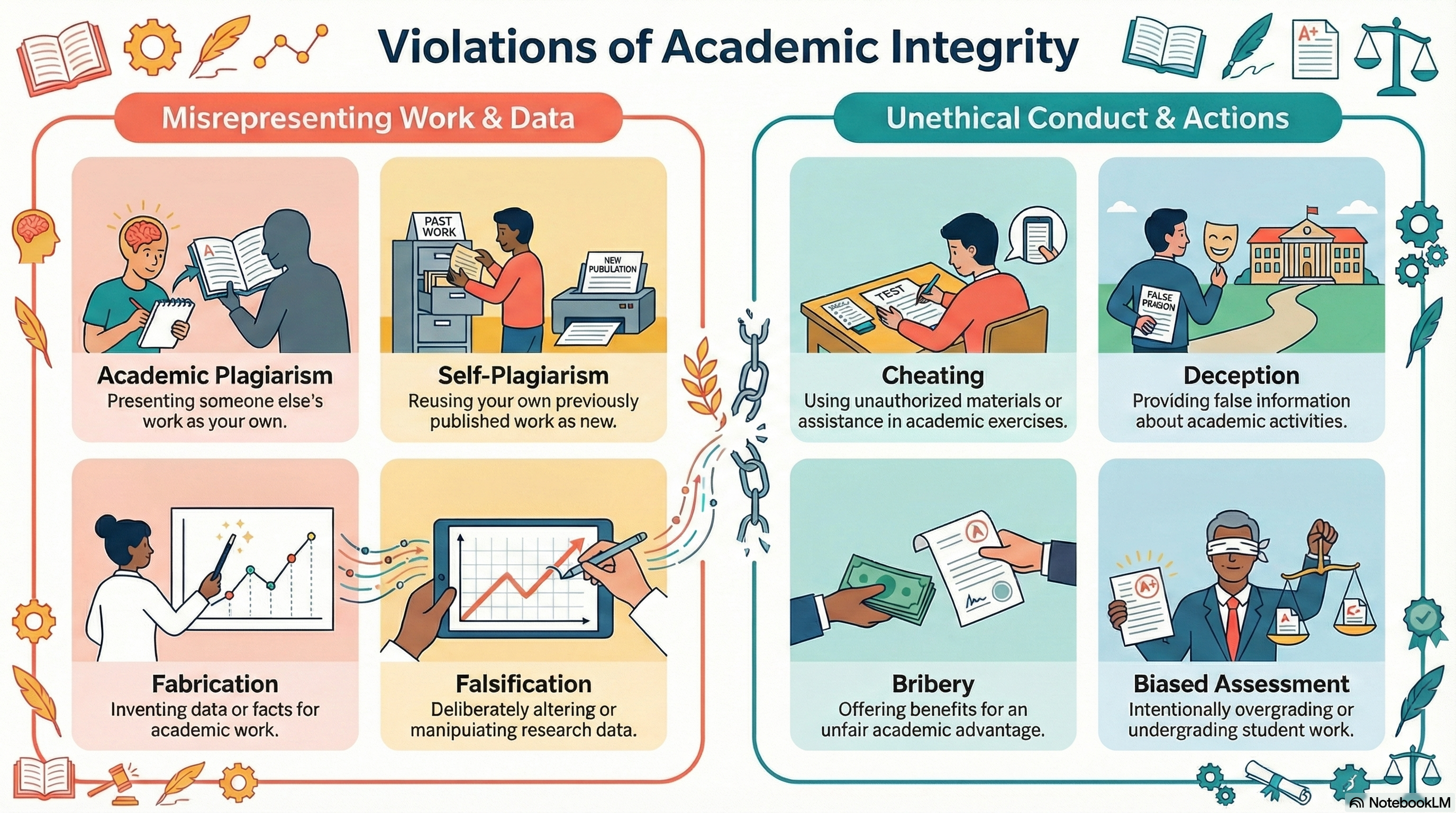
Academic plagiarism – presenting someone else’s work as your own
Self-plagiarism – reusing your own previously published work as new
Fabrication – inventing data or facts
Falsification – deliberately altering research data
Cheating – using unauthorized materials or assistance
Deception – providing false information about academic activities
Bribery – offering or receiving benefits for unfair academic advantage
Biased assessment – intentional overgrading or undergrading
Prevention Measures at NUBiP
Mandatory plagiarism checks for academic and qualification works
Public defense of bachelor’s and master’s theses
Publication of theses and research works in the university digital library
Training in academic writing and research ethics
Open access to academic integrity regulations
Consequences for Students
Reassessment or retaking exams
Repetition of an academic course
Loss of academic scholarship
Loss of tuition benefits
Expulsion from the University (by decision of the Academic Council)
Detection and Review of Violations
Alleged violations are reviewed by the Ethics and Academic Integrity Commission of the University
Academic Council. Anonymous reports are not considered. The review process is transparent, fair, and
based on legal regulations.
Your Rights
To access all review materials
To provide written or oral explanations
To be present during the review process
To appeal decisions to the Ministry of Education and Science or to a court
Why Academic Integrity Matters
Academic integrity protects the value of your degree, ensures fairness, strengthens trust in education, and supports your professional reputation.