


ERASMUS-JMO-2025-MODULE EU_NITRA_UKR: Nitrate pollution prevention for health environment: European experience of the Nitrates Directive implementation for a Ukrainian circular econom
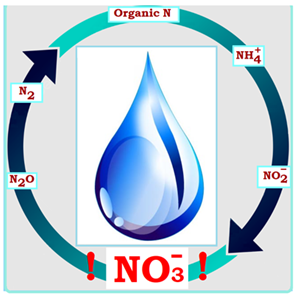
ERASMUS-JMO-2025-MODULE EU_NITRA_UKR: Nitrate pollution prevention for health environment: European experience of the Nitrates Directive
implementation for a Ukrainian circular economy
Description of the project:
Project number: 101238988
Project name: Nitrate pollution prevention for health environment: European experience of the Nitrates Directive implementation for a Ukrainian circular economy
Project acronym: EU_NITRA_UKR
Call: ERASMUS-JMO-2025-HEI-TCH-RSCH
Topic: ERASMUS-JMO-2025-MODULE
Type of action: ERASMUS Lump Sum Grants
Granting authority: European Education and Culture Executive Agency
Grant managed through EU Funding & Tenders Portal.
Data: 01.11.2025 -31.10.2028
Groundwater pollution by nitrates is a serious problem in all European countries with developed agricultural production. In response, the European Community has strengthened regulations to reduce nitrate pollution from agricultural sources, such as the Nitrates Directive, which sets out a specific action plan, including monitoring of all types of water bodies, identification of polluted or at risk of pollution, definition and establishment of codes of good agricultural practice and national action programmes.
The overall objective of the project is to study how to implement the Nitrates Directive in Ukraine through educational and social activities.
Students and schoolchildren who have completed educational courses within the project become key agents and target groups in promoting the Nitrates Directive. Their participation ensures the transfer of knowledge and the formation of an environmental culture among young people and local communities.
Expected results: students, schoolchildren and teachers will have the opportunity to gain new knowledge through an interdisciplinary approach to the implementation of the Nitrates Directive; assess the concentration of nitrates in drinking water, especially in dug wells used for drinking water supply of small communities in Ukraine; develop "nitrate vulnerable zones", understand how to prevent nitrate pollution through good agricultural practices and improved sanitation.
Project duration 3 years. Funding amount 35,000 Euros.
|
The realization of this project is carried out with the financial support from the European Union. This publication (webpage) only reflects the position of the authors, and therefore the European Commission cannot be held responsible for any use of this information. |

PROJECT TEAM:
|
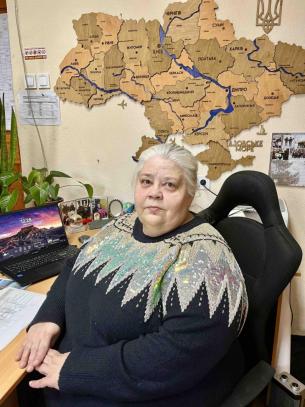
Larysa VOITENKO
|
Project coordinator Associate Professor of the Department of the Analytical and Bioinorganic chemistry and Water Quality; Candidate of the Chemical Sciences +380-44-527-8095 |
|
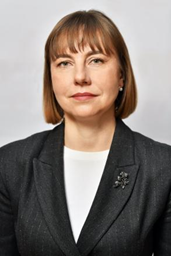
Tetiana USHCHAPIVSKA
|
Project Executor Head of the Department of Analytical and Bioinorganic Chemistry and Water Quality, Associate Professor, Candidate of Chemical Sciences +380-44-527-8095
|
|
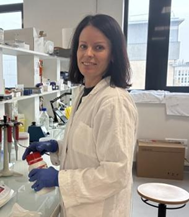
Olha KRAVCHENKO
|
Project Executor Associate Professor of the Department of Analytical and Bioinorganic Chemistry and Water Quality, Candidate of Biological Sciences
+380-44-527-8095
|
|
Nadiia PROKOPCHUK
|
Project Executor Associate Professor of the Department of Analytical and Bioinorganic Chemistry and Water Quality, Candidate of Chemical Sciences +380-44-527-8095 |

ACADEMIC COORDINATORS
-
Oksana TONKHA, Vice-rector for research and innovation, Doctor of Agricultural Sciences, Professor
-
Oleksandr LABENKO, Vice-rector for scientific and pedagogical work and international activities, Doctor of economics, Associate Professor
-
Volodymyr OTCHENASHKO, Head of the Research Department, Doctor of Agricultural Sciences, Professor
-
Oleksandr SOSHENSKYI, Head of International Project Department;
-
Larysa KOVALYOVA, Deputy Chief Accountant;
-
Dmytro LYSENKO, Deputy Head of Planning and Finance Department;
-
Denys RUDEN, Head of the Press Service of the NUBiP of Ukraine;
-
Volodymyr ZAVGORODNIY, Acting Dean of Agrobiological Faculty;
-
Leonid ABARBARCHUK, Associate Professor of the Department of Analytical and Bioinorganic Chemistry and Water Quality;
-
Viacheslav CHOBOTAR, Assistant of the Department of Analytical and Bioinorganic Chemistry and Water Quality.
PROJECT AIMS AND OBJECTIVES
The EU Nitrates Directive (91/676/EEC) is a key policy instrument designed to protect water resources from nitrate pollution, primarily originating from agricultural fertilisers. It obliges Member States to develop and implement action plans, which include identifying pollution risk zones and reorganising the management of mineral and organic fertilisers to minimise leaching into soil and surface water.
Analysing the 33-year implementation of this Directive across the EU is highly relevant for Ukraine. This project focuses on extracting lessons from specific implementation challenges and the solutions developed within the EU. The main obstacles to be examined are:
Heterogeneous Application: Significant variation in how EU countries apply the Directive’s provisions. Ukraine can expect similar, or greater, regional disparities due to differences in governance, climatic conditions, agricultural practices, and the ongoing impact of war.
Financial and Technical Constraints: In the EU, the Directive’s restrictions often necessitate changes to farming methods, impacting farmer income. Similar economic concerns in Ukraine have stalled its formal legislative adoption, despite its inclusion in Ukrainian law following the 2014 European Association Agreement.
Monitoring Deficiencies: Challenges in establishing effective, comprehensive nitrate pollution monitoring lead to implementation gaps. In Ukraine, the groundwater monitoring system was effectively dismantled with the reorganisation of the Ministry of Health and the closure of sanitary-epidemiological stations. Current monitoring of nitrate levels is irregular and limited to surface water, primarily at drinking water intakes.
Climate Change Impact: In southern EU states, high temperatures and drought exacerbate nitrate pollution. A similar trend in Ukraine, where a five-year hydrological drought persists, has caused a sharp increase in nitrate concentrations in water from dug wells - a primary drinking water source in rural areas.
Therefore, studying the EU’s experience in implementing and adapting the Nitrates Directive is crucial for Ukraine. This knowledge is vital for achieving effective water resource management and a circular economy in the nation’s future recovery.
This project is grounded in a multi-criteria analysis of environmental and agricultural science curricula at the National University of Life and Environmental Sciences of Ukraine (NUBiP). These programmes exhibit significant gaps in both theoretical knowledge and practical training. Although Ukraine is renowned as a global breadbasket with fertile lands and high agricultural potential, it lacks the systematic student training in agronomy and ecology - common in the EU - focused on protecting water from agricultural pollution, particularly groundwater nitrate contamination. Most students, educators, and residents in farming communities are unaware of the risks associated with drinking groundwater or consuming produce with high nitrate content.
PROJECT TASKS
Task 1: Develop an Educational Package
A seminar titled “Implementing the EU Nitrates Directive within Ukraine’s Circular Economy: Challenges and Solutions”, for both English and Ukrainian-speaking students.
A blended-learning (b-Learning) intensive course on “Groundwater Nitrate Pollution in Ukraine: Causes, Consequences, and Solutions based on the EU Nitrates Directive”.
Structured debates on defining Nitrate Vulnerable Zones (NVZs).
An online/offline webinar for 16-18-year-old school students, featuring live demonstration experiments for online analysis of water samples using the analytical capabilities of the AQUAMETRICS department laboratory.
A 15-hour online quiz for high school students, with prizes and certificates.
Task 2: Organise a Summer Workshop (b-Learning)
This practical workshop will conduct field testing of nitrate content in surface and groundwater for NUBiP students (agronomy, ecology, biotechnology), coupled with mapping of groundwater nitrate pollution.
-
Enhance knowledge and competencies regarding the EU Nitrates Directive and its potential application in Ukraine.
-
Promote sustainable agricultural practices and water resource management aligned with European standards.
-
Foster environmental awareness and active citizenship among youth and local communities.
-
Support Ukraine’s post-war reconstruction through the advocacy of environmentally sound policies and practices.
Task 3: Disseminate Project Findings to Academic and Professional Audiences
This task ensures the project’s insights reach relevant expert communities through:
-
Coordinating strategic roundtables to plan, discuss, and refine project implementation;
-
-
Presenting research outcomes at relevant international and national scientific conferences, symposia, and applied science forums.
Task 4: Foster University-Society Dialogue for Broader Impact
This task focuses on translating project results into actionable dialogue and public engagement by:
-
Engaging a multidisciplinary spectrum of stakeholders, including local, regional, and national policymakers, civil servants, educators, and public figures.
-
Executing a targeted social media campaign to disseminate findings, raise public awareness, and stimulate discussion among wider communities.
NEWS ANS EVENTS:
1. Успіх НУБіП у конкурсі Jean Monnet – вітаємо фіналістів з отриманням грантів!
5. Презентація проекту Жана Моне на засіданні вченої ради агрономічного факультету
6. THE REGULAR KICK-OFF MEETING OF PROJECT 101238988 – EU_NITRA_UKR
7. REGULAR MEETING OF THE "EU_NITRA_UKR" PROJECT TEAM (101238988)
8. Участь у вебінарі MDPI до Всесвітнього дня води 2026
9. Від поля до лабораторії: дослідження нітратів у продуктах харчування та воді
11. MONTHLY OPERATIONAL MEETING OF PROJECT COORDINATORS Project No. 101238988-EU_NITRA_UKR
12. DIGITAL MODELLING FOR A CLEAN ENVIRONMENT: THE VOICE OF NUBiP IN THE INTERNATIONAL SCIENTIFIC SPACE
13. SUMMER SEMINAR (B-LEARNING) WITHIN THE EU_NITRA_UKR PROJECT HAS STARTED
17. NITRATE-FREE CLEAN WATER: KEY OUTCOMES OF THE EU_NITRA_UKR INTERNATIONAL ROUNDTABLE
18. NUBIP STUDENTS – AGENTS OF CHANGE: HOW WE TEACH COMMUNITIES TO TEST WATER FOR NITRATES
19. HOW THE EU_NITRA_UKR PROJECT TURNED US FROM FIRST-YEAR STUDENTS INTO ENVIRONMENTAL DETECTIVES
LECTURE MATERIALS AND SUMMARY OF EVENTS:
SCIENTIFIC PUBLICATIONS:
1. L. Voitenko, T. Ushchapivska, N. Prokopchuk, O. Kravchenko. National University of Life and Environmental Sciences of Ukraine Kyiv, Ukraine. Nitrate contamination of groundwater: a severe ecological threat in the EU and Ukraine. In: Ukraine and EU: Toward Deep Cooperation in the Security
Sector: conference proceedings (Ostroh, 23-24 September 2025 р.)/ edited by Eduard Balashov. Denys Havryliuk. Ostroh: Publishing House of the National University of Ostroh Academy, 2025. P. 99-104.
2. Kopilevich V. A., Voitenko L. V., Ushchapivska T. I., Prokopchuk N. M., Abarbarchuk L. M., Kravchenko O. O. Hydrochemical assessment and nitrate pollution of groundwaters in the Boyarka Forest research station territory. Тези доповідей учасників Міжнародної науково-практичної конференції «Стале ведення лісового господарства в умовах кліматичних змін: від досліджень до практики» (23 жовтня 2025 року) (Боярка, Київська область). P. 19-23.
PARTICIPATION IN CONFERENCES:
1. Larysa Voitenko, Tetiana Ushchapivska, Nadiia Prokopchuk, Leonid Abarbarchuk, Olha Kravchenko. "Bridging the Gap: Methodological Discrepancies and a Bottom-Up Solution for Implementation of the Nitrates Directive in Ukraine." Prospects and Threats for the Agri-Food Sector of Ukraine in the Context of the Implementation of the European Green Deal: Proceedings of the International Scientific and Practical Conference (Kyiv, May 21–22, 2026). Kyiv: NUBiP of Ukraine, 2026. 357 p. Pp. 19–23.
2. Larysa Voitenko, Tetiana Ushchapivska, Olha Kravchenko, Nadiia Prokopchuk. "Legal Challenges of the Nitrates Directive Implementation in Ukraine: Balance between Democratic Standards and Economic Interests." European Democracy: Legal Dimension: Abstracts of the International Scientific and Practical Conference (Kharkiv, April 24, 2026). Kharkiv: V. N. Karazin Kharkiv National University, 2026. 466 p.