


HOW THE EU_NITRA_UKR PROJECT TURNED US FROM FIRST-YEAR STUDENTS INTO ENVIRONMENTAL DETECTIVES
When First-Year Students Became Water Quality Guardians
Two weeks ago, if you had asked us what the EU Nitrates Directive was, most of us would have shrugged. Today, we can recite its key provisions in our sleep. That’s the power of the EU_NITRA_UKR project - it didn’t just teach us chemistry; it transformed how we see the world around us. It came as a real revelation to us that the dry, boring chemistry we learned at school had transformed at university into hands-on research that people actually need.
From June 1-6, 2026, our summer practical training at the Department of Analytical and Bioinorganic Chemistry & Water Quality, NUBIP Ukraine, became something far more than a routine academic exercise. Thanks to the Erasmus+ Jean Monnet Module project EU_NITRA_UKR (Nitrate Pollution Prevention for Health Environment), we stepped out of our comfort zones and into the real world of environmental auditing.
We, first-year students of the Faculty of Plant Protection, Biotechnologies and Ecology (specialty Biotechnologies and Bioengineering), were given a mission: to apply everything we’d learned in inorganic and analytical chemistry to solve a real problem - nitrate pollution in Ukrainian waters. 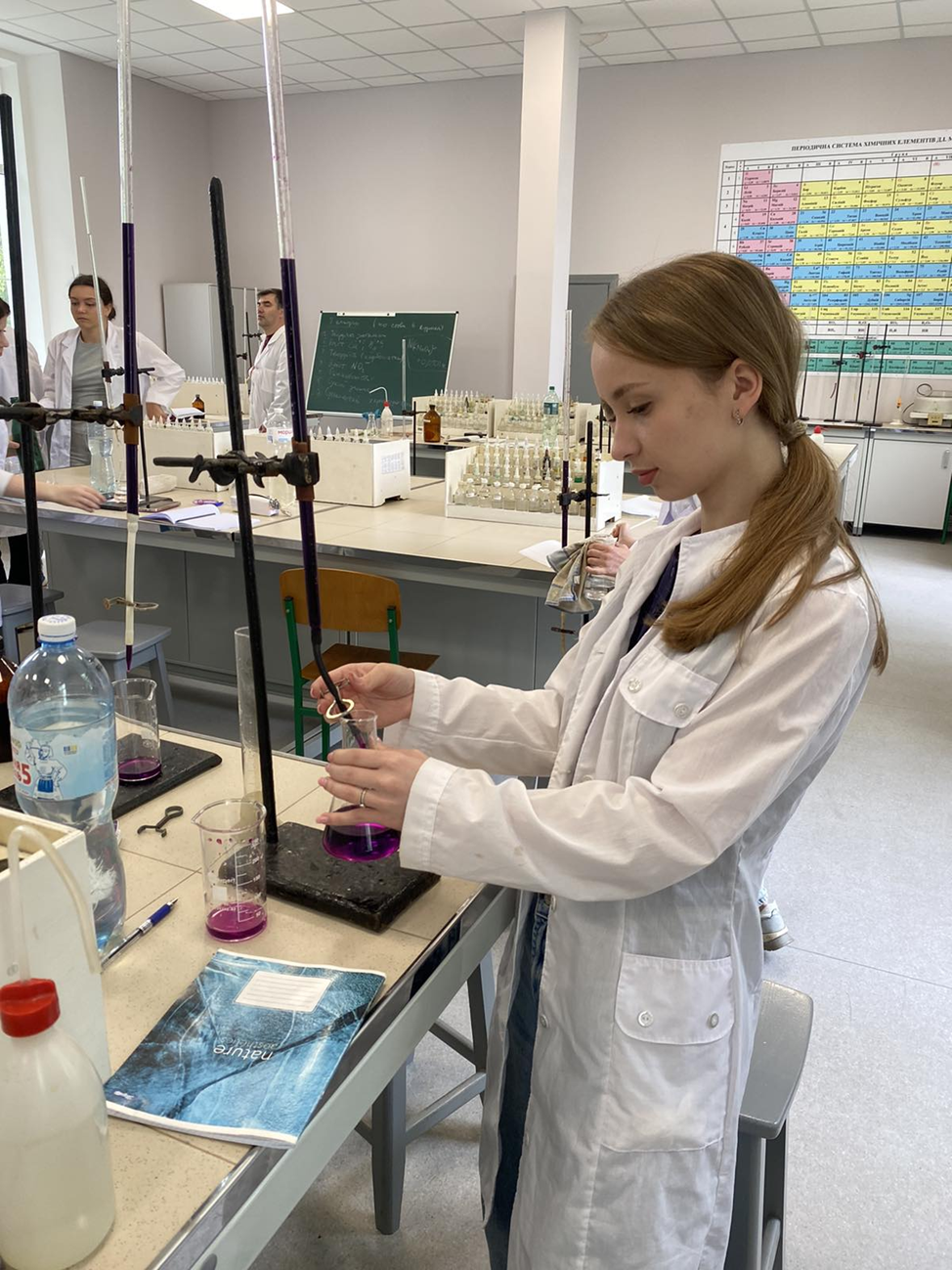
What the EU_NITRA_UKR Project Meant for Us
The EU_NITRA_UKR project isn't just about research - it’s about action. Its goal is to study how to implement the Nitrates Directive in Ukraine through educational and social activities. And we became its first real test subjects.
Through this project, we learned:
-
How to organize field testing of nitrate content in surface and groundwater
-
How to map nitrate pollution
-
How to identify the main sources of nitrate contamination
-
How to prevent pollution based on EU approaches
-
What rules farmers must follow if their land is in a nitrate-vulnerable zone (NVZ)
-
How to safely dispose of used substrates after mushroom cultivation
But more than that, we learned that science without outreach is incomplete. The project’s emphasis on social engagement pushed us to become educators, communicators, and activists - not just lab technicians.
The Six Stages of Our Transformation
Stage 1: Choosing Our Research Objects
E ach of us selected water sources for analysis - surface waters (rivers, lakes), groundwater (wells, boreholes), and centralized water supply systems. Some chose the Vita River, Lake Dobrogo Dub, others went to local villages to sample well water. The diversity of sources made our results richer and more meaningful.
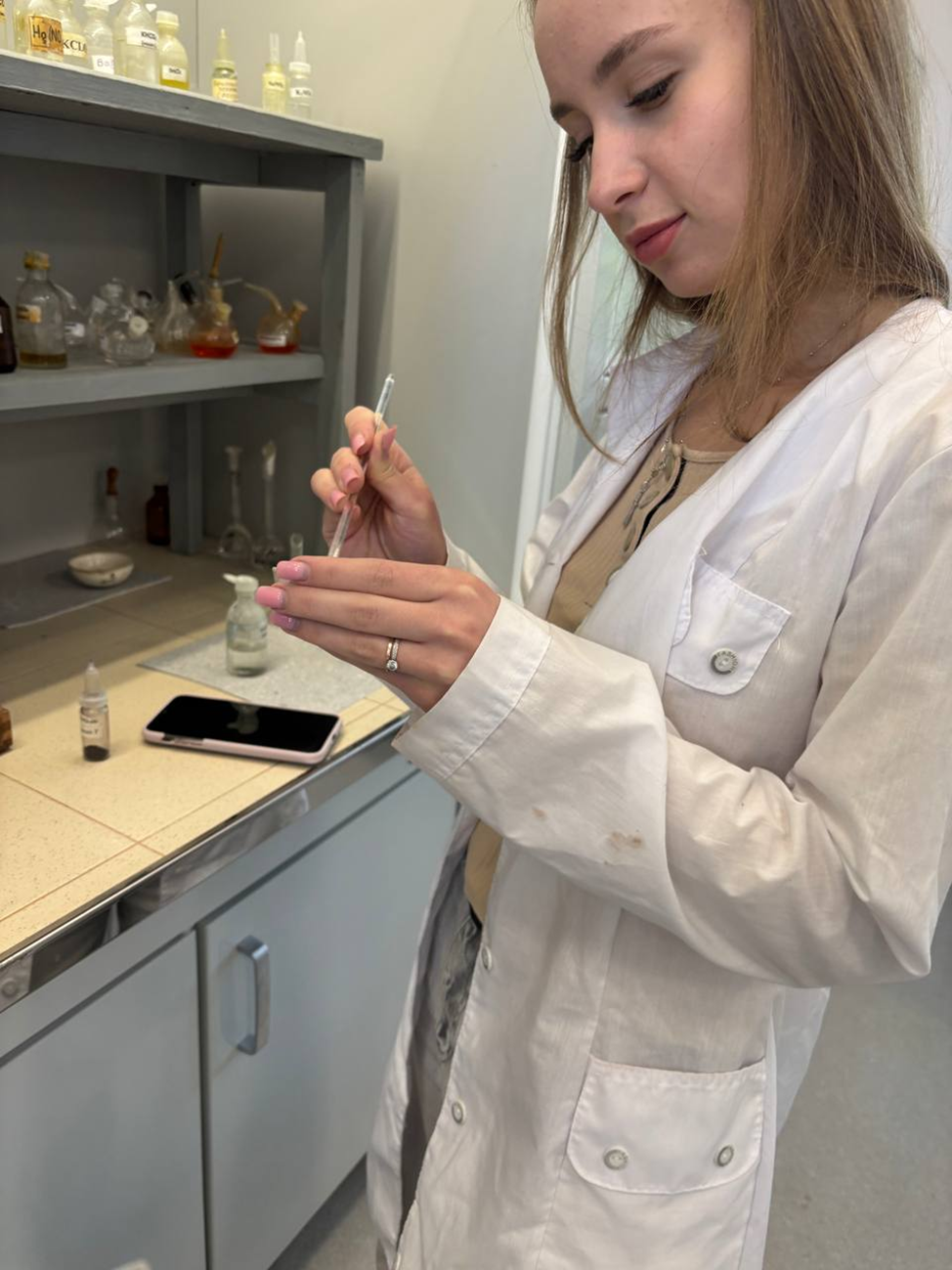
Stage 2: Mastering Hydrochemical Analysis
We conducted comprehensive water quality assessments, determining:
-
pH and smell
-
Total and carbonate hardness
-
Total mineralization (dry residue)
-
Permanganate index (organic pollution indicator)
We discovered that each parameter tells a story about the water’s health - and its safety for human consumption, for fish and water biota.
Stage 3: Navigating the Regulatory Maze
We compared our results against multiple standards:
-
Ukrainian DSanPiN 2.2.4-171-10 and DSTU 7525:2014 (drinking water)
-
EU Directives 2006/44/EC (fish life) and 76/464/EEC (dangerous substances)
-
DSTU 2730:2015 (irrigation water)
Learning to assess water for different purposes - drinking, aquaculture, irrigation - made us realize that one size definitely does not fit all.
Stage 4: The Nitrate Challenge
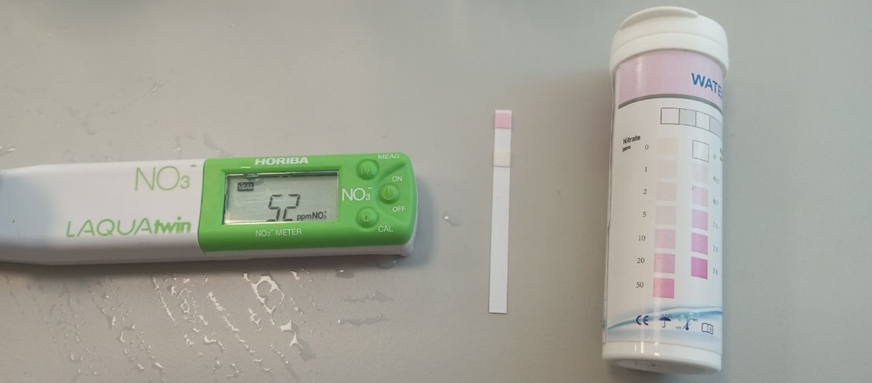
This was the most eye-opening part of our training. We analyzed the same water samples using four independent nitrate testing methods:
| Method | What We Discovered |
|
Test strips |
Quick but imprecise - useful for screening, not for decision-making |
|
Express colorimetry |
Decent accuracy, portable enough for field work |
|
Horiba LAQUAtwin meter |
High-tech but prone to false positives when not calibrated properly |
|
Arbitration method (DSTU 4078-2001) |
The gold standard — accurate but requires a laboratory |
The moment we caught the Horiba meter giving a false reading of 8 mg/dm3 when the actual concentration was below 3 mg/dm3 was a turning point. We learned that no single method is perfect - and that skepticism is a scientist's most valuable tool.
Stage 5: Computer Modeling & The NVZ Discovery
Using custom Python software developed within the EU_NITRA_UKR project, we calculated Sen's slope estimator and Z-statistics to identify nitrate-vulnerable zones (NVZs). For the Vita River, we found a statistically significant increasing trend in nitrate concentration - meaning the territory qualifies as an NVZ under the Nitrates Directive.
This wasn't just an academic exercise. It had real implications for local farmers, who would need to comply with stricter rules if the zone is officially designated.
Stage 6: From Data to Action
We compiled our findings into professional reports and then took them to the people who needed them most - rural communities.
Lessons That Will Stay With Us Forever
Lesson 1: Data Without Context Is Meaningless
We learned that a nitrate concentration of 58.7 mg/dm3 is meaningless unless you know whether the water is for drinking (50 mg/dm3 limit), fish farming, or irrigation. The same number tells a different story depending on context.
Lesson 2: Science Is Political
Ukraine adopted the Methodology for Determining Nitrate-Vulnerable Zones in 2021, but implementation is stalled because of disagreements between the Ministry of Environment and the Ministry of Agrarian Policy. Environmental protection, we learned, is as much about policy as it is about chemistry.
Lesson 3: Technology Has Limits
Our experience with the Horiba LAQUAtwin nitrate meter taught us to never trust a single instrument. Regular calibration and cross-checking with other methods are essential.
Lesson 4: The Sweet Taste of Danger
Many rural residents believe that if well water tastes sweet, it's good water. We taught them that the sweet taste can indicate nitrate contamination — especially dangerous for infants.
Lesson 5: Farmers Are Not the Enemy
Initially, some of us blamed farmers for nitrate pollution. But when we visited local farms, we realized most farmers want to do the right thing - they just lack information and resources. The EU_NITRA_UKR project's focus on education and outreach is exactly what Ukraine needs.
Our Gratitude
This transformative experience wouldn’t have been possible without the dedicated team behind the EU_NITRA_UKR project.
Our Supervisors:
-
Ruslan Lavrik - for his patience, expertise, and for never making us feel stupid for asking “obvious” questions
-
Larysa Voitenko - the project coordinator who believed first-year students could make a difference
-
Olha Kravchenko - for pushing us to communicate science to the public
-
The Lab Team:
-
Olena Danilchenko - for keeping the spectrophotometer running and our spirits high
-
Kateryna Kozak - for explaining the same procedure five times without sighing
-
Oksana Lobotska - for helping us when our burettes wouldn't cooperate.
The EU_NITRA_UKR Project Funders:
-
The European Union's Erasmus+ Programme and the Jean Monnet Module - for making all of this possible
As the project disclaimer says: “This publication reflects only the author's views, and the Commission is not responsible for any use that may be made of the information contained therein”. But for us, the project’s impact is real, tangible, and life-changing.
Final Reflections: The Chemistry of Change
The EU_NITRA_UKR project didn't just teach us chemistry - it taught us responsibility. We now understand that nitrate pollution isn't someone else's problem. It's our problem, and it's solvable.
-
The Nitrates Directive isn't just EU bureaucracy - it’s a proven framework for protecting water resources.
-
Good agricultural practice isn't optional - it's essential for public health.
-
Citizen science isn't a luxury - it's a necessity when official monitoring systems are weak.
-
Student activism isn't naivety - it's the future of environmental protection in Ukraine.
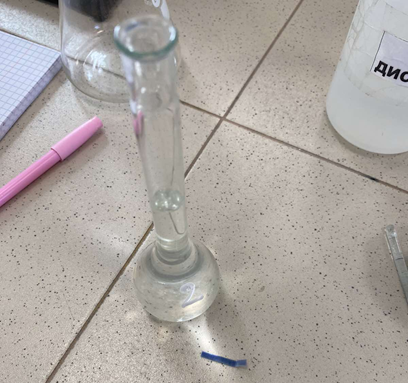
We started this training as chemistry students. We finished it as environmental guardians.
The EU_NITRA_UKR project - our introduction to the real world of environmental chemistry.
The Nitrates Directive - our guide to sustainable agriculture.
The test tubes and field kits - our tools for change.
The communities we visited - our reason for doing this work.
This wasn't just a summer training. It was the beginning of our journey as professionals who understand that chemistry is not about formulas - it's about people, health, and the planet.
The EU_NITRA_UKR project continues until 2028. And we're just getting started.