


CLEAN WATER IS A HUMAN RIGHT: HOW THE EU_NITRA_UKR TEAM AND THE OMBUDSMAN'S OFFICE PROTECT OUR ENVIRONMENT
On February 5, 2026, a landmark event took place for the project's development and its transition to the state level. The team of the ERASMUS-JMO-2025-MODULE EU_NITRA_UKR project, consisting of Larysa VOITENKO, Tetiana USHCHAPIVSKA, Olha KRAVCHENKO, and Nadiia PROKOPCHUK, visited the Office of the Commissioner for Human Rights of the Verkhovna Rada of Ukraine. This visit became a profound dialogue on protecting the fundamental right of citizens to safe water amidst war and post-war recovery. The meeting was prompted by the discussion of the Commissioner’s Special Report on the state of observance of citizens' rights to clean and accessible water under martial law, which outlines the reasons hindering the implementation of the Nitrates Directive in Ukraine. In particular, it was noted that nitrate-vulnerable zones have not been identified according to the Methodology approved by the Ministry of Environment (Order No. 244 of 15.04.2021), and their legal regulation to reduce diffuse water pollution and other implementation barriers has not been introduced.
Constructive Dialogue for Change
The project team was met by representatives of the Commissioner’s Office who directly deal with social and environmental rights: Olena KOLOBRODOVA, Representative of the Commissioner for Social and Economic Rights; Svitlana HLUSHCHENKO, Director of the Department for Monitoring Social and Economic Rights; Julia MIROSHNYCHENKO, Head of the Right to a Safe Environment Unit of the Commissioner’s Secretariat.
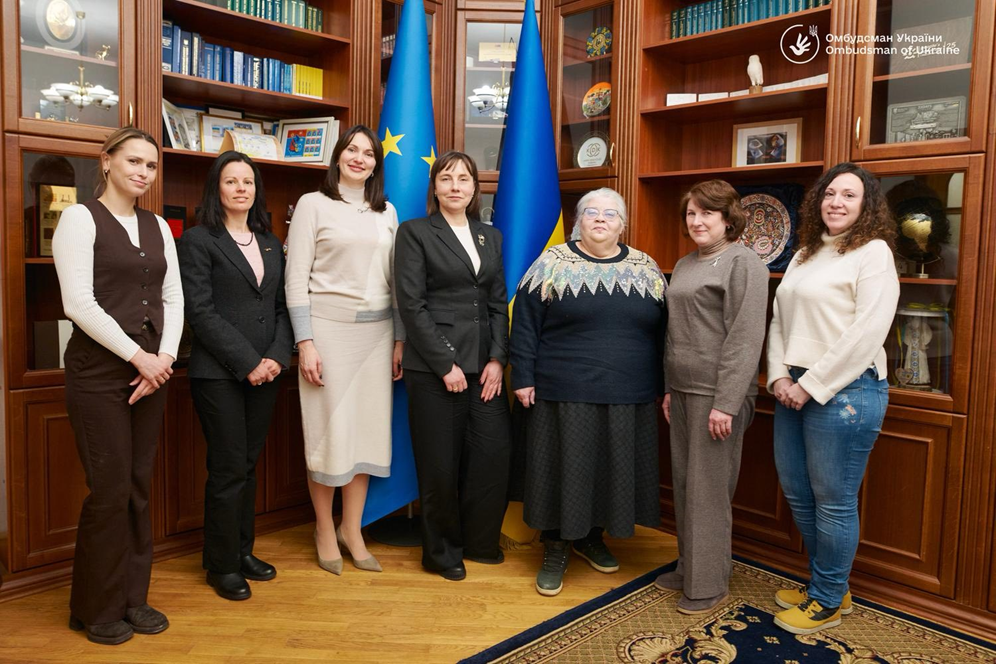
Participants of the dialogue (from left to right): Julia MIROSHNYCHENKO, Nadiia PROKOPCHUK, Olena KOLOBRODOVA, Tetiana USHCHAPIVSKA, Larysa VOITENKO, Svitlana HLUSHCHENKO, and Olha KRAVCHENKO
Why Is This Important Now?
The visit was initiated to discuss the results of monitoring the observance of citizens' rights to water. Today, Ukraine faces a serious challenge: how to effectively implement the European Nitrates Directive when a significant portion of environmental issues remains unresolved.
The visit participants expressed concern over the pace of reforms. Currently, official plans envision the completion of identifying vulnerable zones only by 2036. However, both the project representatives and the Ombudsman's Office agree: such a long delay is groundless.
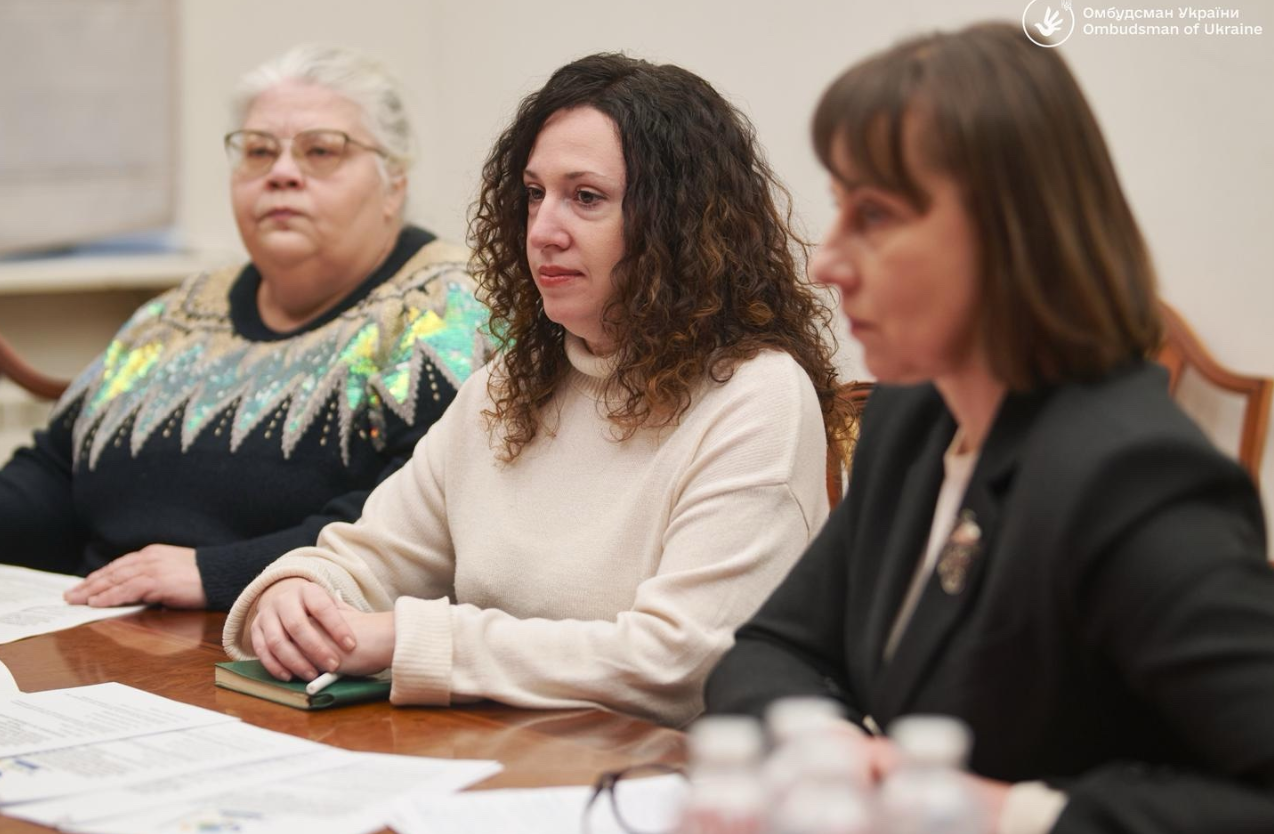
Working session: The EU_NITRA_UKR team and representatives of the Ombudsman’s Office discuss the implementation of the Nitrates Directive in Ukraine
Systemic Obstacles: What Hinders Progress?
During the discussion, critical problems slowing down changes were identified:
-
Lack of Real Monitoring: Existing stations are not configured to monitor nitrates specifically from agricultural sources;
-
The "Grey Zone" of Small Farms: Thousands of private farms remain unaccounted for, although their cumulative impact on water bodies is colossal;
-
Resistance from Monopolists: Powerful market players often simulate changes on paper instead of implementing real environmental practices;
-
Bureaucratic Approach: The risk that the struggle for water will be replaced merely by writing reports.
Concrete Steps: From Theory to Action
The EU_NITRA_UKR team proposed a series of pragmatic steps:
-
Pilot Projects: Initiate real monitoring in a single river basin (e.g., in the Kyiv or Mykolaiv regions);
-
Simplified Accounting: Introduce mandatory registration for small farms (from 5 animals) and provide them with clear environmental instructions;
-
Radical Transparency: Publish monitoring data and audit results of large farms in an open register;
-
Financial Incentives: Link state support for farmers to actual compliance with environmental standards.
The Ombudsman's Role – The Voice of Every Ukrainian's Defender
The uniqueness of this cooperation lies in the fact that the Commissioner for Human Rights can become a key driver of change by appealing to the Cabinet of Ministers and international institutions. The Ombudsman’s voice is the protection of every Ukrainian's interest in a safe environment.
The EU_NITRA_UKR project continues to work toward making European experience a reality in Ukraine, turning "paper" directives into an effective system for protecting our water. As a result of this long and fruitful dialogue, a list of concrete steps has been compiled and will begin to be implemented immediately. Representatives of non-governmental organizations actively fighting for our community's rights to a clean and safe environment will also be invited to cooperate.