

Fifth Consortium Meeting “Train the Trainers – Pilot Session” within the project New Skills for Nearly Zero Energy Buildings
In September 2022, the Verkhovna Rada of Ukraine ratified the Agreement between Ukraine and the European Union on Ukraine’s participation in the EU LIFE Programme — the EU’s main financial instrument supporting environmental protection and climate action. This decision created a legal framework for Ukraine’s integration into European mechanisms aimed at sustainable development, ecosystem restoration, and the incorporation of climate objectives into the post-war recovery process.
Particular attention is paid to the LIFE Clean Energy Transition (CET) sub-programme, which supports systemic changes in the energy sector. LIFE CET contributes to the implementation of key EU policies on sustainable energy and climate, including the European Green Deal, the Energy Union initiatives, the achievement of the EU 2030 energy and climate targets, and the long-term decarbonisation strategy towards 2050.
For Ukraine, participation in the LIFE CET Programme opens new opportunities, including access to additional funding for innovative projects in energy efficiency and renewable energy, integration of national energy policy into the European framework, strengthening cooperation between public authorities, research institutions and businesses, and dissemination of advanced practices and technologies aimed at reducing greenhouse gas emissions and enhancing national energy security.
In accordance with the Consortium Agreement, the fifth scheduled working meeting of the project partners took place in Athens (Pikermi, Greece) within the framework of the project New Skills for Nearly Zero Energy Buildings (NS4nZEBs). The main objective of the NS4nZEBs project is to increase the number of qualified professionals capable of applying photovoltaic systems, smart grids, heat pumps, energy storage solutions and local hydrogen systems in buildings at all stages of design, operation, maintenance and cost assessment. The development of these new skills will foster wider deployment of energy-efficient renewable energy technologies, stimulate investments, and support policies aimed at energy independence and the use of local renewable energy sources in buildings.
The meeting was hosted by Dimitrios Kardomateas, Chairman of the Board of the Centre for Renewable Energy Sources and Saving (CRES). Participants included Paul De Schepper, Project Coordinator, The Knowledge Centre for Energy-related Research, Thomas More University (Belgium); Nina Nikolova, Association of Installers in Bulgaria; Andrea Galeota, Padova Chamber of Commerce (CCIAA PD), Italy; Evelina Stoykova, Sofia Energy Centre (SEC), Bulgaria; Darko Kramer and Elisenda Clèries, Ecoserveis (Spain), responsible for Work Package 5; Georgia Veziryianni, Centre for Renewable Energy Sources and Saving (CRES), Greece; as well as Svitlana Makarevych and Olena Shelimanova, Institute of Energy, Automation and Energy Saving, National University of Life and Environmental Sciences of Ukraine.
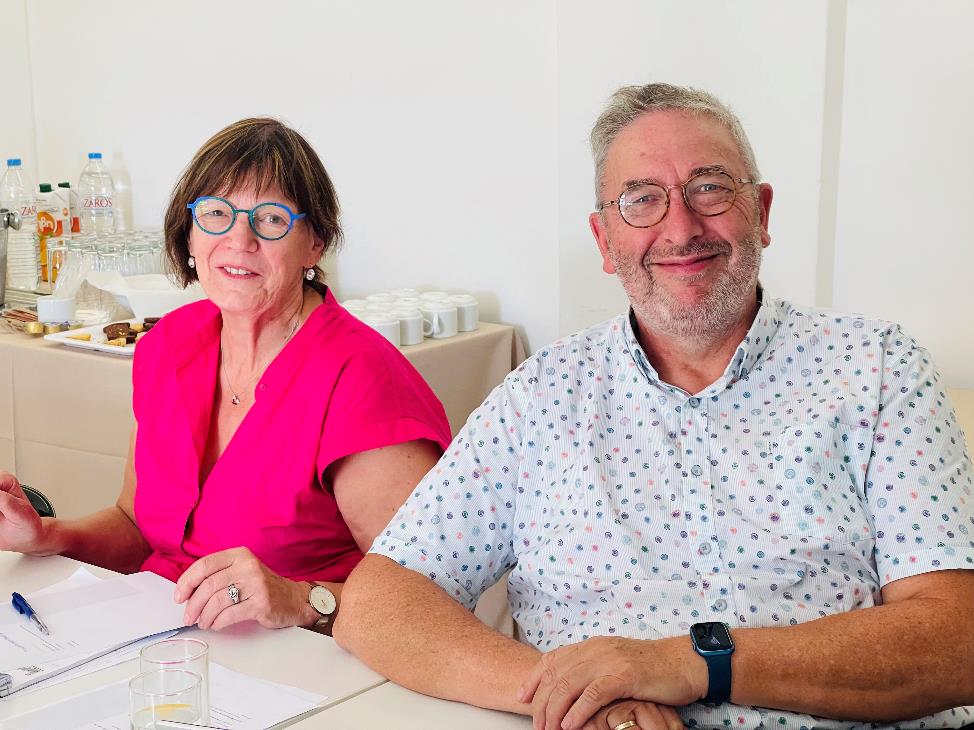
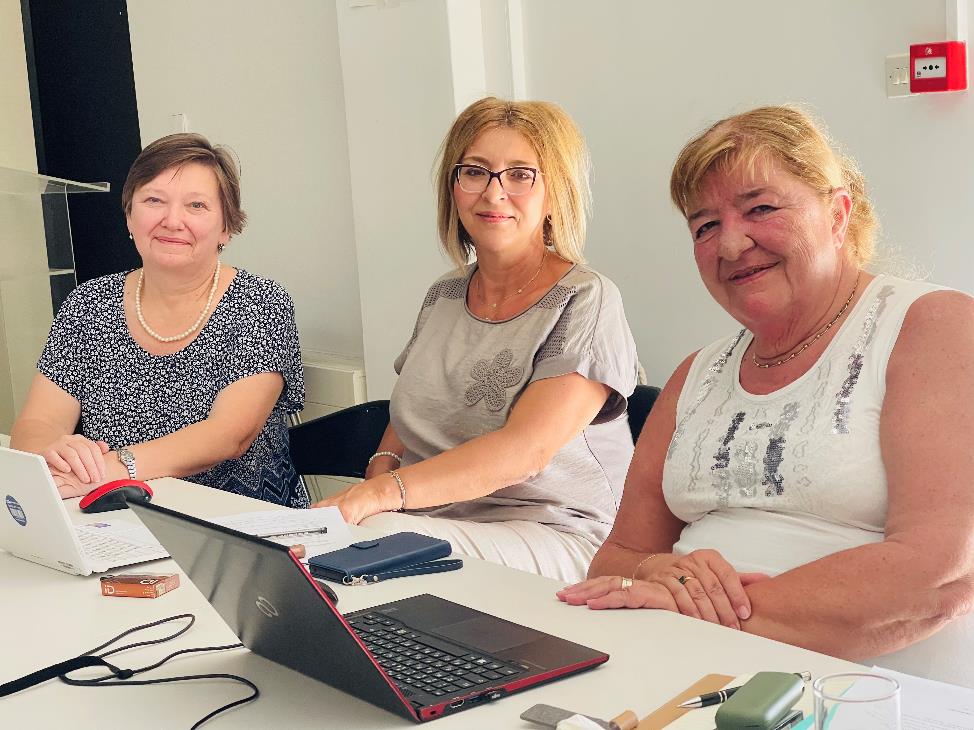
All consortium partners presented the learning materials developed for the project’s e-learning platform, followed by the delivery of a pilot train-the-trainer course and live and online testing of the platform. The event enabled the consortium to assess the quality of the training materials, collect feedback from course trainers, and identify areas for further improvement of the learning process.
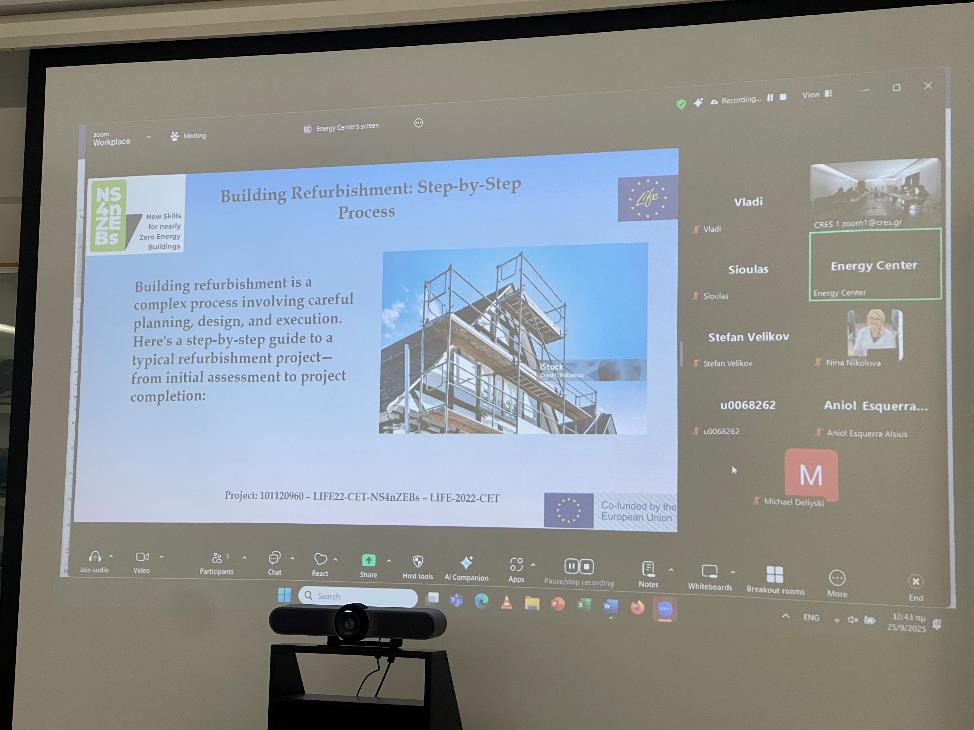
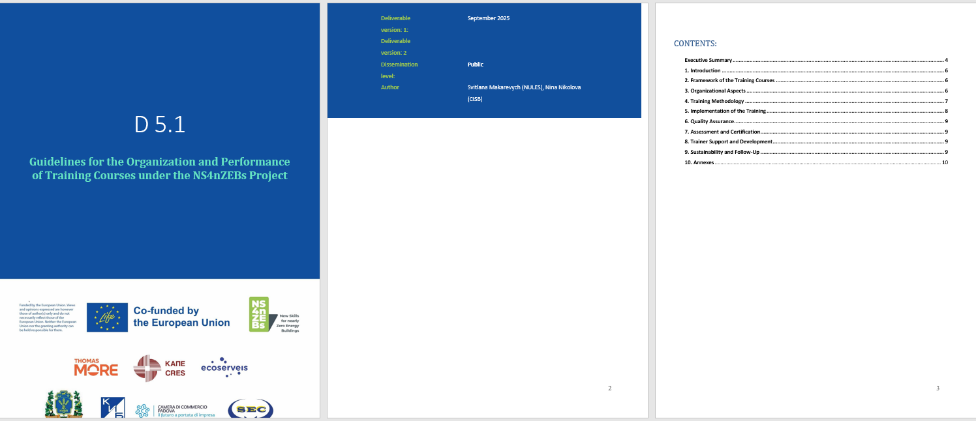
Svitlana Makarevych and Olena Shelmanova (National University of Life and Environmental Sciences of Ukraine) presented the introductory platform modules “Energy Efficiency – Energy Efficiency of Building Systems” and “Biomass Energy”, targeting electricians, thermal energy engineers and architects. In close cooperation with partners from CISB (Bulgaria) and in line with the Grant Agreement, the Guidelines for the Organization and Performance of Training Courses under the NS4nZEBs Project were developed, defining key principles, structure and methodological approaches for training delivery in the fields of energy efficiency and renewable energy.
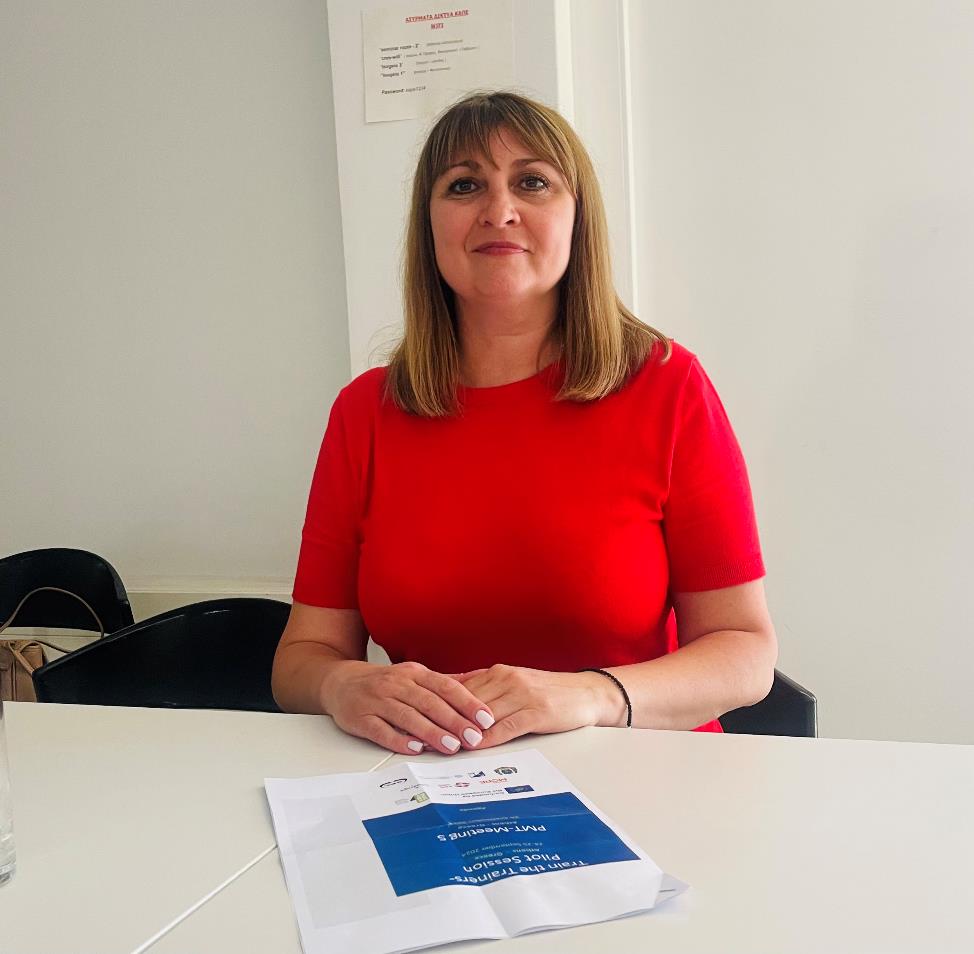
The meeting also included a review of the pilot train-the-trainer seminar and its key outcomes, agreement on next steps within Work Package 5, and planning of future activities aimed at knowledge dissemination, stakeholder engagement and the organisation of certified training courses with Europass Certificate Supplements.
The project coordinators highlighted the high quality and timely implementation of all activities by the NUBiP of Ukraine partners.
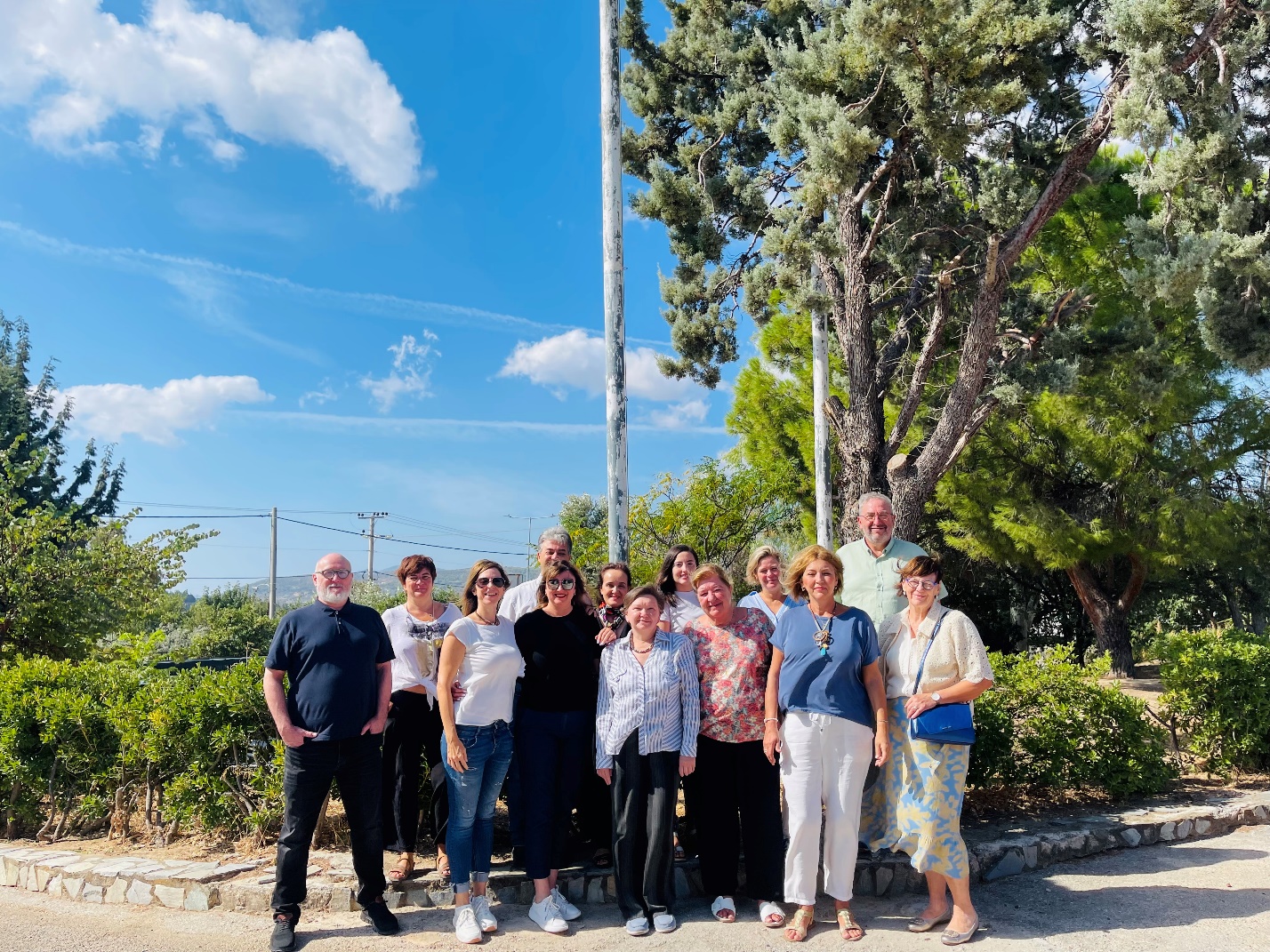
The NUBiP of Ukraine team expressed sincere thanks to Dimitrios Kardomateas and Georgia Veziryianni (CRES) for their warm hospitality in Greece.