
University scientists shared their experience of digital transformation with Polish colleagues
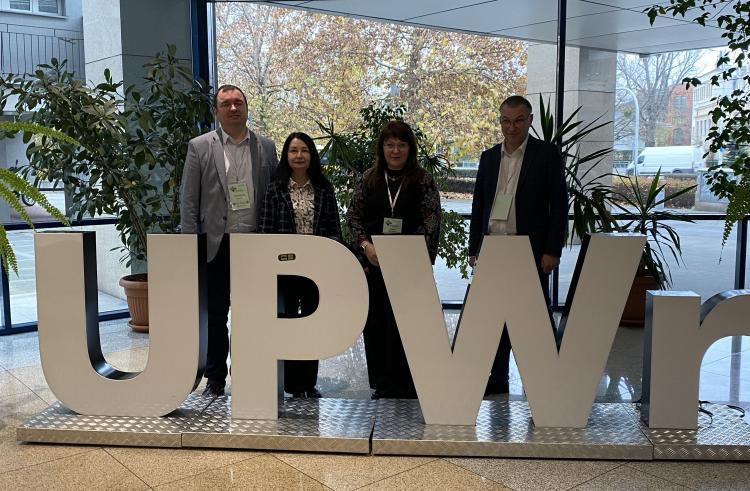
On November 20-21, 2025, the traditional ІХ International Conference «Cyfryzacja edukacji na uczelniach przyrodniczych (Digital Education at Environmental Universities)» was held in Wroclaw (Republic of Poland), the founders and organizers of which are the Wroclaw University of Natural Sciences and the National University of Life and Environmental Sciences of Ukraine.
The international conference brought together participants from the Polish Universities of Wroclaw, Krakow, Gdansk and the National University of Life and Environmental Sciences of Ukraine.
On behalf of the rector of the National University of Life and Environmental Sciences of Ukraine Vadym TKACHUK and vice-rectors for scientific and pedagogical work and digitalization Olena HLAZUNOVA the conference participants were congratulated by the head of the department of foreign philology and translation Svitlana AMELINA who stressed that this joint scientific event is a great opportunity to exchange experience and thoughts on the future of natural science education in a digitalized world, to deepen scientific cooperation between two powerful universities in Poland and Ukraine. Only through joint efforts will we be able to adequately respond to the challenges of our time. Important for modern education in both countries is the discussion of strategies for improving the quality of education, personalizing learning and means of measuring the effectiveness of education using modern technologies, as well as the search for real and effective answers to the questions: How can artificial intelligence revolutionize education, improve the quality and effectiveness of learning?
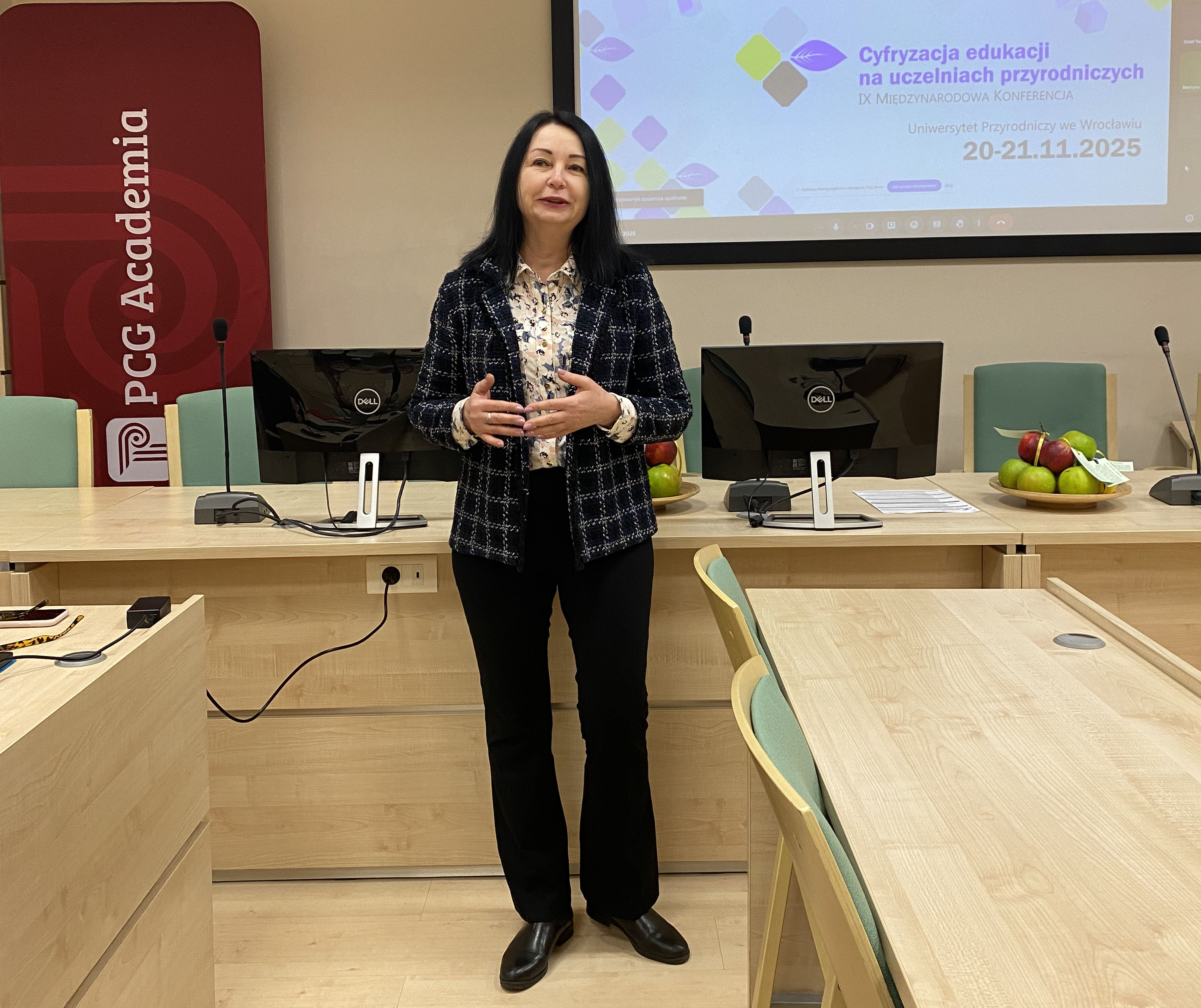
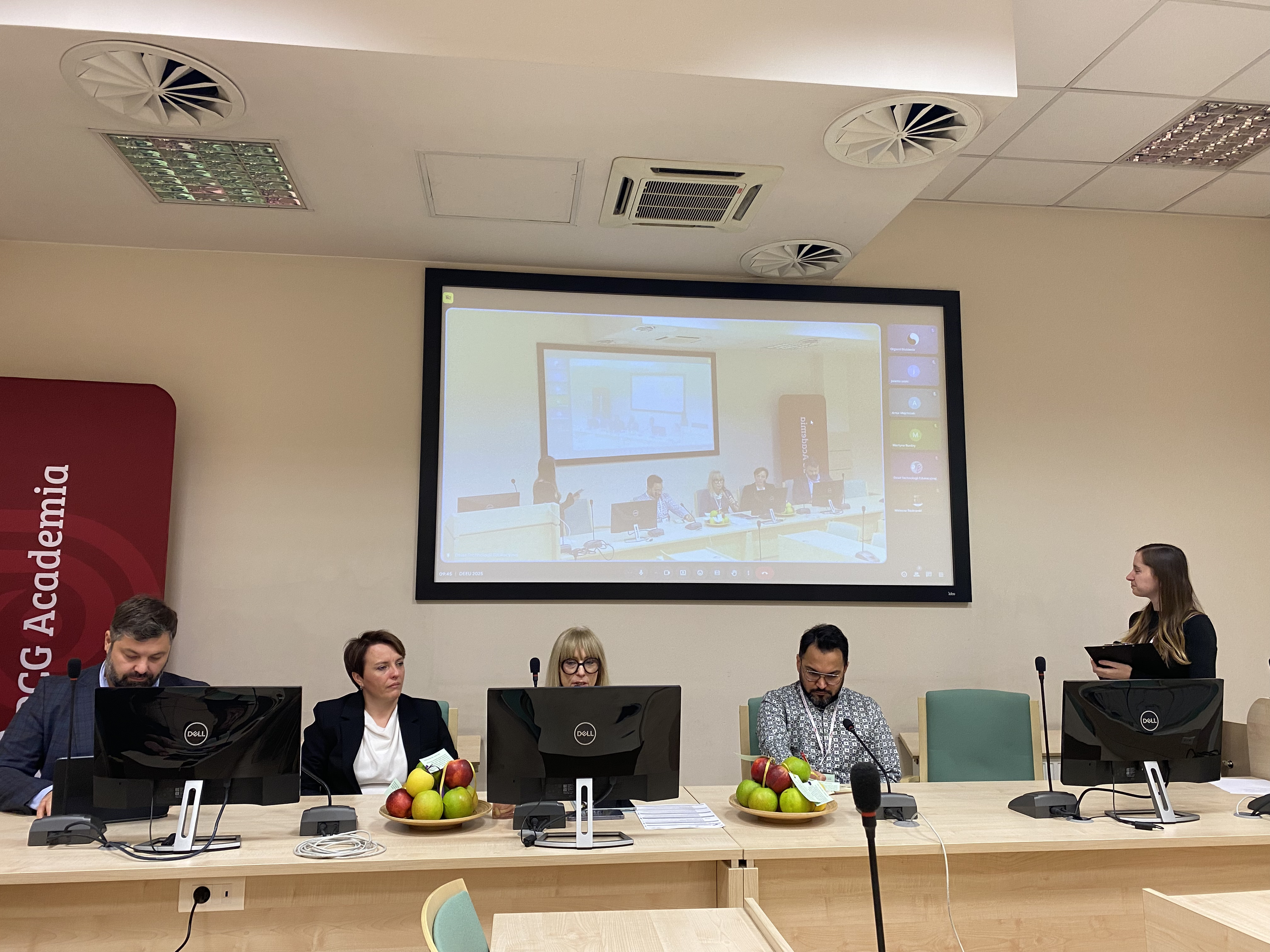
The conference began with a scientific debate in the first section on the topic «Digital university, the human dimension: accessibility, reliability and controllability in the era of artificial intelligence». It was an interesting and informative thing to listen to the opinions of colleagues from the universities of Poznan and Wroclaw.
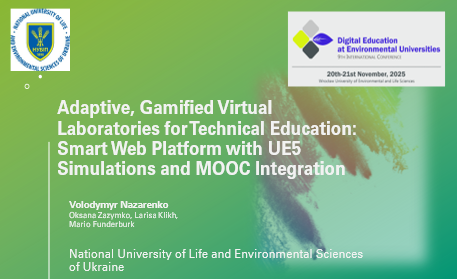
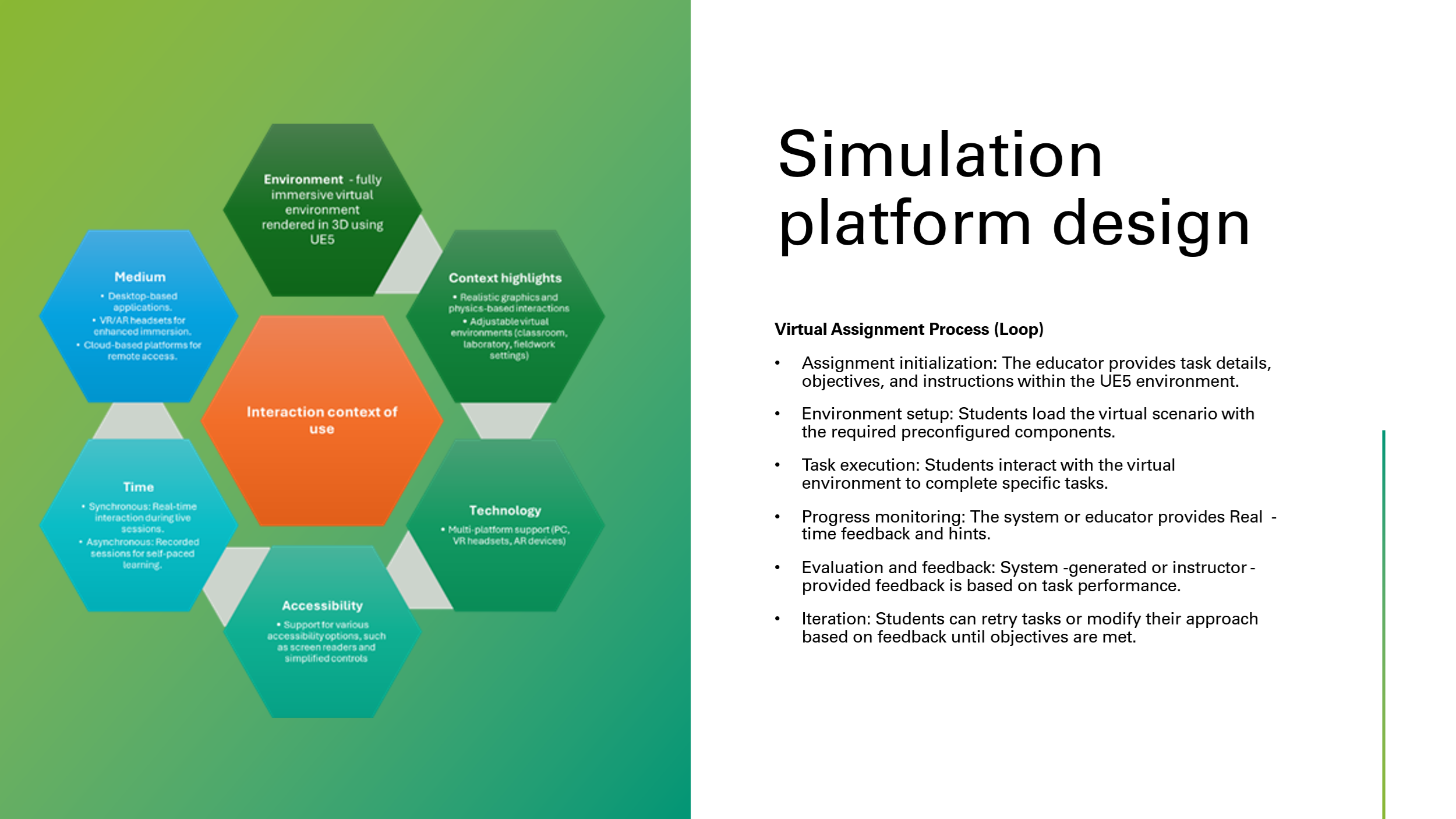
The second section of the conference was attended by Associate Professor of the department of computer systems, networks and cybersecurity, chairman of the council of young scientists of the faculty of information technologies Volodymyr NAZARENKO with a report on «Adaptive, Gamified Virtual Laboratories for Technical Education: Smart Web Platform with UE5 Simulations and MOOC Integration», which aroused great interest among the participants of the international scientific event.
The speaker noted that the motivation and prerequisite factors for the implementation of the study were as follows:
-
traditional STEM labs face challenges of availability, high cost, and low sustainability;
-
power outages (war, pandemic);
-
the need to use remote laboratory alternatives;
-
gamification, AI, simulation – scalable and adaptive education.
Volodymyr NAZARENKO noted that the aim of the study was to develop, implement and evaluate an interdisciplinary simulation platform that will increase the involvement of the faculty and students, improve the accuracy of tasks; maintain the stability of its work and integrate AI and gamification into the educational process.
This study uses a mixed method that combines quantitative surveys, qualitative needs assessments, and pilot testing of a prototype simulation platform. The methodological basis of the work was structured into three key stages: assessment of consumer needs, development of the platform, its implementation and use. Each stage of the work involved students and lecturers from various technical and technological disciplines to ensure relevance, applicability and impact.

The study began with a comprehensive analysis of the study of problematic issues in laboratory training in three academic fields: biochemistry in animal husbandry, materials science in transport technologies, and computer and information technologies. The results of processing the survey results embraced almost 200 students and 14 lecturers, which became the basis for further work.
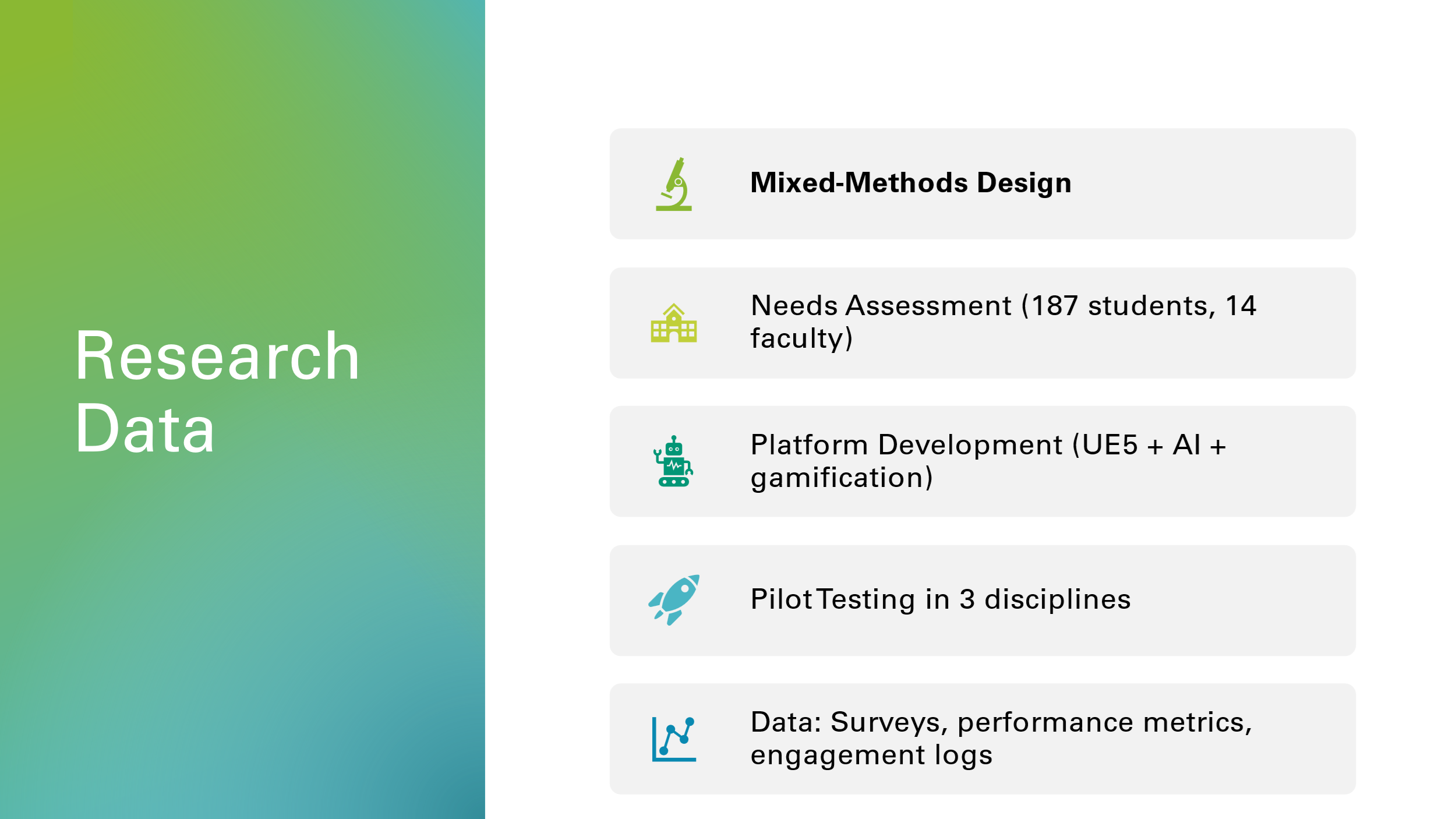
Based on the data obtained, a game simulation platform was developed and applied using artificial intelligence and immersive technologies to improve student engagement and learning outcomes when performing laboratory work.
The speaker noted that the implementation of the developed pilot project and the results of the survey prove that the integration of game elements with simulation tools and AI significantly increases students' motivation, conceptual understanding and task completion, especially in STEM- and technology oriented disciplines.
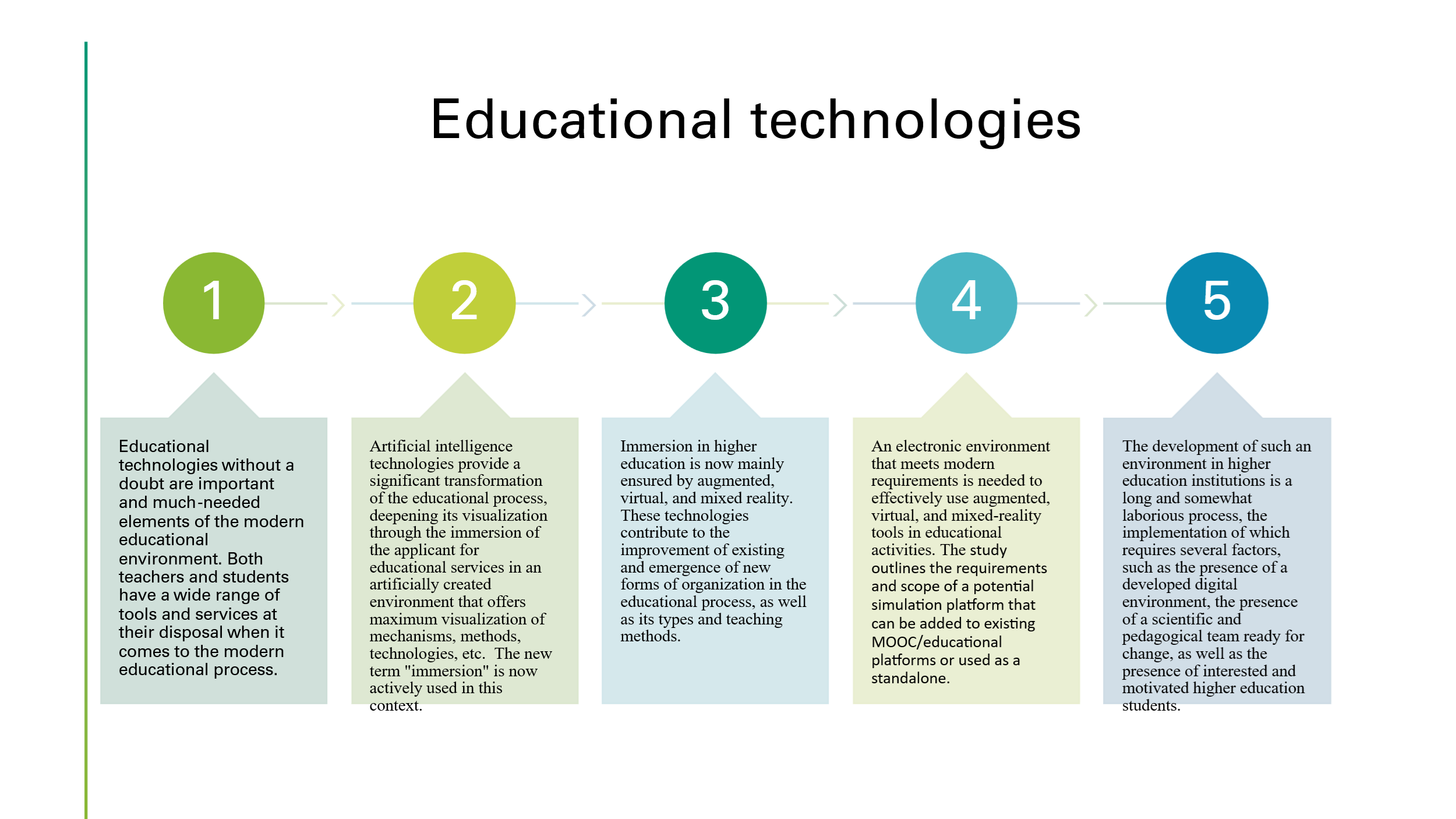
The smart education platform solves a significant pedagogical problem, namely the complexity of conducting hands-on training when laboratories are physically unavailable, and offers realistic simulations with artificial intelligence support for disciplines such as biochemistry, materials science, and computer systems. These systems recreate an important tactile experience and enhance it with predictive analytics, computer vision feedback, and immersion that may not be available in standard labs.
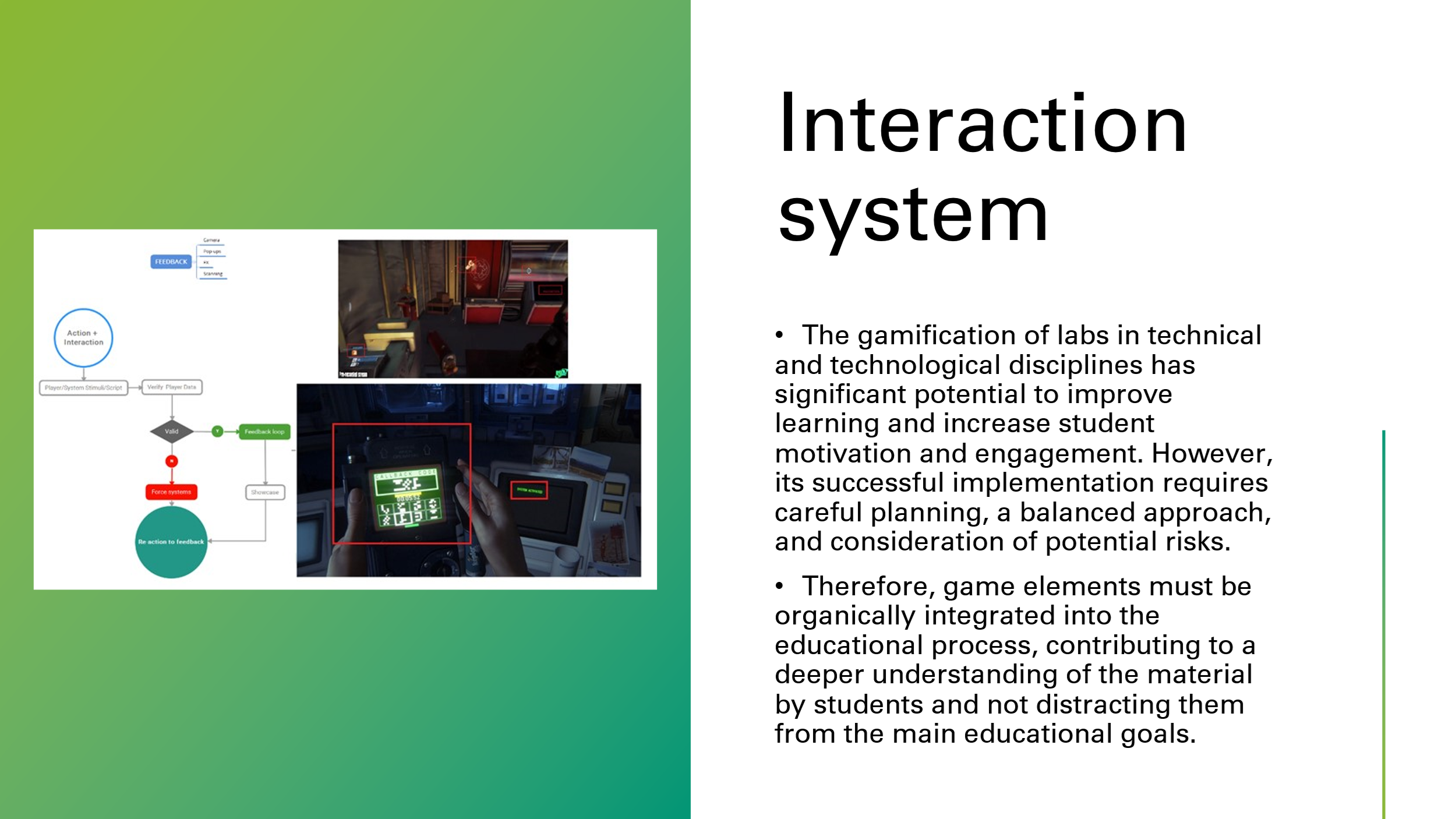
In addition to simulating real-world scenarios with dynamic variables and role-playing challenges, the platform supports the development of teamwork, adaptability, and communication skills. These "soft skills" are often underrepresented in traditional training programs based on lectures or laboratory classes, but they are necessary for modern training of specialists for the labor market.
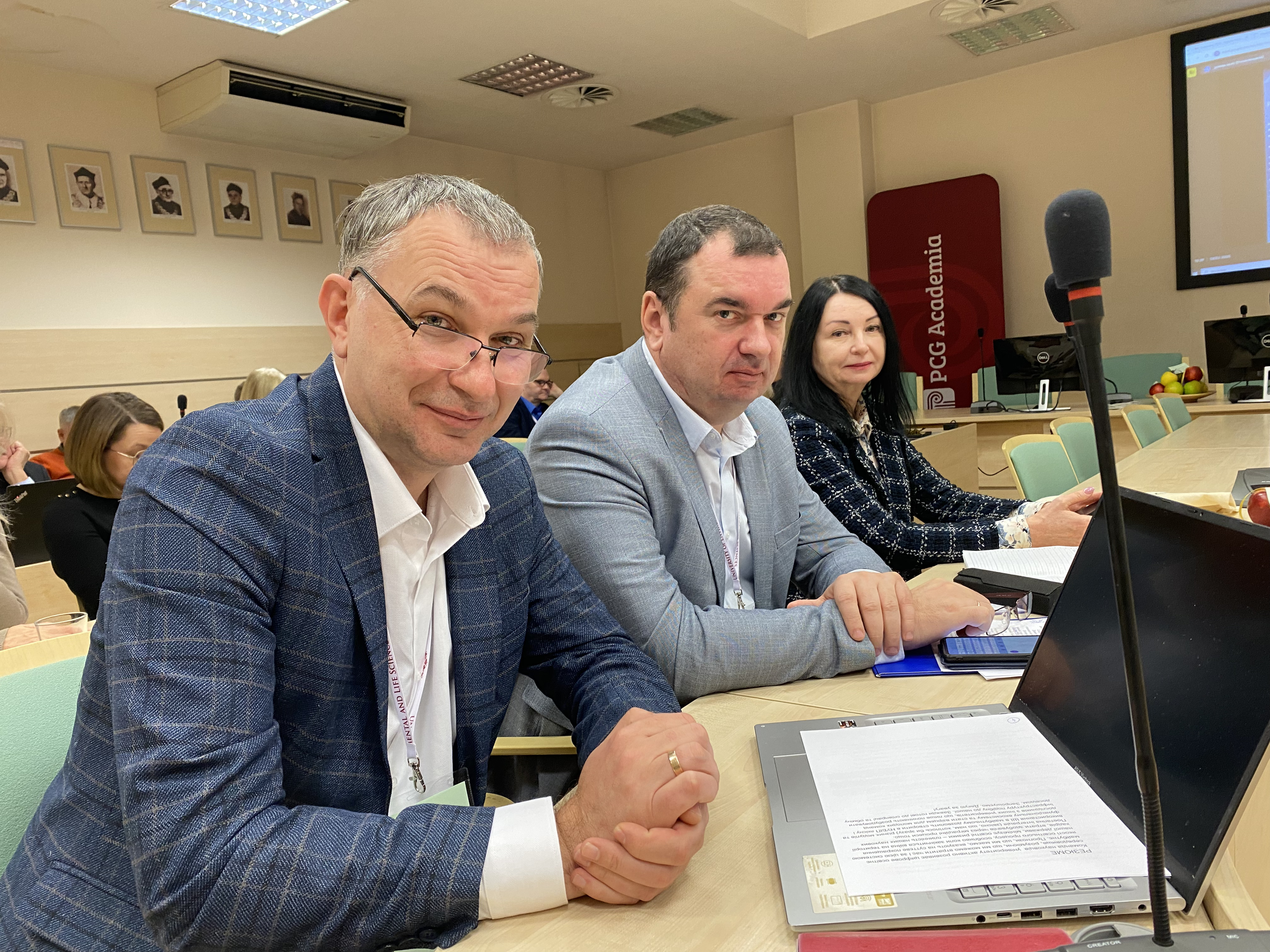
The fourth section of the conference was attended by Associate Professor of the department of administrative management and foreign economic activity, faculty of agricultural management, deputy head of the educational department Petro DROZD, associate professor of the department of management and educational technologies of the faculty of humanities and pedagogy, head of the Center for quality assurance of education Yaroslav RUDYK and head of the department of journalism and language communication of the faculty of humanities and pedagogy Svitlana KHARCHENKO. The participation of university scientists showed the high level of development of the digital ecosystem of NUBIP of Ukraine and their willingness to share real practices of implementing the Digital University model. In their reports, representatives of the university emphasized the strategic transition from the use of separate digital tools to the construction of a comprehensive educational management system, where data, analytics and artificial intelligence technologies become the core of managerial decision-making, as well as the fact that the academic community is providers of language sustainability in the digital age, which, among other things, ensures equality for everyone in the realization of the right to quality education and the achievement of the fourth of the Sustainable Development goals.
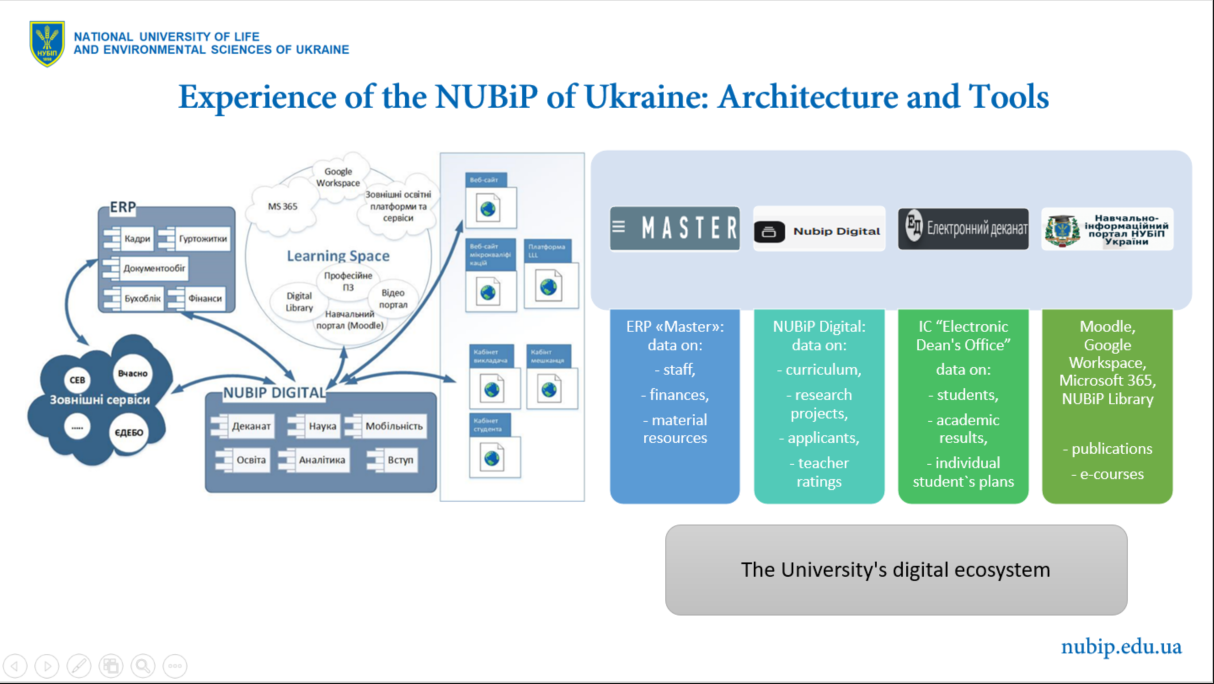
During his presentation Petro DROZD presented the architecture of the digital ecosystem of NUBiP of Ukraine, which integrates key subsystems of the University ERP «Master», NUBiP Digital information platform with software solutions «Electronic dean's office», «My NUBiP», Elearn educational and information portal of more than 5000 active electronic courses based on Moodle, Corporate Services Google Workspace and Microsoft 365, Digital library, cloud storage and Cyber defense solutions.
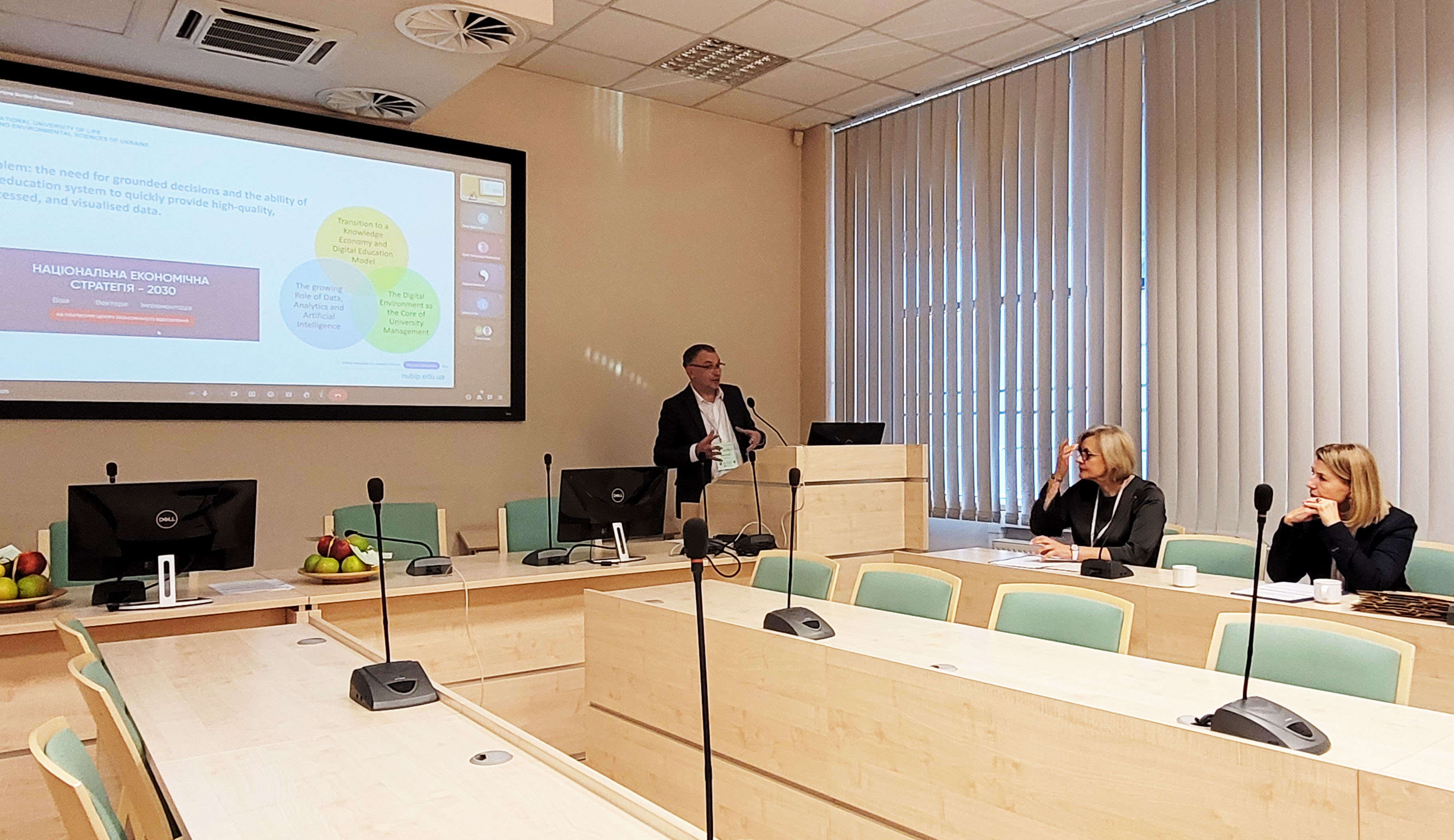
This integration creates a single space where the student's data accompanies the entire life cycle, and the management of the educational process becomes transparent, operational and evidence-based approaches.
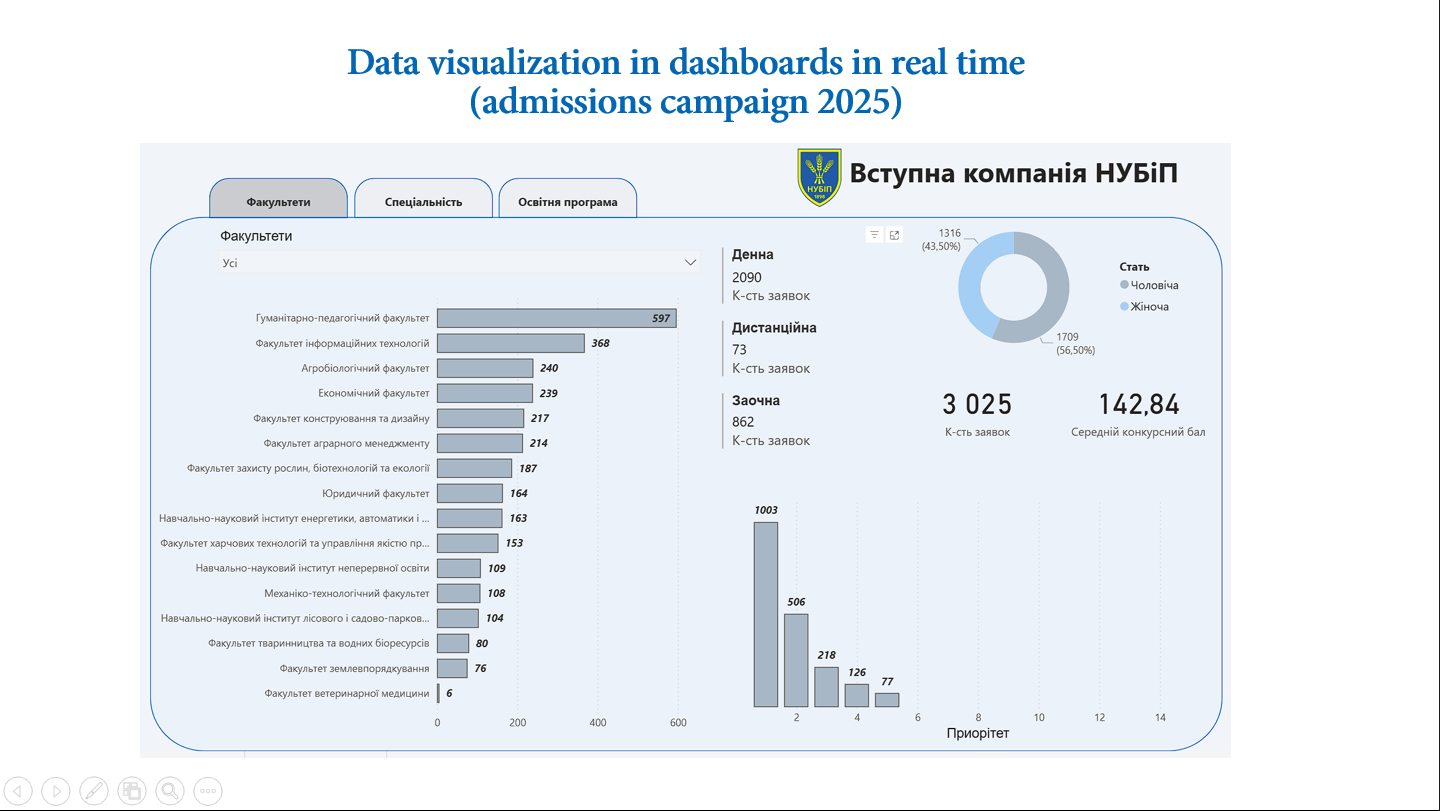
Special attention in his speech Petro DROZD paid to the analytical tools that the University develops for further integration with the official website during the entrance campaign. We are talking about transparent visualization in the form of dashboards of such indicators as the number of applications, the dynamics of popularity of specialties, and the course of competitive stages. This will reduce the stress level of applicants and their parents, ensure trust and increase the openness and transparency of the entrance campaign process.
The report also highlighted the key challenges of digital transformation in wartime: the lack of standards for integration between similar systems in different Western military districts of Ukraine, threats to cybersecurity, increased attention to the level of digital competence of research, teaching and teaching staff of universities, limited funding and the need to create a sustainable digital culture. Despite everything, our University demonstrates a step-by-step, methodologically balanced model for implementing digital solutions, starting with LMS Moodle in 2015, the introduction of the «Electronic dean's office», the transition to corporate accounts (2018-2019) and the creation of comprehensive analytical services in 2024-2025.
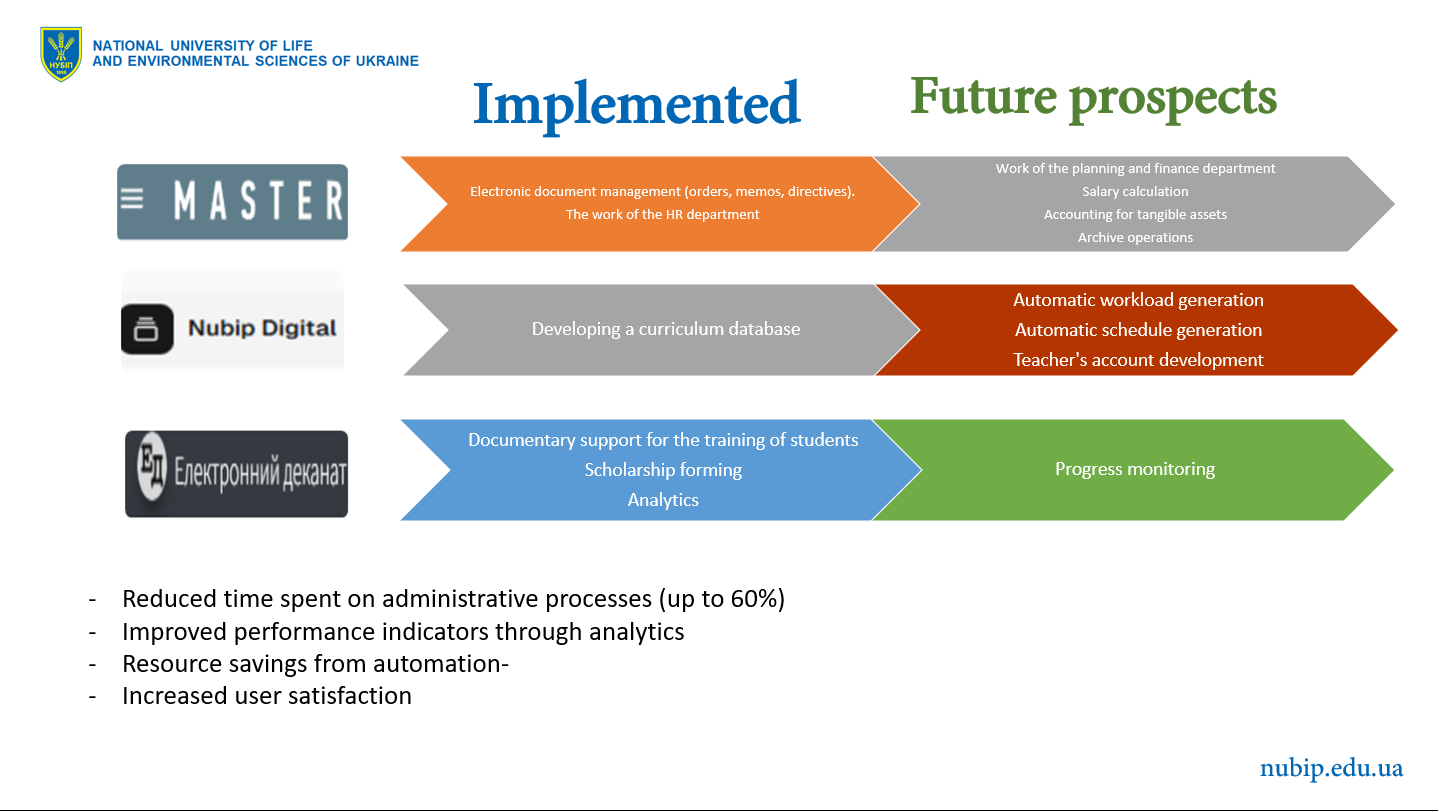
The model presented by Petro DROZD has a clear novelty: deep integration of ERP, LMS and analytical platforms; adaptation of management processes to martial law and limited resources; development of a digital maturity model that meets the specifics of universities of life sciences. The results of implementation are already noticeable: reducing the time spent on administrative processes by up to 60%, improving the quality of analytical support for solutions, saving resources and increasing user satisfaction with digital services.
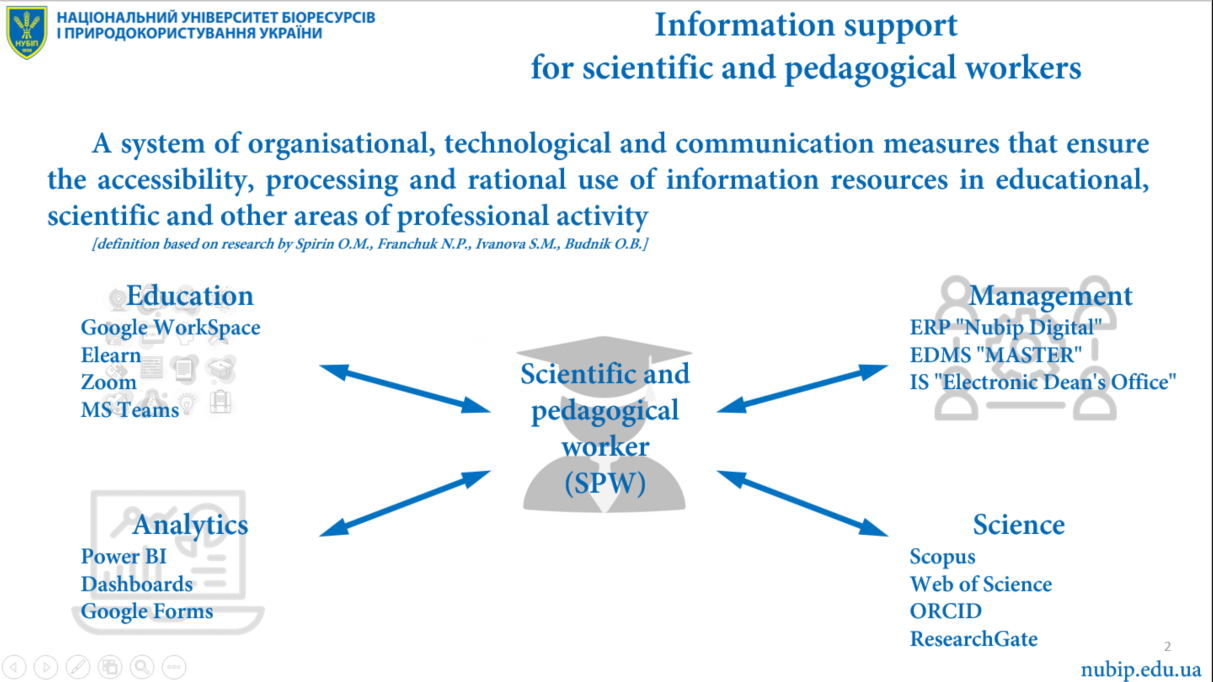
In his report Yaroslav RUDYK developed the topic the university digital ecosystem. His speech was devoted to the principles of information support for research and teaching staff of the university of life sciences and the specifics of ensuring their digital activities.
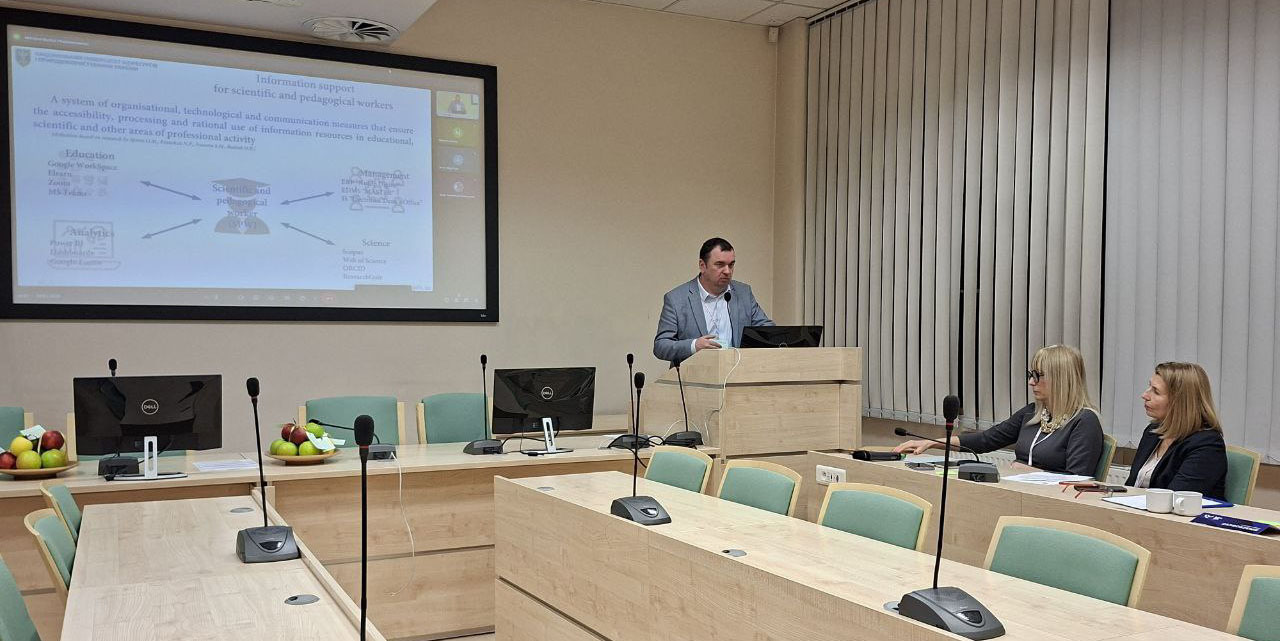
The scientist outlined a key problem – the rapid growth in the number of digital tools used by lecturers for teaching, research and management, which requires clear standardization of requirements and rules. A significant number of them, according to the speaker, creates a need for the formation of a unified information support policy and usage regulations.
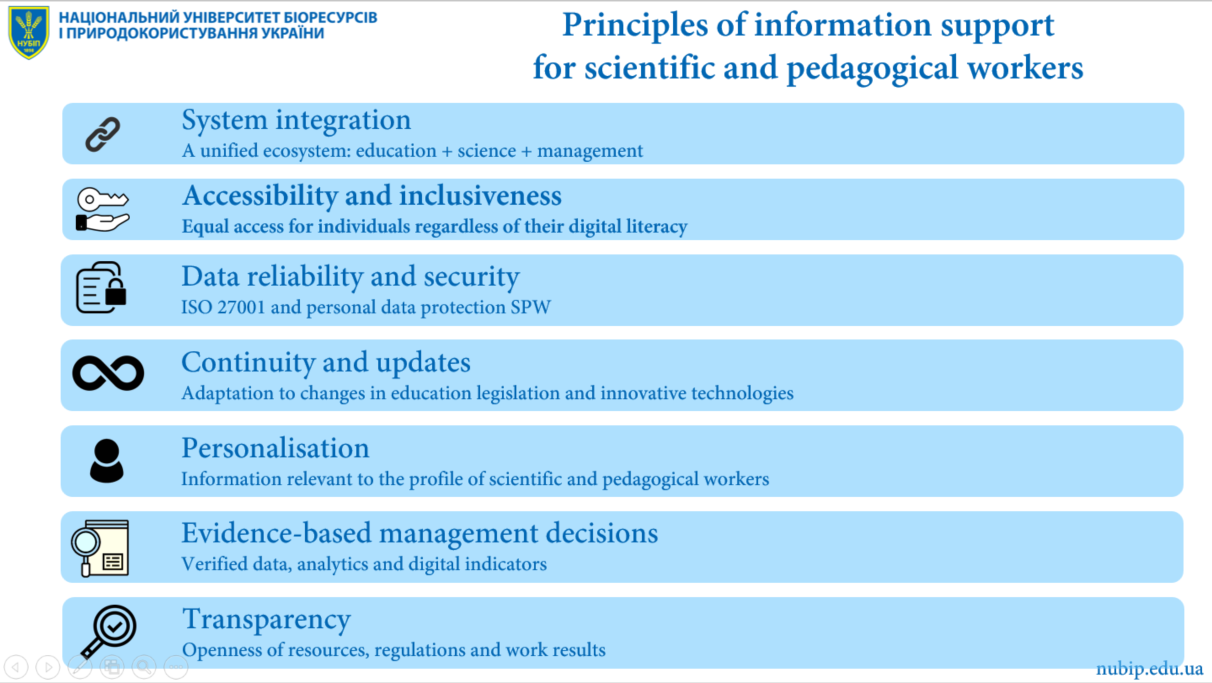
The central place in the speech was occupied by the principles of teacher support in the digital ecosystem of the university: system integration of education, science and management; availability of services for users with different levels of digital literacy; compliance with cybersecurity standards and ISO 27001 requirements; continuous updating of services in accordance with changes in legislation and technologies; personalization of information; evidence-based management decisions; transparency of internal processes and resources.
A special group of challenges is represented by universities of life sciences, where the educational process and scientific activities are based on interdisciplinarity. This involves working with laboratory protocols, field experiments, long-term soil and climate monitoring data, and using specialized software.
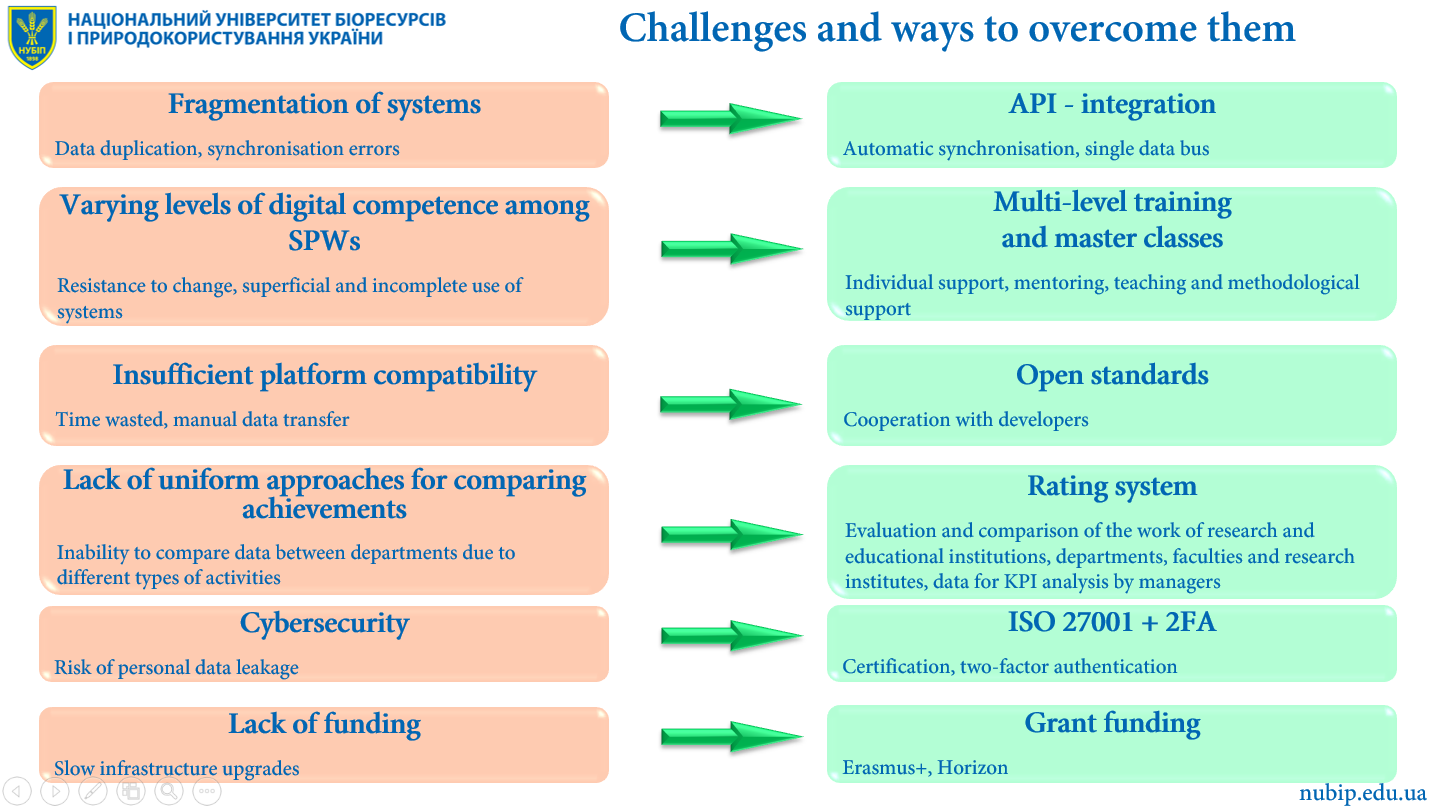
The speaker disclosed in detail the challenges of digitalization: fragmentation of platforms, duplication and synchronization errors of data, different levels of digital competence of teachers, lack of uniform criteria for evaluating their activities, risks of personal data leakage, slow updating of infrastructure due to limited funding. Among the ways to overcome problems Yaroslav RUDYK mentioned the use of the API, conducting multi-level trainings and mentoring, developing rating models for evaluating the work of departments and lecturers, implementing two-factor authentication and ISO 27001 standards, as well as expanding the university's participation in the Erasmus+ and Horizon Europe grant programs.
The speech of the head of the education quality assurance center logically continued and supplemented the digital university model presented earlier by Petro DROZD, emphasizing the crucial role of the human factor, professional support of the faculty, and a systemic approach to organizing digital processes. Together with the report on the architecture of the digital ecosystem, this created a complete picture of the modern digital transformation of NUBiP of Ukraine, which was highly appreciated by the participants of the International Conference.
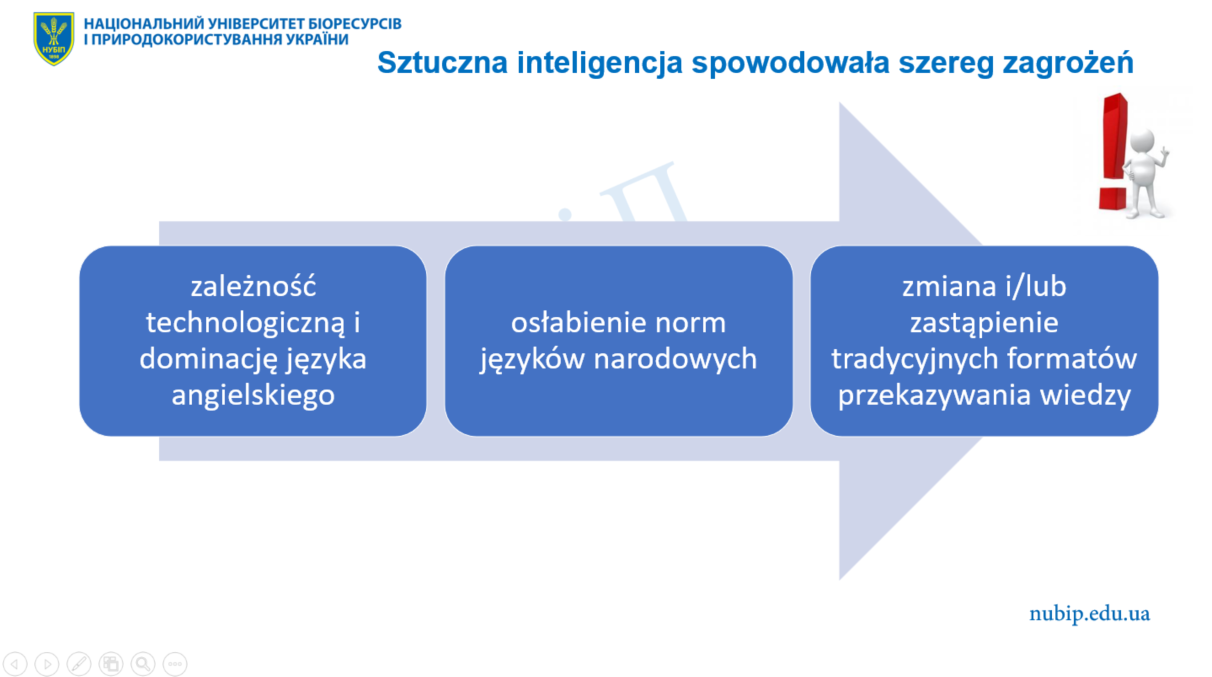
In her speech Svitlana KHARCHENKO on the example of Ukrainian and Polish educational and scientific discourses, analyzed the role of the university academic community as a factor of language stability in the era of artificial intelligence. The active use of AI has highlighted a number of threats in the global digitalized dimension: technological dependence on English-language NLP models, undermining the norms of national languages through uncritical use of generative tools, and transforming traditional university learning formats. Excessive use of English-language sources through AI tools marginalizes national educational and scientific content, it becomes less cited, and therefore less "visible".
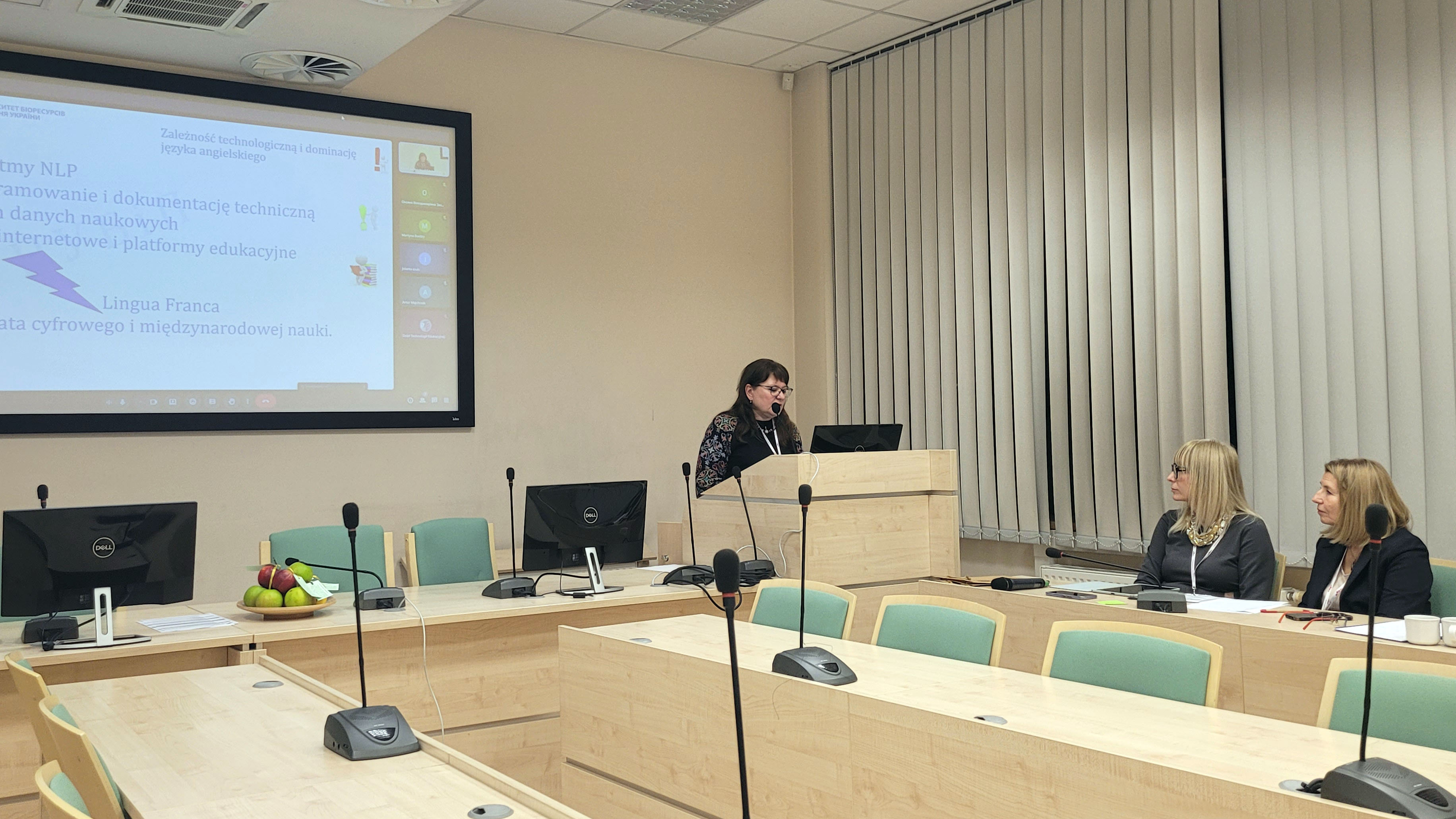
In her speech, the head of the department of journalism and language communication noted that language models trained mainly on English-language material form unequal conditions for other languages, contribute to the emergence of mixed "surzhyk" forms (Polglish, Ukringlish), change the syntax and style of academic writing, as well as discolor and unify the author's expression. This fact also weakens the emotional and cultural connection of native speakers with their native language, reduces literacy rates, and undermines the quality of educational and scientific texts. To counter this negative impact of artificial intelligence in the NUBiP of Ukraine, applicants are offered the course «Academic Ukrainian-language writing», because national languages in the education system guarantee fair access to knowledge, equality in education, and therefore, «ensuring comprehensive and fair quality education and encouraging lifelong learning opportunities for everybody», as indicated in the fourth of the 17 «Sustainable Development goals».
The report states that AI affects educational practices: on the one hand, positively, because there are virtual instructors, automated assessment systems, on the other – negatively, because the role of live scientific communication between instructor and student decreases, violating the thousand-year system of knowledge transfer «teacher (his knowledge, experience, style, charisma) – student».
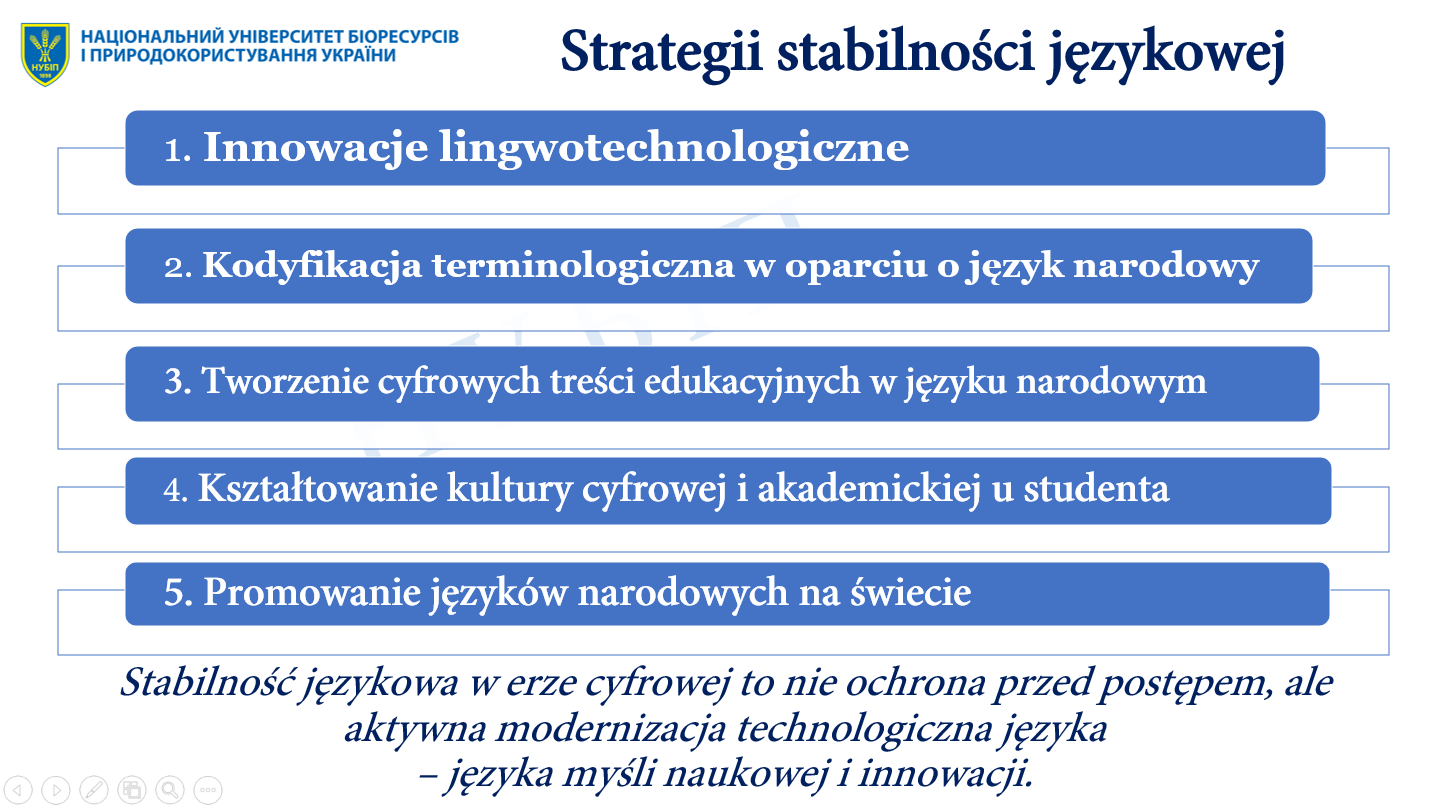
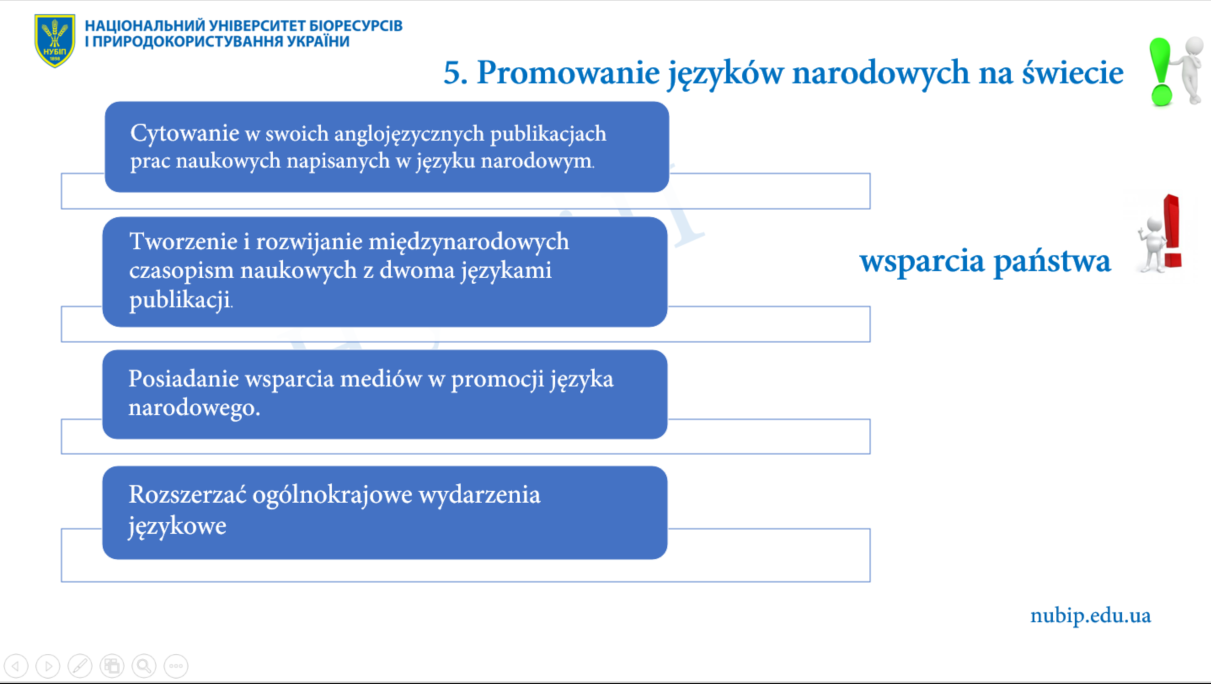
Svitlana KHARCHENKO stressed that it is universities that should become centers of language sustainability, turning technological challenges into opportunities. Among the key areas of activity: development of national language corps and competitive NLP models; codification of terminology; creation of high-quality educational content in the national language; formation of digital and academic culture of students; responsible, critical use of AI; as well as active promotion of Ukrainian and Polish languages in the international scientific space. In the AI era, where content is the currency, the volume of high-quality digital educational content in a national language determines whether that language will only be a passive consumer of knowledge created in English, or an active creator and conductor of global innovation. This is a direct state and university investment in the future competitiveness of the country and the nation as a whole, and in the natural industry in particular.
Summing up, the scientists emphasized the strategic goal of our university – to create a full-fledged digital ecosystem that can ensure the sustainability and competitiveness of education during the post-war recovery. Representatives of the vice-rector's team for scientific and pedagogical work and digital transformation Olena HLAZUNOVA stressed that digital transformation is not only a technical process, but also a change in the management paradigm, a transition to transparency, efficiency and systematic management based on data, as well as preserving the educational traditions of the University and Ukraine, turning challenges and threats of the digital world into development opportunities. NUBiP of Ukraine is ready to share its experience and support other universities in Ukraine and Europe on the way to building modern digital platforms for education and science.