

Booster4Resilience concludes with five projects on water resilience
Booster4Resilience has concluded its five-week online training programme. Working in five groups, participants assessed water-related risks, developed pollution reduction scenarios and compared financial solutions before presenting five eco-projects and mobile or web applications on 29 October.
The programme ran from 29 September to 30 October 2026. It was organised by NUBiP of Ukraine jointly with Wageningen University & Research (WUR, the Netherlands), with financial support from EIT Water and the Poul Due Jensen Foundation.
The course focused on practical approaches to water resilience under climate extremes and threats to infrastructure. Four modules brought together water scarcity assessment, digital modelling, green taxation and project development. The programme included three lectures, two tutorials, three practical sessions and group assignments. Teams used Slack to coordinate their work and seek support from the organisers.
Dr Oleksandr Labenko, Vice-Rector for Scientific and Pedagogical Work and International Affairs, opened the programme on 29 September. He highlighted the need for specialists who can help water systems and businesses respond to global change and external threats. Dr Maksym Klymenko, Head of the International Relations Office, introduced the programme, and training manager Yelyzaveta Didur outlined its structure and schedule.
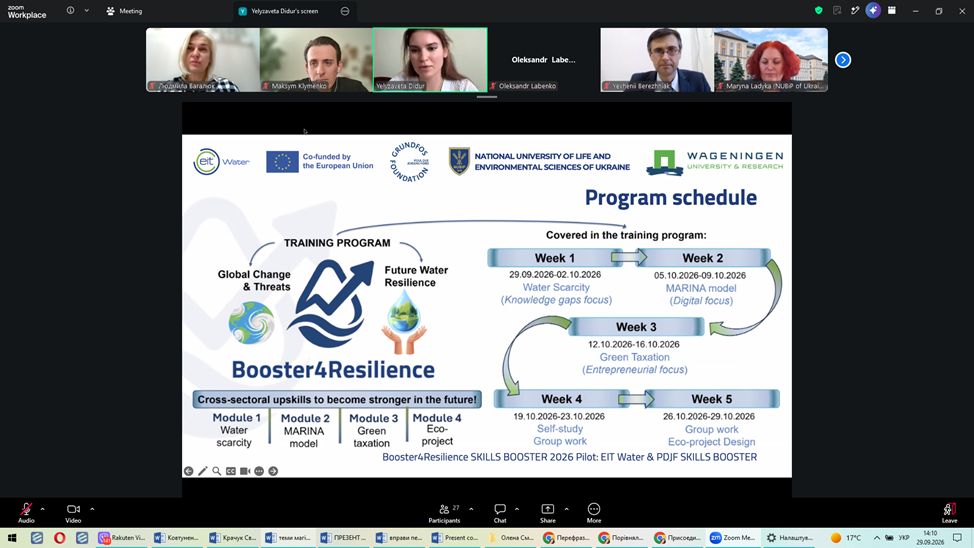
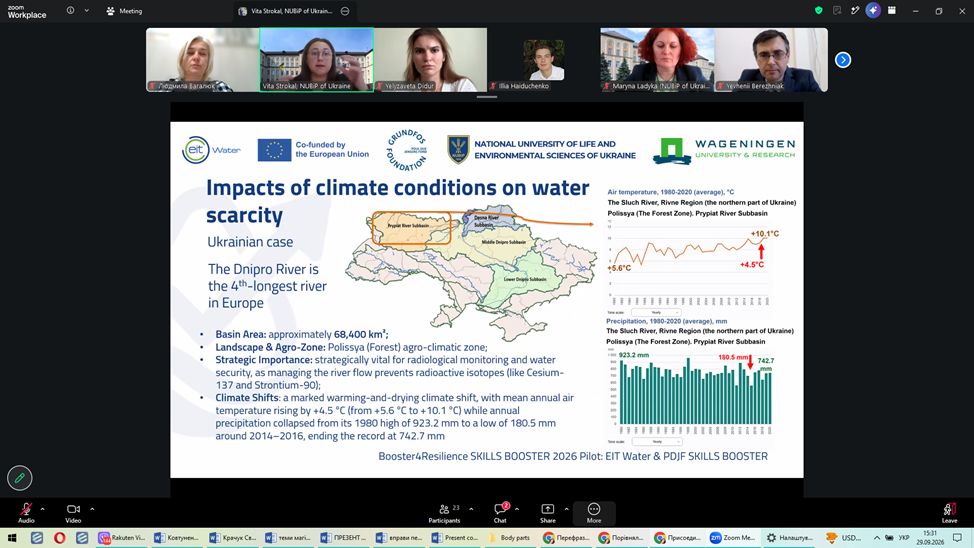
Dr Vita Strokal led the first module, using Ukraine and the Dnipro River Basin as a case study. Participants examined physical, economic and water-quality-related scarcity. In the tutorial and practical session on 30 September, they worked with water stress indicators and the DPSIR framework to connect the causes of water problems with their effects and possible responses. On 2 October, the groups presented their calculations for the domestic, industrial and irrigation sectors.
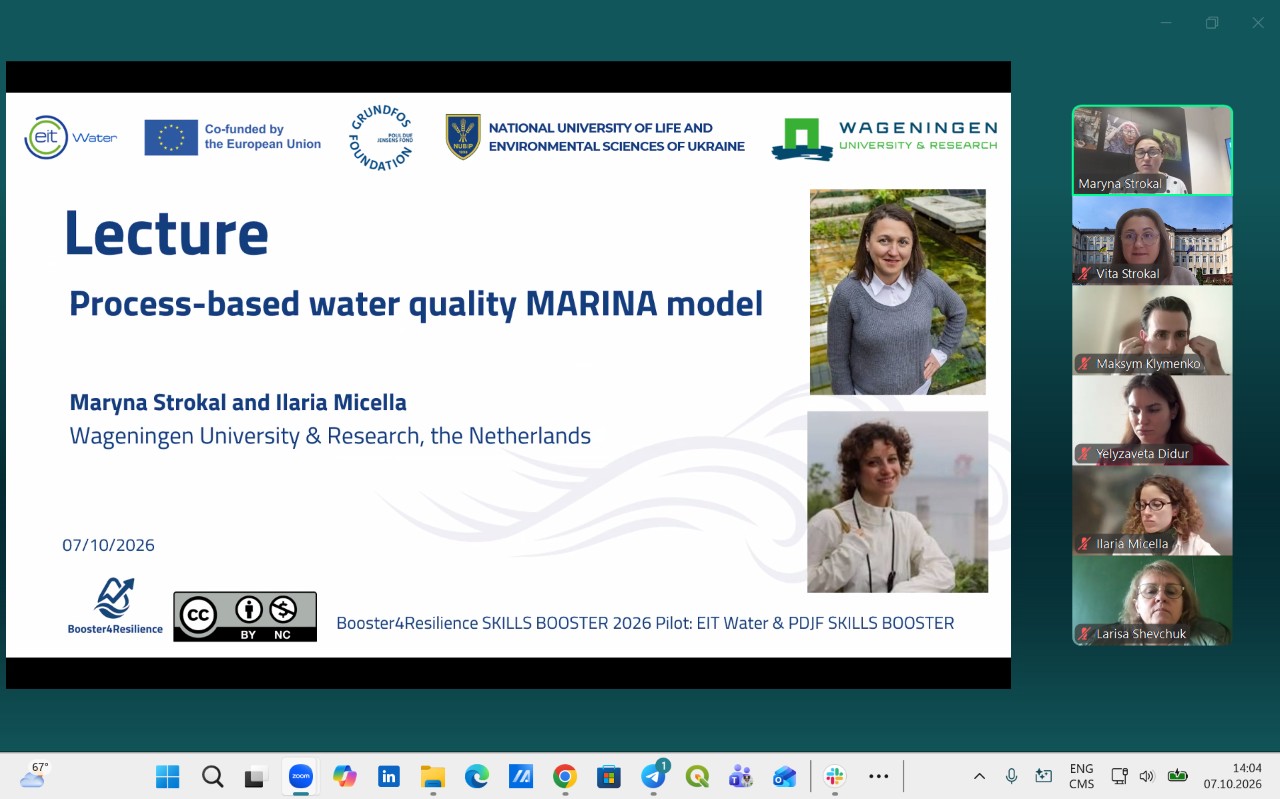
The second module, held on 7-9 October, was led by Dr Maryna Strokal and Dr Ilaria Micella of WUR, both developers of the MARINA model. Participants explored how the model can support water quality assessment and scenario analysis, using RStudio and Excel. Practical work with MARINA-Plastics focused on reducing microplastic pollution in coastal waters. Teams then presented scenarios for the Black Sea and the Dnipro River Basin, drawing on Green Deal targets.
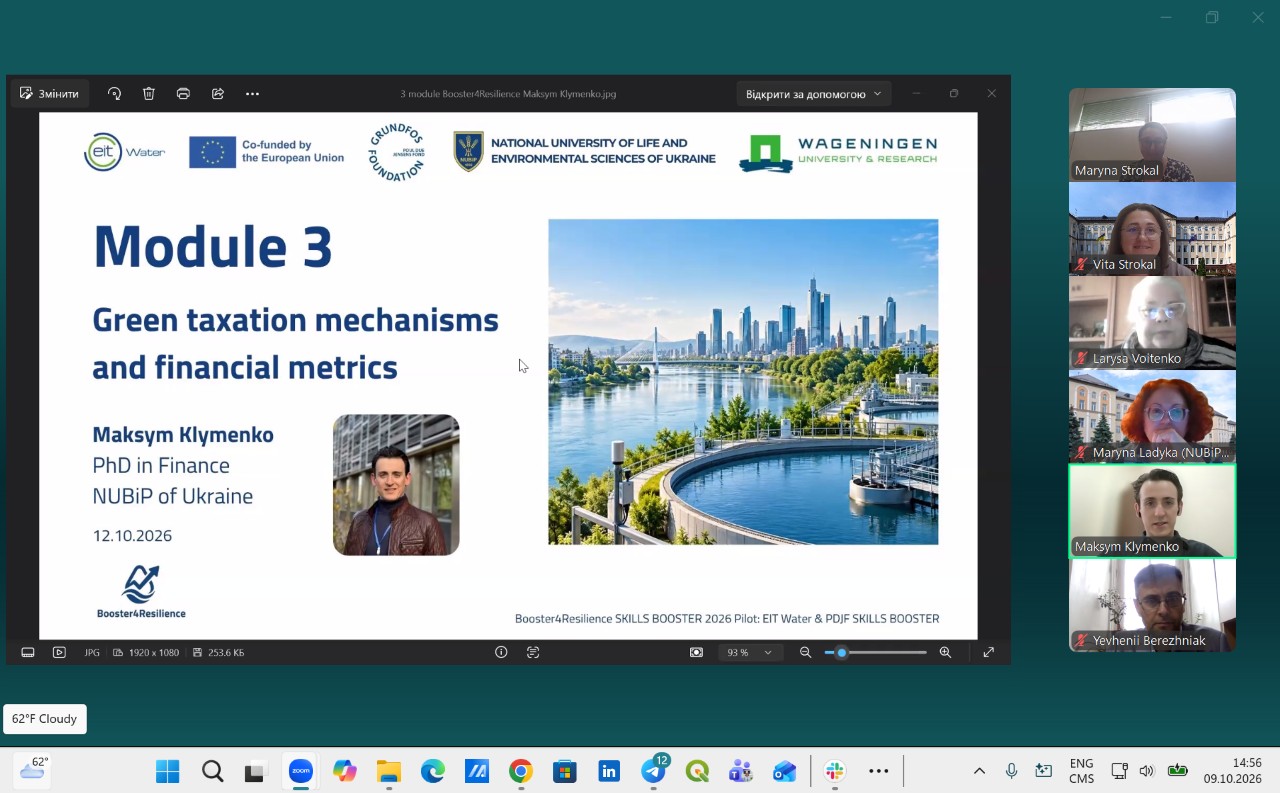
Dr Maksym Klymenko introduced green taxation mechanisms, recovery financing and financial metrics in the third module. On 14 October, he and Yelyzaveta Didur led a tutorial and practical session on financing instruments and decision-support tools for green water projects. On 16 October, teams presented comparisons of alternative solutions, including constructed wetlands with and without retention storage, and centralised nitrate treatment versus household filters. Their assessments used CAPEX, OPEX, IRR, ROI, NPV and benefit–cost ratios. Participants also explored AI-assisted no-code tools for developing their final projects.
The fourth module brought the course methods together in eco-projects. At the final presentations on 29 October, each group demonstrated an application addressing a specific water challenge:
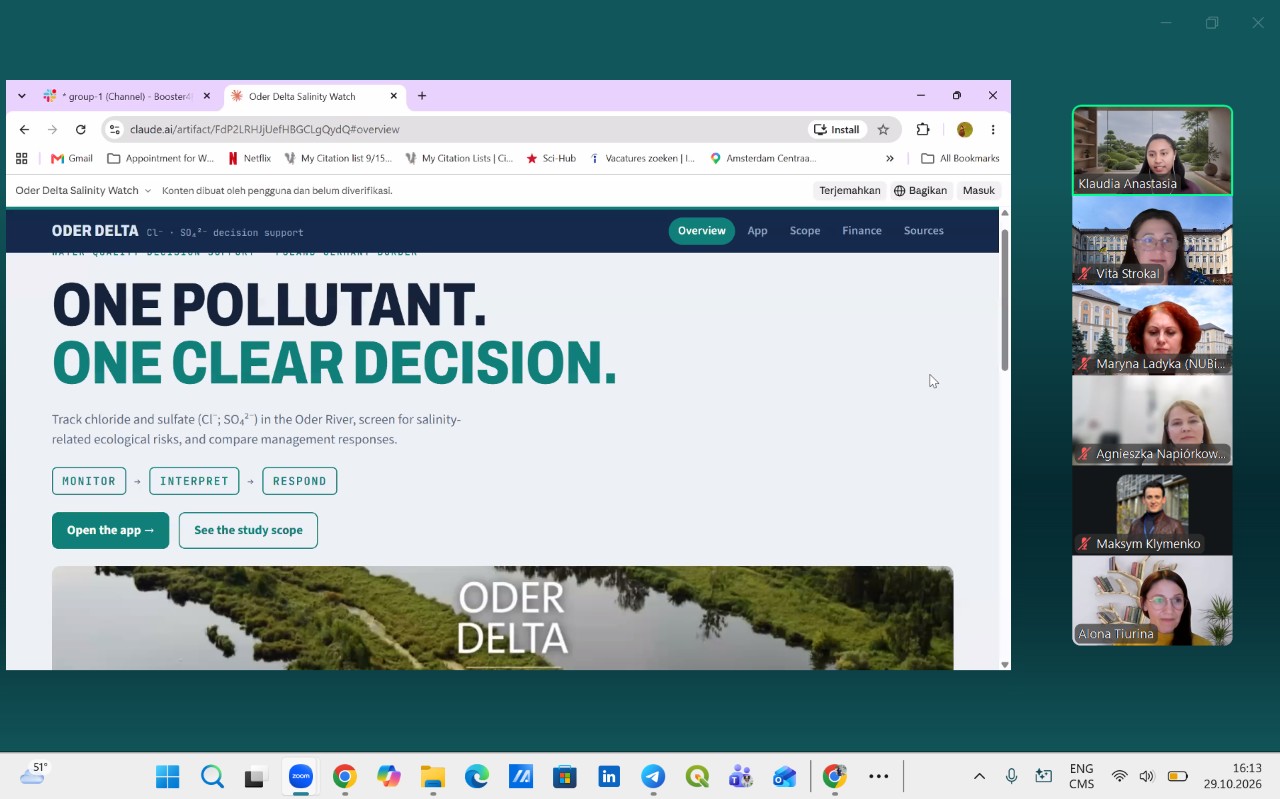
ODER DELTA. A water quality decision-support app for the Poland–Germany border region, focused on chloride and sulphate pollution in the Oder River. It includes a monitoring map, pollution trends, risk screening and response options, alongside financial and implementation considerations.
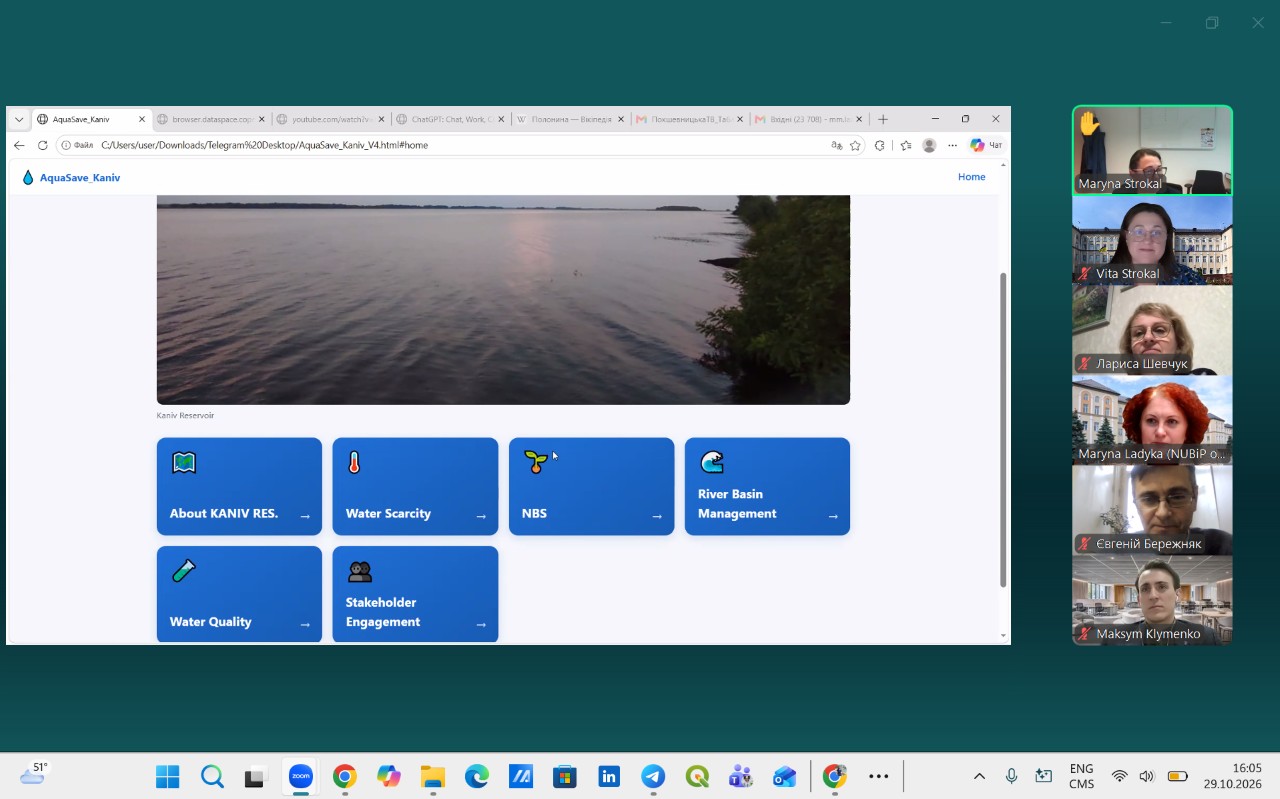
AqueSave_Kaniv. An interactive monitoring and water security app for the Kaniv Reservoir in Ukraine. It brings together information on water scarcity, water quality, trophic status and algal blooms with nature-based solutions and stakeholder engagement. Its intended users include citizens, farmers and water managers.
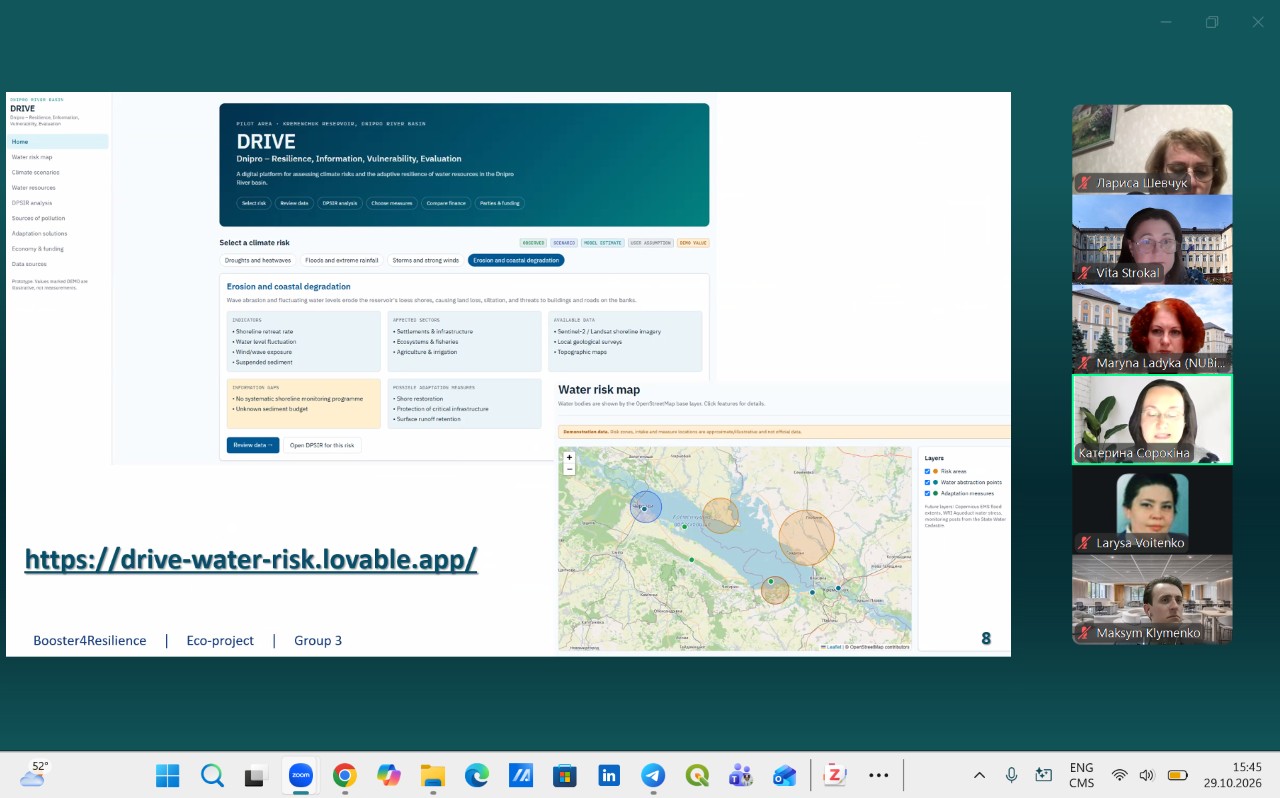
DRIVE – Dnipro – Resilience, Information Vulnerability Evaluation. A digital platform for assessing climate risks and the adaptive resilience of water resources in the Dnipro River Basin. It includes a water risk map, climate scenarios, water quantity and quality information, DPSIR analysis, adaptation options and financing information.
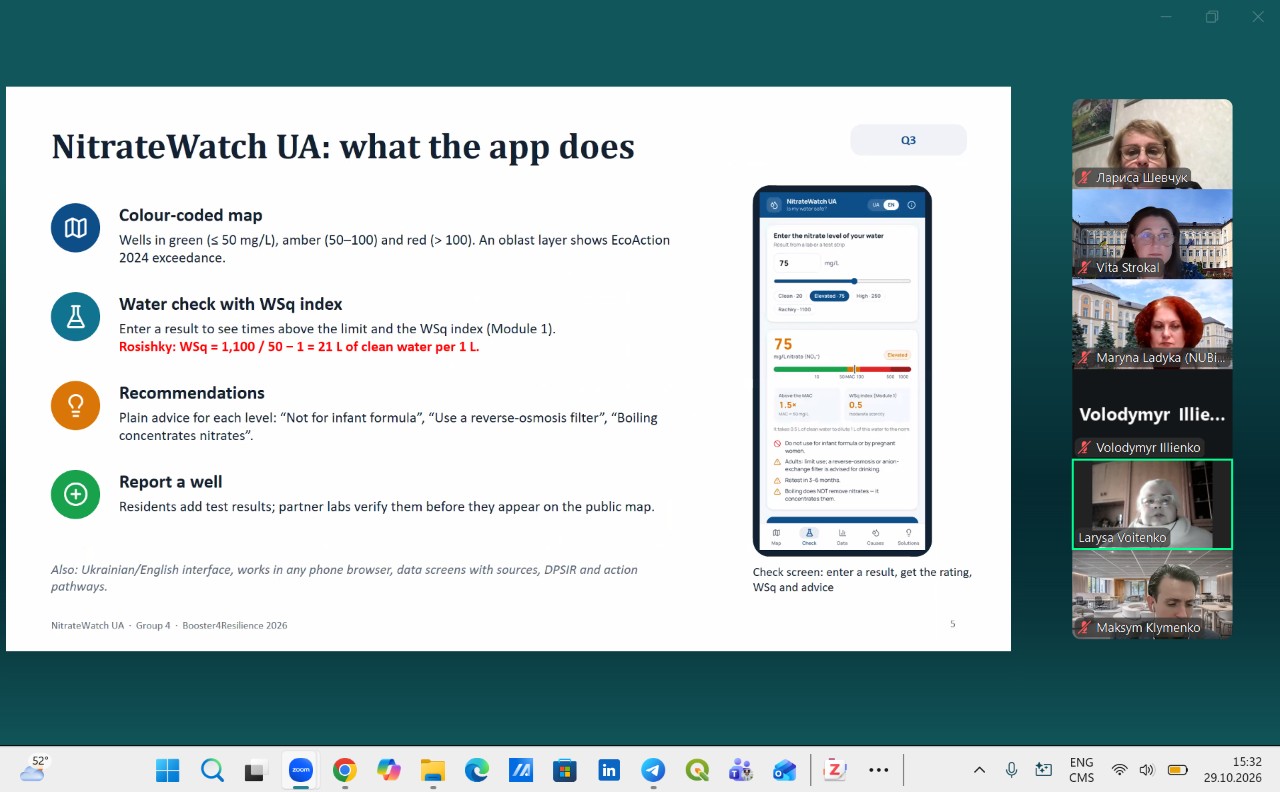
NitrateWatch UA. A mobile app focused on nitrate pollution in decentralised water sources. It includes a colour-coded map, a water scarcity index, recommendations on using well water, protective measures and cost–benefit analysis.
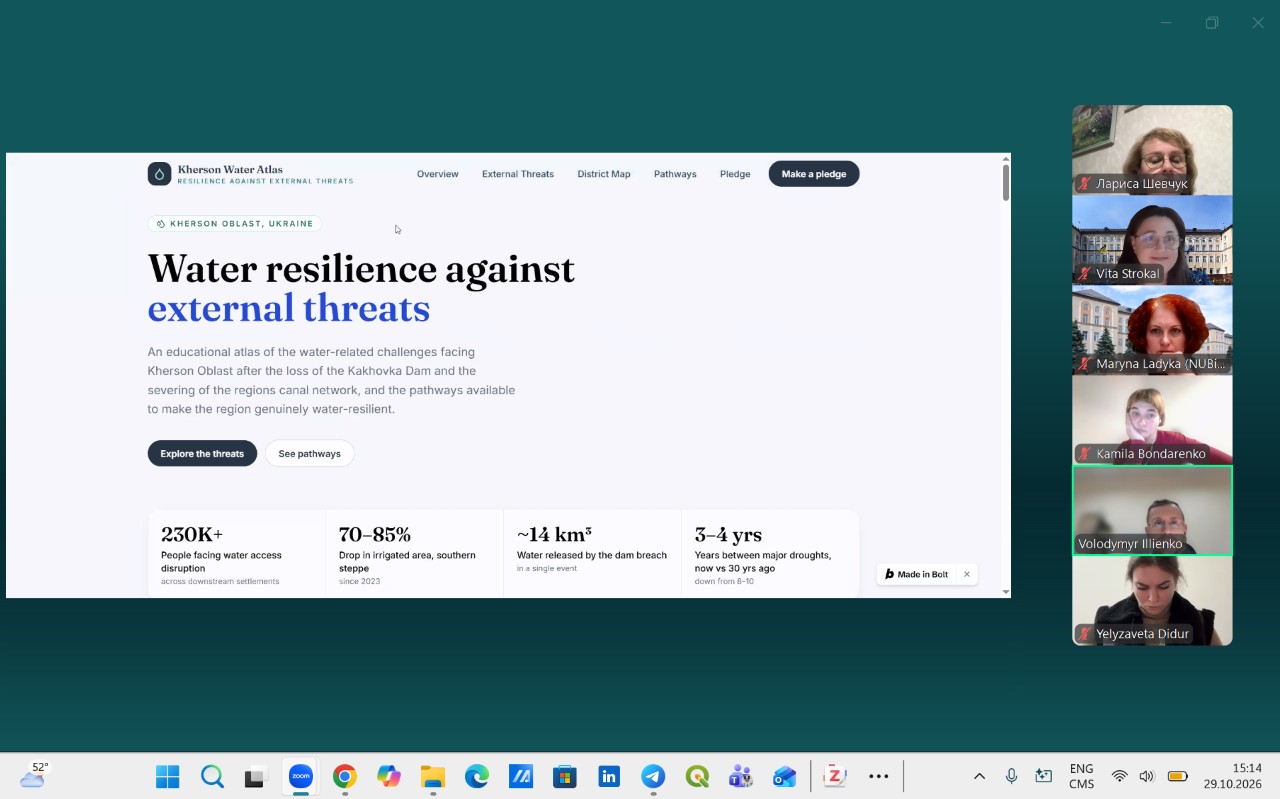
Kherson Water Atlas – Resilience Against External Threats. An educational atlas of water challenges in Kherson Region following the destruction of the Kakhovka Dam and disruption of the canal network. It presents eight water-related challenges, a map covering five districts and six pathways connecting possible responses with the relevant challenges and stakeholders.
Across the four modules, the five groups calculated 15 water scarcity indices for the domestic, industrial and irrigation sectors, developed six DPSIR frameworks and examined 12 water-related challenges. These included nitrate pollution in groundwater, nutrient runoff into rivers, urban flooding, water supply under energy stress and the consequences of the destruction of the Kakhovka Dam.
The groups also developed nine scenarios for reducing microplastic pollution, evaluated 10 financial decisions for water-related challenges and created five eco-projects with five mobile or web applications.
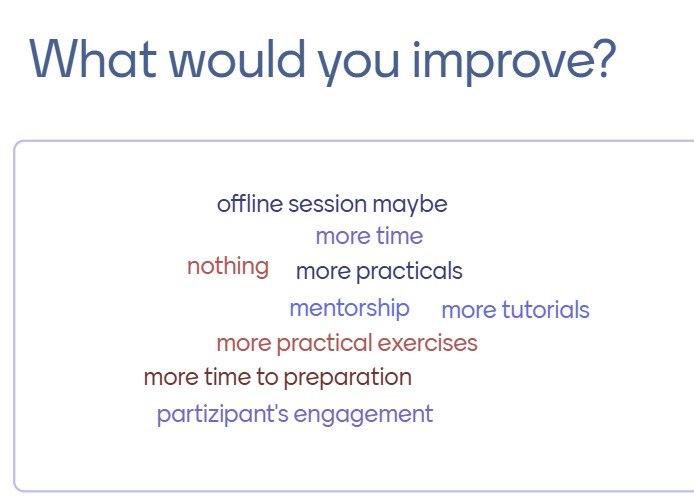
Participant feedback highlighted the interactive tutorials, small-group collaboration and lecturers’ guidance. Participants also asked for more preparation time and more hands-on activities in future courses.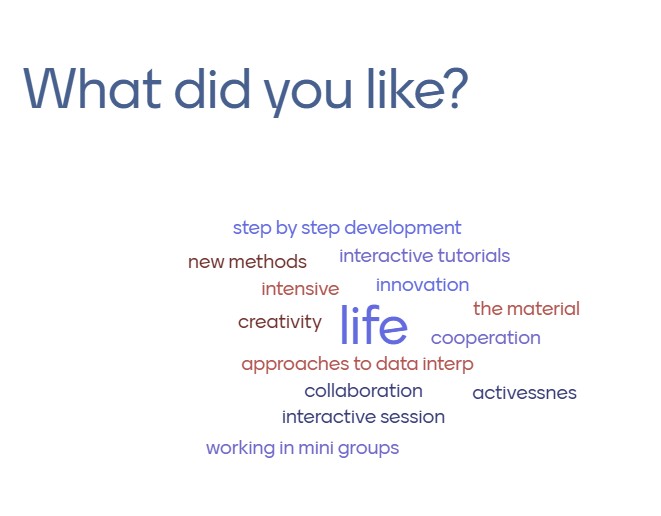
The Booster4Resilience team thanks all participants, lecturers and supporters for their contributions to the programme.