


AREAS OF SCIENTIFIC RESEARCH
The Department of Ecobiotechnology and Biodiversity is actively engaged in research in the following contemporary areas:
1. Microclonal propagation of valuable cultivated, ornamental, fruit and berry, and medicinal plants
Microclonal propagation remains one of the most promising areas of modern biotechnology. Department staff are actively working on developing in vitro propagation technologies for rare, commercially valuable, and medicinal plants, as well as on producing planting material free from viral infections. The cultivation of plant cells and tissues on artificial culture media makes it possible to obtain promising raw materials for the production of various biologically active substances.

2. Identification and Control of the Spread of the Most Common Pathogens of Cultivated Plants
A current focus of the department’s scientific research is the identification of the most common pathogens of cultivated plants. The department’s researchers study the natural antagonistic activity of microorganisms against phytopathogenic bacteria and screen the most promising antagonist strains for controlling pathogens. A separate area of focus involves the use of biotechnological approaches to develop plants resistant to phytopathogens. Such approaches include the use of genetic engineering and marker-assisted selection. In particular, the transfer of resistance genes (R-genes) isolated from wild related species into the genome of cultivated plants significantly reduces their susceptibility to phytopathogens. The use of marker-assisted selection, which is less time-consuming and more accurate than conventional breeding, is also promising. In this case, resistance genes from wild relatives, as well as quantitative trait loci (QTLs), can serve as markers.

3. Extraction of biologically active substances from plant materials
In vitro cultivation of medicinal plants opens up new opportunities for developing biotechnologies to extract biologically active substances from them. Callus and suspension cultures of medicinal plants, as well as “bearded” root cultures, can serve as promising raw materials for the industrial production of substances for medical use to obtain valuable pharmaceutical compounds. “Bearded” root cultures result from the genetic transformation of plants using the soil bacterium Agrobacterium rhizogenes. Such roots are capable of synthesizing the biologically active substances characteristic of the parent plant in the same quantities and, in some cases, in significantly higher concentrations. Furthermore, this culture represents a promising raw material for biotechnology, as it does not require expensive growth media or lighting for cultivation and is capable of rapidly and efficiently accumulating biomass.
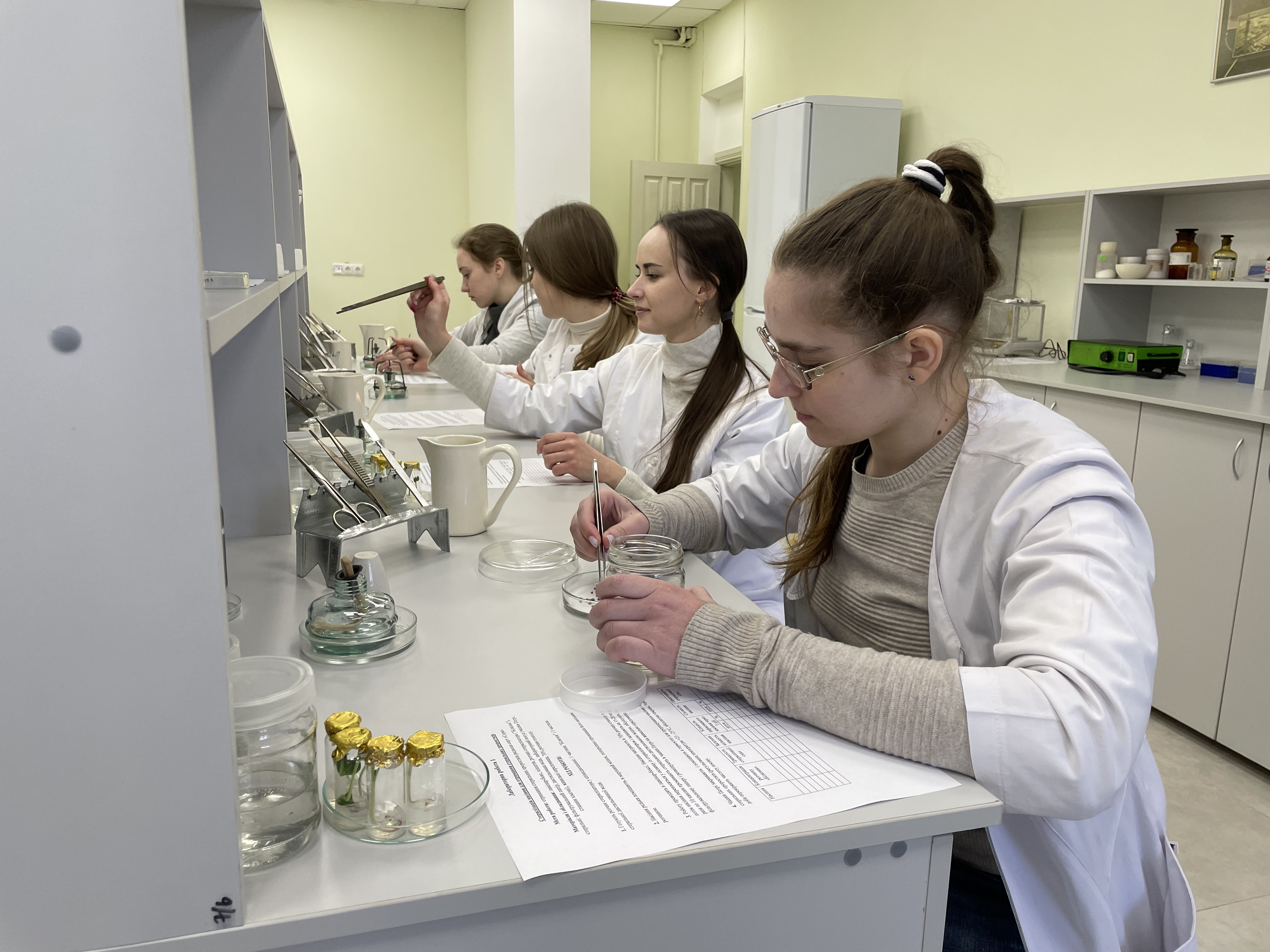
4. Enhancing Plant Resistance to a Wide Range of Abiotic and Biotic Stress Factors Using Biotechnological Methods
A separate area of the department’s scientific research is enhancing plant resistance to phytopathogens by using resistance-inducing substances and activating the plants’ own defense mechanisms. Nitric oxide donors, such as sodium nitroprusside, can serve as such resistance-inducing substances. It is known that nitric oxide plays a key role in plant growth, development, and defense mechanisms. Nitric oxide donors, particularly sodium nitroprusside, are characterized by their ability to induce systemic plant resistance through the expression of defense enzyme genes, the accumulation of phenolic compounds, the synthesis of cell wall components, and the enhancement of signaling molecule synthesis. Therefore, the use of nitric oxide donors is a promising approach for enhancing plant resistance to phytopathogens and other stress factors.