


Modelling Economic Mechanisms of the Circular Bioeconomy at the Centre of International Scientific Discussion
The development of a circular bioeconomy in the fisheries sector requires a sound scientific basis for economic mechanisms that promote the rational use of resources, greater production efficiency and the introduction of closed-loop production cycles. Of particular scientific interest are the comparison of approaches adopted in Ukraine and Sri Lanka to the development of this sector and the use of mathematical modelling to assess possible development scenarios. These issues formed the focus of a joint academic presentation by representatives of the National University of Life and Environmental Sciences of Ukraine (NUBiP) and the University of Colombo at the International Scientific and Practical Conference “Development of the Bioeconomy in the Face of New Challenges”, held on 30–31 October 2026 at the National University of Life and Environmental Sciences of Ukraine.
A presentation entitled “Modelling Economic Mechanisms for the Development of the Circular Bioeconomy in the Fisheries Sectors of Ukraine and Sri Lanka” was delivered during Session 2, “Strategies for Bioeconomy Development and Prospects for Their Implementation”, chaired by Vira BUTENKO, Doctor of Economic Sciences and Professor at the Department of Economic Theory.
The speakers were Sanjeewa PERERA, Professor and Director of the Centre for Mathematical Modelling at the University of Colombo (Sri Lanka), and Nataliia VDOVENKO, Doctor of Economic Sciences and Professor at the National University of Life and Environmental Sciences of Ukraine.
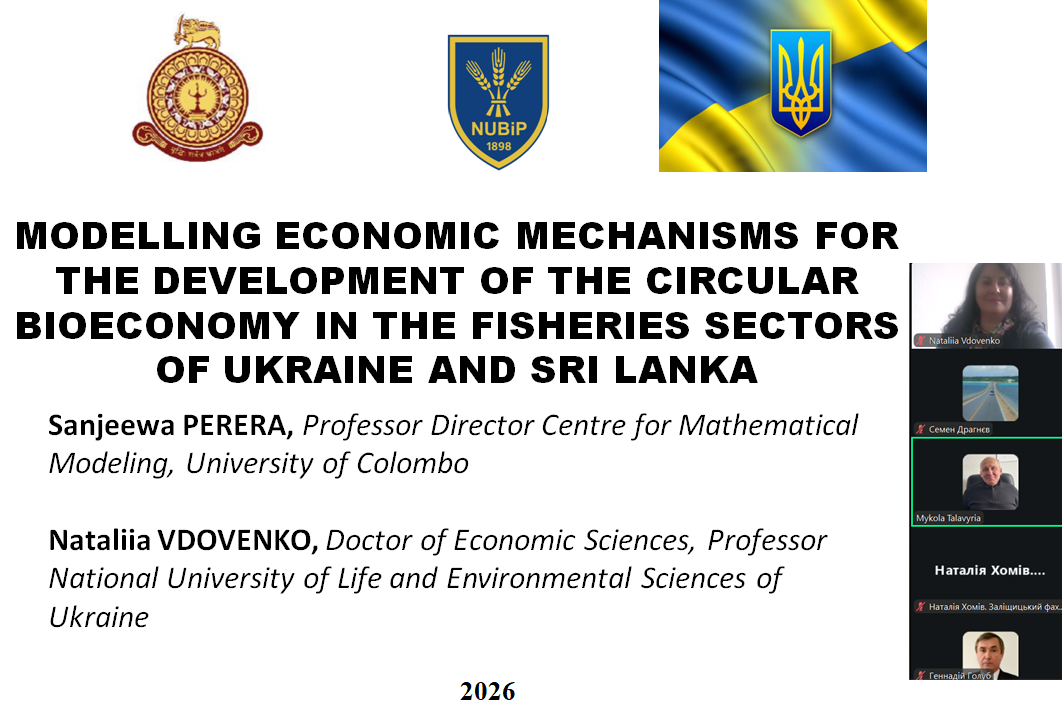
The presentation addressed economic modelling, the development of the fisheries sector and the application of circular bioeconomy principles. Particular attention was drawn to the potential of economic mechanisms to support efficient resource use, improve production performance and establish closed-loop production cycles.
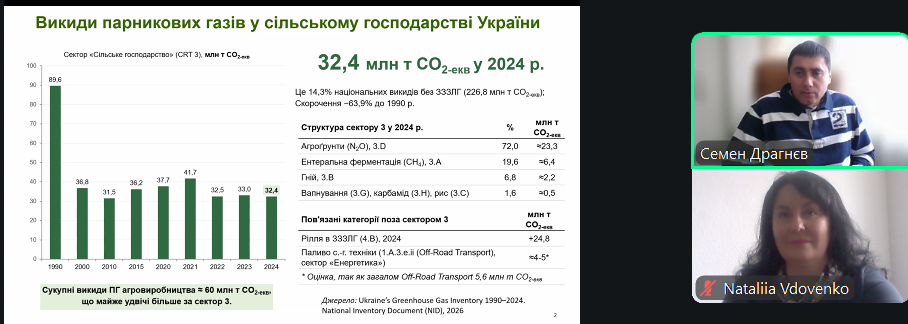
Research into the development of the fisheries sectors in Ukraine and Sri Lanka creates opportunities for a comparative analysis of economic approaches to sectoral governance, as well as the identification of resource-efficient production practices.
Professor Nataliia VDOVENKO placed particular emphasis on presenting the findings of research project No. 110/6-pr-2025, “Scientific Substantiation of Agrotechnological Solutions for Regulating the Development of the Circular and Blue Economies in Agriculture and Fisheries for the Rehabilitation of Military Personnel and the Post-War Reconstruction of Ukraine” (state registration No. 0125U001973).
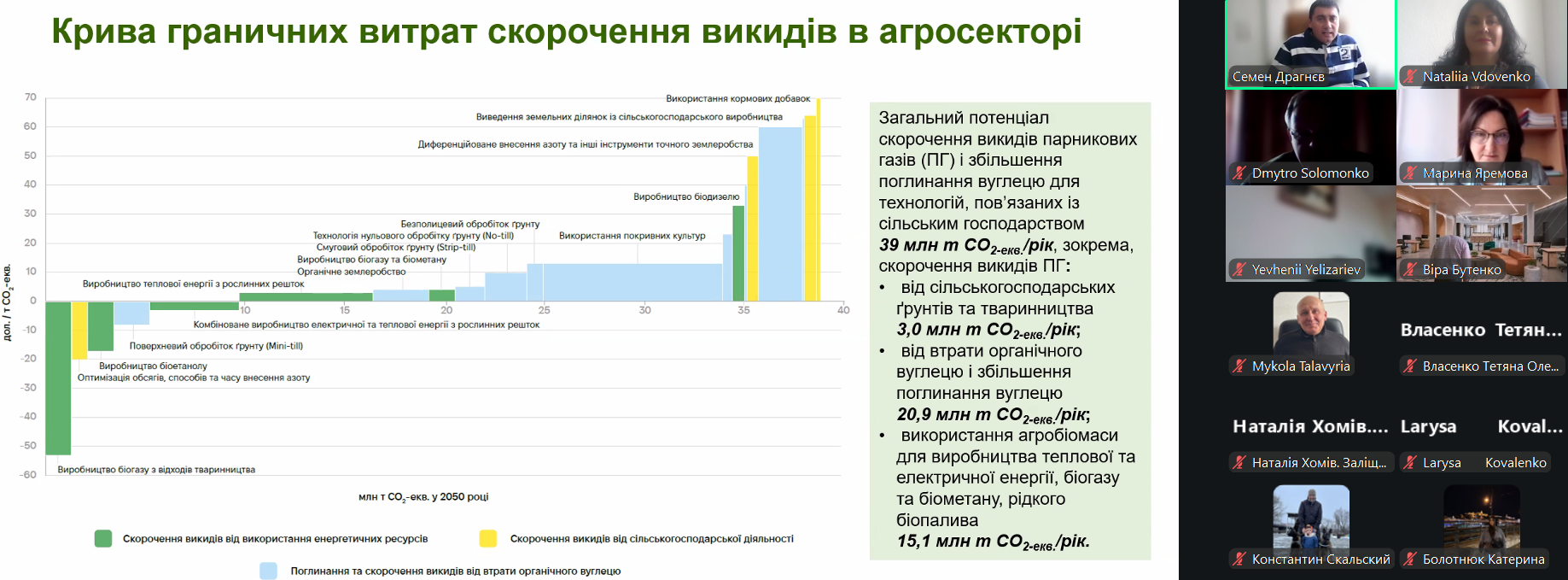
At the same time, mathematical modelling makes it possible to evaluate alternative development scenarios, account for resource constraints and substantiate management decisions.
The joint participation of researchers from NUBiP Ukraine and the University of Colombo in the international conference reflected the development of academic cooperation between higher education institutions in Ukraine and Sri Lanka.
The exchange of research findings and scientific approaches provides a foundation for further study of the economic mechanisms of the circular bioeconomy, improved resource management and greater economic efficiency in the fisheries sector.