
Educational and Research Institute of Forestry and Landscape-Park Management
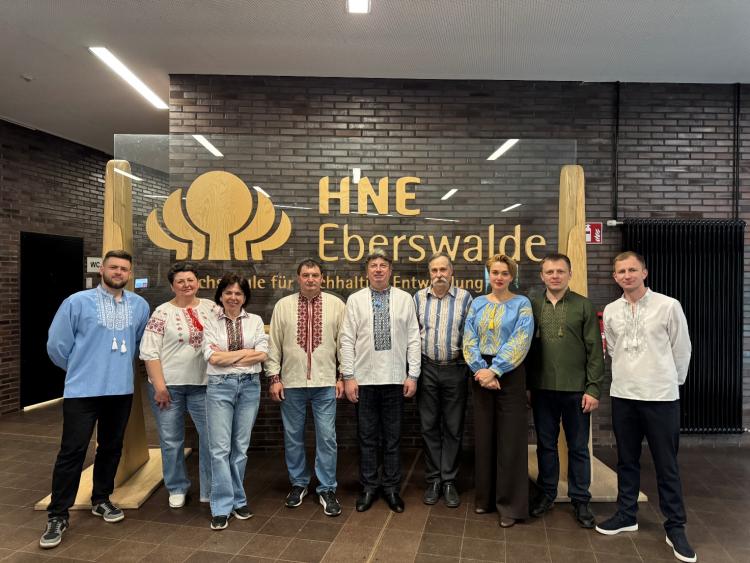
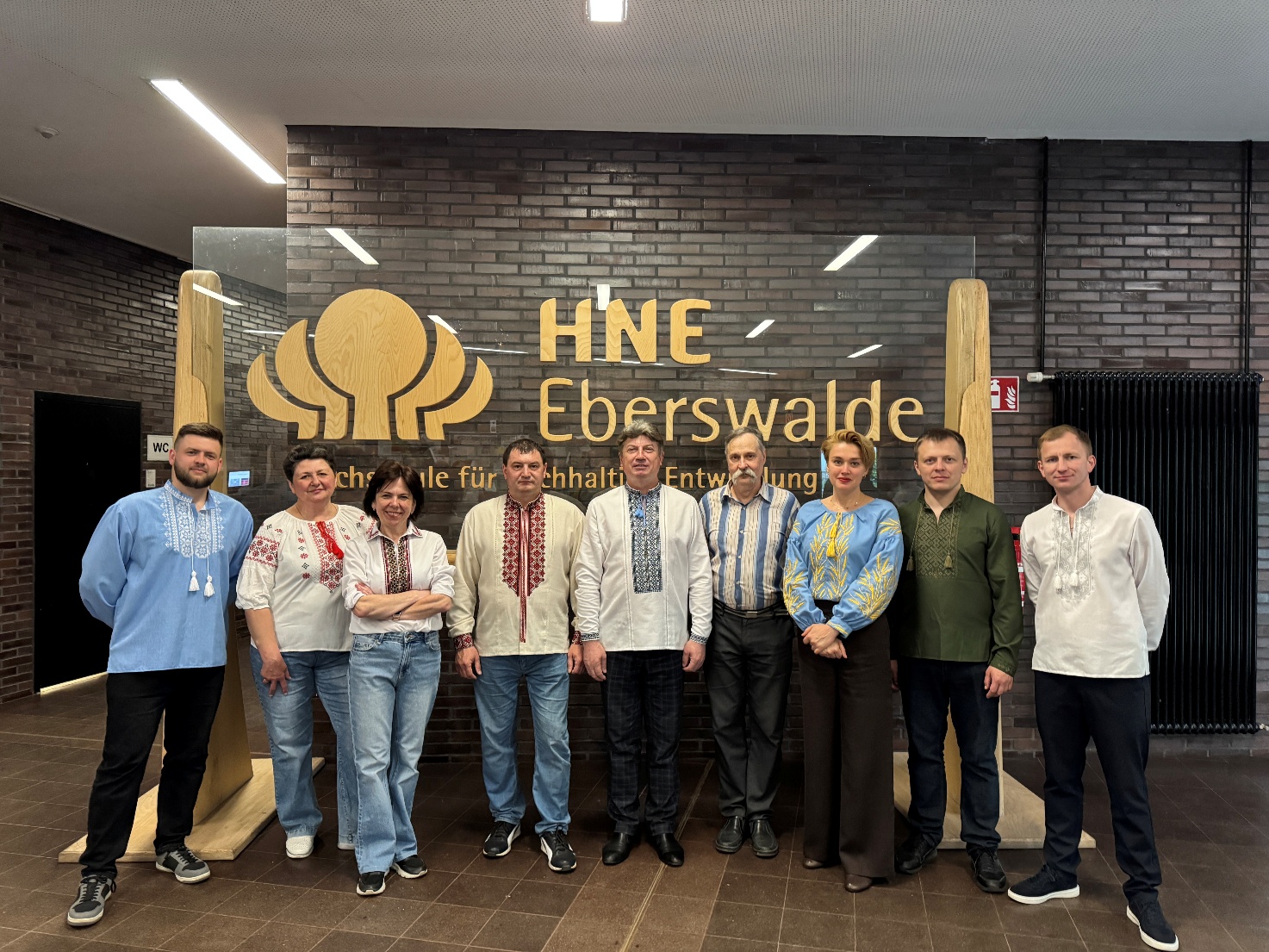
From 18 to 22 May 2026, representatives of the Educational and Scientific Institute of Forestry and Landscape Architecture of the National University of Life and Environmental Sciences of Ukraine (NUBiP of Ukraine) joined colleagues from the Ukrainian National Forestry University (UNFU, Lviv) and the State Biotechnological University (SBTU, Kharkiv) for a working visit to the University for Sustainable Development Eberswalde (Hochschule für nachhaltige Entwicklung Eberswalde, HNEE, Germany). The visit took place within the Erasmus+ project "Modernizing Master Programs to Support Forest Sector Transformation towards Ukraine's Post-War Green Rebuilding – ForestPost" (Grant Agreement No. 101179074).
The programme focused on the development of two master's courses for students of Specialty 205 "Forestry": "Forest Ecosystem Services" and "Close-to-Nature and Climate-Smart Silviculture". NUBiP of Ukraine was represented by Yevhenii Khan, Senior Lecturer at the Department of Forest Inventory and Forest Management; Oleksandr Soshenskyi, Associate Professor at the Department of Silviculture; and Yevhen Kalchuk, PhD student at the same department.
The courses are being developed in collaboration with researchers from the Ukrainian National Forestry University (Lviv) — Prof. Vasyl Lavnyy, Dr. Oksana Mykhayliv, Prof. Leonid Osadcuk and Senior Lecturer Liubov Kondratiuk — and the State Biotechnological University (Kharkiv) — Prof. Yurii Karpets and Prof. Volodymyr Pasternak.
The University for Sustainable Development Eberswalde was founded in 1830 and is one of the oldest centres of forestry education in Europe. Its four faculties serve approximately 2,300 students, and the campus is situated near the UNESCO Biosphere Reserve Schorfheide-Chorin.
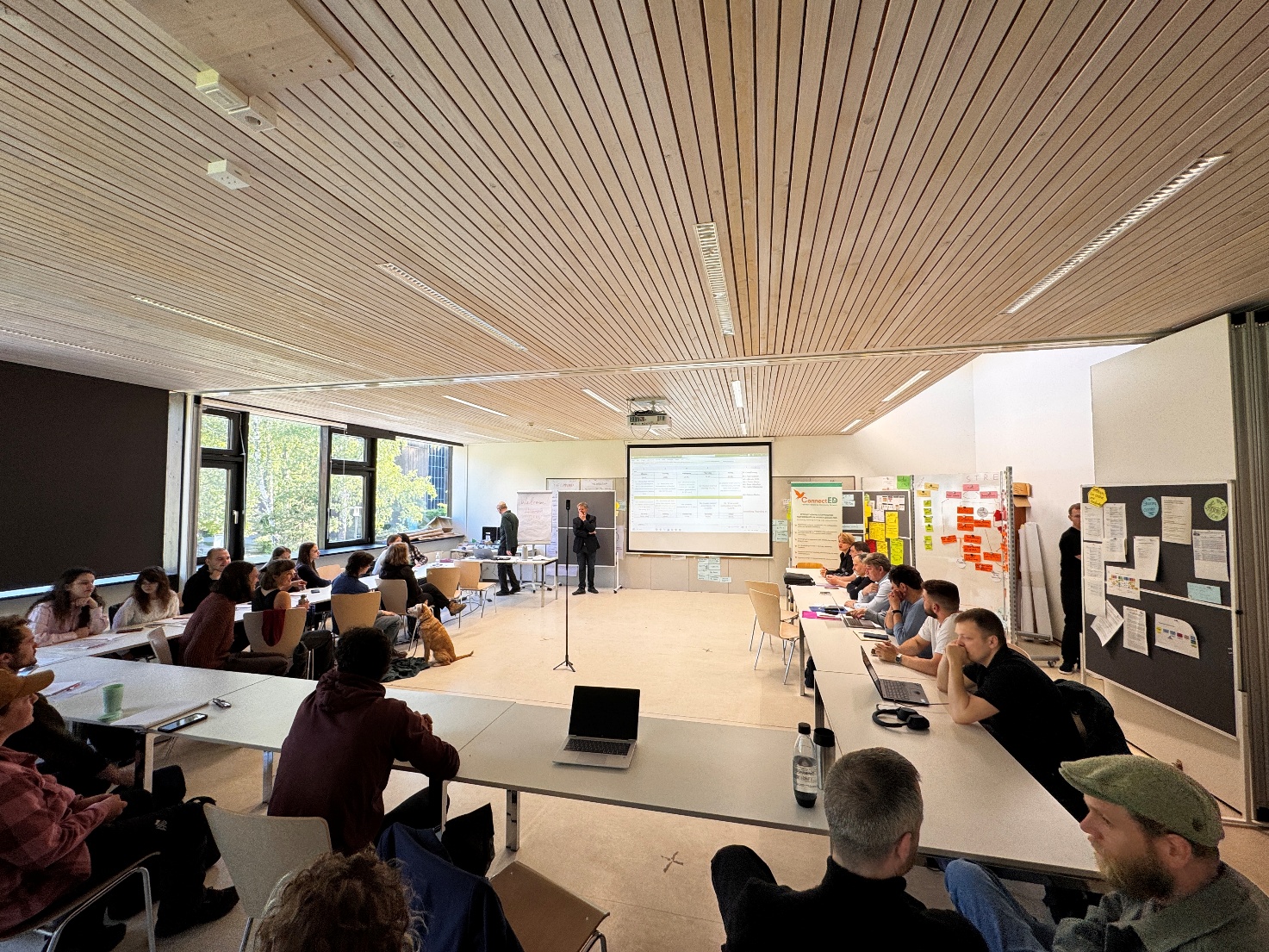
The first day opened with an introductory presentation by Prof. Peter Spathelf on the course "Forest Landscape Restoration" as an analogue of the disciplines being developed by the Ukrainian partners. Prof. Vasyl Lavnyy then delivered the lecture "Forest Disturbances and Restoration in Ukraine", outlining the current challenges facing Ukrainian forestry — mass dieback of pine stands, bark beetle outbreaks and war-related damage to forest resources. Oleksandr Soshenskyi presented "Ukraine in Wartime: Forests and Forestry Science", covering the state of the forest sector under wartime conditions.
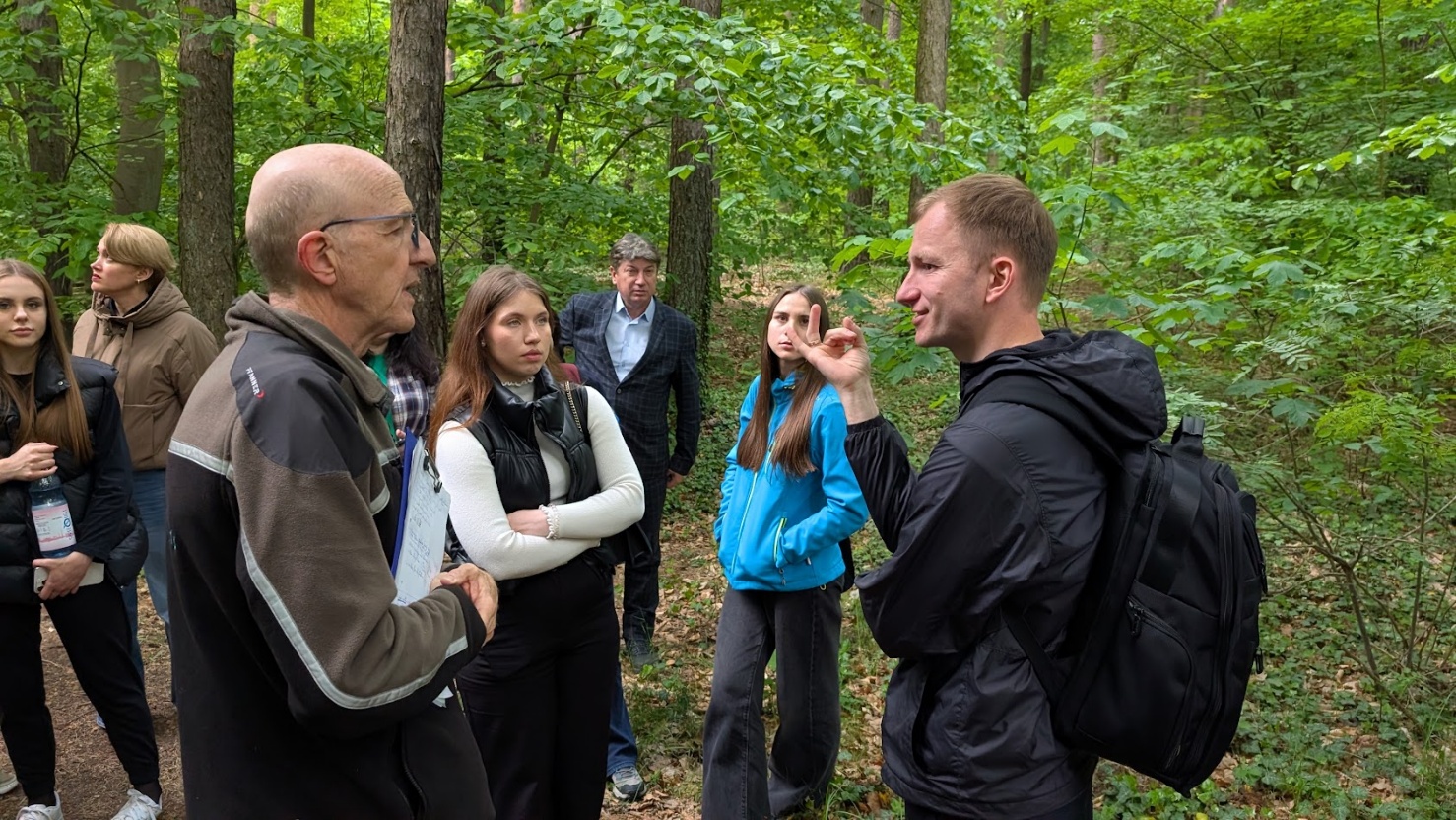
As part of the practical component of the visit, all participants took part in a field excursion to the Spechthausen forest district to observe and discuss close-to-nature silviculture approaches in northeastern Germany. There, participants saw mixed multi-storey stands of Scots pine with beech and oak, in which a gradual transformation of monoculture pine stands into uneven-aged mixed forests has been underway for more than thirty years — an approach known in the German silvicultural tradition as Dauerwald.
Running alongside selected programme events was the student ConnectED Learning Camp, held in HNEE classrooms; its participants joined some of the lectures and field trips.
The following day was devoted to wetlands. Prof. Oliver Jähnicher led a classroom session on "Restoration and Management of Forested and Non-Forested Peatlands". In Brandenburg, over 90% of forest peatlands remain drained, and their rewetting is one of the priorities of the state's climate policy: peatlands, rather than forest stands, potentially offer the greatest contribution to achieving climate-neutral land use. In the afternoon, participants took part in a field exercise involving peat core sampling at a near-natural bog, where they were introduced to methods for assessing peat layer depth, vegetation cover condition and the identification of peat accumulation horizons.
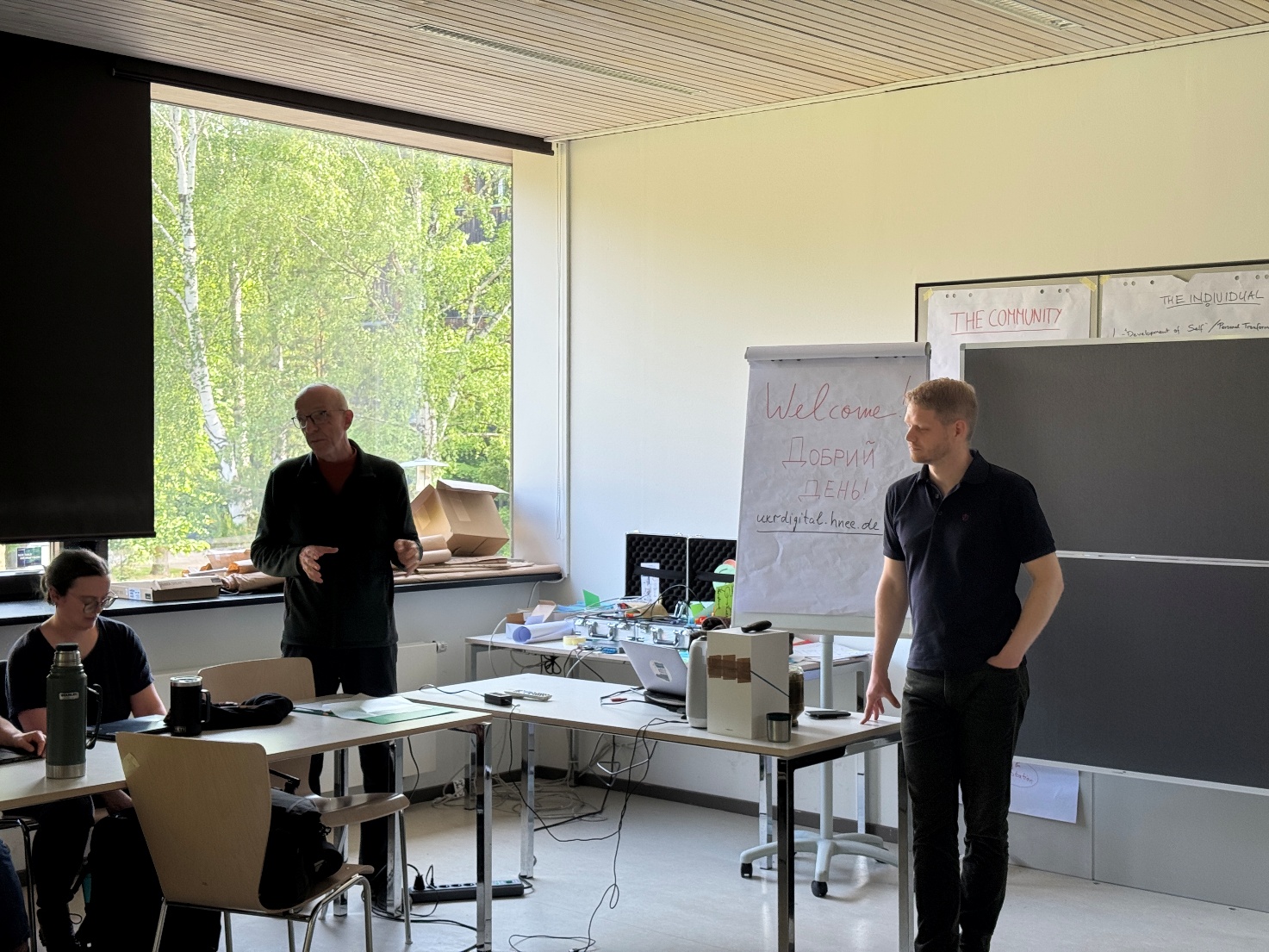
A subgroup of participants also attended the methodological session "Digital Analysis of Forest Ecosystems: Point Cloud Fusion" (Stefan Reder and Prof. Jan-Peter Mund), which focused on merging spatial data from multiple remote sensing sources: photogrammetric point clouds from unmanned aerial vehicles (UAVs), UAV-based laser scanning, and a portable Personal Laser Scanner (PLS).
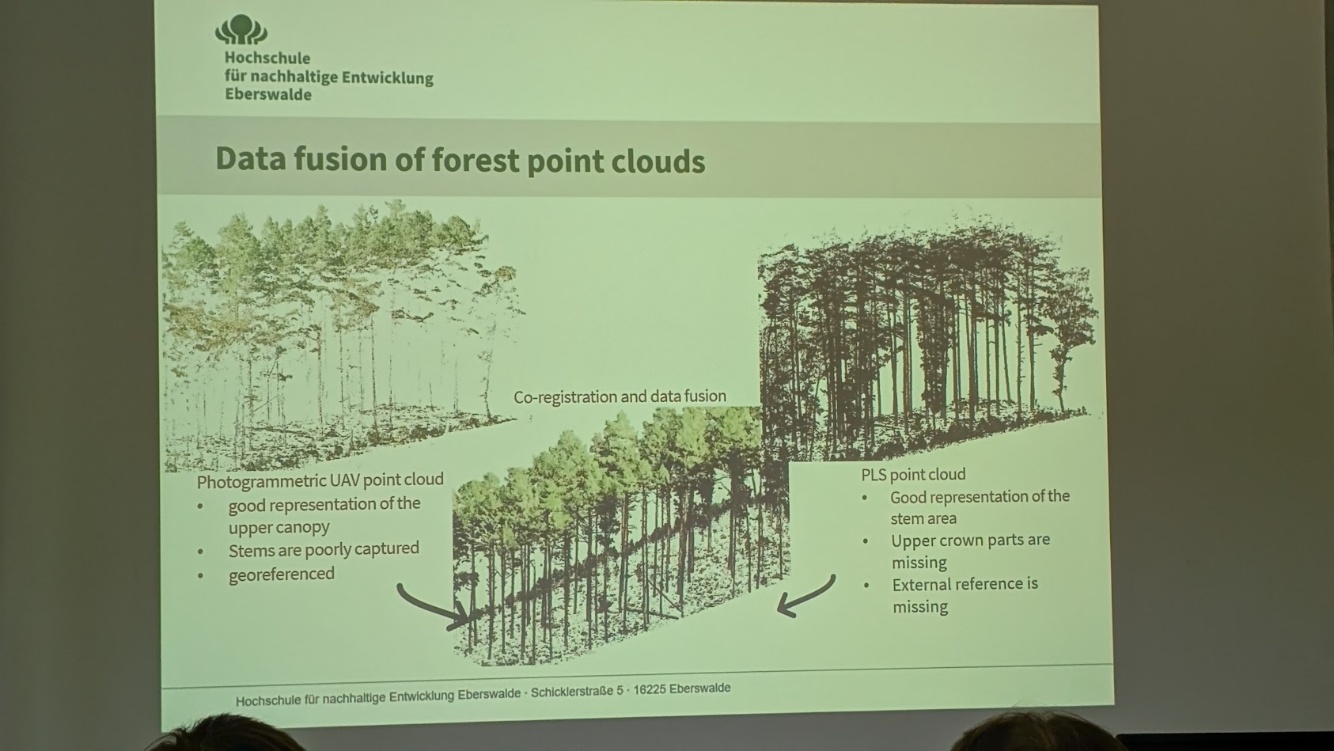
UAV-derived clouds accurately represent the upper canopy but provide only fragmented information on stems; conversely, a ground-based scanner captures stem detail but cannot "see" the treetops and lacks external georeferencing. Combining both datasets enables the construction of a complete three-dimensional stand model.
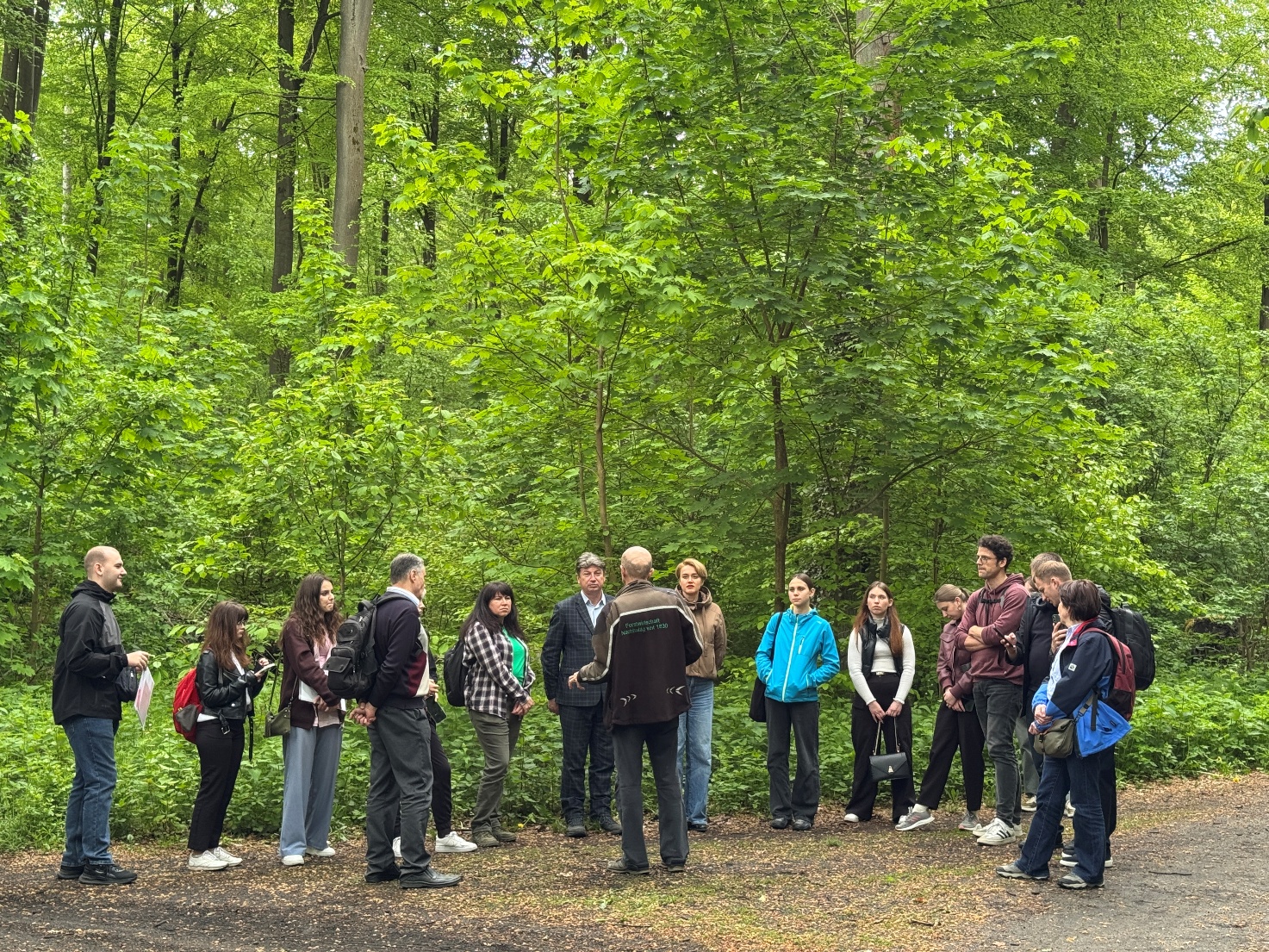
The third day featured a field excursion to the Chorin forest district of Brandenburg State Forests, led by Prof. Vasyl Lavnyy and Prof. Liubomyr Blasko. The excursion addressed silvicultural practices and forest adaptation to climate change, with a particular focus on converting pure pine stands in line with close-to-nature forestry principles. At the first stop, the forester demonstrated the conversion of a mature pine stand into a mixed uneven-aged forest through the establishment of underplanted beech. The second stop featured a black locust (Robinia pseudoacacia) stand invaded by late black cherry (Prunus serotina); the forester described ongoing efforts to remove the cherry in order to restore a second storey of European beech and sycamore maple in a multi-layered stand. The group then visited a former bog that has been progressively restored to its natural state since the 1930s. The excursion concluded with a visit to a Douglas fir (Pseudotsuga menziesii) stand and a demonstration of a thinning operation, during which the forester explained approaches to skid trail layout and timber extraction.
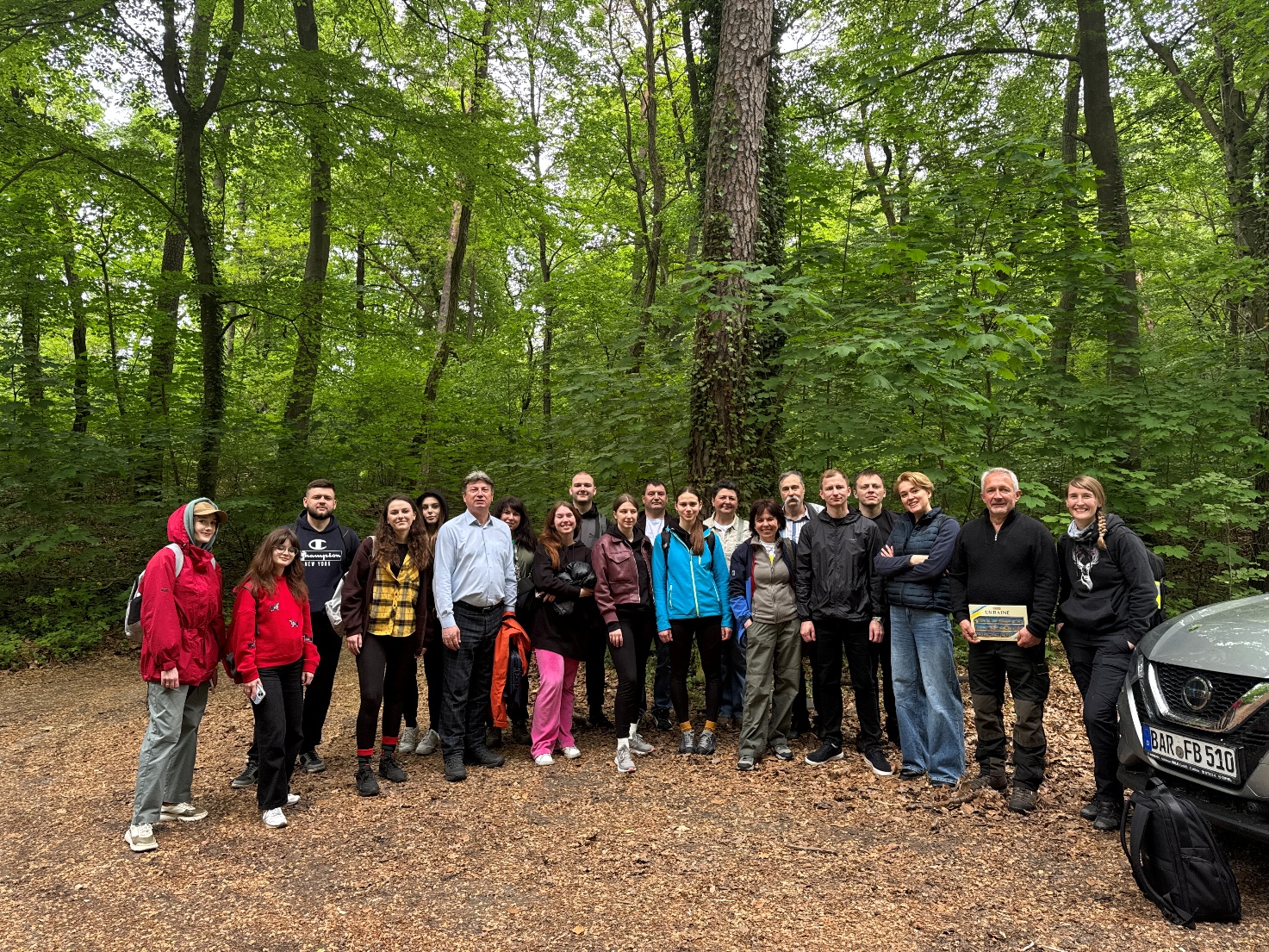
The fourth day was devoted to practical forest exercises. Prof. Albrecht Opitz, Prof. Peter Spathelf and Prof. Vasyl Lavnyy led the field session "Thinning". Working in a training plot within a pine stand, participants discussed the selection of future crop trees, thinning intensity and frequency, and skid trail width, using specific trees as case studies. Special attention was given to recent meta-analyses demonstrating that timely thinning increases stand resistance to drought, pests and fire — a finding directly relevant to Ukraine's pure pine forests, which have experienced mass dieback events over the past decade, partly due to insufficient early thinning intensity.
The closing session was a lecture by Prof. Peter Spathelf, "Climate-Smart Forestry in Germany". The speaker showed that the positive European forest growth trend of the 1960s–1990s has given way to stagnation and even decline, and that the post-drought dieback of 2017–2018 was the most severe in Central Europe in 150 years. Particular attention was paid to the decline of European beech — a species that only twenty years ago was positioned as the cornerstone of Europe's future forests. Recent research indicates that beech shows signs of vulnerability on shallow and dry soils: it is characterised by high hydraulic efficiency but low hydraulic safety, making it prone to cavitation in its water-conducting system.
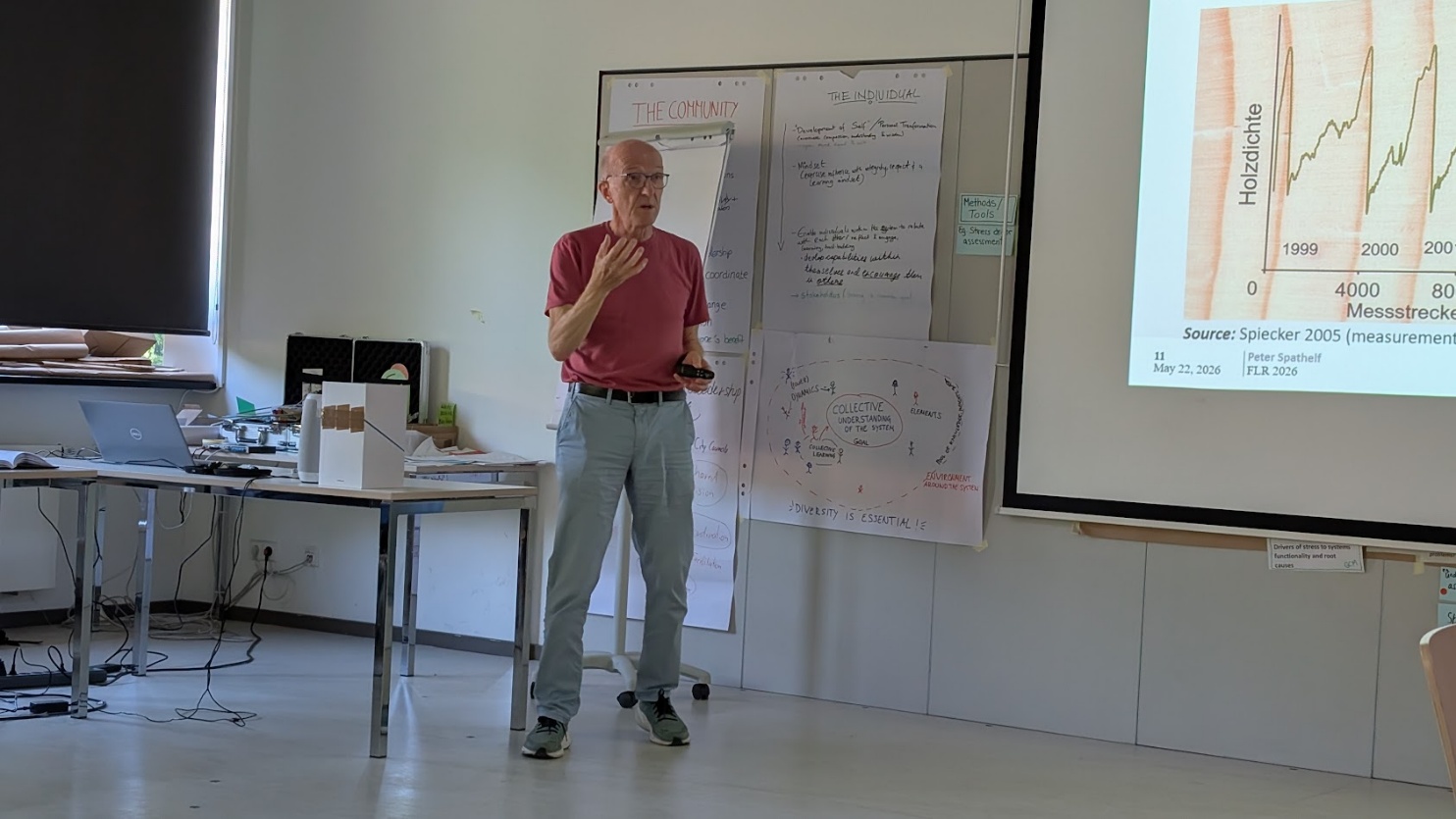
The concept of climate-smart forestry complements classical sustainable silviculture with two interrelated dimensions, climate change mitigation (through carbon retention in forests, in wood products, and via the substitution effect for energy-intensive materials) and adaptation. Among adaptation pathways, Prof. Spathelf highlighted: increasing functional stand diversity through rare native species (lime, hornbeam, smooth elm, sycamore maple) and carefully considered introduction of non-native species (Douglas fir, Turkey oak Quercus cerris) subject to invasiveness risk assessment; timely thinning of young stands while maintaining moderate growing stock; and the retention of old-growth structural elements — veteran trees with microhabitats and deadwood volumes approaching 50–60 m³/ha. The concept of assisted migration was also discussed as a means of bridging the gap between the slow natural migration rate of tree species (100–200 m/year) and the pace of climate change.
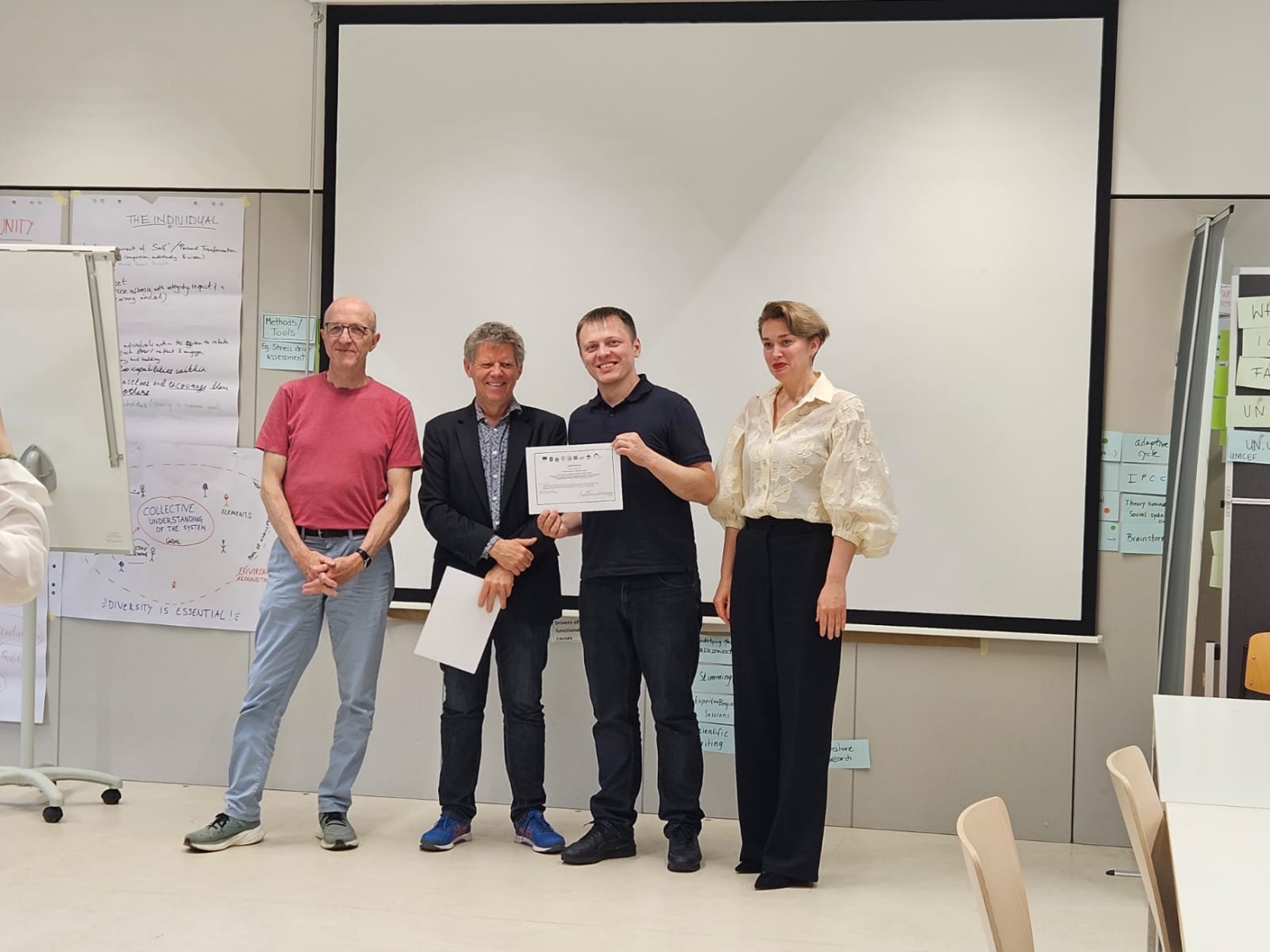
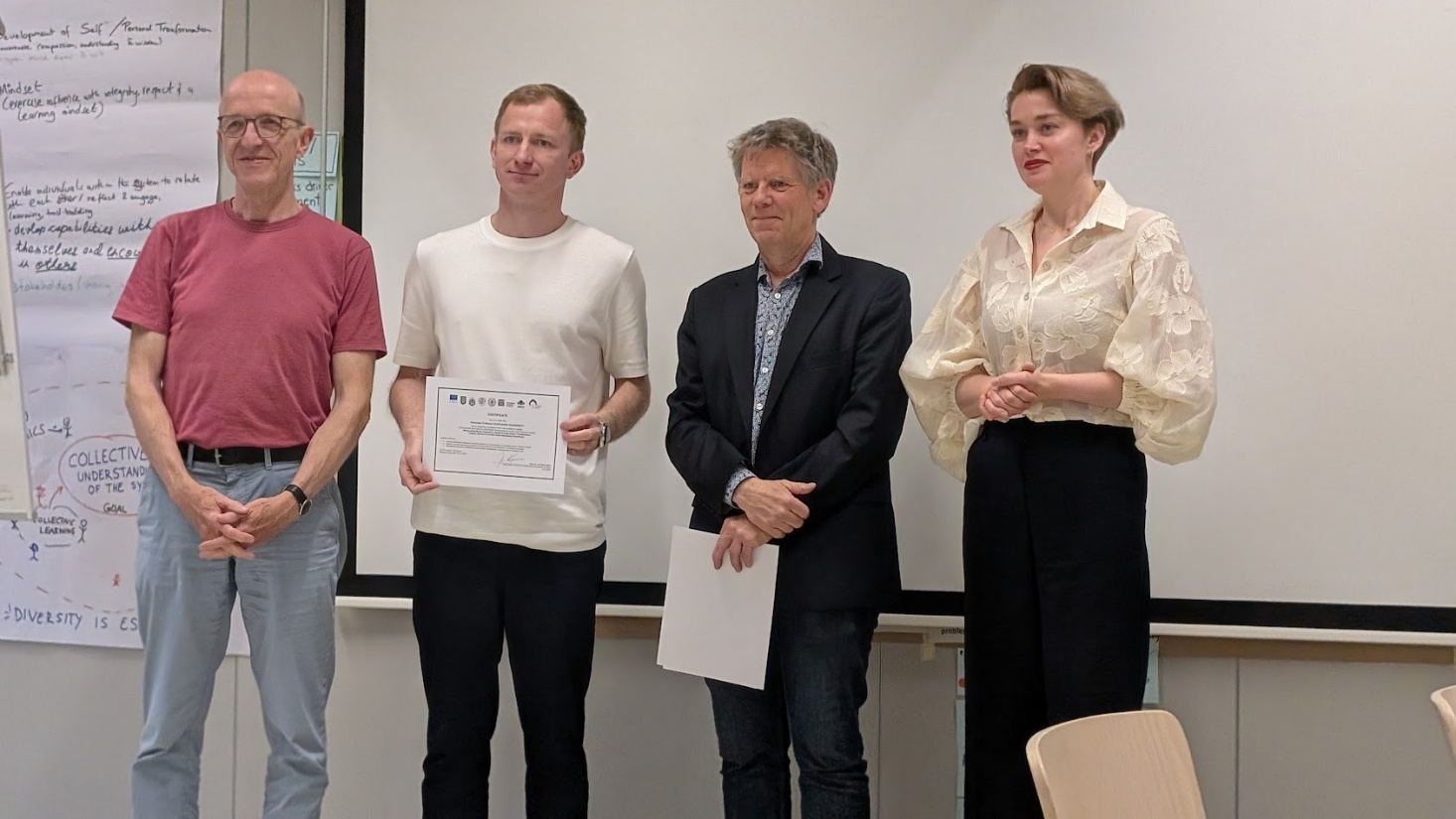
The visit proved an important milestone in the development of the courses "Forest Ecosystem Services" and "Close-to-Nature and Climate-Smart Silviculture", helping to refine the structure and content of their syllabi, build a pool of methodological solutions for lectures and field sessions — including the use of marteloscopes and LiDAR technologies — and to outline the potential for incorporating wetland topics as a key component of climate-smart land-use policy.
We extend our sincere gratitude to the project coordinators for their warm hospitality and the rich programme, and to the International Affairs Office of NUBiP of Ukraine for their organisational support.
Funded by the European Union. Views and opinions expressed are however those of the author(s) only and do not necessarily reflect those of the European Union or European Education and Culture Executive Agency (EACEA). Neither the European Union nor the granting authority can be held responsible for them.