


SHARING EXPERIENCE: HOW EU_NITRA_UKR HELPS PREPARE SUCCESSFUL JEAN MONNET APPLICATIONS
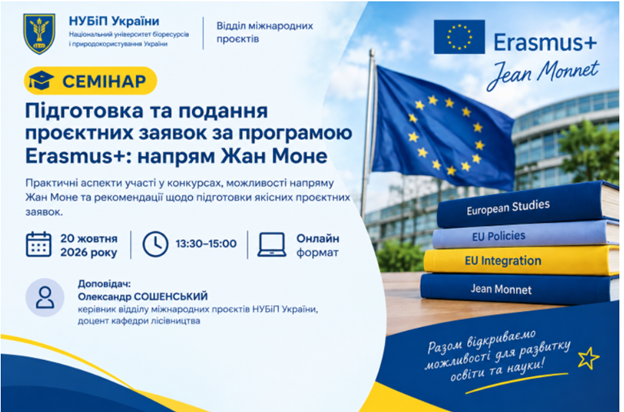
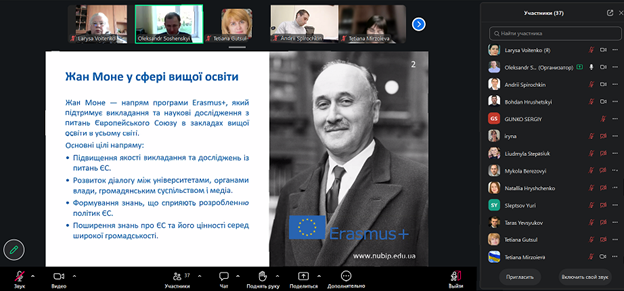
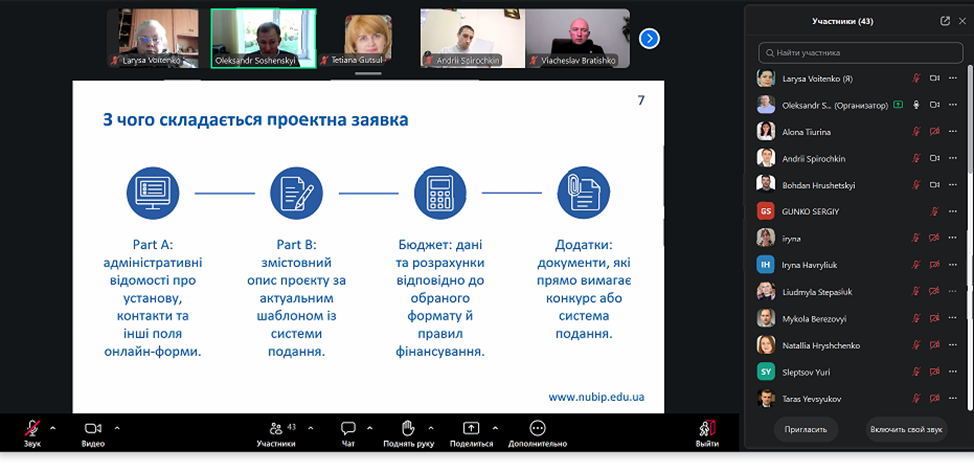
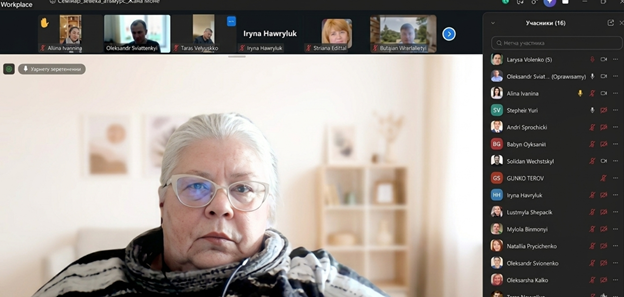
On October 20, 2026, the team of our project participated in the training and information seminar “Preparation and Submission of Project Applications under the Erasmus+ Programme: Jean Monnet Action”. The event brought together 43 staff members of NUBiP of Ukraine who plan to apply for grants, and became an excellent platform for exchanging practical experience.
The coordinator of the project “Prevention of Nitrate Pollution for Environmental Health: European Experience in Implementing the Nitrates Directive for the Ukrainian Circular Economy” (# 101238988 - EU_NITRA_UKR - ERASMUS-JMO-2025-HEI-TCH-RSCH), Associate Professor Larysa VOITENKO, delivered practical recommendations on the most crucial stage - choosing the right topic for the application.
Using our project as an example, the speaker demonstrated how to find the very “hook” that will interest the experts. She noted that the issue of implementing the Nitrates Directive in Ukraine had previously shown signs of purely formal “on-paper” implementation, which became a key competitive advantage. As a result, our application received a high score from the experts: 88 out of 100 points.
In addition, the seminar participants showed great interest in the issue of planning publications. Larysa VOITENKO shared our team’s experience: three scientific publications were declared in the application, and all of them are being successfully implemented. An important nuance that the audience noted: since Erasmus+ project funding does not provide separate funds for publication fees, one should focus on journals with a hybrid model or those that are free of charge.
Since the audience showed such a keen interest and requested the journal details after the seminar, we are pleased to share this list. Our experience proves that this is entirely feasible: we submitted our articles to reputable international journals that offer free publication opportunities:
• Journal of Agricultural Education and Extension, published by Taylor & Francis, Q2 quartile;
• Online Journal Modelling the New Europe, published by the Faculty of European Studies at Babeș-Bolyai University in Cluj-Napoca, Romania, Q3 quartile.
We are sincerely glad that our experience was useful to our colleagues! We hope that the practical advice from the EU_NITRA_UKR team will help new applicants from NUBiP of Ukraine prepare high-quality applications and attract international funding for the development of education and science.