FROM PRACTICAL MEASUREMENTS TO EUROPEAN INTEGRATION: HOW THE EU_NITRA_UKR TEAM PRESENTS EUROPEAN EXPERIENCE WITH THE NITRATES DIRECTIVE AT THE ‘EDUCATION OF THE NEW UKRAINE 2.0’ CONFERENCE
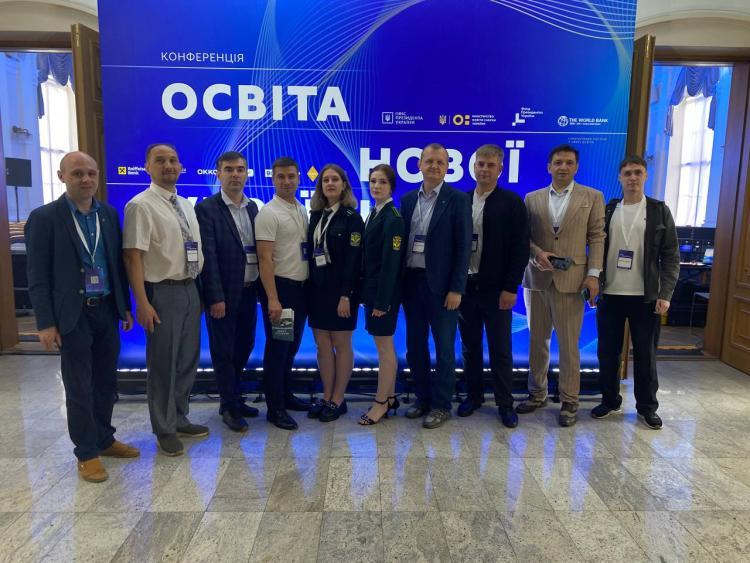
A major nationwide conference entitled ‘Education of the New Ukraine 2.0’ was held in Kyiv, organised by the Office of the President of Ukraine, the Presidential Foundation for the Support of Education, Science and Sport, and the Ministry of Education and Science of Ukraine. The event brought together over 500 participants: secondary school pupils, students, teachers, leading academics and top managers from major partner companies such as Raiffeisen Bank, OKKO, BGV, KAN Development and Sens Bank. The highlight of the conference was the interactive exhibition ‘Alley of Opportunities’, which served as a platform for technology competitions, where leading higher education institutions in Ukraine presented their unique innovations.
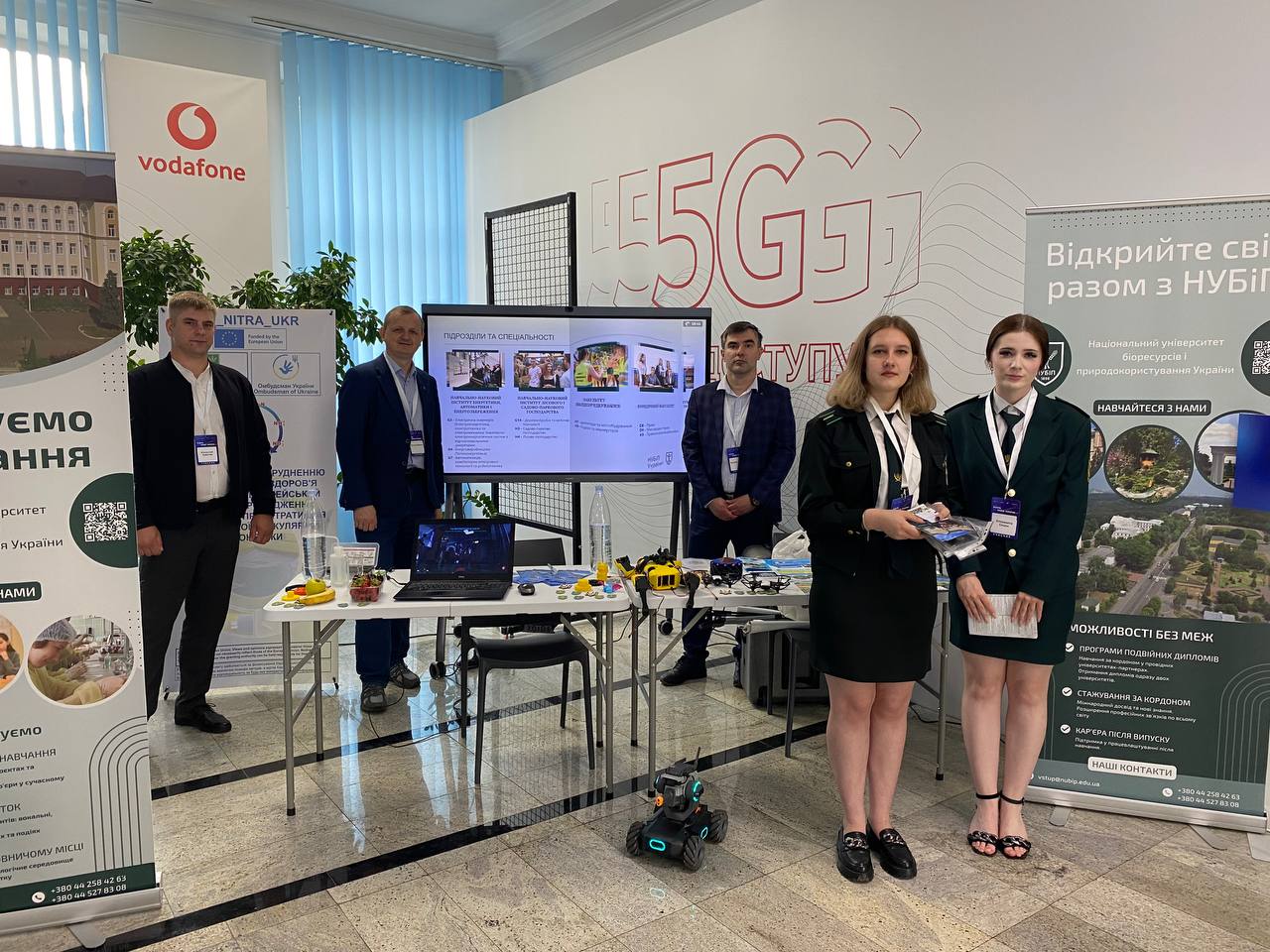
The stand of the National University of Life and Environmental Sciences of Ukraine became the real centre of attention, bringing together the efforts of several departments. The close-knit team from the University put on an interactive exhibition that instantly captivated the attendees. Real-world results were presented from work with intelligent autonomous robots and unmanned aerial vehicles for production automation, modelling and precision engineering. Particular interest was aroused by the practical express laboratory, where guests could measure nitrate levels in food products, determine water pollution and assess the ecological state of the environment themselves.
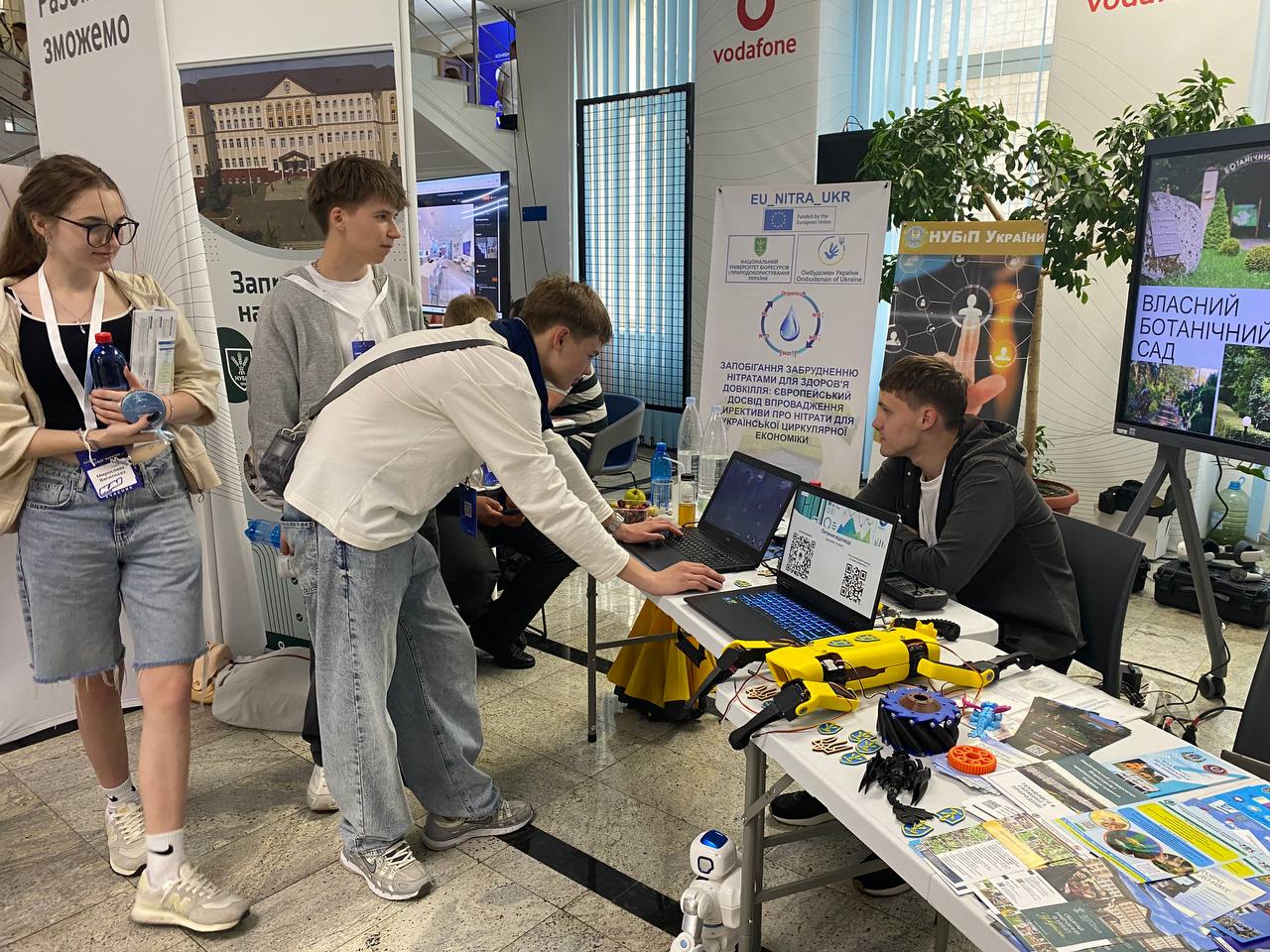
This practical experience forms an integral part of the EU_NITRA_UKR international project (ERASMUS-JMO-2025-MODULE, number 101238988), which was presented by Associate Professor Ruslan Volodymyrovych Lavryk and Assistant Vyacheslav Vasylovych Chobotar from the Department of Analytical and Bioinorganic Chemistry and Water Quality at the Faculty of Agrobiology of the National University of Life and Environmental Sciences of Ukraine. The project is funded by the European Union under the Erasmus+ Jean Monnet programme and aims to explore the possibilities of implementing the EU Nitrates Directive in Ukraine through educational and social activities.
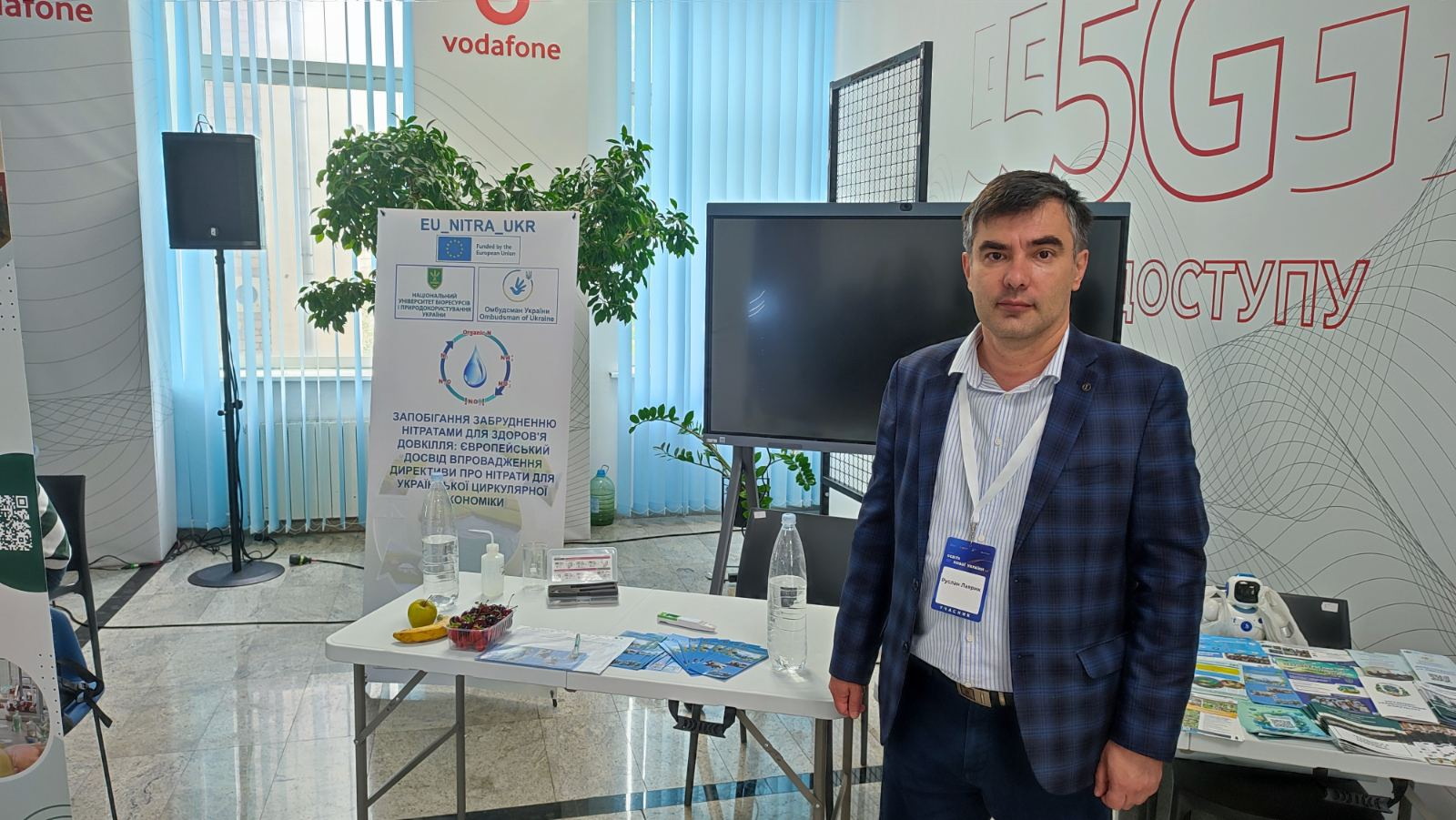
The aim of the EU_NITRA_UKR project is to adapt the EU’s 35 years of experience in implementing the Nitrates Directive to the Ukrainian context, with a view to developing a circular economy in the agricultural sector. Particular attention is paid to the development of teaching materials and the organisation of educational events for students of agronomy, environmental science and biotechnology, as well as for school pupils, who are set to become key agents in realising Ukrainians’ right to a clean environment.
It is precisely this approach — from hands-on experiments to a deep theoretical understanding — that is central to the project’s work. Thanks to practical workshops, schoolchildren and students not only familiarise themselves with the issues but also become active participants in the research process, which helps foster environmental awareness among a new generation of Ukrainians. It is precisely this active youth who will eventually become the drivers of change in agriculture, implement sound agricultural practices and contribute to the development of a circular economy in Ukraine.
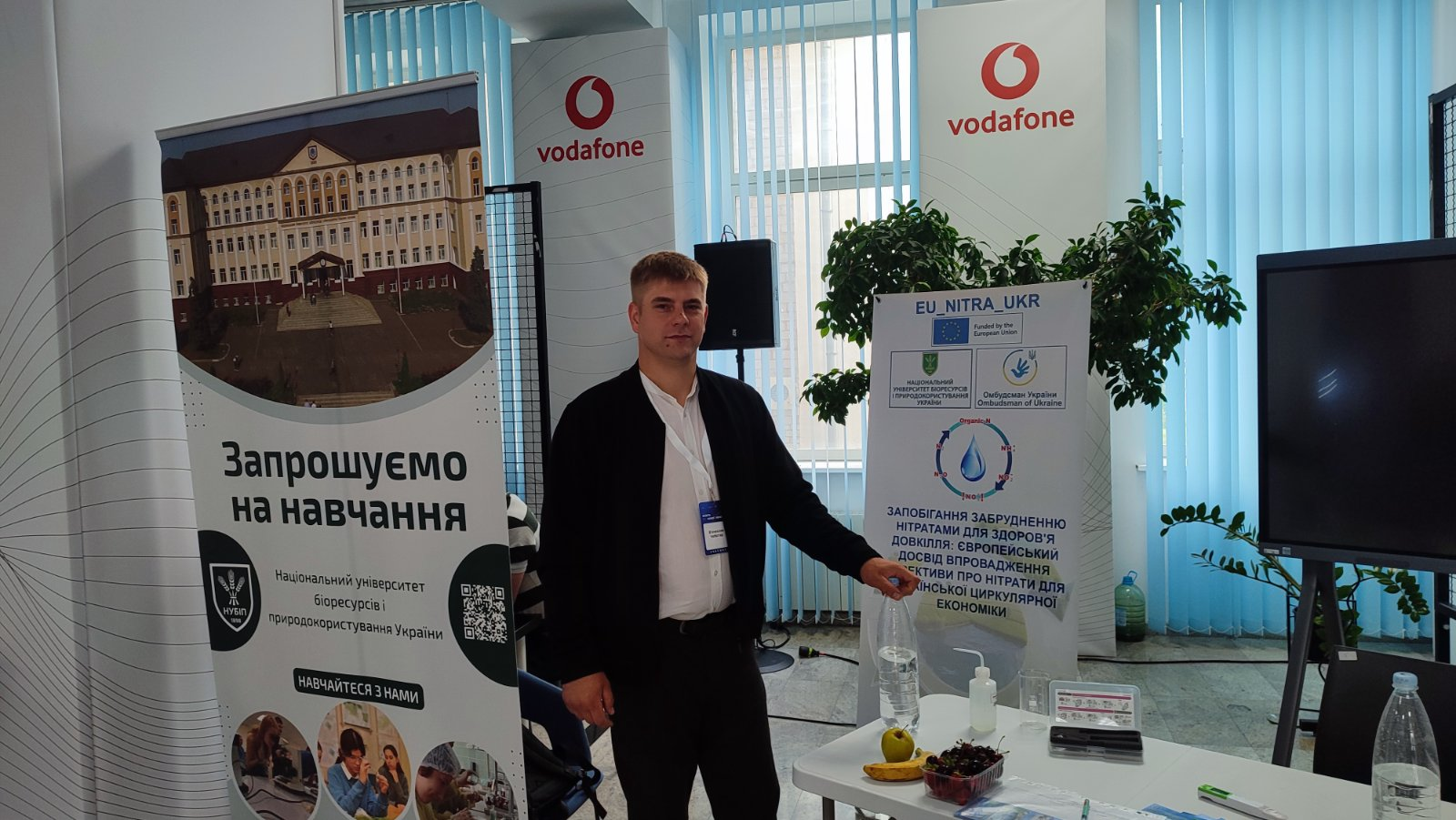
European experience shows that the successful implementation of the Nitrates Directive is impossible without broad public engagement and environmental education. The EU_NITRA_UKR project, which is being carried out by a team of experienced specialists led by Associate Professor L. Voitenko, is an important step towards Ukraine’s integration into the European scientific and educational landscape. Participation in events such as ‘Education of the New Ukraine 2.0’ allows us to convey European values and standards directly to the ultimate beneficiaries — the young people of Ukraine, who will build our shared European future.