Studying at the Universidad Politécnica de Cartagena under the Erasmus+ program: experience, opportunities, and personal development
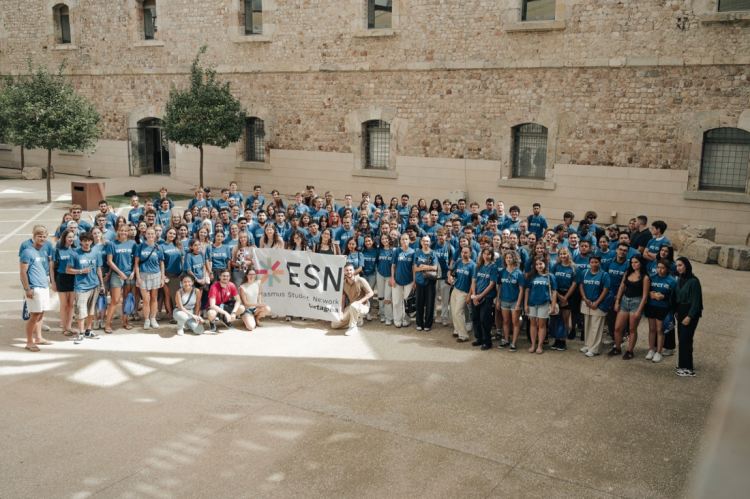
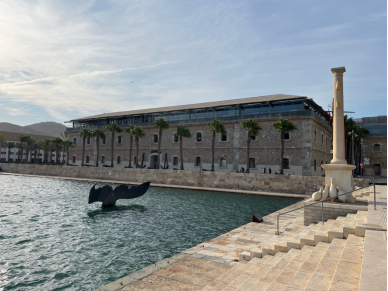
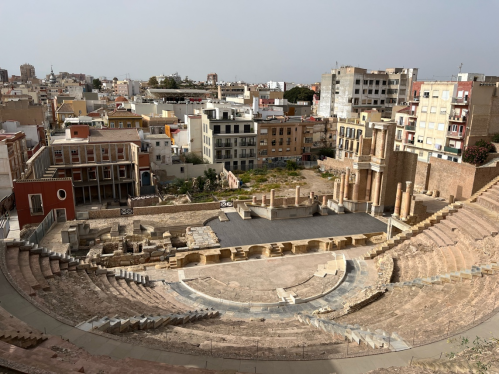
I am Maria Piskun, a second-year student at the Faculty of Agricultural Management, majoring in Management, OP International Business Management. In the first semester of the 2025–2026 academic year, I am studying under the Erasmus+ program at the Universidad Politécnica de Cartagena in Spain. It is a small city by the sea, quite peaceful and convenient for student life, and also with a very rich history. Next to the modern university buildings are a Roman theater, old forts, and a port that has been here for over two thousand years. The atmosphere of the city combines a quiet life by the sea with the feeling that you are literally walking past historical monuments every day. All university buildings are very neat and modernly equipped, with the largest ones located in the center, not far from each other. I was lucky to study in a building right by the sea: from the windows you can see the port, the waves, and the promenade.
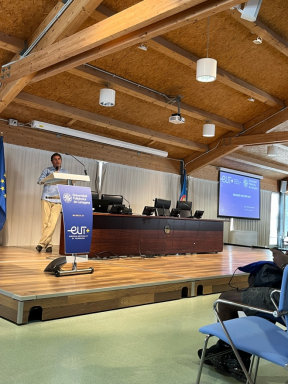
It is a technical and business-oriented university, and the education here is more practical. There are faculties and technical schools such as the Faculty of Business Sciences, the School of Industrial Engineering, the School of Telecommunications Engineering, the School of Civil Engineering and Mining, the School of Architecture and Construction, the School of Agricultural Engineering, and the CIM Maritime School.
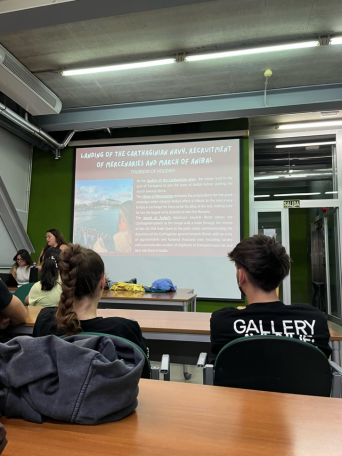
The educational process is not very different from what I am used to at the National University of Life and Environmental Sciences of Ukraine, but there are some differences. There are fewer people in groups, teachers work a lot with presentations, case studies, and team assignments, and there are more practical classes than lectures. Most subjects require active participation in class, project work, and group work, but it was not difficult to adapt.
My knowledge base from NULES is sufficient. Our courses in economics, management, marketing, and information systems provide a good foundation, and much of what I studied in Kyiv is helpful here. Sometimes the material is presented in greater depth or in a different way, but nothing is fundamentally new. The main thing is to be attentive and engaged in the process.

Teaching at the university is in English. Levels B1–B2 are sufficient to understand the teachers, read the teaching materials, and complete the assignments. The most important thing is not to be afraid to speak. The teachers are understanding and do not expect perfect language skills; the main thing is effort and participation. As for Spanish, basic phrases will be useful in everyday life. Shops, cafes, and ticket offices do not always speak English, so basic words help you find your way around faster. Spaniards turned out to be very simple and friendly people, so it is not difficult to communicate with them even with minimal knowledge of the language.